
When I was much younger I studied Abraham Maslow’s Hierarchy of Needs. Despite his theory that fulfillment of physical and psychological needs leads to self-actualization and creativity, I found many creative people driven by something else–something that often causes them to ignore basic needs.
About twelve years ago I first caught sight of the “Artist’s Hierarchy of Needs,” an upside down version of Maslow’s triangle. It balances on the tiny point of self-actualization. This hierarchy applies to more than visual arts and includes writers and others who often find creating more important than eating or sleeping. So it’s time to give others their fair shake and look at some competing ideas about what constitutes creativity.
Sigmund Freud, the father of modern psychotherapy, saw creativity as a socially acceptable defense mechanism for expressing socially unacceptable urges. In other words being creative was the way to sublimate that pesky sex drive. He felt the creative process was driven by the unhappy suffering of unfulfilled fantasies. For him being creative was akin to being neurotic.[1]
Sarnoff Mednick is most famous for his research that associates psychosocial disorders–such as acting like a criminal–with genes that you inherit from your parents. He also came up with the associative theory of creativity, the idea that a person comes up with original ideas as a response to stimulus–sort of like drooling when you smell fresh hot cinnamon rolls. When a stimulus hits the senses, a creative individual’s response would be to think of an extremely remote and barely related idea. Mednick created a test using words based on the theory that the more remote the test taker’s response was from the original word, the more creative that person was. So an extremely creative response could be nonsensical. [2]
Carl Rogers saw creativity in a similar light to Abraham Maslow. He thought creativity was the result of healthy psychological growth, and the highest form of self-actualization. He saw creative people as being wonderfully balanced, open to new experiences, with internally based control.[3] I’m sure most creative people would like to view themselves this way. However, many are honest and admit to deep insecurities. Of course, most of us have run into a few of the difficult, smug, prima donna types.
When people are working on their latest novel they become so fulfilled that they forget about other things–like food and sleep.
Mihaly Csikszentmihalyi does not see creativity as strictly residing within a person, rather it is an interaction between a person and society. Social systems and cultures determine what is original idea and what is not. To be considered a creative author, an individual must strike a balance between coming up with a novel idea and relating it to accepted conventions. Otherwise this work would be viewed as either boring or gibberish. He also describe the idea of flow, an intensified response to a creative urge that causes artists to ignore time. When people are working on their latest novel they become so fulfilled that they forget about other things–like food and sleep.[4] So, creativity can be dangerous to your health.
Finally, we come full circle to Albert Rothenburg who proposes that creative people use a certain kind of thinking that allows them to consider two opposite concepts at the same time–like two objects occupying the same space resulting in something new. His research shows that creative thought processes are not logical and actually resembled those of the mentally ill. However, creative people are actually aware that they are indulging in ‘insane’ thinking while they are doing this–at least most of the time.[5]
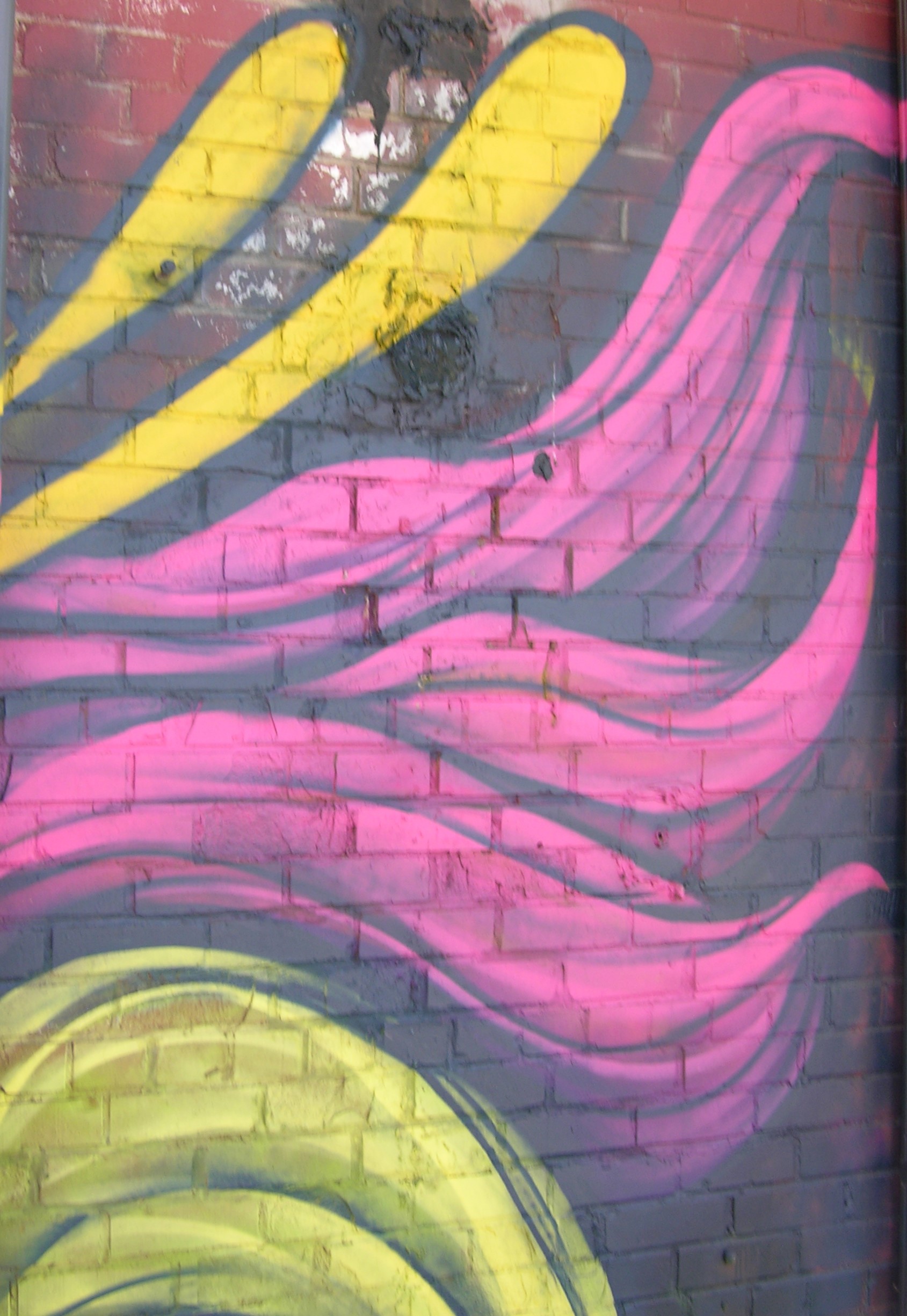
Photo of mural in Plaza District, Oklahoma City, OK by K.N. Listman


 Write about what?