What Exactly is Imagery?

What is the difference between describing details and creating imagery? Perhaps I should ask what is the difference in describing details that are exquisite and those full of boring minutia. The concept is difficult to explain because it does depend on how much that readers desire to immerse themselves in the scene. I may want my readers to see, feel, smell, hear and even taste the locale of the story. However, a passage written for all five senses can make a person dizzy.

I decided to research what some experts in the fields of communication had to say about imagery.

Noam Chomsky, a linguist and cognitive scientist, who is known for his political involvement has examined McLuhan’s area of expertise, how the public perceives advertisements. According to Chomsky:

Everyone knows that when you look at a television ad, you do not expect to get information. You expect to see delusion and imagery.”[1]

Marshall McLuhan, was known for his communication and media theories, and particularly the application of his theories. His most famous quote is “the medium is the message.”  He wrote extensively on how marketing and advertising appeals to people. However, occasionally he commented on the realm of politics:

Politics will eventually be replaced by imagery. The politician will be only too happy to abdicate in favor of his image, because the image will be much more powerful than he could ever be.”[2]

There is a similar theme running through both of these quotes, the idea that imagery provides more than actually exists in the object or person being described.  The literary device of imagery can be defined as using words to create a mental picture. However, the mental picture is not simply what exists, but more than that. It is an amped up description that provides a greater intensity.

When imagery is used to describe a simple sponge cake cookie called a madeleine dipped in tea, it takes on a taste, texture and color that make it magically memorable. This technique used by Marcel Proust introduce memories of his childhood in his multiple tome In Search of Lost Time (also known as Remembrance of Things Past).

Techniques that move imagery to this level are comparisons known as similes and metaphors. Similes typically deal with more superficial appearances. For example, “The sky overflowed with gray clouds, dark as slate.” Metaphors typically deal with deeper structural similarities as in the sky is a vast, turbulent ocean of air.  This similarity can be stretched into complex extended metaphors. However in each case the writer is adding nuances to the description that are beyond simply what is observed. Imagery adds connotations which builds another level of perception and results in something being more appealing or distasteful than it actually is.

In the end what the reader desires is not simply to feel like they are present with the author but to be able to see the intangibles: the feelings, desires and very beliefs that drive the words on the written page. Remember the imagery in commercials: the man standing stalwart in front of the flapping flag sells stability not the candidate, and the car rushing down the open road sells freedom, rather than a brand of automobile. People do not want to read books to show them reality, but something beyond it.

[1] http://www.brainyquote.com/quotes/quotes/n/noamchomsk635602.html

[2] http://www.brainyquote.com/quotes/quotes/m/marshallmc135596.html

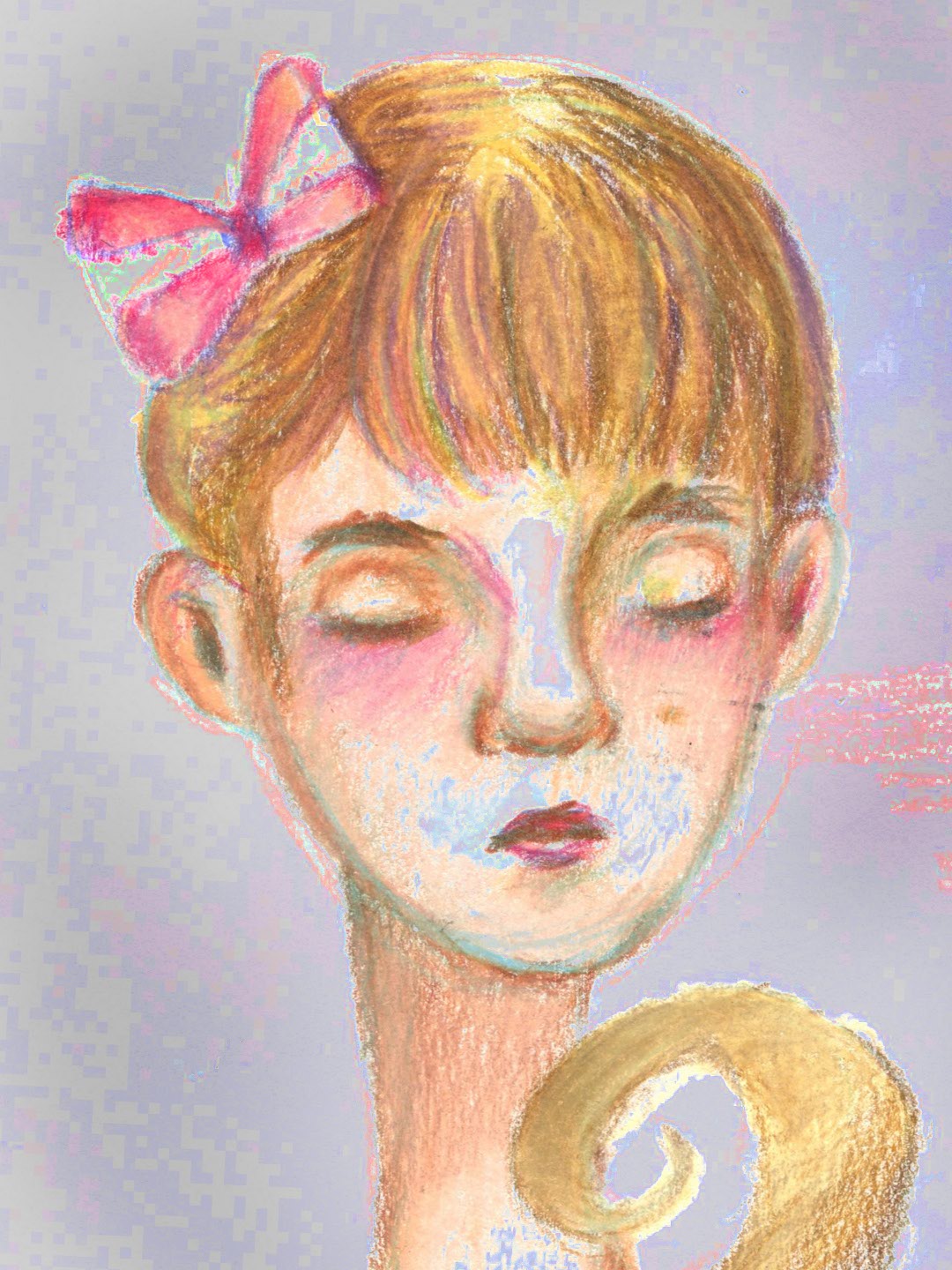
Artwork by J. W. Listman

Posted in Showing versus telling, Writer's resource | Tagged , , , , , , , | Leave a comment

The Writing Sampler

I recall a time when I could amble through a mall and be approached by marketing interviewers. If I fit the criteria, I could spend twenty minutes of time providing my opinion in exchange for a few dollars or coupons for free products. I preferred those interviews in which I could sample foods for a company trying to create a new flavor. No one was upset at my choice among multiple shades of flavor to determine which was the most popular. It is much more difficult to present precious words for sampling to a writing critique group. Of course, literary critique groups only expect one variation of your work, but rarely is everyone in the group pleased with it. After belonging to a number of critique groups I began to recognize the paths that different members followed.

The grammarians are very precise about grammar and usage rules. Therefore, they will point out all known errors. Some even ask the author to correct preferences that are not errors, such as using a preposition at the end of sentence or using a conjunction, such as “and” or “but” at the beginning. People tend to learn usage rules that are acceptable during the time of their education. Then, they stick with these even though the language continues to change. Even when people change their writing style with the time they should not expunge all adverbs, dialogue tags or passive verbs. These have a legitimate place in writing.

The trendsetters have read current bestsellers and books about writing composed by currently famous authors. They direct me to change all writing to follow styles used right now. Some of these comments may be useful. For example, I really don’t want an “info dump” following my exciting first scene. However, I do not always have a dramatic first scene, but one that hints at the drama to follow may suffice. I don’t want my coming of age novel forced into a horror/suspense format.

Content critics uncover events or character’s actions that are not ringing true. They may be true for the life I have lived but not theirs. Or perhaps the book is beginning to drag. and they think I should add a bit of tension or trim some excess details. This is where I find my own strength in providing critique information. It is also one of the hardest to quantify when it comes to the usefulness of the advice as it is not rule driven.

Because opinions are a matter of taste it may work better for group members to read each other’s work and provide comments before the critique group meets. That way people will receive comments from these different viewpoints. The other option is providing written feedback. Nobody has to hear what the other members said about your work. But the people providing the critique do not receive any feedback on the usefulness of their comments either. I’ve often heard that criticism should only provide an indication of what is wrong without ever telling the other person how to fix it. This provides a safe place to hide for the person who tells me to get rid of passive tense. If I request to know how to reword the passive text, I put the other person on the spot. Their results must sound better than my own writing. 

Perhaps critiquing should be more like the marketing interviews. The “interviewer” asks specific questions about their writing, we all give answers, and then enjoy our free samples and treats.

Posted in Creativity, Ideas for writing, Literature, Teaching writing skills | Tagged , , , , , , , , | 1 Comment

Classics Don’t Qualify as Comps

Before attending my first writer’s conference in Oklahoma, I poured over the biography of all the speakers. Each one was asked to disclose a classic novel in their want to read list. Despite the different books listed I was shocked to realize that I had read them all except for one, The Mill on the Floss by George Eliot. However, that claim didn’t make me extremely well read. Multiple speakers mention Anna Karenina, perhaps because a movie based on the classic had been produced in 2012.

During lunch at that same conference, I sat across the table from an editor seeking a new kind of book which she described as very dark, “the darker the better.” Then, the keynote speaker addressed the entire room, inquiring if any of us had the experience of reading works by an author and wishing to write like that.

I whispered, “That would be The Idiot by Dostoevsky.

The editor snapped, “Nobody writes like that anymore.”

Dostoevsky wrote classics, so this editor simply could not see his novels as comparable to current best sellers.

The Idiot revolves around a naïve Prince Myshkin in a corrupt Russian society that was pretty dark. One man was dangerously obsessed with a woman, while that same woman grew merciless towards the man who had abused her for years. The Idiot was an extremely dark book despite skirting around explicit descriptions of cruelty. Perhaps a modern version of it would have been exactly what the editor was looking for. However, Dostoevsky wrote classics so this editor simply could not see his novels as comparable to current best sellers.

This brings up the difficulty of providing agents and publishers with “comps” (books comparable to the one that the author is submitting). As I read a long list of instructions written by agents describing what they required I noted the short time periods for acceptable comps. Few would accept books published more than ten years ago. But, one insisted that writers not bother him if their comps were books that had been on the scene more than two years. This agent was too eager to obtain an author producing a sure thing, emulating what was currently selling. This short range of years for comps increased the likelihood of receiving works that read like many others. I was certainly not going to interrupt his little bubble by submitting any of my own attempts to create a unique novel.

While many authors want their work described as similar to current best-selling authors, I fret about writing a novel that imitates another work too much. I don’t want to produce a mere imitation. I realize that not a lot of current works deal with the souls of people in the way that Dostoevsky’s novels do. However, even if I wished to write like him, I am not familiar enough with nineteenth century Russian society. My work may be influenced by his in the way conversations reveal interior thoughts and characters play games to manipulate others. But, I do not want to regurgitate something too similar to his work.

The best way to avoid producing work which simply mimics other authors is to have a wide-range of reading, a range that goes well past one’s lifetime and encompasses the work of multiple centuries and distant societies. I have noted an increasing disregard for notable authors of the past centuries. Does writing well depend on being well read? No, but I’m not sure of that anymore.

A counter question has been growing in my mind — does being well-read actually hamper a writer’s ability to publish popular books, today? Knowledge of classic authors from past centuries is not necessary to be considered well-read today. However, authors can feel free to copy characters and rewrite scenes from these novels without being concerned about people recognizing this content. Evidently, nobody writes like them, or even reads them, anymore.

Posted in Drama and movies, Literary devices, Psychology, Teaching writing skills, Trends in books | Tagged , , , , , , , , | 3 Comments

Dealing with Painful Critiques

Educators often do not recognize their most creative students. I witnessed examples of this behavior as teachers described which poems they preferred in an anthology written by students. The cheerful rhyming poems were often considered better than those dealing with serious topics using unique metaphors and imagery. Do educators find works that bring up difficult questions unacceptable? How do they feel about students that produce them?

Both majors in creative fields and education majors place willingness to take risks high on their list of creative traits. However, the education majors gave high self-esteem first place when I gathered data for a research project. The teachers advised maintaining a classroom with an accepting atmosphere, free from criticism.

This did not match the recommendations of people studying creative fields. Both creative writing and art majors agreed that being around creative people was an important factor. But, self-esteem wasn’t even mentioned. They preferred honest critiques of their work from other more experienced artists.

Creative writers sought out critiques, willing for others to review their precious work while secretly hoping the reviewer would say it was amazing. But most writers understood that the praise provided by friends and family members was not useful. They needed people who were not afraid to let them know what was wrong with their work-in-progress.

Alex Osborn, known for founding the Creative Problem-Solving Institute, set up a structure for group creative brainstorming. One rule to free people from creative inhibitions is to forbid criticism and judgment during initial brainstorming. All ideas are to be expressed without any negative feedback because people tend to champion their own ideas at the expense of other better ideas. It only takes a small minority set on “defending their turf” to have a detrimental effect. [1]

However, when producing ideas for creative products, rules change. Research conducted in both the United States and France examined the result of brainstorming groups. Some groups were told not to criticize the ideas of colleagues while the other groups were was encouraged to debate these ideas. Those allowing debate generally came up with superior results. However, some restrictions were applied so no one person was allowed to monopolize the brainstorming session.[2]

“Brainstorming techniques have specifically admonished people ‘not to criticize’ their own and others’ ideas, a tenet that has gone unexamined. In contrast, there is research showing that dissent, debate and competing views have positive value, stimulating divergent and creative thought.” [2]

Most teachers say they want to maintain a classroom with an open and accepting atmosphere–one that is free from criticism. Is this a realistic goal? Is it even a good one? If the quality of work makes no difference in how it is received, why put in the extra effort to produce something that is excellent? People in creative fields will agree with the need for a stimulating environment, but not with the lack of criticism. Asking others for critiques can encourage innovative ideas.

People in the corporate world find creative colleagues difficult for the same reasons that some educators do. Employees with inventive ideas tend to level criticism at others more frequently.[3] But most creative people do not seem hurt as much by criticism as the general population is. Both innovative students and employees take the anxiety resulting from a negative evaluation of their work and convert it into energy. This fuels their drive to be even more unique.[4]

[1] Osborn, Alex. F. (1953) Applied imagination: Principles and procedures of creative thinking

[2] Nemeth, Charlan J. Personnaz, Bernard. Personnaz, Marie. Goncalo, Jack A. (2004) The liberating role of conflict in group creativity: A study in two countries. European Journal of Social Psychology,Volume 34, Issue 4, pages 365–374,

[3] Torrance, E. Paul. ‎(1963) The Creative Personality And The Ideal Pupil. Teachers College Record, 65, 220-226
[4] Johns Hopkins University news release, August 21, 2012, Don’t Get Mad, Get Creative: Social Rejection Can Fuel Imagination, JHU Carey Researcher Finds
Posted in Creativity | Tagged , , , , , , , , , | Leave a comment

The Power of Laughter

Detail from “Officer and Laughing Girl” by Johannes Vermeer.

Evidently girls between the ages of 11 and 18 all over the world laugh more than any other group. They even laugh when nothing is particularly amusing. However, the very sound of an initial giggle seems to generate the impulse for laughter to spread. In high school this shrill twitter can bring a class to a halt. I have often suspected that was the reason that the girls were giggling so much. It turns out that I was not far from right. Girls don’t giggling all the time because they are having fun, but because they are building their first line of defense. Giggling is an attempt to gain allies in a conflict. They are waging war from a position of weakness as evidenced by their weapon of choice, laughter, but waging it nonetheless.

The gigglers sense that they have little authority over others.

The gigglers sense that they have little authority over others. They may be a female in a male dominated society, a youth in culture where older people are acknowledged leaders, or less educated and experienced in a world espousing intellectual ability and technological savvy. Delicate chortling is a way of seducing those in power into helping and not attacking them. The people for whom the giggling is performed are often well aware that it is done to appease them rather than for any humorous words they have said.

The gigglers live within a hierarchical framework, a kind of caste system based on power in society. They have discovered that the placating nature of a chuckle usually works better than attempting a rational discussion, which places both parties in a position of equality. Laughter is their choice tool for manipulating others. They typically laugh to appease someone they view as having a superior position. However, if you observe a giggler talking to someone that they feel they are above (such as a younger sibling or child) and the laughter frequently disappears, and is sometimes replace by a demanding voice.

While researching the psychology of laughter, I found an interesting Radio Lab called “How Does Laughing Affect Us?” Vanderbilt University associate professor of psychology JoAnne Bachorowski concluded that men laugh more around their bosses and women laugh louder around men they don’t know because “the giggling girls have power.” They use excessive laughter to shield themselves, and to gain the attention and protection..

Want to know more? – https://www.radiolab.org/podcast/91593-how-does-laughing-affect-us

Posted in Laughter and humor, Manipulation, Persuasion | Tagged , , , , , , | Leave a comment

Scoring Your Sense of Humor

My patience is often short with motivational speakers. They may tell interesting stories but often their techniques only work for themselves. I listen to one who was humorous enough to get a chuckle out of his audience. However, afterward in a personal conversation he bemoaned the problems he had with a translator when presenting in China. “I was using the same jokes and puns that always get a laugh, but the just people sat there deadpan.” He shook his head, seriously disturbed.

At first I wondered if the silence was a cultural response. Perhaps the audience thought laughing at the speaker was rude. I inquired if they responded with laughter to other speakers. He assured me that they did. Then, he told me that he asked the translator if she was translating his speech word for word or restating the meaning in her own words. The accusation in his voice was obvious as he noted the translator confessed that she was restating the meaning. He assumed that is why the Chinese audience didn’t perceive him as being funny.

He failed to comprehend that his favorite puns and malapropisms were based on words sounding similar with different meanings. This kind of humor relies on comprehending a particular language. So, I tried to explain that a word for word translation from English wouldn’t have been funny to the Chinese audience and might even have sounded nonsensical. However, he continued to whine about how the translator ruined his humor, which eventually got a chuckle out of me.

There are advantages to being considered humorous, even if you do not want to spend your life in front of an audience or use humor to gain attention at business conferences. People communicating with humor are often perceive as being more socially attractive and more competent speakers. Students feel that teachers who appropriately use humor are in touch with them. Workers view joke cracking bosses as having a great immediacy.

Humor is not just the content of what you say, but also the manner of delivery.

So, how do you know if you are funny? The Humor Orientation Scale has been developed by a pair of West Virginia University researchers to can rate Humor Orientation or HO. But there is a caveat, your peers must also think you are funny, so recruit a couple of acquaintance that will honestly rate you according to this scale. Humor is not just the content of what you say, but also the manner of delivery. People who have high HO scores are perceived as being funnier than those with low HO scores, even when delivering the same jokes.

However, there are other dimensions to this humor rating. For example, instructors who had the ability to raise a laugh were considered more humorous by students also had high HO scores. Basically they shared a cultural sense of what is funny. The students with low HO scores did not perceive jokes in the same manner. They had different requirements for humor. The Humor Orientation Scale is still a way to measure how funny another person is. Instructors with low HO scores were not considered funny by any students.

A study from Baldwin Wallace University has linked conversation decoding ability with humor orientation. This decoding ability involves three parts: conversational sensitivity, nonverbal sensitivity, and receiver apprehension. The more sensitive the person was to both verbal and non-verbal cues, the higher the person’s humor orientation tended to be. However, sometimes this sensitivity resulted in apprehension and apprehension made people seem less funny. The content of humor definitely matters. When people invoked laughter at the expense of others this did not always cause a lower perception of their humor ability. Instead their “likeability” ratings plummeted.

So, before you gather your collection of puns and one-liners remember that believing you are funny doesn’t necessarily make a person humorous. Traits found in people who are considered humorous include: adaptability in communication, desire to make a positive impressions, orientation towards feeling/emotions, and being able to see the irony in a situation. There is a skill involved.

Booth-Butterfield, S., & Booth-Butterfield, M. (1991). Individual differences in the communication of humorous messages. Southern Communication Journal, 56, 205–218.
Merolla, Andy J. Decoding Ability and Humor Production, Communication Quarterly 05/2006; 54(2):175-189.
Wanzer, M., Booth-Butterfield, M., & Booth-Butterfield, S. (1995). The funny people: A source-orientation to the communication of humor. Communication Quarterly, 43, 142–154.
Wanzer, M. B., Booth-Butterfield, M., & Booth-Butterfield, S. (1996). Are funny people more popular: The relationship of humor orientation, loneliness, and social attraction. Communication Quarterly, 44, 42–52.

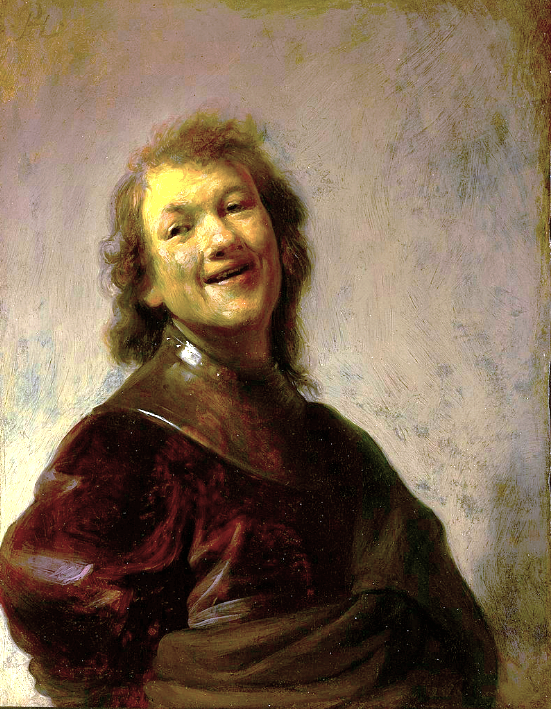
Illustration Rembrandt Laughing by Rembrandt Van Rjin

Posted in Laughter and humor, Mental health | Tagged , , , , , | Leave a comment

Why Do We Read Emotions?

In the last blog I described the difference between real and faked laughter. Both are quite useful and will be heard in the feasts that mark the cooler seasons in the United States. We indulge in food and conversation at events like the Labor Day barbecue, the Thanksgiving dinner, and a variety of holiday parties. We also tend to indulge in believing that it is a great ability to read the emotions of others.

Imagine sitting down to holiday dinner at which a number of friends and family have gathered. The host, Micaela is young, a bit nervous, rushing about trying to please the guests. Timidly she offers a plate of brown patties, in plate of broth. When asked “What is it?” she responds smiling, “Pate foie gras… goose liver paste.” Sandy, sitting across the table momentarily curls up the side of her mouth in an sign of contempt.

Thoughts go rushing through your head. Did Micaela not see Sandy’s expression? Is she insulted by that look of disgust? Perhaps you should comment about what delicacy pate foie gras is to show your empathy for Micaela. But, then maybe Sandy finds force feeding geese a type of animal cruelty, and the expression of disgust was an automatic gut response. Perhaps you should encourage Sandy to speak up by reminding your host that some people may have ethical reasons not to eat this dish.

Emotional intelligence is feeling what others feel. However, most instruction in this skill do not tell you what to do when detecting emotions. Instead we are informed that emotional intelligence will be a benefit if we learn it. So, now I have honed my skill to the point of recognizing a momentary micro-expression. But empathizing with a person requires that I demonstrate that I am taking their side.  Do I choose what to do based on which person can benefit me the most?

Emotional intelligence can be welded as a weapon.

This same interaction that occurred at the dinner table is repeated ad infinitum around the conference table in businesses. Emotional intelligence can be welded as a weapon to point out rivals’ doubt that they were concealing. It can be used to find the secret to persuading others to join your camp, when there aren’t enough facts to support your ideas. Research on emotion recognition has shown that people who are skilled in reading feelings have often gained this ability to serve themselves, rather than others.

University of Michigan research has found that people who exhibit the personality trait, exploitativeness, (part of the scale to measure narcissism) are as good at reading expressions or emotion as empathetic people are. Two studies, one with 100 college students and another with 88 adults both resulted in this same conclusion. The major difference between subjects that scored higher in dispositional empathy and those that had narcissistic tendencies of a similar magnitude, is that the exploitative people could recognize negative emotions better. Researcher Sara Konath theorizes that this enables them to detect vulnerability in others. [1]

However, people tend not to hide “positive” affects like happiness, or contentment as much as they do anger, fear, disgust, etc. So in the practical everyday realm the narcissists are better at reading hidden emotions. Back to the dinner table… have you decided to empathize with the nervous host or disgusted guest? Perhaps considering the kind of person who can read negative emotions the best, you should just be quiet and not say anything at all.

[1] Konrath, S., Corneille, O., Bushman, B.J., and Luminet, O. The Relationship Between Narcissistic Exploitativeness, Dispositional Empathy, and Emotion Recognition Abilities Journal of Nonverbal Behavior, March 2014, Volume 38, Issue 1, pp 129-143
Posted in Emotional intelligence, Mental health | Tagged , , , , , , , , | Leave a comment

Distinguishing types of laughter

The muffled giggle, the high pitch twitter, the polished chuckle, the wheezing chortle, and the deep belly laugh can all be taken differently depending on who is uttering the sound. Real involuntary laughter is often contagious in groups, one person catches on to a joke and others join in with rounds of laughter that rise and fall. But faked laughter is more common in everyday life. It typically serves a type of social interaction and can be used to smooth over differences, appease a person perceived as more important, to draw attention to oneself or increase group cohesion by aiming guffaws of scoffs at an outsider.

A common use of the manufactured laughter, which tends to be slower and more nasal in tone, is to bond with other people. However, faked laughter is only appealing if we actually like the person doing it. I heard a guy comment once that a particular group of women were not attractive enough to be giggling so much. He understood their artificial laughter as a kind of flirtation. He was uncomfortable with their laughter because he did not find them appealing.

Most people can only distinguish faked laughter about two/thirds of the time.

According to studies conducted by UCLA associate professor Greg Bryant, most people can only distinguish faked laughter about two/thirds of the time. Detection is based on the “breathiness” of the laugh, which is composed of the vocalized sound. Part of this is the “ha, ha, ha” sound and part is rapid breathing. The slower the laugh is the more we hear the vocalization and the more controlled the breaths seem. When both of these occur people assure that the mirth is fake.

And there is a third kind of laughter – the insidious, haunting kind of evil laughter. What makes it different from the other two? It hints of insincerity because the breathing is clearly controlled, unlike the gasping of real laughter This laugh it is often marked by pitch that trails downward. However, the situation does affect our opinion of legitimacy of the person laughing. A genuine deep belly laugh at at a revolting or grotesque scene, still seems very twisted.

Greg Bryant’s studies are based on idea that many animals use laughter to indicate playfulness similar to a real human laugh. Most people are familiar with the hysterical sounds made by chimpanzees. But what do these chimps find so outrageously funny? Nothing. The chimp’s laughter eases social situations. Did you realize that dogs, also have a way of chuckling? You may not be able to perceive it because it is much more like wheezing than human laughter. However you do not have to worry that your dog is poking fun of you. Dogs use chuckling to appease people, just like other people do.

http://newsroom.ucla.edu/releases/ucla-s-laughter-guy-dissects-features-of-counterfeit-chortling

Posted in Group psychology, Ideas for writing, Laughter and humor | Tagged , , , , | Leave a comment

Why Not AI?

I write under a curse that requires me to experiment and revise as I create. Despite considering ideas, creating outlines to guide me and re-reading my initial work to improve it, the quality of my writing is not consistent. Unfortunately, I can always make my novels better. However, I can tell when I’ve produced an intriguing chapter that only requires minimal editing to remove the grammatical mistakes I introduced in my frenzied editing.

So why do I ignore the perfect output of Microsoft copilot, ChatGTP or Grammarly’s Writing Assistant when I am stuck? Surely I want to get over that delay quickly. I also know when I have composed a chapter that is errorless and bland. For that reason, I avoid relying on AI for content. When I change tiny details that don’t matter and shift the order of events I realize that I am heading nowhere, and need a new idea for that chapter. However, I don’t want the new version of machine learning to find the average of most popular ideas. I need to reveal a character’s action or trait that will cause the reader to wonder “What will she try to do next?” 

It does not matter if I must scrap some chapters and start over again.

What helps me move forward in a novel is deciding to put the manuscript away for a while. The problematic plot and characters stay on the back burner, simmering. Often I am surprised at how soon inspiration comes and I am ready to serve up scenes that unfold with natural tension. It does not matter if I must scrap some chapters and start over again. The parts of my book that were written with delicate care may not require any more than a spelling and grammar check. I am willing to use AI driven software to find those errors. After all, if I invent my own grammar and usage rules, that will make my writing unintelligible to others. So, I am willing to stick with the average for this. But, not when it comes to creative ideas. 

People tend to use AI for those tasks that they don’t do well. This may mean letting predictive text write emails for you, which will pad the word count as well as transform your words into socially polite phrases. That is not what readers want to see in every book. Authors should work to break this mold and create a unique experience for the reader.  

Image from Wikimedia Commons

Posted in Characters, Creativity, Ideas for writing, Novels, Story structure, Teaching writing skills, Trends in books, Writing trends | Tagged , , , , , , , | 1 Comment

The Price of Staying Connected

Before I entered grade school, I knew something about computers. That may be ordinary today but unusual for someone born in the 1950’s. However, my father worked for General Electric in Louisville, Kentucky which housed one of the first non-government computers in use. At that time a mainframe computer was a bit intimidating, filling an entire room with rows of cabinets containing tapes for storage. It used vacuum tubes for circuits that had less power and speed than today’s hand-held devices. Add a few blinking lights and monotone voice and you have the image of a malevolent, super-intelligent machine with a human tendency towards egomania that the general public liked to frighten themselves with in movies.

As an adolescent I viewed movies such as 2001: A Space Odyssey and Colossus: The Forbin Project, without any fear about being endangered by a powerful computer that decided to foist its desires on humanity. Computers really didn’t have the desire to rule humanity, or autonomous thought to produce work of their own volition. Half a century later I find myself surrounded by much smaller and more sophisticated computers. People imagine a world devoid of these devices as a new dark age. We are tempted to try AI (Artificial Intelligence previously known as machine learning) to lighten our own cognitive load while producing art, writing, music and programming code to impress others. Computers have not taken control of humanity–we have handed it to them.

We have become dependent on constant internet access to find our way when driving, to entertain our children during the long drive, etc. We typically pay for these with cold, hard credit cards or a wealth of information that will provide companies with the data to target us with custom ads. Because of the easy access to information, there is less need to remember what used to fill our heads or notebooks. We just need to general knowledge about a topic or the name of the current expert. Details can be found online, neatly condensed for use by AI, which occasionally provides realistic facts that aren’t true, such as best-selling classic books that never existed.

What do we give in exchange for this convenience? Have you seen reports about student’s decreasing ability to comprehend difficult text or even read for an extended period? This did not begin with schools being shut down for COVID 19. According to author Nicholas Carr there is evidence that our thinking has been changed by the shallow nature of reading as we flit from site to site. We skim text and then dart off in another direction through enhanced text. The residual effect is greater tendency to be distracted and lower tolerance for reading for an extended period.1

The same thing is true of videos. “Psychologists say that the average human sustained attention span is 20 minutes.” But a full minute video online tends to tax our patience.2 With so much short material produced for the internet, attracting viewer attention requires additional flash. This distraction has another effect. According to Elizabeth Lorch children increasingly fail to understand causes such as “Why did an event happen, why did a character do this?” More exposure to electronic media correlates with greater numbers of children with ADHD3.

The correlation of time spent on computer with increase in asocial behavior has been well documented. In 2004, The Annual Review of Psychology published research that indicated “greater use of the Internet was associated with declines in participants’ communication with family members in the household, declines in the size of their social circle, and increases in their depression and loneliness.”4

We need time to practice how to stay connected like humans.

Of course, I am not advocating that we return to the pre-computer dark ages. Rather we need to realize the problems that occur when our lives are constantly immersed in electronic media. We all need large chunks of electronic free time, when we sharpen old skills like non-interactive reading, writing by hand and talking face to face. Time free from electronics is needed for everyday life because we need time to practice how to stay connected like humans.

[1] Carr, Nicolas, Is Google Making Us Stupid? What the Internet is doing to our brains The Atlantic July/August 2008) http://www.theatlantic.com/magazine/archive/2008/07/is-google-making-us-stupid/306868/ (accessed December 12, 2012)
[2] “4 ways to keep viewers engaged in an online video”, February 7, 2011 http://wistia.com/blog/4-ways-to-keep-viewers-engaged-in-an-online-video/ (accessed December 12, 2012)
[3] “UK Psychologists Featured in New York Times story on ADHD” http://psychology.as.uky.edu/uk-psychologists-featured-new-york-times-story-adhd-0  (accessed December 12, 2012)
[4] Kraut, Robert; Patterson, Michael; Lundmark, Vicki; Kiesler, Sara; Mukophadhyay, Tridas; Scherlis, William. “Results of interaction depends on usage goals, however some characteristics unique to internet”  The Internet and Social Life, Annual Review of Psychology. Vol. 55: 573-590 ( February 2004)
Posted in Mental health, Social media, The information age | Tagged , | 1 Comment