
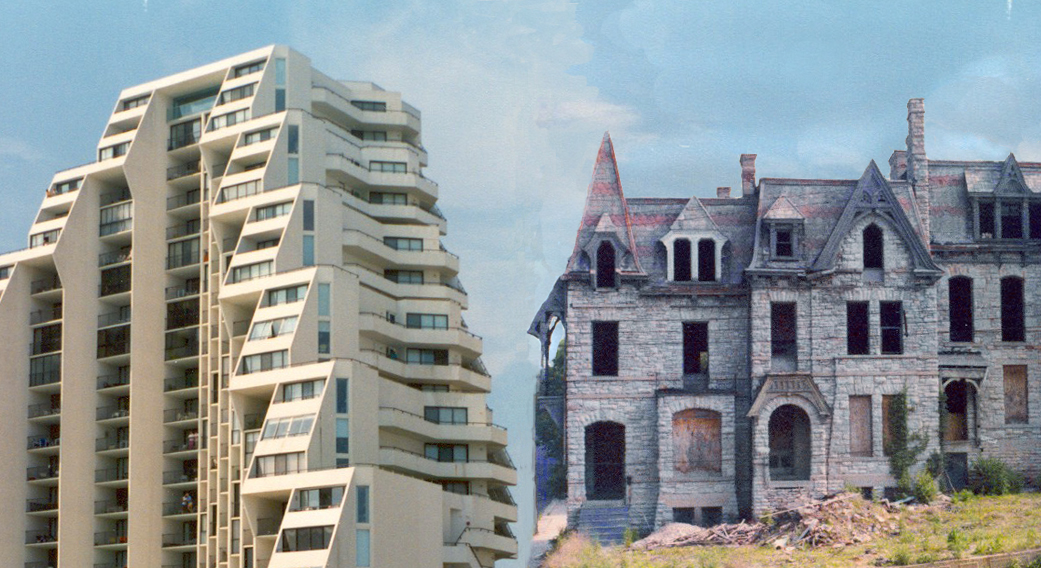
 World building can be a challenge. Advice from someone well-versed in geology, history, or sociology will help when designing world differing from the one we inhabit. My desire was to create an alternate world in which civilization was advanced as ours but uneven in development due to a missing critical resource. How about a world without fossil fuel?
My son, who has some advanced classes in extraterrestrial geology assured me that with large populations of living creatures, there would be fossil fuels. Perhaps, he suggested, the people had not discovered fossil fuels because they were unable to access them. They could be using geothermic energy with an adequate number of volcanoes own my imaginary world. So, my decision was to alter the one missing resource from fossil fuels to a scarcity of ductile, malleable metals like iron and tin. (I suppose I couldn’t get rid of iron completely as it is an essential part of blood).
Without sufficient iron and no tin, the inhabitants of this world could not make steel. Remove steel, and they cannot mine coal, cannot drill oil, so an abundance of fossils fuel would not help them. But I realized there was a cascade of even more differences—the city would look vastly different with no steel beams for sky scrapers, no steel cables for bridges, no steel to reinforce freeways, or build train tracks. Any mode of transportation, such as a car, bike, boat or aircraft would be made of inflexible wood, or flimsy fabric and rubber.
They have no steel for iron-horses, or steam engines, or internal combustion engines so I have created an anti-steam punk world. The structures of this anti-steam punk world would be made of mostly stone, ceramics, wood and glass.
In the end I decided not remove all metals. They must have some ability to manufacture some instruments, so only a limited amount of light-weight aluminum, magnesium and titanium would remain. But these metals are more fragile, so they cannot risk wrecks of light weight vehicles. However, my original premise was a world as developed as our own.
Then I realized that my son’s suggestion that they live near geothermic energy was a good one. This would typically be near the ocean, near beaches with lots of sand (which is mostly silicon). Computers where invented in our world at the same time as combustion engines. So, the societies of my world would have delved into using computer controls earlier out of necessity. As they were not spending time building steel structures and vehicles, they would have learned to make silicon circuits earlier. More widespread use of computers would allow for individuals and companies to use computing to create safer modes of transportation based on grids to direct driverless vehicles.
So, it is not oil I delete from my world, but steel. That gets rid of guns of and steel, two parts of the source of European hegemony, according to anthropologist Jared Diamond’s Guns, Germs, and Steel. This society would not reflect the life in Victorian England at all. The masters of this new world would be those who can conquer germs, and my major character can be from the people that prize understanding the natural world.
So, choose a difference, take a all of the way through to its logical conclusion, and voila, a world that does not resemble any of those copycat world builders.
 The character with charm, with the twinkle in the eye, who speaks noble words with the perfect voice, who makes the impassioned plea to turn the crowd around– the character with all the traits of charisma that we desire—that character doesn’t fare so well in fiction.
 In the search to construct a likable character, amateur authors often forget that the major character needs flaws. When authors want to escape this world by imagining themselves as the person that everyone adores, this adulation occurs only within the story that they craft. Envy and distrust are the real life responses to the almost perfect person.
 Adolescents are known for following fads in fashion. Buying clothes which they wouldn’t dare be seen in the next year. Only, I’m seeing styles that keep coming back. The tendency towards fads has moved on into the world of books. We finished a phase in which the major character in a YA book was overwhelmingly more likely to fall in love with someone not quite human than another person. What changed between the novels was the quality of that difference. One was a vampire, the next a werewolf, and another a space alien. How about a romance with the zombie; isn’t that original? On the surface yes, but it is largely the same plot.
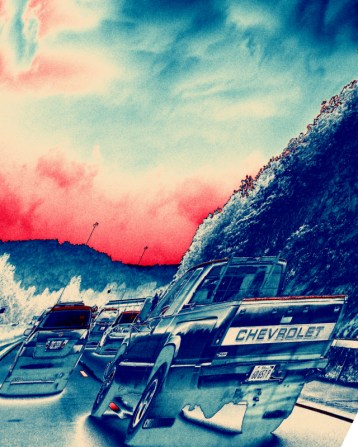 Imagine a movie scene from the seventies or eighties– a car veers out of control over the edge of a cliff and tumbles end-over-end finally exploding at the bottom of the ravine. We’ll never know who that unfortunate driver was. Only it doesn’t really happen that way. The MythBusters sent several cars careening over cliffs (sans driver) but they couldn’t get one to explode, even when they damaged the gas tank. Writers are sometimes under the illusion that an exciting event like sending a car tumbling over a cliff will create a bang in their story, only to have it fizzle out just like the cars failing to explode for the MythBusters.
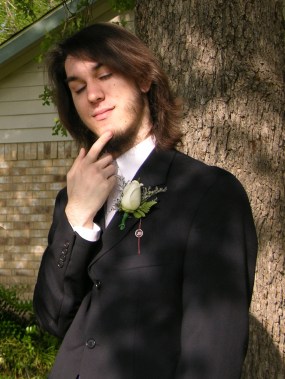 Recently I started reading two different stories with a peculiar similarity. In one the romantic male lead had olive skin, and dark hair and eyes. The other had tanned skin and raven black hair–both variations of tall, dark and handsome. In both tales of romance, the young man meets the adolescent girl’s father first, as the daughter observes him. In one narrative, the tall, dark and handsome man would defend the young woman, and in the other he would betray her. Can you guess which?
 Many writers believe that most readers will only read a novel that grabs their attention from the first page. A dramatic episode must unfold in the first paragraph. I witnessed a workshop in which writers were coached to do just that. The leader liked anything with an immediate crisis, imminent death being the most desirable one–such as a character waking up in the hospital with all the tubes attached, or her favorite, the one facing execution.
 Since the popularity of The Hunger Game series and the awards won by All the Light We Cannot See, a trend is fiction is the use of present tense. This style is touted as making the character’s actions more intimate to the reader, but it is not a new fad. I recall reading the Babar books to my own children, who were quick to pick up that these 1930’s children’s classics sounded different. They were penned in present tense.

 Write about what?