
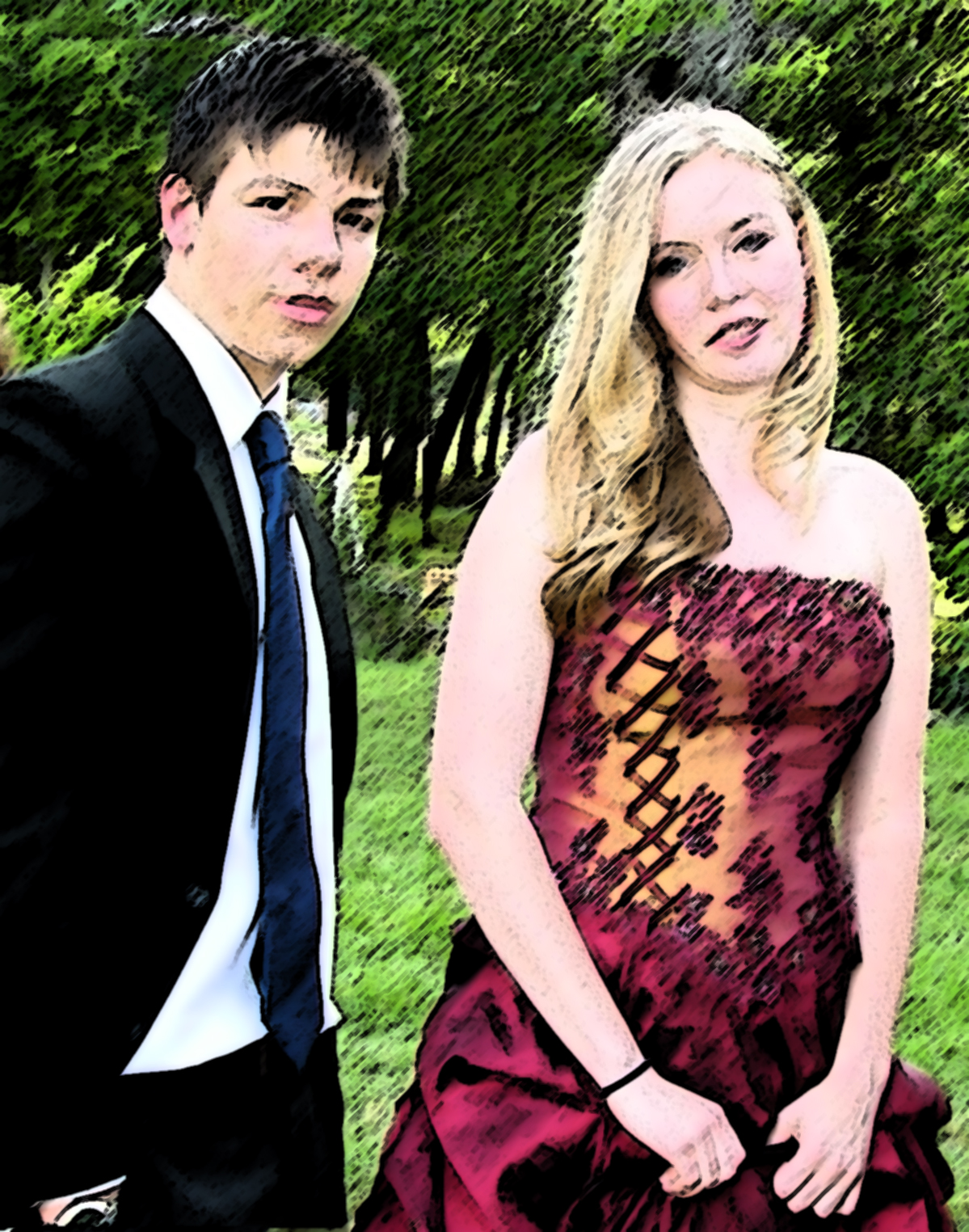
If I describe one of my protagonists as chubby with a large pyramid-shaped nose, fat eyelids and thin hair, I believe I’ve indicated she is not attractive. So, she is not deluding herself when she says she is ugly. However, I’ve encountered people who assume she just doesn’t know how to fix herself up and she must follow the trope of eventually becoming gorgeous because she is the main character.
Still, my main character is spot on in her assessment of herself and this is not going to change. Other people in the story do not consider her to be good-looking either. Readers may see what they want to see, no matter how I paint characters’ portraits. That is something that I cannot control.
How much should I describe the exterior appearance and traits of the people in my stories? The sister of a chubby and ill-favored protagonist is seen as beautiful by the others in this story. I actually say little about her appearance other than she has long blond hair that hangs in loose curls. If I explained what the younger sister looked like in detail, some readers might not agree with my assumption of attractiveness. So, it is more important to indicate how the other characters react to the person’s appearance than it is to describe the details. This helps readers get past preconceived notions about how certain kinds of body shapes, skin tone, hair or eye color, or even facial features look in their mind.
It is more important to indicate how the other characters react to the person’s appearance than it is to describe the details.
I know the interiors of my characters well; I have drawn their thoughts and traits. They are based on real people, so I maintain a good idea of what makes them tick with insight into their passions and their fears. I even make up a family tree. Although that is not included in the story. However, their appearances are often based on random photographs. Typically they are not described so well that the reader can imagine them in detail.
A greater depth in describing appearance does not keep a character from being simplistic. Readers who struggle with the time spent learning about well-drawn individuals may prefer stock characters. Those who expect to jump into immediate action and learn all about the character by the end of the first chapter will tend to find beautifully described but such characters in their favorite books. That may be what they are asking for, but not the kind that I want to write.
Photo by K.N. Listman


 Write about what?
It is a concerted choice by the author to focus on character description or story-telling just as it is the reader’s choice to determine their own preferences. I recall writing professors cautioning against the use of a contemporary actor/actress to describe characters. If that is how they are seen, so be it. I still believe in fiction, as in life, actions describe a person more accurately.