
 The character with charm, with the twinkle in the eye, who speaks noble words with the perfect voice, who makes the impassioned plea to turn the crowd around– the character with all the traits of charisma that we desire—that character doesn’t fare so well in fiction.
Historically charismatic leaders don’t have a long life span. Authors often reflects that reality. In Shakespeare’s Julius Caesar the charismatic Marc Antony has the well-known and often the quoted (and parodied) speech at Caesar’s funeral. As a close friend of Caesar, he is permitted to speak at the funeral on the basis that he will not blame the conspirators who assassinated Caesar. But, Anthony displays the skill of his golden tongue. With just the right amount of sarcasm and emotional appeal, he begins to praise Caesar, and cast suspicion on the conspirators, until the people rise in rage to hunt down these men.
It would only seem natural that Antony would take his place as the leader after avenging the death of his ally ,Caesar. However, history has shown that in the end he lost his life running from another member of the ruling triumvirate, named Octavius. Once a person is known for his charm, he cannot simply be pushed out of office. He must be destroyed.
Purely fictional characters that are charismatic also don’t have a good reputation. In Alan Paton’s novel Cry the Beloved Country, the main character, Stephen Kumalo, goes to visit his brother, who now has a reputation as a political activist. John Kumalo has a deep commanding voice, that can draw in an audience and send them out fighting for their rights. He has a passion to free blacks from injustices, such as separation from families to working in mines in which the white people make the huge profits. But John has a cowardly streak, as he speaks to gain attention more than he speaks to gain justice for his countryman. He is not brave enough to ruffle the feathers of the authorities when it comes time to call for action.
Why does the charismatic person seem to have great promise in real life but not in fiction? The first problem is that as much as we are drawn to those kinds of traits, such a person is suspect, simply too good to be true, when found in a novel. The trope of a smooth-tongued politician whose secret desire is to become another Hitler has been used a few too many times. There is also the possibility that authors are a bit jealous of personalities that appear larger than life in public. Their skill is in the written word, not in persuasive speaking. So, the best revenge is to turn the bold, charismatic character into a self-indulgent tyrant.

 In the search to construct a likable character, amateur authors often forget that the major character needs flaws. When authors want to escape this world by imagining themselves as the person that everyone adores, this adulation occurs only within the story that they craft. Envy and distrust are the real life responses to the almost perfect person.
 Adolescents are known for following fads in fashion. Buying clothes which they wouldn’t dare be seen in the next year. Only, I’m seeing styles that keep coming back. The tendency towards fads has moved on into the world of books. We finished a phase in which the major character in a YA book was overwhelmingly more likely to fall in love with someone not quite human than another person. What changed between the novels was the quality of that difference. One was a vampire, the next a werewolf, and another a space alien. How about a romance with the zombie; isn’t that original? On the surface yes, but it is largely the same plot.
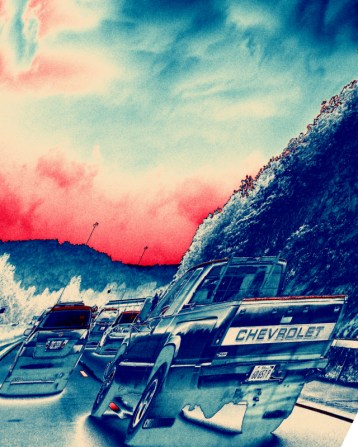 Imagine a movie scene from the seventies or eighties– a car veers out of control over the edge of a cliff and tumbles end-over-end finally exploding at the bottom of the ravine. We’ll never know who that unfortunate driver was. Only it doesn’t really happen that way. The MythBusters sent several cars careening over cliffs (sans driver) but they couldn’t get one to explode, even when they damaged the gas tank. Writers are sometimes under the illusion that an exciting event like sending a car tumbling over a cliff will create a bang in their story, only to have it fizzle out just like the cars failing to explode for the MythBusters.
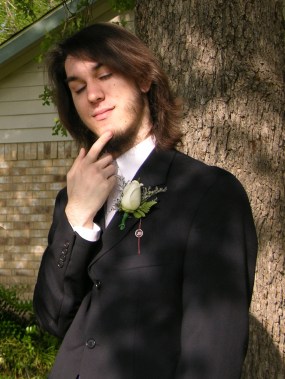 Recently I started reading two different stories with a peculiar similarity. In one the romantic male lead had olive skin, and dark hair and eyes. The other had tanned skin and raven black hair–both variations of tall, dark and handsome. In both tales of romance, the young man meets the adolescent girl’s father first, as the daughter observes him. In one narrative, the tall, dark and handsome man would defend the young woman, and in the other he would betray her. Can you guess which?
 Many writers believe that most readers will only read a novel that grabs their attention from the first page. A dramatic episode must unfold in the first paragraph. I witnessed a workshop in which writers were coached to do just that. The leader liked anything with an immediate crisis, imminent death being the most desirable one–such as a character waking up in the hospital with all the tubes attached, or her favorite, the one facing execution.
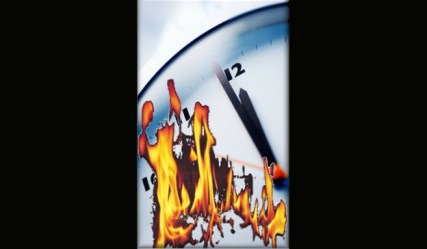 Since the popularity of The Hunger Game series and the awards won by All the Light We Cannot See, a trend is fiction is the use of present tense. This style is touted as making the character’s actions more intimate to the reader, but it is not a new fad. I recall reading the Babar books to my own children, who were quick to pick up that these 1930’s children’s classics sounded different. They were penned in present tense.
 Walking beneath the of faces of stars glowing from two story tall billboards, I glanced down at the stars embedded into the side walk—at least when they were not covered by the feet of the crowds on Sunset Strip. Above me are giant billboards–evidently Mary Poppins is coming back and so is M. Night Shyamalan. However, I must also look down occasionally to ensure I didn’t trip over a homeless person sleeping at the edge of the sidewalk, curled up in a blanket on hard concrete in the relative safety of the daytime. It was fun for a while, this walk of fame, replete with costumed super heroes who may be sleeping on the streets with the homeless if they don’t get enough tips. It is also unnerving—a reminder of the great divide when it comes to performers.

 Write about what?