The flaws of a likeable character

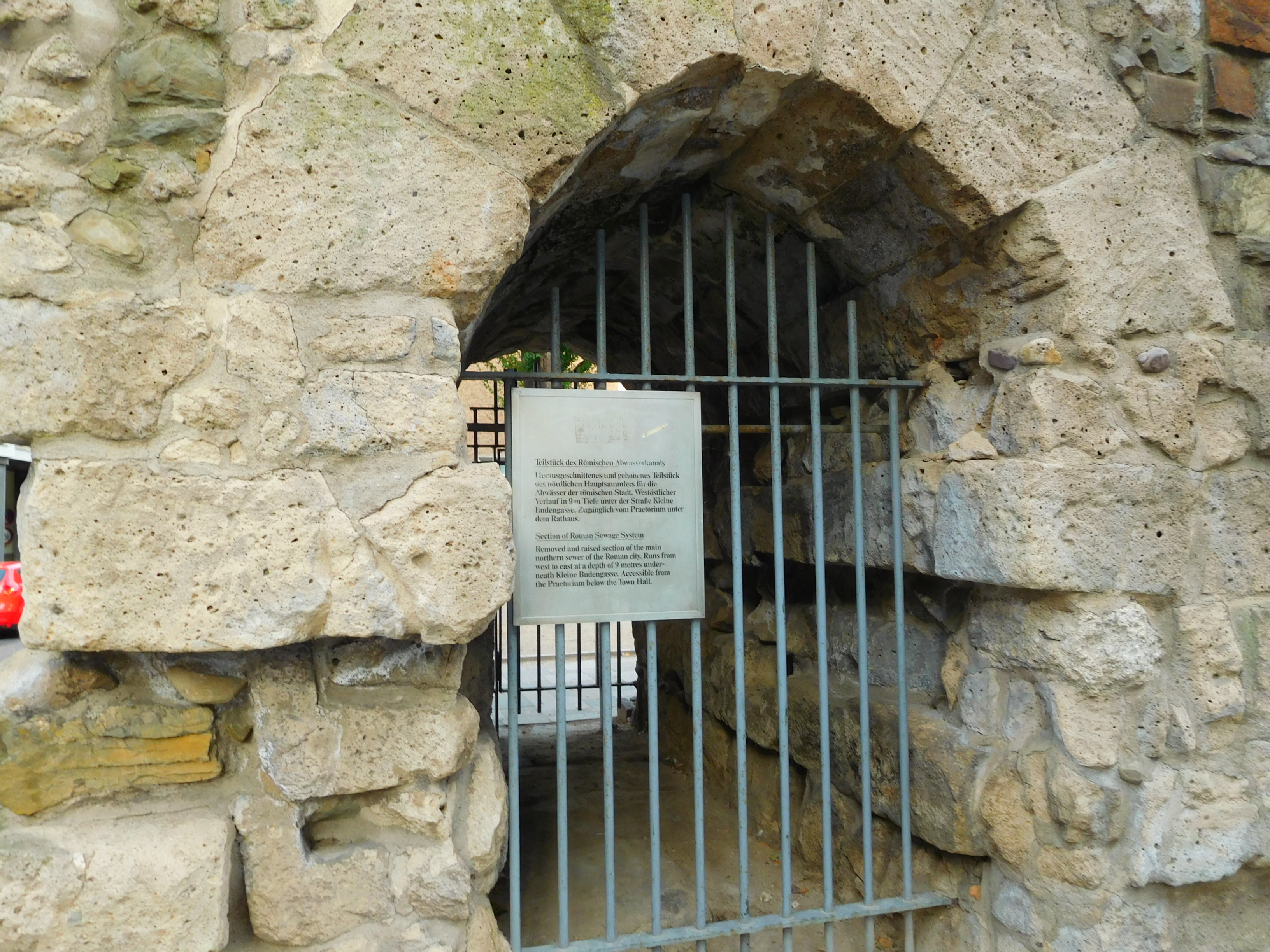
Real flaws are like an iron-barred opening. They are real barriers. The hero must discover the key to break out of the predicament.

Enchanting books that I read in my childhood, which still hold up under my scrutiny as an adult are the ones I turn to for examples of how to write. One such classic, The Door in the Wall by Marguerite de Angeli, is a model for creating character flaws. This historical fiction deals with a boy named Robin whose hopes of becoming a knight are dashed when an illness leaves him with almost completely paralyzed legs.

He doesn’t regain the use of his legs, but he is forced to crawl on the ground and learn new skills such as swimming. He doesn’t solve the threat facing the feudal estate where he resides by himself but gets help from a monk. Robin is a character with a great deal to learn. His flaws, partial paralysis and lack of confidence and knowledge, are major problems that simply cannot be ignored.

That slim volume has inspired the way I create imperfections in characters. They get major flaws, not simply interesting minor ones. These are part of the conflict—difficulties that either have to be dealt with or be accepted by other characters. What kind of shortcomings can characters have that don’t make them unlikeable?  

  1. Physical flaws such as missing limbs, stammering, weak heart, or unattractiveness—However, physical ugliness can be a challenge to overcome for a female protagonist because readers may assume ugly is unlikeable.
  2. Irrational fears of large crowds, closed spaces, heights etc.—These are flaws of the mind similar to physical weaknesses, and a favorite ploy in the stories that Hitchcock used. The protagonist cannot make the transition to hero with such a fear hindering them.
  3. A mental illness—John Nash, the schizophrenic and Nobel Prize winner who suffered from schizophrenia, was noted as being arrogant, uncaring and not particular likeable in real life. The key to changing this image in the fictionalized account of his life was to show that he was attempting to do something valuable for others, even if he was deluded.
  4. A different way of relating to the world—A personality disorder or neuro-atypical pattern of thinking may result in strained relationships with people around them.
  5. Proud, egotistical, or critical of others—These protagonists have enviable abilities, but their inflated self-esteem produces its own kind of heartache. This is the hardest flaw to pull off and still have a likeable character. One lesson they must learn is a degree of humility.

The character arc that deals with these physical, mental or personality flaws is as important as defeating the enemy or a devious undermining acquaintance. If you really want to annoy a reader, create a character that does everything right with little to no effort.

Posted in Writer's resource | Leave a comment

An Impossible Fantasy

November, the month when many strive to complete a 50,000 word novel (or novelette according to today’s standard). Would I consider that an exercise stretching me to my limit? Or, an impossible fantasy? For me it is definitely the second. No matter how well I have thought out what I plan to write, I can only live a few hours of my day recording what is in my head. Then, ideas clear out like cockroaches fleeing from light. I must arise from my desk chair, fix food, clean up the kitchen, rearrange my closet, and straighten my bookshelf. Then, I find an interesting title that I haven’t read, yet. Five hours later, I am finally back to writing again.

However, over the years I’ve found ways to increase my written output. So, I do have some advice for those that want to attempt this impossible challenge. The easiest way to create the most content in the least amount of time is to write what you know. Your own life story may not be that interesting, so don’t feel confined to the truth. If better ideas spring up, or you decide to appropriate events that happened to friends or celebrities, remember that you are writing fiction, not a real autobiography. With a word processor you can use the search and replace feature to alter the people and places after you are finished. This also relieves the fear of being shunned by family members who don’t appear in the best light.

However, even when writing a novel based on your own life you need a plot. There must be a challenge you that you face or a problem to overcome; whether you succeed, fail, or just accept your fate. This requires an outline to keep your story on track. Think through the basic plots repeated in myths and fairy tales until you find one that mimics your life, at least partially. The story line found in Cinderella is often used. It starts out with recalling an innocuous event that shifted your life from pleasant to some degree of miserable. Then, after three nights at a ball—make that three different attempts to overcome the problem—you encounter one last disaster, run away and prepare for defeat. However, your fortune shifts due to someone’s gallantry or pure grit on your part.

Remember, this is still a scant outline that will need embellishment, lots of it. The initial event, each of the attempts to overcome the problem, and the final triumph each require multiple scenes. As a person who has a number of flash fiction pieces under my belt, I find a complete scene should be around 1,000 to 2,500 words. Using that word count would leave you writing 20 to 50 scenes, or an average of 35 scenes (which mean slightly more than one per day for 30 days).

The number of scenes will not be the same as the first two sections will have more. There might 12 scenes introducing the problem, and 15 scenes in the attempts to solve it. Then, for the ending stretch, when fortune shifts, only 8 scenes would be required. The next obvious task is creating a brief (one or two sentence) description of what occurs in each scene. That is not an easy task. In fact you might consider it Sisyphean.

What do you do? Turn to the same place as the word Sisyphean originated, Greek myths. Fortunately, some of the work has already been done for you by Joseph Campbell who reviewed mythology to create a list of events known as the Monomyth, or the “hero’s journey.” This design includes three major divisions: 1) The Departure, in which you (the hero) view your ordinary world and come across an inciting event which lures or forces you to leave it; 2) The Initiation, in which you venture into this unknown world with its unexpected hazards and actually grow into someone more heroic though trials and tests (three or more is good, just like in Cinderella); and 3. The Return, in which you triumph and return to your ordinary world. The benefit of the Monomyth plot is that Joseph Campbell has identified 17 different steps to spice up your story.

When or if you hit the goal of 50,000 words, you will still be less than half way to a new novelette. The next months will be consumed editing and rewriting until this morass of words makes sense and flows in a manner to keep the reader interested. So, while I will not be attempting this, best of luck if you are!

Posted in Writer's resource | Tagged , , , | Leave a comment

Food for the imagination

How many movies make you think?

The movie viewer usually does not have to think as much as a person reading, with one notable exception—the occasion extraordinary science fiction film. These films were once an outlet to comment on society, often with a critical view, such as Silent Running  and Fahrenheit 451 (which made a few unfortunate detours from the book). As recently as ten years ago I was intrigued by a British film in this genre entitled Moon, which ending in a startling critique of the lack of ethics dealing with humans in a profit driven society. But, very few Americans even know about that film.

However, when I watch many of Hollywood’s current science fiction offerings, I feel I am viewing slick versions of the early, moody Hitchcock films shot on another planet. Watching actors dash through dark sets is like trying to find the bathroom in the middle of the night in a strange house. Despite listening intently in order to absorb what is happening, I still must depend on the obligatory explanation provided by dialog near the end of the film.

The invention of CG special effects has made creating the illusion of mystery easier. These scenes are jam-packed with mood, but the startling special effects make it difficult to attend to what is actually happening. Bird’s eye views of gleaming space ships and whirling galaxies are accompanied by the dance of flickering lights, and punctuated by the occasional flare of an engine.

As the camera zooms in and out, my attention wanders because frequently not a lot is happening beside special effects. When action finally occurs, the close-up view will slam it right into my face. So, I’ve also learned not to worry about missing any clues as to what is occurring. The dialog in the next scene will be an info dump that tells me everything I missed.

As I view these films, the question asked in an article by David Sterritt almost twenty years ago still echoes in my head, “Are we witnessing what some critics call the dumbing down of American cinema?[1] Actor Simon Pegg also notes the dumbing down of movies in the U.S. “Obviously I’m very much a self-confessed fan of science fiction and genre cinema but part of me looks at society as it is now and just thinks we’ve been infantilised by our own taste.”[2]

So, I continue to watch science fiction movies not caring if I miss anything important in them, because there often isn’t much important to miss. I bemoan that producers seem ignorant of what I really desire—movies that have characters with real moral struggles in which the ending isn’t obvious and dialog subtle enough that I actually have to pay attention.

[1] Are Hollywood movies being dumbed down? Christian Science Monitor, June 15, 2001

[2] Simon Pegg criticises ‘dumbing down’ of cinema, The Guardian, 19 May 2015

Posted in Writer's resource | Tagged , | Leave a comment

The icebox dilemma

The rapid pacing of movies allows script writers and directors a few freedoms that would be criticized in novels. They may stir in a scene that audience that reels in the audience in with mounting tension, but which ultimately does not make sense. Alfred Hitchcock is said to have referred to the incongruities in a scene in Vertigo as the kind that “hits you after you’ve gone home and start pulling cold chicken out of the icebox.” From that quote, we’ve gained the movie term “ice box scene.”

In Hitchcock’s Vertigo a woman named Madeleine is able to walk into a hotel, completely unobserved. She then enters the room of another woman that should be locked. There is no explanation of how Madeleine obtains the key without the desk clerk seeing her, or how she is gains access to the room. However, the audience is too terrified by watching the height fearing character played by James Steward on the roof of the hotel to question these plot wholes.

The screen writer cuts out exposition for the sake of economy to keep the movie on its scheduled pace. The movie viewers take in exciting scenes at face value in a movie and don’t consider why they occurred. However, a novelist must fill in between the scenes or provide a short exposition to connect events. Otherwise many readers will become alienated by events that don’t make sense. The constant “showing” that occurs in films is not feasible. Sometime the author must take a break from the amount of words required to show all action and simply tell the reader what has occurred.

The early action scene in Matewan (a film about a West Virginia coal miner’s strike) involves a train full of  replacement workers or “scabs” being brought to Matewan by the company. Unexplainably the train stops in the middle of the woods, not at the mining camp, to drop off these new workers. The strikers immediately appear to attack them. It seemed as if the whole point of the early drop off site was to expose new workers to a danger that the mine owners would want to avoid. So, why did this happen? No explanation is given. Movie viewers have no time to question why this occurs. The “scabs” re-board the train as if begins to move and the viewers watch breathlessly to see how the last of them, a main character, manages to be pulled into the rolling train by his friends. Then, the scene immediately switches to another setting in the remote mining town of Matewan.

The writer that attempts to keep action moving at the pace of a film faces the icebox dilemma. How do you deal with making sense without pausing the action in between scenes to fill in the rationale for the string of exciting events? Remember, you are writing a book, and reader will expect to think more than when watching a film. With their mind engaged they are more likely to detect plots holes. So, the writer of a novel must take to time to fill in gaps in logic and avoid “ice box scenes.” When the reader gets hungry and visits the refrigerator for cold chicken, he should be questioning what will  happen next and not doubting the likeliness of what just occurred.

Posted in Writer's resource | Leave a comment

The writer’s secret sauce

Movies have an advantage over the written word when it comes to presenting the emotions of your characters. For example, you read that a man “had his lips raised in a half-smile on one side while he eyes narrowed.”  Did you realize that he was smirking? How about “the woman’s lips curled up, but corner of her eyes remained smooth and unwrinkled.” That is the evil smile, which flashes across the face of actors to show you how devious the person is. If we see these commons facial expressions, we recognize them. However, discerning them from words is more difficult. But, the novelist has a secret sauce that moviemakers can only employ with difficulty— presenting the internal thoughts of characters with clarity and intensity.

In my previous discussion or writing movies versus novels, I described the opening Matewan, a quasi-historical movie ending with a violent massacre during a minor’s strike. The audience is introduced to the internal thoughts of an adolescent coal mining boy at the opening scene. This internal view was so brief that I didn’t even catch it until the end when the denouement was told from his viewpoint as an adult. However, I realized this adolescent was the character with the greatest change arc. I imagine most audience members also failed to catch this subtlety. Despite doing well with critics, Matewan fared poorly with audiences.

The same difficulty detecting the character’s internal view occurred when I viewed Mad Max 2 (known in the US as Road Warrior). I puzzled who spoke the opening and closing sequences of this movie. I immediately questioned “Whose head are we in?” only to be told that it was the feral boy. (This knowledgeable viewer had seen the movie too many times.) This feral boy only grunted and growled during the film, so his speaking voice was not obvious.

Viewers are used to movies shown from the omnipresent view. To accommodate the rapid pacing expected in a movie, the audience sees the actions of both hero and villains and any important characters. Internal thoughts are rarely voiced. If a movie protagonist is stranded alone, due a plague, a wreck on a tropical island, or an incident during the exploration of Mars, they will typically start talking to something with a face, such as a bust, a skull, or a blood painted volleyball as in Castaway. These conversations are essential for the audience to understand the plot.

However, the novels are not only allowed to move the plot forward via peeks of inside thoughts, they are expected to do this. (The only restriction is to avoid head hopping—moving from one person’s thoughts to another’s without a clear break.) Do not be afraid to use this one benefit to spice up the written word to your best advantage.

Posted in Writer's resource | Leave a comment

Picking the wrong recipe

The view from Hollywood Boulevard.

How often have you seen movies used as examples on how to write a novel? It’s a shortcut authors employ because familiarity with movies tend to be greater than books.

Movies only consume an hour or two of our lives at a time, and do not require the continued concentration and effort of reading. The plot of a movie is typically the length a few connected short stories or a novella. But, the difference between the two type of media begin at the start. I’ve heard repeatedly that a book must grab the reader in the first few pages. Because a movie has a slimmer plot covered in a shorter time, a book will almost never be as tightly paced.  However, the early attention grabbing requirement that we assume readers are applying to books means that an author has to shove what occurs for the first 10% of the movie into less than the first 1% of the book. Ouch!

Novelist feel forced to introduce the major conflict on the first pages, ignoring the need for portrayal of the characters who play out this conflict. Therefore, the reader is forced to figure out the normal behavior of major characters while reading about an abnormal event. The author must find some unobtrusive way to provide backstory, without shoveling it into the work in chunks large enough to choke on. However, this rarely happens. So, the reader may have to tolerate the initial conflict being shelved until the introduction to the characters occurs.

 The author has an even greater handicap because visual images and sounds portray a setting more rapidly in film than in the written word. Recently, I watch a fictionalized historical film called Matewan (very loosely based on a massacre occurring between striking coal miners and Baldwin-Felts detectives). There was a minute or so panning the disgruntled coal miners climbing out of the mine into daylight, and an immediate switch to the new crew in a cramped box car. This jump from one setting to another would be disconcerting in a book. Scene changes require description of settings, which means more words. During the Matewan scene in the box car, the next set of miners listen to the reading of company rules, which are obviously unfair based on the expressions of the newcomers barreling down the tracks towards the mine.

A modern book would start in the middle of the action—after the train stops and disgruntled miners attack the new replacements. But, only those with a prior understanding of the situation would not be confused by a movie opening in the middle of this skirmish. Instead, movie makers offer a bit of local color by showing the setting and close-ups of important actors, especially their expressions. This lets the viewer into their minds at the beginning. The boring info dump about the company rules remained in the movie even though this would be truncated to a few words in a novel. The movie-going audience is tolerant of a slower start because they expect less requirement to use their own imagination than a book asks from readers.

This is only the start of my discussion. So, as readers please be patient in this exploration of why it is not the wisest tactic to create a book based on the same principles that drive a movie script. And, if you are discussing how to write books, please keep that in mind.

Posted in Writer's resource | Leave a comment

The recipe for a boring book

Recently I read a description of a street scene which included the cry of a woman as she hawked hot banh minh. The very use of the word “hawked” which denotes selling goods on the street and banh minh, which is a hybrid sandwich (French bread stuffed with Vietnamese cuisine) would frighten readers who had no connections with that culture. For me, however it was a quick way of expressing the sounds, smells and sights of the street vendor in Saigon. I could even hear the particular shrill intonation of the Vietnamese woman which is not the same as American female yelling.

Whether a reader perceives writing as rich and interesting is based on the reader’s comprehension and experience. When the setting is not a familiar one, it requires ability to deal with new words and culture to avoid pulling out of the story from fear of the unknown. A higher level of reading comprehension provides the ability to deal with the greater mass of information that goes into a more complex work. Also, if the reader has a larger vocabulary “poetic” writing is not only easier to comprehend, it appeals more because of the verbal uniqueness.

An interesting book for a portion of the population can be boring if it is too simple or too complex for you. What make a piece of writing boring depends on the readers as well as the writer. So, this is my criteria for a boring book:

Flat characters—the reader is aware of their physical appearance but little is revealed about interior quirks, frustrations or struggles. They may have only a few traits described, and these are static, so the person never grows or changes.

Irrational characters—there is a temptation to have antagonists do things simply because they are evil or crazy. Insane people may indulge in magical thinking, but they still have reasons for what they do. Characters don’t take actions simply to beef up the plot. Characters should propel the plot rather than the other way around.

Improbable plots—too many conflicts are solved quickly, and multiple coincidences are required for the resolution of the problem. A poorly developed or simplistic plot is usually indicated by one of the following:

  • I can figure out pretty much what is going to happen early in the book.
  • The solution to any mystery is all jammed into one chapter at the end.
  • The various characters, who should not know as much as the reader, seem privy to the reader’s knowledge.
  • The author uses a lot of sex and/or violence to keeps the reader’s attention.

Impoverished descriptions—overused phrases—are boring. So is the reverse, ornate writing in which the author spends too much effort on the word choice rather than developing an intriguing flow of language. I want to visualize the scenes and prefer poetic writing as long as it doesn’t disintegrate into purple prose.

Just having an thrill-paced first chapter will not keep my attention. In fact, I don’t even require any excitement in first chapter. The second or third one is more important as long as the tension in the story is building. I have put down a lot of books that started out in an interesting manner only to devolve into one of the problems described above.

My friend, who is intelligent when it comes to math, computers and logic, simply could not get into The Lord of the Rings trilogy. I found it exciting early in the first book. My daughter thoroughly enjoyed Cry the Beloved Country, a book which she admitted held surprises for her until the very end. Many of her classmates were bored by the poetic language describing the racial struggle. So, I pay little attention to how many stars a book has on Amazon or Goodreads. If it has an average of five stars, it will probably be too simplistic and too packed with unrealistic plot twists or lurid details for me to enjoy. I find books hovering below the “perfect” review range are typically much better.

Posted in Uncategorized | 1 Comment

Unnerving new genres

NY toll road (1) _a copy

Slipstream refer to airwaves around an object that is moving ahead you. Move into slipstream–if you have enough nerve to follow another vehicle that closely–and your travel will become faster and easier. Slipstream is also a writing style. It is gaining acceptance as a technique or genre (depending on who you ask). As a genre it is a story that depicts unnatural events found in fiction that are not already categorized and codified in another genre of speculative fiction, such as the fluid movement within time from past to present to future or in any other order without distinction. Supernatural events in slipstream often occur naturally, unaided by machine, technology or even psychic power.

The best example of this that I could offered happened recently. Driving out of my neighborhood in Oklahoma City, I almost immediately passed a sign signaling, Roads closed ahead. Grumbling I ask, “How am I going to get around this as my destination was only a few blocks away. So I continued doggedly on and found that the road was not closed, not even partially blocked. “The sign lied.” I snarled.

“No,” my daughter replied. “At some time in the past, this road has been closed and at some time in the future, it will be close. It is simply not closed right now.

I suppose that with roads in Oklahoma City frequently subject to such temporal closing, I should be grateful for slipping into a time in which the road was open to traffic. In slipstream a person may be traveling in his mind to the past or in the future and back in, often in a way that connects seamlessly to the present: the same season, same place, same family.

When reading walking the clouds an anthology of indigenous science fiction edited by Grace L Dillon. I noted how slipstream differs from time travel in European and American canon. Slipstream travel does not require going through a worm-hole, a hole in the time space continuum, sophisticated technology described by HG Wells, or even the sinister merry-go-round of Ray Bradbury. In his classic “Something Wicked This Way Comes” the ability to manipulate time by moving backward and forward in age results in a painful experience and even death for one individual. In the literature of Native Americans and other indigenous authors, this movement in time is considered a natural movement between the curves of the spiral history.

So, if you want to try a new genre that defies categorization, experiments with the other science fiction genres and ignores theirs conventions, try writing in slipstream.

Posted in Uncategorized | Leave a comment

Please make me think

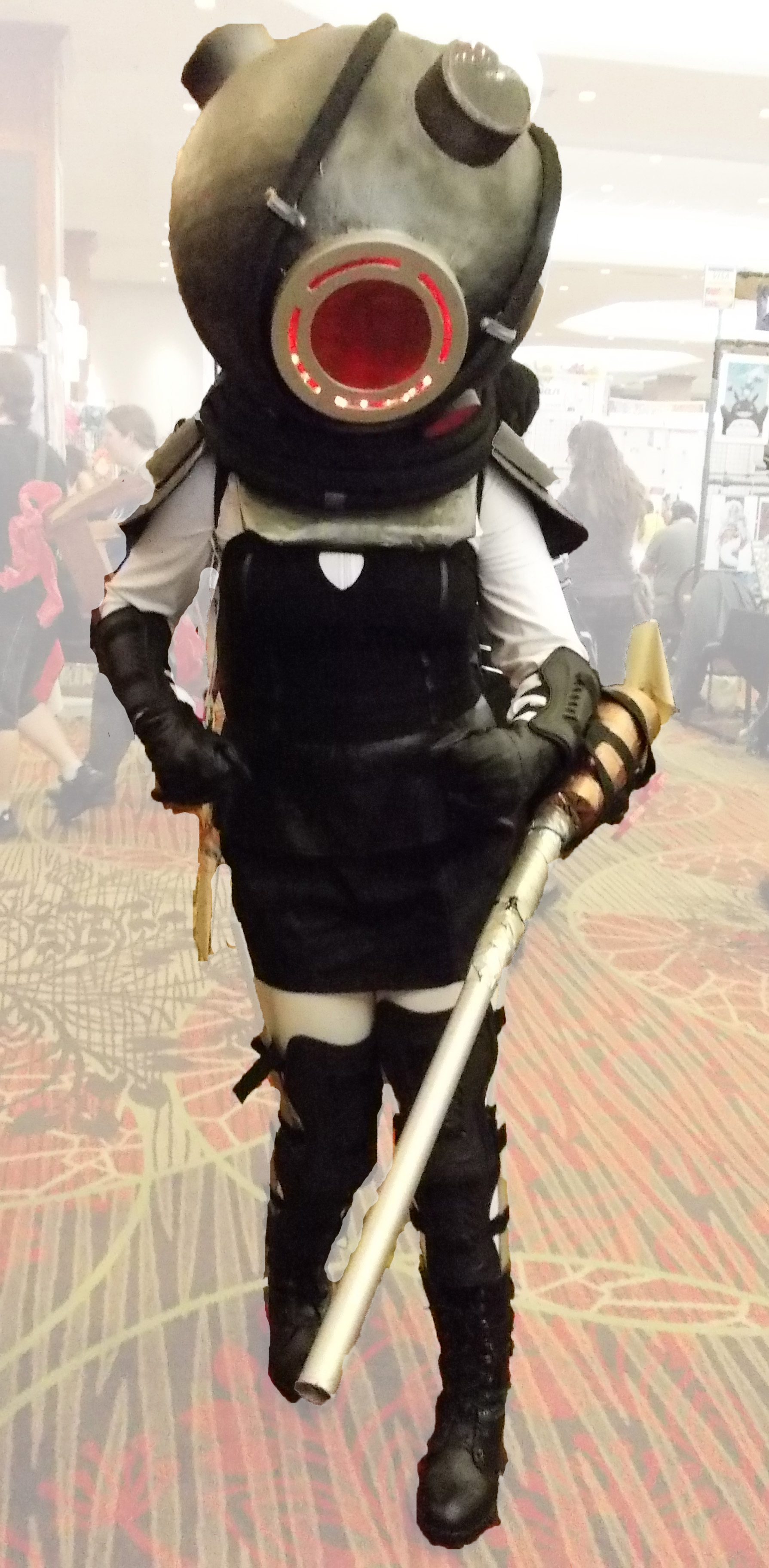
Bioshock character

Science fiction in films was once an outlet to comment on society, often with a critical view, such as Fahrenheit 451 and Silent Running. As recently as ten years ago I was intrigued by the British Science Fiction film, Moon, which ending in a startling critique of business ethics. But, very few Americans even know about that film.

However, when I watch science fiction produced by Hollywood now, I feel I am viewing a slick version of an early Hitchcock short. It was shot at night with existing light, and watching it was like trying to find the bath room in the middle of the night in a strange house. Because of the low lighting, I had to watch and listen intently in order to absorb what was happening. But even that is not true of current films.

The invention of CG special effects has made creating the illusion of mystery easier. There are not only shadows, but bird’s eye views of of gleaming sky space ships and whirling galaxies, accompanied by the dance of flickering lights, and punctuated by the occasional flare of a engine. The camera zooms in and out, leaving me both spooked and dizzy.

These scenes are jam-packed with mood, but the special effects make it difficult to attend to what is actually happening. And, I noted a habit that I’ve developed when a scene like this starts in modern movies. My attention wanders because frequently not a lot is happening beside special effects. When action does occur, the close-up might slam it right into my face.

So, I’ve also learned not to worry about missing any clues as to what is occurring. The dialog in the next scene will be an info dump that tells me everything I missed. As I view these films, the question asked in an article by David Sterritt almost twenty years ago still echoes in my head, “Are we witnessing what some critics call the dumbing down of American cinema?[1]

Actor Simon Pegg also notes the dumbing down of movies in the U.S. “Obviously I’m very much a self-confessed fan of science fiction and genre cinema but part of me looks at society as it is now and just thinks we’ve been infantilised by our own taste.”[2]

So, I continue to watch not caring if I miss anything important in the movies, because there doesn’t seem much important in them. And, I bemoan that movie producers seem ignorant of what I really miss–movies that have real characters with moral struggles, in which the ending isn’t obvious, and the dialog is subtle enough that I actually have to pay attention.

[1] Are Hollywood movies being dumbed down? Christian Science Monitor, June 15, 2001

[2] Simon Pegg criticises ‘dumbing down’ of cinema, The Guardian, 19 May 2015

Posted in Drama and movies, Literature, Story structure, Trends in books, Writer's resource | 1 Comment

After the fall

The term post-apocalyptic brims with images of ruins, remnants of civilization crumbling around the world. Meanwhile humans a reduced to living like prehistoric hunter gatherers. Honestly, if a novel pictured how life improved for humans after the collapse of civilization, it would be considered a bit boring. A survey of post-apocalyptic books doesn’t reveal any in which the world has improved. Most are about turning society around to head in the right direction. Some novels blame the problems on “partial” people such as zombies, or mutants, essentially forms of humans we feel okay hating. Their plots are a war, in which the survivors who maintain their humanity and seem more like us, battle the ones who do not. I prefer post-apocalyptic books that deal with humans as they are.

The Postman by David Brin may seem like a dystopia, but it is a society pushed back to a primitive time by plague. Oddly enough, many of the people the postman encounters are willing to help him. And there are some genetically enhanced people on both sides of the conflict. In fact, this hopefulness at rebuilding society seems is the theme of the book. However, I actually prefer to movie to the book. There are large differences in the plots, such as the movie lacks super computers or genetically enhanced people.

The Last Book in the Universe by Rodman Philbrick is a YA book that deals with preserving literature is a gang run society that somehow survived an unspecified environmental catastrophe outside the protective bubble. But it becomes evident that the gangs are evolving into a kind of useful government. Those inside the bubble ate giving those outside a new technological entertainment that feeds directly to the brain. This addictive way to escape their troubles is the real problem. So, the actions of some residents of the prefect society in the bubble are the major problem. This book doesn’t really blame either side as much as it deals with the first steps in reuniting the two separated groups of humans.

It is true that humans are bent on achieving the power that allows them to destroy the earth in A Canticle for Leibowitz, Walter M. Miller Jrbut there is always a small group or remnant that remains. The concept of the monastery preserving knowledge and dignity of mankind in the same way that many did medieval times is very interesting. As is the fact that the action in this book spans millennia. This is probably my favorite post-apocalyptic book that ends on an optimistic note (although a very bittersweet one).

Posted in Ideas for writing, Literary devices, Novels, Story structure, Trends in books | Leave a comment