Fiction from my Family Tree

One of the reasons that there is “nothing new under the sun” is because human creativity depends on our experience. But, I have only lived one life. Rather than writing an autobiographical series about a rather sedate existence, I would choose to record a fictionalized history of my ancestors.

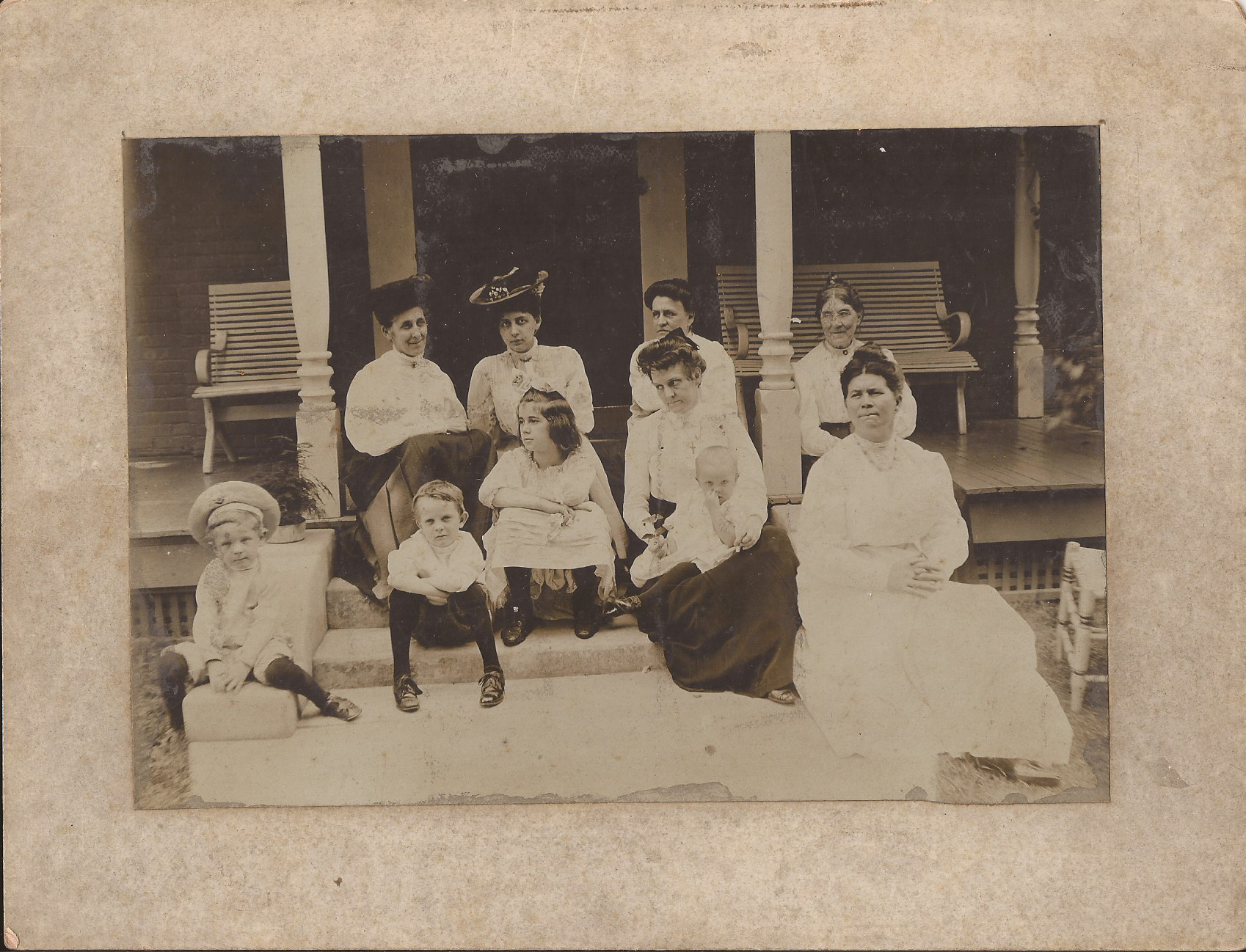
In my family tree exists a woman, who is a daughter of a Separatist from Nottinghamshire, England. She moved to Amsterdam and married a local Dutchman. I would have to create a story to show how they got together, most likely in spite of parental protests. I also wanted to know why they ended up in New Amsterdam (currently New York) rather than in Massachusetts with the rest of her kin.

Research was in order. After watching a special about William Bradford. I discovered the Separatists, first headed to Amsterdam. They didn’t like the free-wheeling culture, or the poor wages. This group, whom we now call Pilgrims, returned to England seeking passage to the New World. First, they hired the Speedwell, which did not speed well and was not even a seaworthy ship in the rough oceans. They returned and left again with only the Mayflower. After suffering severe weather during the crossing, the pilgrims were blown off course as they neared their original destination of New Amsterdam. But, the captain did not want to risk going against the violent storms to reach Manhattan. That might sink the Mayflower as well. So, he chose Massachusetts, the closest place to land.

In historical fiction, when the facts are few, the door is open to be creative.

Another family reached New York in the seventeenth century by a roundabout way. The man was Sephardic Jew, who left Seville in the late 1500s when the Spanish Inquisition put him in danger. He traveled east to the country that had been Persia and married a woman from that region. Then, he headed west again, all the way to the Caribbean isles, employed by the British to find the source of the gold in these islands. Of course he never found these non-existent goldmines. The British who wasted their money were unhappy. He fled to another island. His son eventually made his way to New Amsterdam.

That’s two stories, the joining of these two adventurous families is a third. But, evidently their descendants’ lives were sedate like mine. I have found nothing more than a list of marriages and births. I would have to recreate the bulk of a fictional account on my own. There is a large market for historical fiction. It does require time for research. But, when the facts are few, the door is open to be creative. 

Personal photo belonging the Neree H.Wood. Photographer unknown

Posted in Literary devices, Literature, Trends in books, Writer's resource | Tagged , , , , , , , , , , | Leave a comment

What’s the Big Deal about Readability?

Today, writers rarely use semicolons, which provide a level of pause between a comma and a period. Authors have declared war on adverbs, forms of the verb to be, or filter words that identify a character’s thoughts. Others want to rid writing of dialog spelled as it sounds. These changes are touted as increasing readability. I suppose the goal is to create text so easy the reader forgets that they are reading.

Despite my experience with a number of classic books written by authors from the British Isles, I don’t recall an overuse of semicolons. But, American author Herman Melville was quite fond of them. I lived through reading his massive tome, Moby-Dick for American Literature class. Despite its 10th grade reading level i and meandering text, this deadly duel between a captain and a white whale captured the attention of America. Moby-Dick remains his most popular work, at least in abridged versions rewritten at a lower reading level.

If you’ re familiar with Adventures of Huckleberry Finn by Mark Twain (reading level 8th grade), you may grasp the difficulty of understanding regional dialects written as they sound. However, the prize for most incomprehensible regional dialect belongs to Emily Brontë. In Wuthering Heights, the servant Joseph’s words in Yorkshire dialect are unintelligible to at least 95 percent of English speakers today. Ah suppose eur mooar fowk could understan’ it i’ ‘a tahhm. (Yorkshire for “I suppose more people could understand it in her time.”) I read Wuthering Heights with footnotes translating this brogue into English received pronunciation. Later editions (reading level 6th grade) revised this servant’s dialogue within the body of the novel.

In the United States today, far more people can read than during the lives of these three authors. However, adult literacy is in decline.

In the United States today, far more people can read than during the lives of these three authors. However, adult literacy started its decline around 2005 ii before the COVID virus. Prior rates fell below the Program for the International Assessment of Adult Competencies (PIAAC) international average. iii Still, the recommended readability level when writing for the general public in the U.S. is seventh to eighth grade.

Evidently, the New York Times best-selling authors are not writing for the general public. Ben Blatt has researched statistics on each New York Times bestseller from 1960 to 2014. The eighth grade was the median reading level for these best sellers in 1960. Today that level is sixth grade. The largest number of bestsellers fall into either the thriller or romance category. Since the 2000s increasing numbers of novels in these two genres are written at sixth grade level or below. iv

Writers might have more to worry about than semicolons, passive tense, and adverbs.

Photo by K.N. Listman


Posted in Fiction in education, Novels, romance, Writing trends | Tagged , , , , , , , , , , , , | 1 Comment

How Creative Do You Want to Be?

What can creativity do? Provide me with insight into yet to be imagined stories, allow me to develop amusing ways to express unpopular opinions, fill up my time when I am bored, or fritter away my precious time when I have work I must get done that I simply don’t want to do. 

People are often classified as creative according to their occupation, with writers, artists and composers getting top billing. Not everyone in these professions is imaginative. Although some people may be more inherently creative than others, I would not classify them according to their occupation. How inventive a person is depends on how much they esteem originality. However, at some point, their ideas need to actually work. Creativity in literature can be unnerving to readers shy away from techniques like stream of consciousness or story told completely as dialog. Extreme experimentation means extreme confusion for some readers, while a few still enjoy works that push the envelope.

The ability to create and innovate appears in all fields.

      The ability to create and innovate appears in all fields. As an electrical engineer my father developed new household appliances/products. One of those I tested was the portable vacuum designed to replace the clunking roll-around canister type. It hung from my shoulder by a strap as I walked through the house poking the long hose like an elephant nose into dusty crevices. His inventions required a knowledge of both engineering and creativity. He probably assumed what was manageable for me as a ten-year-old would work as a new design. However, it also required the approval of the marketing department, and that never occurred. 

      My father wanted me to be an engineer, too. However, I gave into the lure of a typical creative field and majored in art in college. Then, I spent several years working both as a graphic designer and a photographer. Fortunately, I had some positions where my artistic projects required imagination, and I was not just cranking out ads all day long. However, this field changed and new computer technology could do the work that used to require many graphic artists. My company at the time tried to place most of us no longer needed artists in new positions. But, I also had a degree in English, I ended up writing lesson delivered via computer.

      As a graphic designer and photographer, I wrote and publish poetry and flash fiction on the side. However, when my new profession required eight hours at a desk writing, I found myself drawn to watercolor painting and nature photography outdoors. No matter the reputation that my profession had as far as creativity, I preferred exploring the arts in a manner that wasn’t currently paying the bills. Making a living producing new and unusual written work is not a form of play. It takes as much discipline as it does imagination. But if the thoughts inside must find their way out as words on a page, you are stuck with being creative.

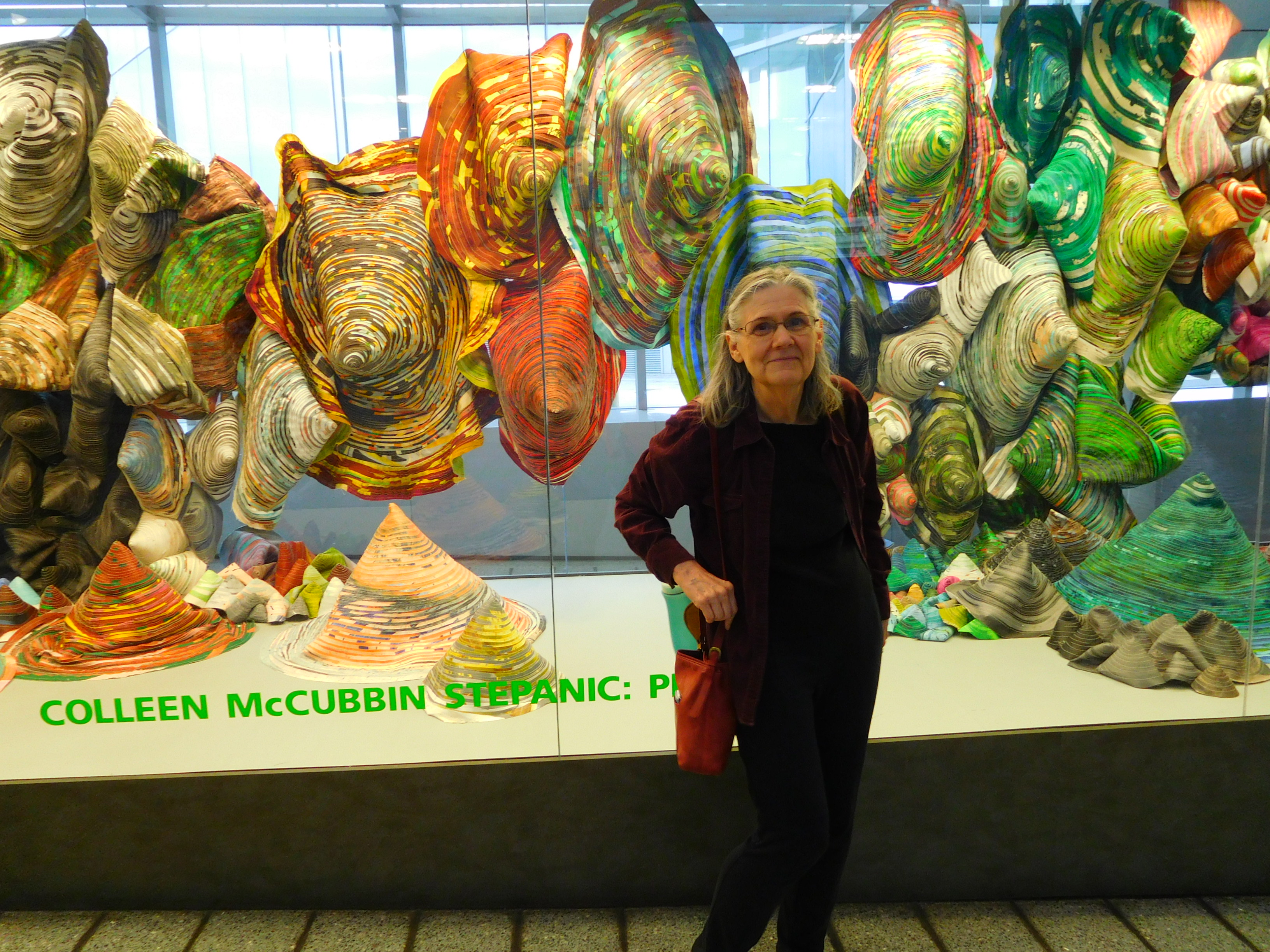
Photo of artwork by Colleen McCubbin Stepanic by J.W. Listman

Posted in Ideas for writing, Literature | Tagged , , , , , , | Leave a comment

Imaginary reality

Everyone writes from their experience. That is all some writers ever do. Henry David Thoreau only recorded his life experiences. James Baldwin and Ernest Hemingway wrote semi-autobiographical novels in addition to non-fiction essays and articles. Hemingway’s fiction contains thinly veiled characters who existed in real life. In his first novel, The Sun also Rises, the group of expatriate friends were recognizable enough to be embarrassed to discover the author’s opinion of them. Author’s friends don’t want to see themselves in the form of a character behaving badly, or even worse, the major villain of the novel. When a book is fictional and not a biography or autobiography, it is polite to alter characters taken from real life so they are not identifiable, at least to other people. 

Writers often start with their own experience because that is the easiest way to create a plot. Louise May Alcott and Leo Tolstoy both wrote lengthy novels including people who are easily recognized as their family members in kindlier portrayals. However, most authors run out of material if they continue to write about their own experiences or those of family members, even an adventurer like Hemingway. 

Authors will also write fiction about historical characters who are no longer living, using their actual names–one of my favorite kinds of fiction as an adolescent. However, I’ve often felt that authors owe it to their reader to note what is factual about historical characters, as massive portions of these novels are created in the mind of the author. I recall helping the middle school student who chose to write a biography of King Arthur cope with lack of factual information. I explained that he probably never existed. The teacher who allowed her to choose him as a historical character should have been aware of his fictional nature. However, many people are not.

I’ve often felt that authors owe it to their reader to note what is factual about historical characters. I recall helping a middle school student who chose to write a biography of King Arthur cope with lack of information because he may have never existed.

When I decided to write a novel portraying Arthur as a real chieftain trying to re-establish order in the unrecorded historical times after the Romans left Britain, I knew I had no facts as a basis for my novel. However, I did have experiences: picking wild berries, watching an uncut stone wall being built, visiting my grandfather on his small dairy farm, listening to a museum docent describe how swords were made, and even learning how to create thread through drop spinning. Parts of my life helped me describe details of how people lived in more primitive times.

An author definitely does not have to live through what they write about. Otherwise we would never have any science fiction or fantasy novels. But, imagination also has a basis in observation of real life. That is why writers typically become more proficient with age and a wealth of more experiences from which to draw.

Photo by K.N. Listman of Carcassonne, France

Posted in author feuds, Ideas for writing, Literature, mythology, Trends in books | Tagged , , , , , , , , | Leave a comment

Reading the lines… or the space between them?

Reading between the lines doesn’t refer to reading blank space. But, sometimes it is almost as difficult. It requires astute attention to pull out what is not explicitly stated in the text. How much should an author expect a reader to infer? There’s no easy answer. Some people hint at almost everything without being willing to come out in the open and state what they want to say—that might be embarrassing.  However, the same people who hide what they are really thinking, may infer much from a book.

There is a close relationship between text that requires reading between the lines and that which focuses on showing rather than telling. A novel that is pure showing, such as La Jalousie by Alain Robbe-Grillet, describes every detail: the light through the blinds, the scent of the lilacs, the indolent movements of the people outside. It takes keen perception to realize the unnamed viewpoint character who spies on his wife as she launches an affair with another man may be imagining part of what he observes. The reader deduces the main character’s suspicions by reading between the lines. However, people unable to do this will simply stop reading the book.

Authors often intersperse detailed description and realistic conversation with exposition that simply tells the reader what has happened.

Writing is very abstract. Providing instructions like “show don’t tell” requires bringing the abstract to a more concrete level. Authors often demonstrate a fifty/fifty approach. They intersperse detailed descriptions and realistic conversation with exposition that simply tells the reader what has happened.

Writers who show all events may risk not conveying subtlety in their work. Facial expressions have to be dramatic enough for readers to pick up the meaning. So, they must be exaggerated. Other readers may tire of hyperbole which produces “drama queens” in place of realistic characters. Reading between the lines increases awareness of their intentions and interior feelings only if the reader is able to perceive it. Characters in a book should be able to display subtle emotions, too—anxiousness, restlessness or boredom. Readers may not comprehend what’s happening when a character shuffles his feet in the dust, or rubs his chin, or stares blankly into space while another character is talking. They may struggle to read between the lines.

The majority of readers prefer to be told what is happening with enough description so that they feel they are present at the scene. However, when a scene seems to drag on and become boring, it’s time to truncate details and simply tell the reader what has occurred. Telling takes far fewer words than showing. Each writer must learn the balance between explaining events and displaying them through description of sensory details.

When unsure, write the scene in question in two manners—one that shows the action, and one that tells what is happening. Review the writing and choose the one that works best.

Photo taken in Chinatown, Los Angeles, CA by K.N. Listman

Posted in Ideas for writing, Literary devices, Style and voice | Tagged , , , , , , | Leave a comment

Does the Box Really Matter?

Reconstructed weathervane in a box for public display until placed on the steeple of the new Garrison Church, Potsdam Germany

I encountered a young writer who claimed that he always thought “outside the box.” Although many might consider inside the box as a small confining area, much of what we learn to do follows standards, laws, and rules. For example, this young man had been driving a car for a while without having his license revoked. So, I assumed that he conformed to what others expected of him while on the road.

His writing was another matter. It was beyond ordinary and sometimes it took a few re-readings to grasp. However, after I had perused enough of it I realized that he repeated the same types of “out of the box” techniques in each written work. Perhaps, his style differed from the vast majority of people. However, there was not a huge variation within his style. The area “outside of the box” tends to be small for some people. When creativity becomes a habit to churn our writing more rapidly, it becomes the same kind of thought processes that one has inside the box.

While listening to this young man describe his imagination, I recalled lessons learned when coaching grade school teams for creative competitions such as Odyssey of the Mind and Destination Imagination. Some children wanted to be conformists and preferred to suggest ideas that were familiar. They wanted to ensure these ideas would actually work. Other children imagined “crazy” concepts and had to sort through all the bizarre ones to find ideas they could actually produce.  

People do not become creative simply by convincing themselves that they are so.

The children created more differing ideas initially when they worked in groups that allowed them to bounce ideas off each other. As a writer you also need to find other writers, amateurs and professionals who will help you critique your work. After that, you can start entering into competitions to see what literary people at large think of your work as a creative writer. Don’t expect much praise at first. People do not become creative simply by convincing themselves that they are so. They allow themselves to work at being creative and still fail without giving up. Only then can they push themselves to be original while producing work of a high quality.

I have read a lot of books that have been “uninspired”—not ordinary in the content matching our everyday life, but ordinary in the story content replicating what is found in many other books. So, some stories are being cranked out without any inspiration and I imagine that this has been done for ages.

Creativity comes from the willingness to be different from other people. One of its identifying markers is preferring to do something other than what people think should be done. It may not be useful to tell people to think outside of the box because they may not naturally conform to other people. If we allow people to consider ideas and produce in their own preferred method, then there may be no need to rage about being creative and thinking outside of the box.

Photo of Garrison Church weathervane, by K.N. Listman

Posted in Writing trends | Tagged , , , | Leave a comment

My POV Journey

Initially, when I was eight years old, I started writing in the third person point of view and all my characters were animals. Did I mention that Black Beauty was one of my favorite books? A few years later, I composed slightly more complex tales in first person POV as told by me. Imagining that I was the main character is a task easy for a bookworm and avid reader to do. My next step? Basing the protagonist on someone that definitely was not me. I began identifying with complex multifaceted characters, even the ones that were not so nice. I am also imperfect and not always pleasant, so I felt sorry for Frankenstein’s monster.

I started reading “depressing” stories by classic authors because I admired the way that they developed characters.

Exhibiting realistic motivations was a kind of tipping point for me to identify with a fictional character.  I disliked reading about people who had it all together and knew the answers to deal with any problem. At the time these characters had no specific epithet. Today, we call them Mary Sue or Marty Stu.  So, I started reading “depressing” stories by classic authors because I admired the way they developed characters. Rukmani, of Nectar in the Sieve, is a woman in India who lives in a farming village and marries young. Yet, she struggles to adapt as industry takes over her world. She is one of my favorite characters, despite have a life and goals that are nothing like mine.

As my reading habits changed, so did my style of writing. I would alternate between realism and fantasy in short stories, and between first person and third person omniscient POV in attempt to imitating novels written in that difficult to master point of view. Finally, I realized it was easier for me to create a third person POV work in which the reader only got to see into the mind of one or two characters. For my first novel that I actually completed I chose a third-person limited POV for my main character as he experiences new locales. He is not at all like me, but a person with rare talents that I don’t possess such as fluency in a foreign languages. He is still clueless in many ways and often, he struggles to decipher what’s going on in other people’s minds.  

Second person POV is the weird one, using the viewpoint of you, the reader. During the downtime of COVID I experimented with it and found that it was the key to a fictional memoir based on the phone dialogue between two people. Then, I began to write stories that were not based in this real world but in alternate universes. World building required creating multiple viewpoints in my third person POV. Alternate worlds may differ from ours, but each character finds their homeland familiar while this same place is strange and terrifying to others. I even returned to my original characters from my childhood and wrote scenes told from the viewpoint of an animal.

So any debate about which POV is best is a waste of time. The same tale may be told using different ones, and still work just as well.

Photo by K.N. Listman

Posted in Literary devices, Literature, Novels, Style and voice | Tagged , , , , , , , | Leave a comment

Too Much Info

Humankind’s love affair with technology is not a new development. At the beginning of the twentieth century, advances in industrial technology were touted as the solutions to problems of crime, poverty, ignorance and the boredom of ordinary daily life. La Tour Eiffel, nicknamed “the Lady of iron,” rose as a celebrated symbol of technology, built mostly offsite and then assembled in the heart of Paris with amazing speed, at least for its time. The Eiffel Tower watched over two world wars. The “great” war, later called World War 1, reached a destructive intensity unknown before that time due to new technology.  World War 2 started as a resource grab to build up industry and overcome the recession following the first one.

In 1970 a book was published by Alvin Toffler called Future Shock that described the stress and disconnectedness that comes when change occurs too rapidly. It was even made into a film for those too overwhelmed with information overload to read. Although I do not agree with the premise that most of the social problems in our society are due to inability to accommodate rapid change, I do find some of the problems that it causes troubling.  For example, because it is much easier to produce new learning material and new software applications—even though the improvement made is  out-weighed by the new learning curve.

During the seventies, I also  recall learning a new ‘language’ based on simple English phrases that would allow me, a relatively unsophisticated high school student, to communicate commands to a computer. It was called BASIC. This language is one of those dinosaurs of the early information age that has not yet gone extinct, although it is relatively unknown today.

Although we have a world of information at our fingertips, we often do not trust what we see, hear or read.

I have lived through the birth of multiple changes and find that most people do not bother to learn any kind of technology in depth, but concentrate on finding the newest, latest app to make their life easier. As we accelerate towards a rate of change in technology that makes much learning obsolete within a shorter period of time, the demands of constant relearning are bound to create difficulties. Although we have the world of information at our fingertips, we do not often trust what we see, hear or read. To tell the truth, research was in many ways easier before the Internet. There were fewer places to look and published works had to pass the review of gatekeepers, such as editors and publishers, which helped to cut down on inaccuracies, at least those that were not wide-spread accepted ones.

What is the price to be paid for the luxury of being able to have so much information available anywhere there is a wi-fi signal. So, many replicated articles are churned out that we simply let AI compose new content based on past works. I’ve faced a rapid review of words, images and videos that blur together until I’ve realized that I need to take a break from this flood of information. At least that is what the apps on my phone and computer tell me.

Artwork – Book Shell Architecture Design. Wallpaper Shelf.com

Posted in Uncategorized | Tagged , , , , , , | Leave a comment

Journeying away from the Hero’s Journey

Want a plot that’s been used successfully thousands of times? Research Campbell’s monomyth or simply read Christopher Vogler’s book on the hero’s journey. The hero’s journey is an idea manufactured as a result of popular literature from Greco-Roman times. However, it does not even include the depth of writing that actually existed within those two cultures. Still some authors have this idea that the hero’s journey as based on Greek myths (and defined by Joseph Campbell) is the only plot worth using. It is becoming the one most palatable to the public. I frequently detect a simplified version of the Greco-Roman literature influencing our culture. How does this affect our society? People assume that this type of literature is used in the rest of the world, but it is not.

I begin to wonder what kind of background some teachers of literature have. I recall a student being downgraded on an assignment when analyzing a story by an Asian author because she could not find the hero’s journey in it. There was none. The main character fled China and came back to find the children she had left behind. Only, these children were now adults and strangers to her. She gained no knowledge and achieved no triumph through her arduous trip back to China. Rather there was a sense of disappointment and doubt about whether she should have taken the journey at all. Still, it was not a tragedy when she realized that her homeland was not worth returning to, and the strange place where her “adventure” took her was now her home.

Popular stories follow the first half of the monomyth and rarely deal with the second part in which the hero screws up his life.

Most of the time popular stories follow the first half of the monomyth in which the hero goes through ordeals and manages to come back victorious from his journey. They rarely deal with the second part where the hero screws up his life. Read what happens to Jason after he brought back a bride who helped him obtain the Golden fleece, and then decided that one wife wasn’t enough. Perseus faced a similar problem after he killed the monstrous Minotaur and rescued a beautiful woman, who he later abandoned. The heroes of monomyths often make a mess of the second part of their life.

The bare bones of the hero’s journey won’t suffice for the entire story either. It is only a guide. When a story has been told thousands of times what makes it interesting is adding personal details. Each author must ask “What things are important to me that I want to emphasize? What events have occurred in my life that match parts of the story? When I get done reading a good novel I feel like I’ve met some of the characters because the author actually has. And, if it turns out that the hero’s journey morphed into something else, so much the better.

Artwork by http://www.pikist.com

Posted in Ideas for writing, Literary devices, Literature, mythology, Novels, Story structure, Teaching writing skills, Trends in books | Tagged , , , , , , | Leave a comment

Writing for Therapy

The idea of writing as a therapy is not new. Being able to bare these struggles of the soul on a page could make a person feel better—or worse. My desire to write creates more stress than relief, so I shouldn’t consider it as therapy. When I have ideas in my head that refuse to appear on a page without a fight, tensions definitely increase. When I think about writing I may suffer the delusion that I can produce a work that will touch other’s lives, or at least provide enjoyment. But, when I ask others if they want to read my work, they don’t seem eager to do so.

As a child I retreated to my parent’s bedroom, concealed myself in an overstuffed chair, and plugged my ears, so I wouldn’t hear noise from the outside world when reading. Unfortunately writing requires the same kind of environment for me. When my oldest was a toddler, he played in the room as I typed poetry on the keyboard. At that time most computers were blocky CPUs called towers and these sat on the floor with the connected screen and keyboard on the desk. He quickly learned that pushing a certain button would turn off the screen. I quickly moved the tower on top of the desk because computers back then would sometimes fail if not shut down properly over and over again.

I did not write about my life as a method to deal with the stress, but because incidents provided a more exciting plot

As my children matured, I obtained a real desktop computer and placed my writing desk, so that I could not hear TV or music from the family room. No one messed with my computer, but life became busy enough that most of the little writing I did occurred after bedtime. However, my children did offer inspiration for writing—a phone call from camp to tell me my child had fainted and was in the hospital—led to my first award winning short story. I did not write about my life as a method to deal with the stress, but because this incident provided an exciting plot.

Recently while watching several coming of age movies with my children, who are now adults, we discussed current movies of this type that often have characters wandering through their life and never learning anything as they grow older. I prefer to have at least one of my characters realizing something of value by the time I finish a piece of writing. So, essentially my writing does not provide therapy for me. It is work that gives me a sense of purpose. 

Photo by K.N. Listman

Posted in Creativity, Drama and movies, Nonfiction, Writing trends | Tagged , , , , , , | Leave a comment