The speed signs for writing

This is about how fast your writing seems rather than how fast you write.

knlistman's avatarWrite about what?

01 steph oct 025

The way we string together words and the type of words we use contribute to the “pace” of writing. Longer sentences with a plethora of subordinated clauses provide an intellectual sound to the writing. The reader must take more time to ponder the concepts presented, making the ideas seem as complex as the style,  and also making the reader slog through the work.

Short sentences with direct verbs are the antidote to a dragging pace. However, few readers can stomach an entire work of short choppy bursts.  When dependent clauses are avoided, flow is sacrificed. The trick to dealing with pace-changing techniques is knowing when the writing can be improved by putting on the brakes–to let the reader savor the experience of reading–or speeding up the pace for drama.

A good exercise to show how this works is to take a paragraph out of academic writing and rewrite it. Revise it by…

View original post 349 more words

Posted in Uncategorized | Leave a comment

Order matters how?

So what does Yoda have to do with creating the writer’s voice?

knlistman's avatarWrite about what?

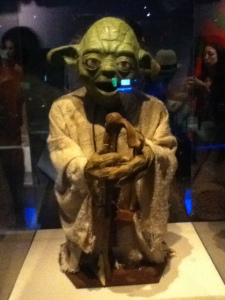
YodaPuppetWhile diction determines word choice, syntax determines where the words are placed. Language without syntax are words strung together with no method to the madness–in other words, nonsense. Our normal syntax mimics what we have heard before. Unique syntax requires mixing up that order without creating nonsense.

Do you recall Yoda’s distinctive style of speaking in the Star Wars movie series? Simply take the predicate object or predicate adjective at the end of a sentence and move it to the front. Voila–Yoda speak. “But what is a predicate object and predicate adjective?” you ask mystified. Basically it is everything in a normal syntax that follows after the verb.

Learning how to use syntax to create a unique voice requires a fundamental knowledge of grammar. I recall creating lengthy diagrams parsing complex sentences in my junior high days. But, diagramming went out of vogue (probably due to lack of time) just like…

View original post 255 more words

Posted in Uncategorized | Leave a comment

Write or wrong word

Another blog in the series on creating voice in writing.

knlistman's avatarWrite about what?

chronic waste c2

Diction is one of the building blocks of voice that pushed far enough can become a two-edged sword, making the written word dangerously inaccessible to readers. When teaching Shakespeare’s plays to students I frequently pointed out that it was not the formal speeches that were hard to comprehend. Rather it was the lines full of common slang and innuendos of Elizabethan English that the students failed to grasp. After all, the bard did write to entertain the “man on the street.”

Beginning with the Renaissance there was a movement toward more formal diction in writing, and then sometime before the twentieth century writers started backing away from that same kind of diction. You could blame or praise Mark Twain for this, but he was not the only one in concerned in this swing. Today, the media has morphed into users of an informal brand of Standard English that is sprinkled…

View original post 271 more words

Posted in Uncategorized | Leave a comment

Tone of voice

Creating tone–second in the series on the writer’s voice.

knlistman's avatarWrite about what?

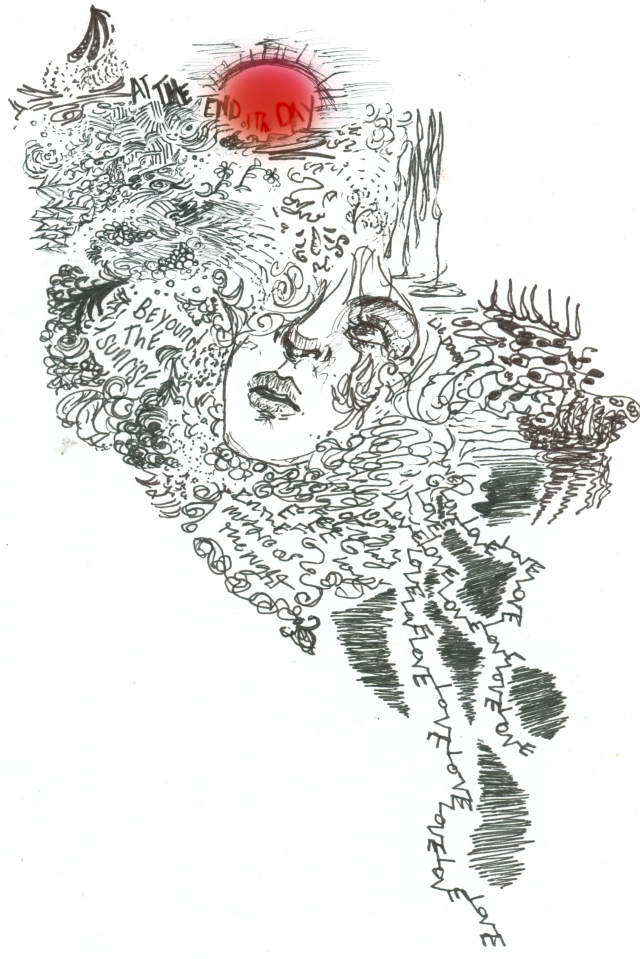
ink1007 sunsetTone of voice… you have probably heard this phrase used frequently, such as in “I don’t like your tone of voice.” As a child I often assumed that phrase was the adults’ way of reprimanding someone whose statement was not malicious or false, but brought up an inconvenient truth. In speaking, tone is typically associated with a certain timbre, pitch or intensity that expresses an attitude, such as amusement or disdain. However those cues disappear if the words are written.

How are we to betray underlying emotions in writing? That is one of the keys to creating a distinctive writer’s voice.  Authors often use imagery to create the tone through their descriptive passages.  It does make a difference if the setting sun is “red as a ruby” or” red as blood.” A skillful writer uses imagery, full of connotative words with emotional undercurrents, to draw their characters and set the…

View original post 247 more words

Posted in Uncategorized | Leave a comment

The writer’s voice

Chasing the elusive writer’s voice…

knlistman's avatarWrite about what?

voiceWhen people speak they produce many different signals that  the audience can interpret–facial expressions, gestures, and timbre of voice can add to the meaning of the words, or reverse them. For example, a person saying “Good job!” in a lusty voice with the right corner of his lips raised in a sneer of disdain means that he thinks you’ve done anything but a good job. However, when we write, we only offer one stimulus–words on the page.

Your style of grammar, tone, and inflection, which make up your voice when you are speaking out loud, offer so many modes of expression that must be converted to words when writing. When I hear people say creating a “voice” in writing means simply writing like you speak, I cringe. Only putting down the words you say in print is a pale, tasteless version of what needs to be told. However, writing done…

View original post 310 more words

Posted in Uncategorized | Leave a comment

Ancient Name Dropping

Alas,_poor_Yorick

Photo by Peter Church, CC BY SA

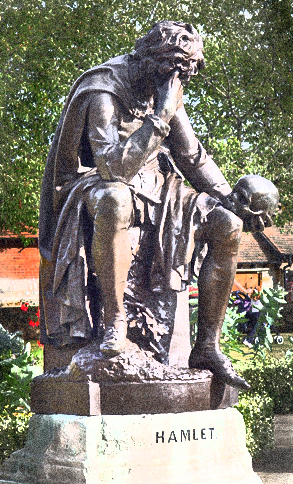
In the George Lucas’ film The Empire Strikes Back, the furry Wookiee, Chewbacca, holds the head of robot C-3PO in the same way that Hamlet is usually shown holding a skull. Many people assume that Hamlet recited his fateful soliloquy “To be or not to be…” as he stared at the skull.  But, that occurs an act later. Actually, Hamlet said “Alas poor Yorick, I knew him well.” Yorick was the king’s jester, a bit of comic relief serving the same purpose as the protocol droid, C-3PO. This distinction is not important to understand the point of this allusion in The Empire Strike Back.  Chewbacca was wrestling with the nature of life, death and existence, just as the doomed Danish prince did.

If you find yourself dangling too close to the edge of sanity trying to come up with the perfect words to describe your character, you can lean on what past writers have done. Allusions are the literary equivalent of name-dropping. Once, I heard an acquaintance refer to another person as an “Adonis.” Despite knowing over fifty people in common, I immediately knew who she was discussing. There was only one man in our circle handsome and charming enough to fit that comparison (and he just happened to be from Greece). Alluding to a well-known character, fictional or real, is a short cut that quickly gives the readers already developed concepts.

How do you determine to which characters or works you should make your allusions? You want to make sure enough people recognize the same literary characters that you do. Use your friendly internet to supply lists of the most famous people, both real and fictional. Then cross out anyone who wasn’t walking the earth or in a book more than one hundred years ago. Not only have you shortened your list dramatically, you have selected the people with staying power.

Is it necessary for readers to read the same books as you for this kind of name dropping to work? Not always. On almost any list of the famous classics that authors use for a source of allusions the Bible and Shakespeare’s plays sit on top. However, people who have never read either one still know that “Judas” is an epithet for a traitor, and “Romeo” describes a male with romantic intentions.

Of course, when you allude to a character from Shakespeare’s works, everyone knows that you aren’t claiming personal friendship with the playwright. But they may assume that you know his works quite well, when in truth you may not have read any of them, just like your reader. However, that is where the difficulty lies. Comparing a character to Romeo because he is old and lecherous is not the kind of romantic male that Shakespeare had in mind.  Unless your you call him “Romeo” in a sarcastic manner, readers who have actually read Romeo and Juliet may start making fun of your work, or simply stop reading it.

If you are intent on using allusions you should be well-read.  It is not enough to watch movies that pale in comparison to the work that inspired them. And, you must read the classics, not just recent best sellers. Finally, you must be aware of all the shades of behavior epitomizing the characters before you allude to them. Drawing on the already developed descriptions of classic characters will add depth to your writing. However , if used incorrectly, you simply sound pretentious.

Posted in Literary devices, Writer's resource | 1 Comment

More than what you see

knlistman's avatarWrite about what?

IMG_4708 imagery2The term ‘imagery’ brings to mind, of course, images–verbal pictures that allow us to peer into the world which an author has dreamed up.  Imagery sometimes implies page after page of descriptive detail–in which case you might risk having the readers fall asleep and start dreaming up their own worlds.  But, a story without enough visual detail leaves the characters moving in an unsubstantial shadow land.

Imagery should includes more than what you see in your mind’s eye. It also needs to bring to life the sounds, smells, tastes, and textures of the world you have created. One of the appealing aspects of writing is that you do not have to stick with the conventional. Music can be  ultramarine blue or a person’s scent can be rough and sand papery. Using these metaphors which cross the senses is  called synesthesia, a term referring to a neurological condition in which senses…

View original post 217 more words

Posted in Uncategorized | Leave a comment

Vibrant verbs

knlistman's avatarWrite about what?

fun run 2Writers can throw around the terms used to describe interesting language – sensory images, unusual syntax, well-developed descriptions, and vibrant verbs. But incorporating these into writing and preserving the flow is a challenge. Recently I worked with some nascent writers trying to conjure vibrant verbs to replace the old, tired, common ones.

Actually, the common verbs are quite useful (which is why they are common). Did you ever try to carry on a conversation and not use some form of have, get, go, do or say? As the first exercise the participants had to tackle finding vivid variations of the past tense of “said” the past tense of say.

When I write dialogue I am acutely aware of how many times I have employed “said.” However, it interferes with the flow of the dialog if I have to keep stopping to search for alternate words. My own solution was to create a handy list…

View original post 323 more words

Posted in Uncategorized | Leave a comment

The forgotten sense

knlistman's avatarWrite about what?

stollen d

For an recent practice in sensory description, emerging writers chose a photo from their childhood–playing on a snow drenched hill, seeking warmth in the flicker of a fireplace, or splashing in a plastic pool to escape the summer heat.  For many  the photo showed them posed in starched clothes in front of a birthday cake. As part of the exercise, they were required to use descriptors for all their senses. Well, not quiet all senses but the five major ones. However, one did include the sense of balance in the dizzying sled ride down the snow drenched hill.

When it came to illustrating the required sense of taste, almost every nascent author choose to describe something that tasted sweet. Granted humans are only suppose to be able to differentiate between five tastes: sweet, sour, bitter, salty and the newly discovered one that we have been attracted to all along, the…

View original post 308 more words

Posted in Uncategorized | Leave a comment

Creating pungent memories

knlistman's avatarWrite about what?

Vanilla1webcThe sense of smell is such a powerful memory enhancer that at one time people in the training business tried to capture its potential.  However, the difficulty with using smell to help people retain what they had learned is that very few smells are considered neutral. Most smells carry an association, either with something pleasant, or unpleasant. And people do not always agree on feelings evoked  by particular smells.

For example many people enjoy the pungent smell of vanilla, especially combined with sweet overtones such as in vanilla cookies. However, long ago when I was in college, I was approached by a shuffling, old man in a grocery store as I pondered which fresh fruit would best supplement the rather insipid, college cafeteria food. There was a familiar pungent smell exuding from him as he kept pestering me.  Then, I realized what it was when the stock boy shooed him…

View original post 269 more words

Posted in Uncategorized | Leave a comment