Traveling Swan Roads in Books

While reading Beowulf in a modern translation I encountered a person called a breaker of rings. In my mind I could see a burly man hacking gold rings apart, possibly a thief destroying the identity of his latest heist. As it turned out, a breaker of rings is a leader, or a chieftain, who more probably obtained his wealth through trading rather than snatching it like a thief. Beowulf also refers to another leader as a giver of rings. I suppose the more successful chieftain could give his loyal followers entire rings rather than breaking them apart in order to have enough gold to reward them all.

Reading ancient literature in translation is difficult because we don’t know how to interpret such figures of speech. These kennings, or idioms, would help the listener see the images of people and actions based on their own lives. It was a form of showing versus telling. We might assume the word ‘bigwig’ describes a person who is a boss. But, imagine the difficulties that someone from the year 1000 would have understanding it. They might imagine a person collecting a mass of hair to pile on their head without seeing it as a sign of power.  

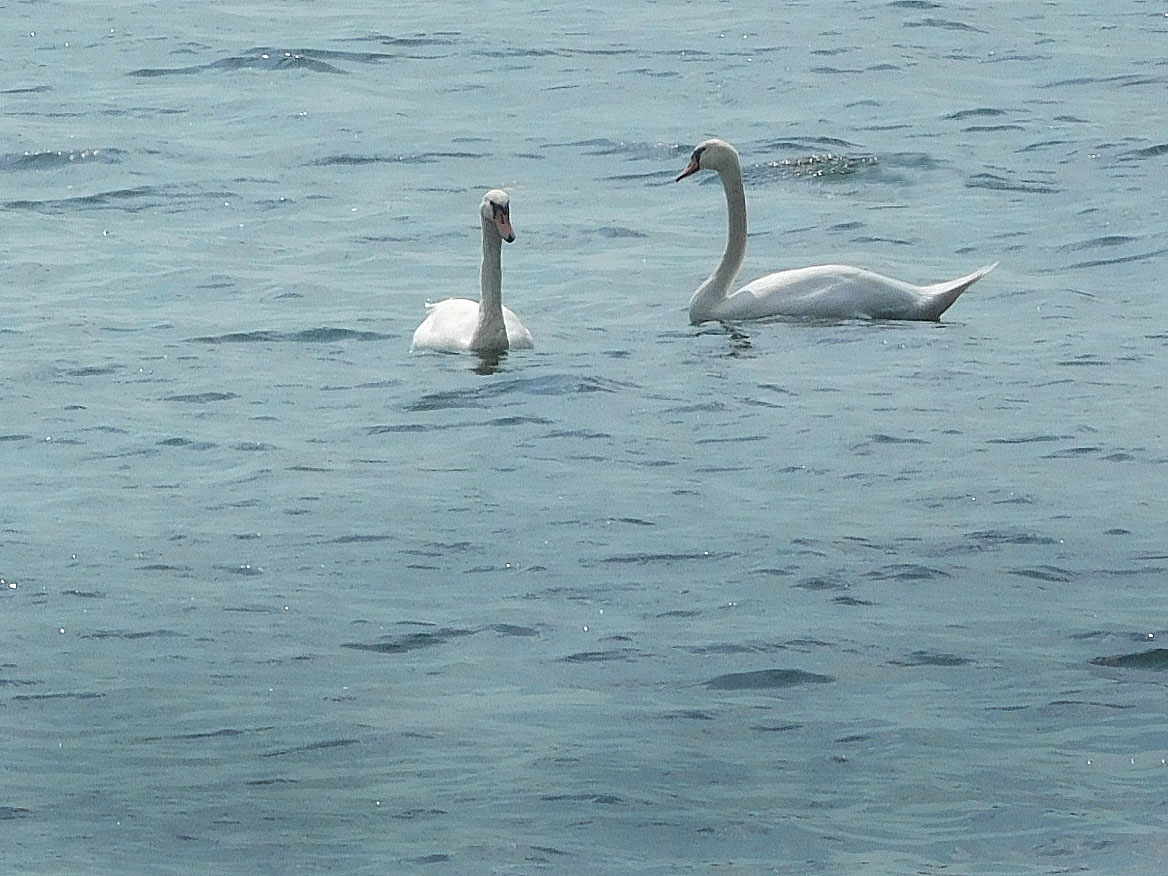
If an early text, such as Beowulf, was translated into completely modern English, we would still stumble over kennings, such as whale road, sail road and swan road. All of these phrases describe the sea. Huge whales and sailing ships travel the ocean, but I’ve never seen swans there. I suppose they may be found in estuaries that border the sea. Even old English authors realized using the same word repetitively was boring and sought out alternatives, some of which didn’t work as well. Are our highways, freeways, and interstates any less confusing than whale roads, sail roads and swan roads? These are distinct types of roads that conjure up distinct images for us, but in reality they overlap. 

Decades ago I was reading an email from my daughter in response to one I sent about how to cut mats with multiple openings to display photos of an art fair. I concluded by asking if the pictures had to be in the “same direction.” In her response she said there could be no mixing of portraits and landscapes. That threw me for a second because I knew some of the pictures were of people at the art fair, and others of the trees in the park where it took place. Then, I realized she was referring to the orientation of the pictures. Rectangular pictures have been aligned either horizontally or vertically for eons. Now we have a kenning, a way of describing orientation based on print options.

Figures of speech fill our conversation and our books with words pertinent to our time and our location. We see those common phrases as being ordinary and easy to understand. Seeing outside of our own existence can be a struggle. Learning to understand figures of speech from another time and place is one of the steps to understanding diversity.

Posted in allusions, Creativity, Literature, Poetry, Showing versus telling, Style and voice, Trends in books | Leave a comment

Leaders within the Writing Community

Writing is often a solitary endeavor. Authors spend hours alone working words and ideas into something alive within their own minds. New writers, unused to such dedicated isolation, often seek inspiration for their creativity–new sources for intriguing characters and unique plots which will win the reader’s approval. They look to experienced writers with hope for help. The experienced author usually desires to be seen as a representative of their craft and a leader within their genre. Despite the loneliness of their career, they crave followers that share their sentiments and are not above accepting adulation. 

If a writer wishes to be a pathfinder and out in front of the crowd, some of the literary crowd will not perceive them to be as appealing. Egos will be bruised and feuds will result. A number of well-known authors have the reputation of stepping on the toes (or worse) or other writers. Ernest Hemingway was regarded as a charismatic person by many in his day. He lived an exciting life, wrote exciting tales and fought with other writers, including a fist fight with the poet Wallace Stevens who was twenty years older than Hemingway. 

F. Scott Fitzgerald became Hemingway’s friends, helped his career, and introduced him to an influential editor. Despite all of this, the younger Hemingway soon began mocking Fitzgerald. He claimed that Fitzgerald’s life was wasted talent, and that the consumption of alcohol which helped him write, was an overpowering poison for the older Fitzgerald. Evidently, this famous author’s flaw was helping Hemingway, who wanted the credit for making his own way in the writing world. 

Later in Hemingway’s career he found he had switched places. Now he attempted to advise a younger William Faulkner in his career. However, Faulkner did not respond with the reverence Hemingway desired, and even mocked his use of an elementary level vocabulary. What crushed Hemingway the most was that Faulkner won the Nobel prize for literature years before he did first.

The more emotional the appeal of the leader in the writing community, the more influential  that leader is likely to become. Also, the more likely that followers will act harshly against this author due to any perceived problems. One of the difficulties with a charismatic leader is they may make an appeal to fight against the common enemies as a way to rise to fame. This often creates an “us against them” culture with people who are not that much different.

Posted in author feuds, Leadership, Literature, Teaching writing skills, Writing trends | 1 Comment

Skip the Formula

At one point in time, 10 years ago to be more precise, I decided to write a romance. According to my critique group a romance is a genre that readers can’t get enough of and therefore an easy to market novel. Most people publish their own because it is an addictive kind of read, that people want to experience over and over again. Romantic leads traipse through the book following a formula. The beloved other person has a magical aura that is unmistakable. Guy sees a girl and just can’t keep his eyes off her (or vice versa). If that doesn’t happen the pair can run into each other, physically bumping into the soon to become significant other person while walking down the street. 

Of course, there is not one attention grabbing technique that will work for every single person. I didn’t want to copy what others wrote. I created a leading male who was attracted to the woman’s voice before he saw her. This is not the correct order in the steps to romance and can sometimes cause a blunder. I recall the seductive sound of the woman announcing the Blue Light Specials at the K-mart. A guy who frequently checked out at the pet department where I worked, commented on her beautiful voice. So, one time I pointed out the disheveled fifty-year-old owner of the sultry voice. He never mentioned her again.

In my romance novel, the young woman was as lovely as her voice. The timid guy who didn’t have the guts to approach her fell in her lap when the plane encountered turbulence as he headed back to his seat from the restroom. But, my story didn’t turn out to be a traditional romance. The romantic hero wasn’t exactly a “prize.” He had a degree, but no job, was shorter than average and suffered from a heart murmur. But, love is a thing that should be able to overcome such deficits. Right?

Grabbing attention at the beginning will not keep the reader engaged all the way through a book. Keeping a reader’s attention requires more work. I needed scenes to increase tension that let off slightly, and then started to build up again. I needed to throw in problems to keep the two apart. The singer was definitely into her career in opera more than she was into the guy. So, the young man becomes friends with two other women, one is a bit weird and artsy, and the other one is gorgeous and refined–definitely the prize he seeks–and also a source of trouble. 

There was no need to have the romantic couple have problems and spats. The guy had to do a bit of soul searching to uncover who the right young woman was for him. The first one he met could easily be the wrong one. A romance is not a romance if it breaks any of the narrow rules: idyllic characters, love at first sight in the first chapter, neither couple looks at anyone else despite spats over trivial problems, and finally the required happily ever after ending. 

Typical romance novels can also make you feel like your own romantic life is pale and boring in comparison. My characters are not strong or beautiful, but a mixture of strengths and weaknesses that results in an average person. They are sometimes charming, or clueless, or arrogant, but they develop throughout the story. The Bronte sisters and Jane Austin became famous writing romances in which the characters grew up over time. It wasn’t always clear who would be the couple that found true love. Good romances break the rules.

Posted in Characters, Novels, romance, Story structure, Writing trends | Leave a comment

The Superpower of Speaking Other Languages

I found a list helpful for writers wanting to avoid the dreaded Mary Sue/Marty Stu character.  If a protagonist had three or more of the traits that character had failed the test. One item that caught my attention was “Speaks five or more languages fluently.” There are a few rare individuals that can do this. They’re just not incredibly attractive and able to run the mile in under four minutes. I want to make reading stories which involve other languages easy for the readers to comprehend, but if it is too easy, the illusion is broken.

Creating a character whose strength is foreign languages does present some challenges. In one of my earliest novels, I followed a twenty-something Texan adult traveling around Paris who speaks French with a few intentional errors. However, this Texan’s language ability was not superb but enough to impress some Parisians. He receives more positive attention than his strikingly handsome and strictly monolingual friend. As my character was not completely fluent in French, I had him think about what he was going to say in English before he spoke in French. Then, he translated the other person’s response in his head. This prevented the need for inserting translation notes during conversations.

What if inability to comprehend the other person’s language is the core problems in a story? For example, characters in an historical fiction novel concerning the Island city of Tenochtitlan. As ancient Aztec nobles they speak Nahuatl (but and I do not). That should not present a challenge if I do my research. Classical Nahuatl translators exist online. However, my readers will not want to resort to that. To give a richer sense of the nature of this Mesoamerican society. I use authentic names for people and places and insert a few common Nahuatl terms such as avocado, chayote, chipotle, and chocolatle.

The difficulty occurs both for the inhabitants of this city (and for me as a writer) when the Spanish conquistadors march over the horizon. In scenes where characters from both groups appear, each group will be confused as to what the other one is saying. There should be a translator, a native who has been with the Spanish explorers long enough to pick up some of their language. But, this translator will not be fluent in Spanish, and their dialog will change depending on who he (or she) is speaking to.

The translator may use a stilted speech towards the Aztec nobility and casual speech to a peer. When speaking Spanish to the soldiers, it might be at the level of a five-year-old. However, when I researched the communication between Cortés and the Aztec nobility, I discovered this required two different translators. Aguilar, who spoke Spanish and Mayan, did not know the Nahuatl language. An enslaved bilingual Nahua woman named la Malinche translated his Mayan into Nahuatl the speech of the Aztec nobility. She has become famous (or infamous) in her own way as a woman who help bring down the empire who had originally enslaved her.

In each instance you want to give the reader an authentic feeling of how this point of view character senses the dialogue. If the reader only comprehends as much as they do, this avoids breaking the illusion of the difficulty in communicating. This takes skill and some effort to write in this manner so that the book can be written almost completely in one language. It is important to adequately portray the superpower of knowing multiple languages.

Illustration of Hernán Cortés and La Malinche, 1576 Durán Codex

Posted in languages, Literary devices, Novels, Translations, Writer's resource, Writing trends | Tagged , , , , | Leave a comment

What is Not Lost in Translation

One of the old Star Trek episodes that intrigued me had a simple plot with a complex Idea. Captain Kirk and his landing party were forced to land on a planet only to discovered that their universal language translators didn’t work. They heard the inhabitant’s words translated into English but the phrases didn’t make sense. Finally, Spock discovered that the people spoke a language based heavily on allusions and imagery. It was an advanced literary language for such a simple-appearing society. Imagine calling a beautiful woman Aphrodite, or referring to a task requiring strength as Herculean, or one with no end as Sisyphean. A few people do this. However, the person needs a comprehension of mythical Greek literature to understand such conversations. Allusions make translating a challenge in any world.

What if we ignored descriptions referring to legendary characters. Consider those that we use based on ordinary animals. Does it make sense to refer to an attractive woman as a female fox, or vixen, and an irritable one as a female dog, or bitch. The behavior of the two species is very similar, so why does this difference exist?  Explain why calling a person a dog means that they are physically ugly or undeserving while referring to someone as a fox indicates cunning? Face it, universal translators wouldn’t even work on Earth.

Such problems cause some people to reject reading any work in translation. How are they going to understand the content of any book that differs so much from what they are used to reading? Translators need to be skillful in both the original language and the one into which they are translating. Matching the meaning precisely is not always possible. Therefore, I don’t mind translation notes attached to the text. Learning why the same word in English carries a completely different connotation from the original is enlightening. Sometimes the reader of a translation will not get the full meaning that a native speaker would. However, refusing to read based on that limitation restricts us to reading only about our own culture. Closing ourselves off and associating with similar people is not the right path to understanding other societies.  

Therefore, I strongly recommend reading works in translation.The difficulty of translating a book creates an advantage for the reader. People do not go to this trouble for ordinary or trite written work. The translated works are often the most notable ones. I did not think about this when choosing novels such as War with the Newts (Válka s Mloky), One Day in the Life of Ivan Denisovich (Odin den’ Ivana Denisovicha) and The True Deceiver (Den ärliga bedragaren). These stories fascinated me with visions of other places. 

Another bonus to reading works in translation is that they are most often translated into the modern version of English, which does not require as much reading skill. Through the hard work of a translator I could read the 17th century French novel La Princesse de Cleves and comprehend it better than if I were reading one of Shakespeare’s plays written in his original words.

We now have the benefit of artificial intelligence (AI) translators, and I try to contribute to the machine learning of AI by adding clearer alternative translations to phrases in articles when there is one that doesn’t make sense. However, I hope we never turn over the invaluable task of translating literature to a machine. AI does not take into account our ignorance about Aphrodite, Heracles and Sisyphus, or my lack of understanding why comparison to a dog is an unfavorable one but comparison to a fox is not.

Posted in allusions, languages, Literary devices, mythology, Translations, Writing trends | Tagged , | Leave a comment

The Language Quandary


Recently, I was reading a novel in which a young woman spoke English with a lovely French accent. At least that is what the author told me. Her dialogue was written in normal, modern, American English which I could read without a problem. It did not help that the main character’s thoughts were inserted to let me know that he could barely understand her. I could understand her perfectly, which removed me from the illusion of the story whenever the woman spoke.

Advice concerning use of accents often violates the maxim “show, don’t tell.” I’ve heard it often said not to imitate the way a person speaks, but just mention their accent occasionally. Honestly, if that accent is important to the character, it should be shown. This requires some expertise in the character’s first language. and it may be tedious to create a legitimate accent. The writer needs to know what English language sounds are not in the native tongue, and what the person would use to replace these. For example, “th” is common in English, but not a lot of other languages. It can appear frequently in dialog.

For example:

“The man walked to the theater with that woman. I saw them there.” 

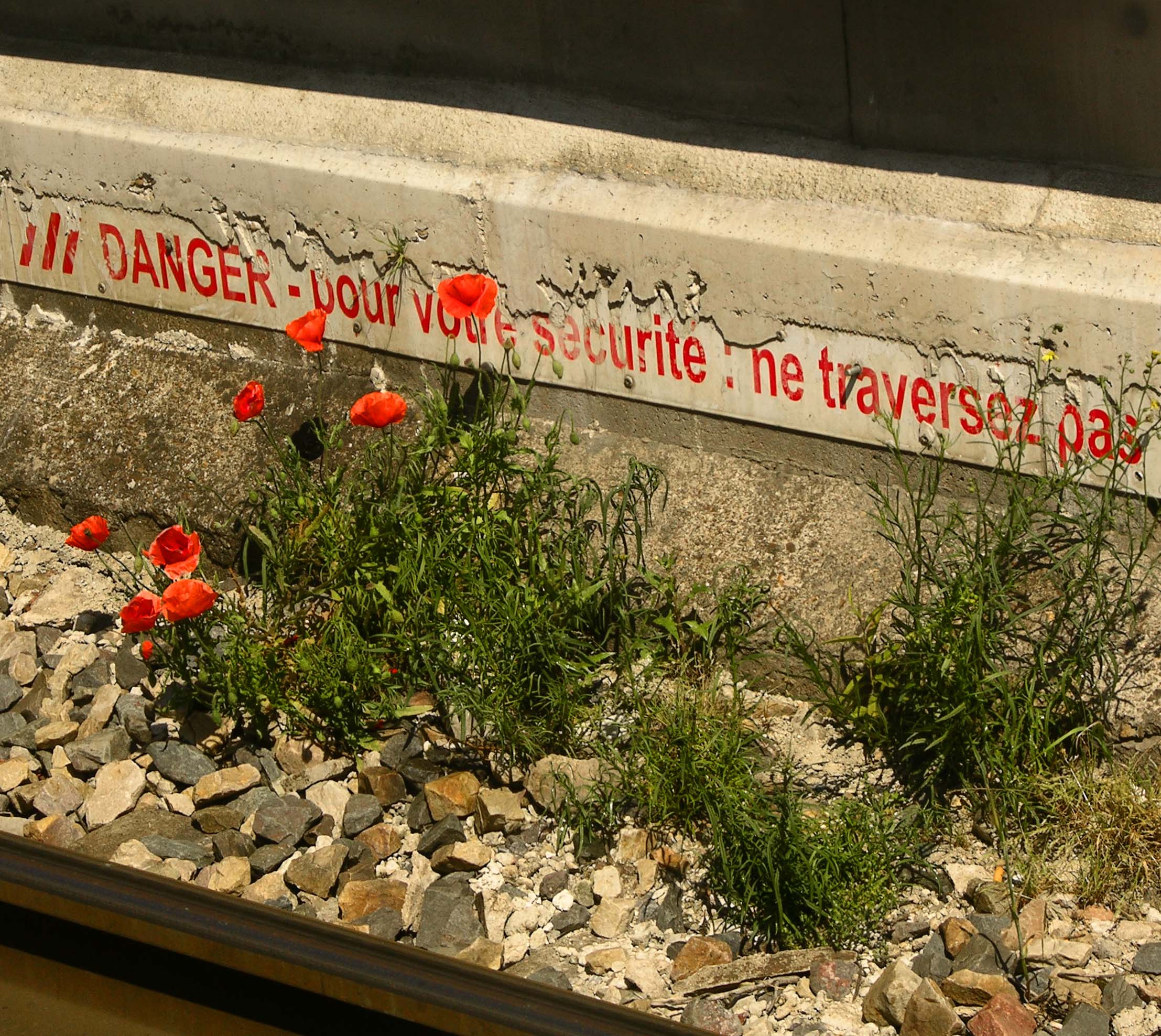
The “th” sound can be replaced by various sounds such as d, t or z. It not advisable to change every other incident of “th” to “z,” which is the typical way that French speakers pronounce “th.”

“The man walked to ze zéâtre wiz zat woman. I saw zem zere.”

Also, “th” may not always be replaced by the same letter if a person has a French accent. The word theater is a French cognate spelled “théâtre.” This actual French word would be used even if the “th” is pronounced as a “t.”  Also, “the” might be written as “zhe” to appear more like the English word. Perhaps only “the theater” needs to be changed to provide the effect of an accent.

“The man walked to zhe théâtre with that woman. I saw them there.”

French syntax differs from that of English. So the normal order of words would change in a sentence. “I saw them there,” would be rearranged as “I them saw there,” which makes no sense to English speakers. So syntax cannot be replicated in that case. However, spoken French past tense uses helping verbs which can replace the simple past tense used in English.

“The man was walking to zhe théâtre with that woman. I have seen them there.”

Choose a few words that are spelled as pronounced by the non-native speaker and sprinkle them through the dialog. This should probably not be done for more than 10% of the words. In the case of the French accent, all you may need to do is change every “the” to “zhe.”  If that seems like too much, choose lots of French words with English cognates, such as “théâtre,” to insert with their accents and slightly altered spelling.

If the language does not use Roman letters, the internet still provides a wide range of guides to sounds found in other languages, so the spelling reflects the actual pronunciation. If you are not sure this is worth the trouble, don’t mention the characters accent at all.

Did I mention that it may be tedious to create a legitimate accent that an English speaking reader can still understand? Both pronunciation and the normal order of words in a sentence are unique to most languages. Of course, the easy way out is to say that the character has a thick French accent and then simply write in normal English. But, too much dependence on telling rather than showing is the mark of an amateurish author.

Posted in Literature, Teaching writing skills, Trends in books, Writer's resource | Tagged , , , , | Leave a comment

What Rules?

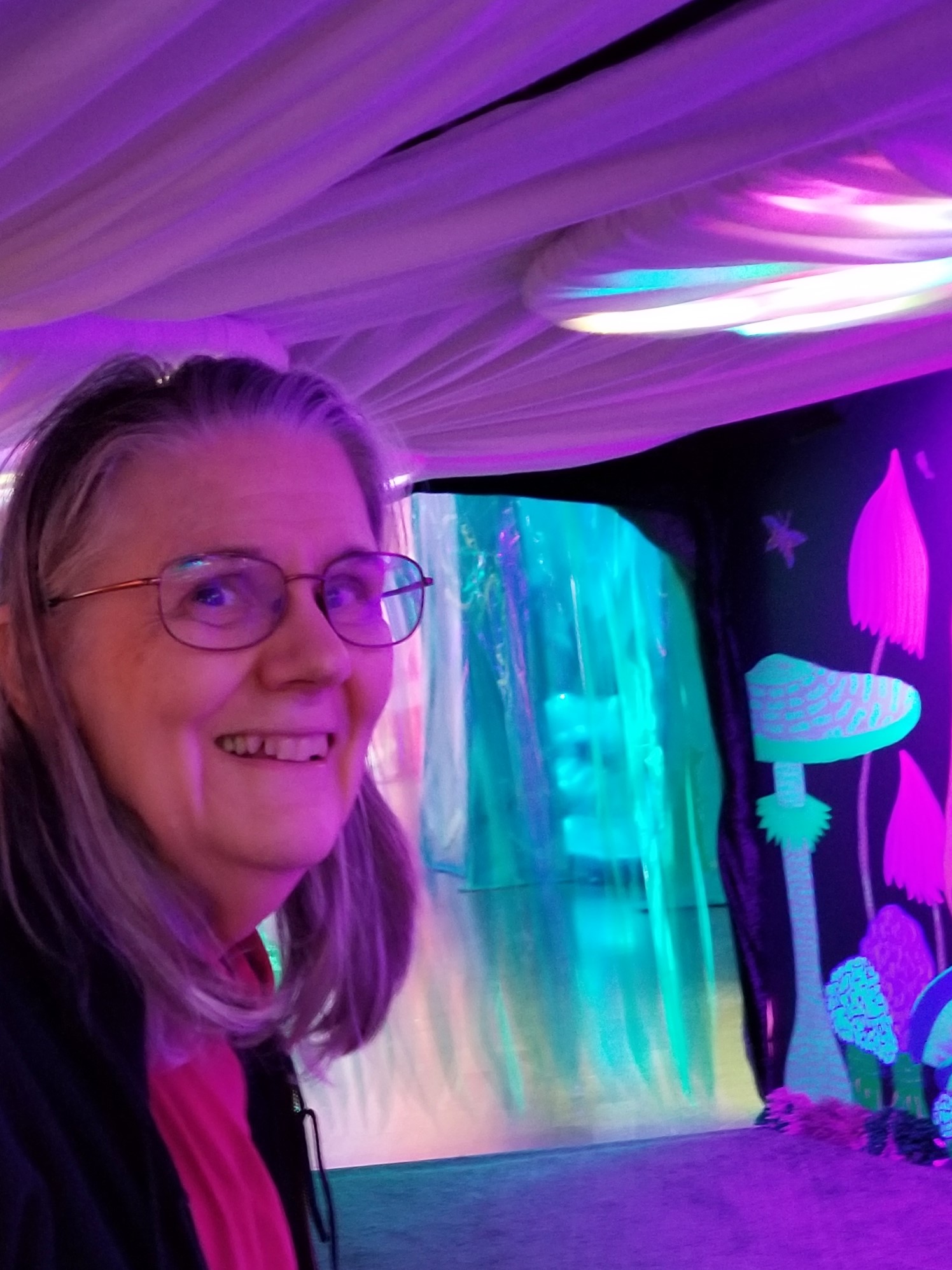
Synesthesia, an immersive exhibit by Factory Obscura

It would seem easier to be a writer after gaining some reputation or a devoted group of followers. But, at that point the writer has to make the decision, “Should I keep producing what readers expect of me or allow myself to experiment. Perhaps if I create something different, it will not do as well.”

Experimentation means ignoring rules and dabbling in areas that new writers are is told to avoid.

1) Telling the story rather than writing it in scenes

New writers often find themselves in this predicament. They have a good idea and simply want to explain what happens. Then, they are prodded, sometimes roughly, into showing not telling. This translates into creating scenes occurring in specific locations and within a time limit. It also translates into more words because showing, by its very nature, is more descriptive. However, exposition can cover more ground in a story very rapidly and may work with complex situations. Exposition also allows the writer to reveal important truths about life and/or the universe in a novel.

2) Starting a story based on a vague idea rather than a well-formed plot

Famous authors have written books starting with the barest of concepts and writing to see what happens without knowing the ending. They cannot break the story into scenes because they have no summary. Events just pop into their head and they record them. This kind of book normally will take much longer to write. Suddenly the plot takes a wrong turn forcing the author into a dead-end which requires backtracking and restarting. Extensive editing is often required. This would be enough to stop an inexperienced author, but one who has the confidence gained by completing a well-received work may try this tactic anyway.

3) Creating a one-sided or flat main character

An author usually cannot get away with a too perfect character. Also, readers do not see a difficult, stubborn, and ruthless person as “strong” simply because that is what the author calls him. They expect some realism that they can relate to and admire, well-rounded characters with both strengths and obvious flaws. Characters should change and grow or devolve, and there should be reasons for this improvement or worsening. Both the protagonist and antagonist (if it is a person) should eventually suffer the consequences or reap the reward of their actions. However, a flat, one-sided character can make a point about the society in a story simply because of their extreme consistency.

4) Too much action, or almost no action instead of well-defined arcs in action

There is a wide range of pacing as far as action that works depending on the author’s style. The more poetic the words are, the less action is needed. The reader can enjoy the poignant prose as much as a fast-paced plot. However, we often repeat to new writers the idea that there must be a conflict and the main character needs to struggle to overcome this problem. If this kills the protagonist, the story is a tragedy. On the other hand, repeating similar actions—such as winning a fight by sheer strength—gets very repetitive unless that is the point of the story. It takes skill to have less than well-defined arcs, but it can be done.

5) Making the plot too implausible

Initially writers should consider the logic of each action and result, even for characters driven by emotion. In a fantasy world, the author lays down rules on how society runs and sticks with them but does not have to specify these rules for the readers. There should be an obvious pattern to what can and cannot happen in the fantasy realm. Throwing logic to the wind is a bold move that may catch the reader’s attention. However, maintaining this attention takes skill. Building a story based on the implausible that offers no excuses or explanation is the very root of a satire. 

So, are you ready to take the plunge and experiment with some technique that you have been warned to avoid?

Posted in Characters, Creativity, Literary devices, Novels, Style and voice, Writer's resource, Writing trends | Tagged , , , , | Leave a comment

Imitative Arts

When studying theories of creativity, I encountered R.J. Sternberg’s idea that “Creative individuals, by their nature, tend to defy the crowd. They resist merely thinking or doing what others are thinking or doing.” This idea resonated with me but often does not define creativity to the rest of the population; nor is the concept of being original really understood.

Creativity requires making a product that does not resemble those produced by others. However, many people consider creativity as producing an “artistic” result that resembles some item they have seen before that has been praised for its artistry. In other words, something that is much closer to imitation. Artificial Intelligence uses work produced by others to learn how to alter successive reiterations of an image or a piece of writing. The fact that we sometimes cannot distinguish one from the other may indicate a waning desire for creative work. The new goal now seems to be a product acceptable to an audience because it is like other current art forms. The only noticeable difference may be pushing one aspect to a greater extent.

Now, we have a conundrum. There is no reliable way to quantify creativity. We could ask a large random group of people to vote on the creative aspects of a number of books. However, as the definition of conformity is preferring what others prefer, the average choice would not be based on how different the book is from others but rather how similar it is. That is why editors and publishers seek “comps” for new works by unknown authors. Bestselling books are often similar kinds of books until successive reiterations (produced by humans and not AI) blend so much that a new trend provides welcomed novelty.

Another way exists to judge writing and art. People respected in their particular fields judge the entire body of work from an extensive sample in order to rank individual works. For example, a joint study by Harvard and University of Washington tasked judges with comparing samples of visual art and creative writing by teenagers made between 1990 and 2011 to determine if creativity was increasing or decreasing. The markers of creativity were complexity, risk-taking, and breaking away from the standard mold. The conclusion? Improvement existed in visual work, which showed greater sophistication and complexity, and a decline occurred in the writing, which became simpler and more mundane.[1]

There is also a test designed by E.P. Torrance to judge the creative thinking of children (unimaginatively named the Torrance Tests of Creative Thinking). The scores on this test began their downward slide in the United States in 1984. Students at all grade levels have been gradually showing less creativity since that time. This, steady decline is most evident in the ability to elaborate, or produce details that support a main idea. [2]

Is it any wonder that people are now awed by the creative products of a computer that combines and imitates the styles of humans in art and writing? Just as there is no single factor contributing to the creativity of individuals, there are no hard and fast rules when it comes to judging forms of art for their originality. There are just trends that may not always hold true, because as all creative people know, rules are meant to be broken.

[1] Kelley,P. A decline in creativity? it depends on how you look, University of Washington News and Information, November 11,2013

[2] Kim, Kyung Hee (2011). The creativity crisis: The decrease in creative thinking scores on the Torrance Tests of Creative Thinking. Creativity Research Journal, 23, 285-295.

Posted in Creativity, Ideas for writing, Trends in books, Writing trends | Tagged , , | Leave a comment

Collaborating with Other Authors

How do multiple writers work together to produce a work superior to their individual abilities?  With a great deal of struggling. Despite the idea that synergy, or combining abilities of people in groups, to produce better ideas than individuals most research on writing and other creative endeavors points in the opposite direction. Few writers enjoy creating a single work as a part of a group. Occasionally a pair of writers collaborate on a book after ironing out the details of who does what to produce a single novel. But suppose you are assigned to work with a group to come up with a plot and cast of characters for a new movie. What can you do to improve your chances of at least some modicum of success?

Brainstorming has been touted as one way for groups to multiply innovative thinking. However, group sessions produce more ideas if people spend alone time considering and conceptualizing ideas first. The best performance, as far as number and quality of ideas, occurs when there is a brief group session followed by individuals brainstorming on alone as shown by research conducted in which a whopping 23 of 24 groups produced a greater quantity of high quality original ideas when brainstorming alone, than together (Dunnet et al, 1963). In another experiment, the results of those working in isolation were consistently judged more creative. It appears as if the very presence of others decreases creative output (Shalley 1995). This may be because we are unwilling to try out new ideas and techniques that may flop in front of others.

Why does this mystique of greater creativity within teams exist despite so much evidence to the contrary? The psychological benefits of teamwork contribute to this illusion (Allen and Hecht, 2004). People with strong needs for social interaction feel more satisfied when working in a team, even if the results show lower quality ideas. People tout the benefits of being with their tribe, because inclusion in a team provides a sense of belonging. Even though these “tribes” tend to enforce similar social behavior, so that our thoughts are more restricted.  

So what works if you decide to create a novel, or movie script with another writer? It helps to understand human characteristics that prevent people from effectively sharing knowledge with others.  It is almost impossible to grasp what others know, or deduce what they need to know from us. Sharing of information takes time. It helps to have initial sessions that are simply for the purpose of  describing what each person knows without the pressure to produce new ideas. 

A larger group of writers must take the time to provide a background for what each one contributes. Clearly defining why we know what we know is another hurdle as we base knowledge on various underlying assumptions. Some people fear a loss of status if they share their knowledge and creativity. This is a legitimate concern with no easy solution. So, a facilitator who refrains from making their own contributions can help, they may openly acknowledge the contribution of others and mediate a discussion that enables a equitable contribution from various members.

Finally, choose a variety of activities to get out of the rut of group brainstorming sessions. Let the people question and critique each other’s ideas, but not each other. Alternate between group sessions and individual activities taking place away from the presence of the group for adding to the work-in-progress. Remember, simply having others around, possibly looking over your shoulder, tends to limit creativity.

It takes more time for a group to produce creative ideas for a novel or movie than it does for an individual. However, the bonus to this method is the sense of connectedness to a greater number of people. Varying viewpoints promotes the acceptance of the creative ideas–if and when the group actually produces them.

Allen, Natalie J.  and Hecht, Tracy D.  (2004) The ‘romance of teams’: Toward an understanding of its psychological underpinnings and implications. Journal of Occupational and Organizational Psychology, 77, 439–461.
Dunnette, Marvin D.; Campbell, John; and Jaastad, Kay. (1963) The effect of group participation on brainstorming effectiveness for 2 industrial samples. Journal of Applied Psychology, Vol 47(1), Feb 1963, 30-37.
Shalley, C. E. (1995) Effects of coaction, expected evaluation, and goal setting on creativity and productivity. Academy of Management Journal, 38, 483-503.
Posted in Creativity, Drama and movies, Group psychology, Novels, Writer's resource, Writing trends | Tagged , | Leave a comment

Are Writers Born or Made?

Start any discussions on the art of writing fiction and you will quickly find the group divided. On one side people claim it is an innate trait that people are either born with or without. But, when the authors that make this claim start creating their own books on writing that is admitting this stance is not true. Still, people exhibit varying skills with language and different comprehension of the elements that make up a story. The flip side of this viewpoint is writing itself is not innate and must be learned. The desire to write fiction and poetry seem to reveal itself early but successful writers don’t pen their first book by age twelve. There is definitely a learning curve to consider that will consume at least a quarter of a century in a writer’s life. For some it is much longer.

Even when people see fiction writing as a skill that can be taught, their methods vary for teaching it.  Despite formulas and questions to aid with producing quality fiction, the characters of this kind of writing are neither able to be defined or measured with any consistency. What is original and unique in one culture, may be commonplace in another. A goal worthy of a hero in one society, may seem a bit nonsensical to another.

Anyone in a program to develop their creative writing skills has found that some deliberate efforts to kick start creativity may fail. But, original stories may surface at other times in spite of  being stuck in a boring place among boring people. The work of the imagination is terribly unpredictable and won’t follow our schedules. According to author and editor Irving Taylor, creativity exists hidden within many people, but requires development.  “At some point, however, some conscious discipline and control is beneficial and necessary. It is difficult to know whether developing creativity is like building a muscle or following a recipe.”[1]

In my own  research, I interviewed college students studying the different fields of art and writing to identify the factors that helped or hindered their creative drive. Near the top of factors those that helped were characteristics such as “risk taking” and “experimenting,” along with “being imaginative.” However, they rated having creative friends as the most helpful. Their major hindrances to making creative work were lack of time and resources, followed by their own lack of expertise. To cultivate the skill of writing fiction it seems necessary to provide the appropriate environment: lots of other creative people, no fear of experimentation and plenty of time and resources.

As I examine the kind of instruction recommended to teach creative writing, I find that this talent is nurtured, encouraged and cultivated more than it is directly taught. The skills for creating fiction can be learned, but the drive that it takes to complete this work can also be stunted or even killed.

Illustration by J. S. Duverger – Wikimedia commons

[1] Irving A. Taylor, A Retrospective View of Creativity Investigation, in edited by Perspectives in Creativity, eds, Irving A. Taylor, Jacob W. Getzels (1975)Transaction Publishers
Posted in Creativity, Ideas for writing, Literature, Teaching writing skills | Tagged | Leave a comment