A Matter of Ego

No one really writes a novel without considering the plot beforehand. Nor do they outline the events so tightly that they know each step the protagonist will take and never vary from this initial plan. So why do we argue about the best method? It is a matter of ego. Authors claiming to write what flows out of their mind without much premeditation often claim to be purists–the truly creative writers. While those who plan their compositions respond to anyone bemoaning the fact they kept rewriting their book with a nonchalant, “Why don’t you try outlining?” 

A person who writes without an outline may keep on composing more and more pages until they have penned passages worth keeping. This writer still has a plan before starting the story, even though writing oneself into a hole may result in ditching a book and starting over again. People with this kind of writing temperament will review their work without mercy if they are wise and cull needless words. It takes perception to put a novel under the knife like a surgeon removing a tumor in an attempt to save the patient. 

Like many writers who rely on outlines (and I fall into that camp) I ruminate about what will occur in the book. I don’t grow weary of writing out the details of a scene that I composed as a detailed list after rehearsing it in my head and I don’t get bored writing this way. Rather, most of the manuscript is never as compelling as I imagined it in my mind. As I determine the number of acts and sketch out the major plot points, I always give into the temptation to start writing scenes. So, I have come up with a compromise of completing each “act” as a fully developed manuscript before I move on to the next one.

Most of the manuscript is never as compelling as I imagined it in my mind.

My initial style is dry and repetitive. I later edit my work to make the language more luscious. That is much the way that F. Scott Fitzgerald wrote his stories. When stuck, I will go back and reread to recall my characters’ pasts. Sometimes what I have written earlier surprises me. However, there is a point of diminishing returns. I keep rewording phrases until I imagine they flow. But, when I start changing the characters’ names, eye color, and clothing style, I must acknowledge that I’m not helping my novel any more.

I am comfortable developing the plot first and imagining a conflict that will take an entire book to overcome. It helps to delve into a setting familiar to me, so I don’t spend endless hours researching details. I have found out there really is no list of common culinary practices for southern Britain after the Romans pulled out, nor drawings showing how people dressed, nor a record of how business was conducted without a  currency. At that point I get to create the rules of society for myself. In the end the creator of a detailed outline can be just as creative as the author who wings the entire story.

Photo by K.N. Listman

Posted in Creativity, Novels, Story structure, Writing trends | Tagged , , , , , , , , , , | Leave a comment

The Definition of a Classic

First, you must understand that there is no one definition of a classic work. There is the assumption that the work is well-known. But, in which periods has it gained fame? If it is a current written work, will this fame outlast the life of the author? If so will it be a few years, decades, or centuries?

I first encountered the term “classic” in reference to art and understood that this term referred to the art style from a particular period, the one with the growth of Greek city-states beginning about 500 B.C. and ending 323 B.C., at the death of Alexander the Great. There are other cultures with other classic periods or rapid growth in artistic expression. Although, Alexander the Great’s empire spread Greek culture and art, Alexander was actually a Macedonian. Military empires often do not come up with their own “culture,” but adopt one from a conquered region because having a similar language and culture makes it much easier to rule a huge empire. When the Romans took over, they were too busy building roads and outposts for their huge empire, so they adopted many aspects of the Greek culture.

Fast forward several hundred years to the Renaissance. Europeans rediscovered this “classic” style spread by the Roman empire, including the literature of that earlier time. So what makes classic literature a classic? Largely it’s acceptance by academia. Harold Bloom of Yale University is known for his book about books, The Western Canon: The Books and Schools of the Ages. This discussion of classic books is obviously biased towards English literature. Bloom credits William Shakespeare’s plays and poetry with giving rise to the style of writing that continued to inspire the great works of European literature.

Shakespeare did not write for other highly educated people but was an actor, writer and producer of popular entertainment.

Most students do not realize that Shakespeare was not an “academic.” He did not write for other highly educated people. This renaissance playwright was an actor, writer and producer of popular entertainment. Common people paid a small amount to go stand for hours and watch his plays just like modern people crowd into movie theaters (at least prior to Covid-19). Many people also do not realize that Shakespeare’s plays contain quite a bit of suggestive language. One perceptive student said to me, “If you don’t understand a particular phrase in a Shakespearean play, it is probably R-rated.”

However, the fact that his work has lasted so long is an indication of its general appeal and quality. It’s also an indication of how much the actors wanted to take part in his popular plays. Shakespeare remained famous when other playwrights faded from history because these actors paid to get his work published. What also contributed to Shakespeare’s work becoming “classics” was his popularity as an author within a growing political power. It helped that Shakespeare was writing at the dawn of  the British empire and wrote historical plays parroting the monarchy’s view.

During the growth of an empire, certain people have the luxury of producing art for a living wage. To become well know as an author at the point at which a country starts influencing the rest of the world is indeed fortunate. It seems as if the power of a nation is as important to a work to becoming a classic as the artistic worth of the work. However, that doesn’t means those classics are the best works that exist, just the most well-known.

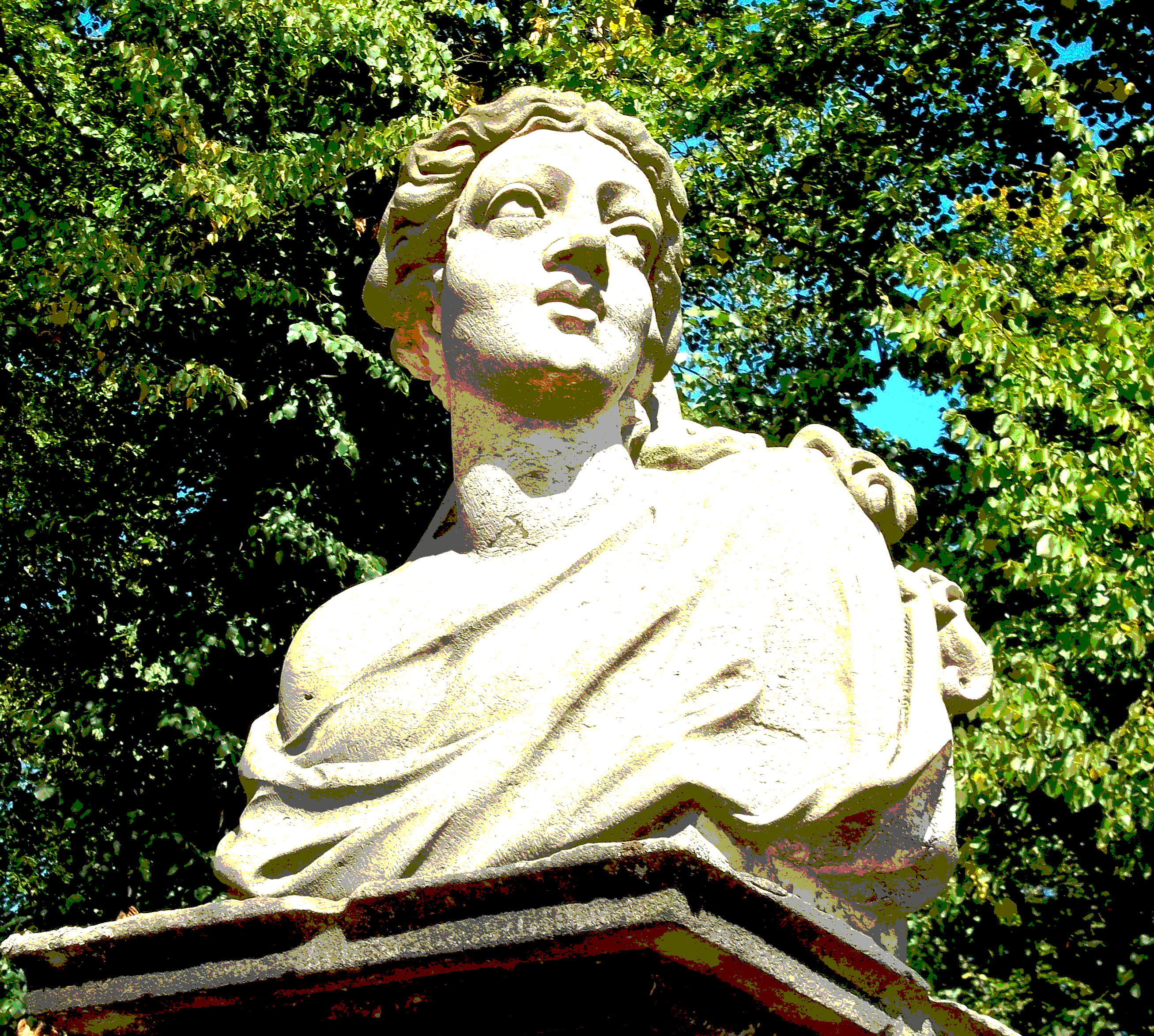
Photo of bust at Sanssouci, Potsdam, Germany by K.N. Listman

Posted in Literature | Tagged , , , , , , | Leave a comment

Why Don’t They Like My Writing?

Beta reviewers or the local literary critique group may not be fond of what an author has written. However, they often don’t know how to explain what they dislike. The problem could be based on style. Perhaps, the language sounds strange due to unfamiliar regionalisms, or the author has a vocabulary above that of the reviewer, or uses trite phrases ad nauseam.

The level of originality could result in critical comments because original works are not supposed to conform. Some people reading new literature become uneasy if the story bends their expectations of tropes for that genre. So, reviewers may enforce unnecessary standards for “creative” work because this quality is not based on a single component. The more that a writer pushes the envelope, the more that pinpointing what should earn the title creative versus being called ludicrous becomes a challenge.

Other people’s minds work just like that spelling and grammar checker, reading not for content but for conformity to usage that they believe to be correct. They may not accept alternate spellings such as colour or centre, even when the author is British. These reviewers may complain when words are not found in their spelling and grammar checker. However, the artificial intelligence supporting these is no where near perfect.

The most insidious problem with accepting a review of one’s work is based on personal beliefs. The piece may espouse a philosophy that the reviewer disdains. However, chances are this person will never tell the author their true feelings out of a misguided sense of politeness.

When a person is unable to describe what aspects need revision, they often resort to common over-worn expressions.

When a person assigned to assessing your work is unable or unwilling to describe what aspects need revision, they often resort to common over worn expressions, such as “move it up to another level,” “grab my attention,” or “put more into it.” These vagaries don’t address the problems at all. Rather than making the effort to show the author what is wrong with the manuscript, the critique group members advise the author to “show don’t tell,” breaking the very advice they have given.

Artwork by J.W. Listman

Posted in author feuds, Creativity, Ideas for writing, Showing versus telling, Teaching writing skills | Tagged , , , , | 3 Comments

Climbing over the Block

What is writer’s block?

For me it is not a dearth of ideas, but a multitude of mediocre ones. If I push through this initial uninspired feeling and write, eventually a creative thought or two should appear. Sometimes I stretch to express a concept higher than my current ability. While writing, I grind my teeth in frustration, wondering if I should give up. Other times I keep typing until I feel a flow of unique words coming out. A day later I review these pages and find that I have said almost nothing. But, not completely nothing. There are still a few paragraphs worth keeping.

 What causes writer’s block?

For me it is exhaustion. When my brain fails to remember words, I stop searching through my mind. Maybe after some rest I can come back to writing. Brainstorming brings up ideas from past experiences. They arise inside of me as I stare into the darkness, deep in thought, or when I dream while sleeping. These thoughts, and even dreams, are influenced by what I’ve read, what I’ve watched, and even more by what has occurred in my life. When I wake up from an interesting dream, I record the scene on my phone, and consider why these images appeared. Were they based on something that I desire or fear? They may become the conflict for a new plot.

How do I deal with writer’s block?

I stop thinking about what is pressuring me and let my mind wander.

I look through old photos or notes I’ve made about plots. Often, I change my location, and go walking, especially at a park, or in a different section of the town. I stop thinking about what is pressuring me and let my mind wander. An hour-long walk is good for me. As I see new things I morph them into elements of my story. If the outside is wet and freezing, which is typical in Oklahoman winters, I try a local museum or a library. I favor the children’s section as an answer to shove aside a block in my writing may come through a beautiful illustration. If not, the children’s books are still fun to look at.

The key for me to prevent writer’s block is to write on a regular basis. I don’t have to always be working on a new novel. I often try my hand at a poem or essays first. When I play with the idea for a new poem, story or play, I don’t have the full concept in mind. I must elaborate and create details that I had not thought of beforehand. Sometimes writer’s block may strike, but it’s never permanent.

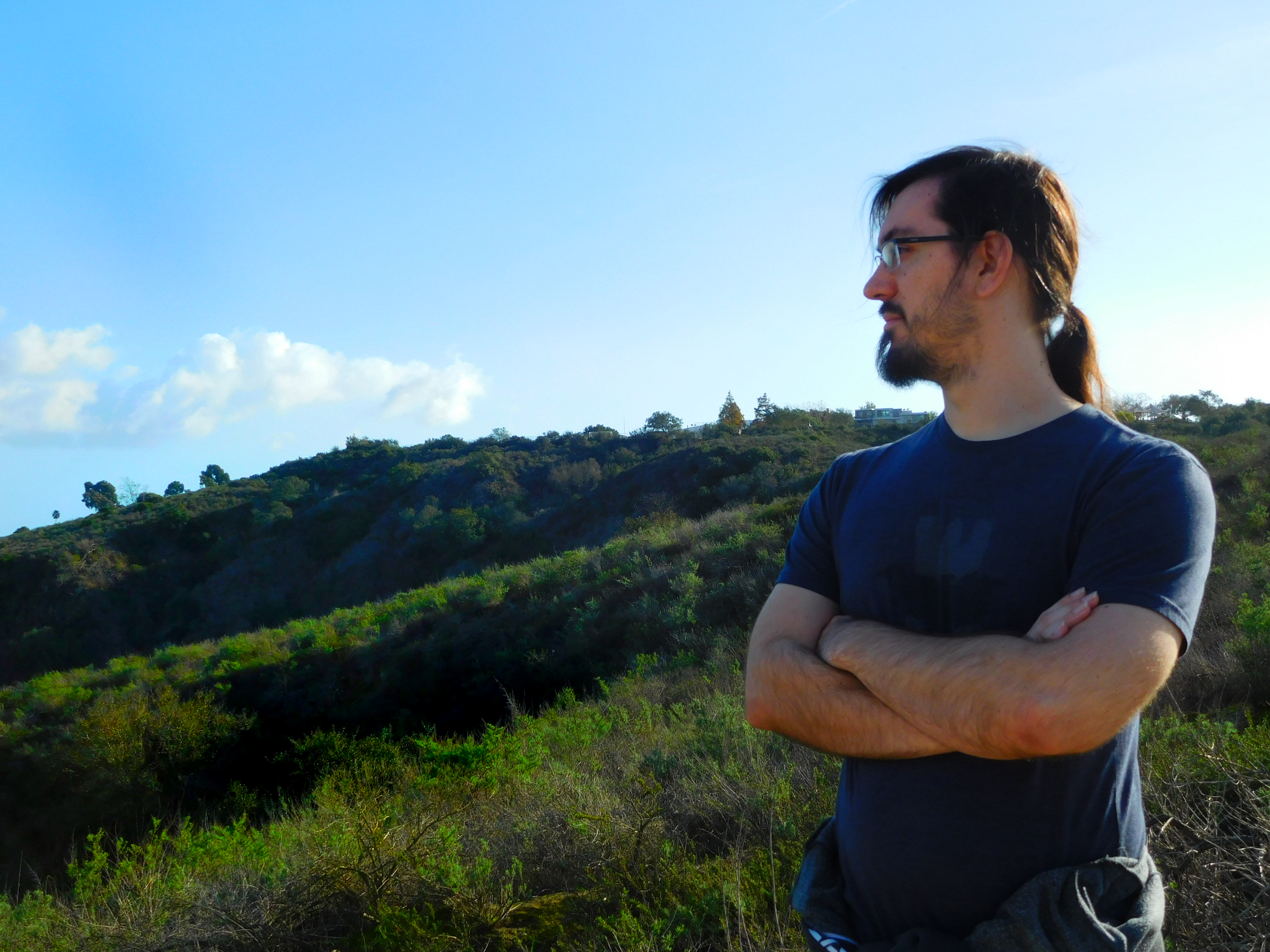
Photo of Aliso Wood Canyon by K.N. Listman

Posted in Creativity, Story structure, Style and voice, Writer's resource | Tagged , , , | Leave a comment

Selling Familiar Names

I looked up at the librarian with a pleading glance, trying to get her attention. I had failed, again, in my attempt to check out books at a self-serve kiosk. My difficulty was holding my card at precisely the correct angle for the scanner to read it. I could type the number in, but the touch keyboard on the screen was not working either. Everything the library had done to automate the checkout experience was now putting me in the mood to commit a misdemeanor—walking out with two unchecked out books under my coat.

Instead of glancing my way, she turned to a co-worker and confided, “Patterson and Cussler are definitely the biggest repeat offenders.” Worse offenders than me? I wondered how many library books they had stolen. However, as the conversation continued I realized this duo was James Patterson and Clive Cussler, two popular authors in the thriller genre. Immediately, I stopped fiddling with my card. I wanted to hear more, but she offered nothing in the rest of her conversation to enlighten me. What was their offense that kept happening? Perhaps, I should have been blunt and asked. But, this event happened shortly after the peak of Covid-19. We were all wearing masks. So, I kept my 6-foot distance and my silence. At one point I gave up and laid my card down, but in doing so I evidently performed whatever magic feat was required to get the scanner to recognize it.

Later at home, rather than diving into one of my books, I googled the similarity between James Patterson, Clive Cussler, and the world of librarians. Evidently both of these authors openly admit that they hired others to write many of their books. James Patterson sketches out plots, which he hands over to ghost writers to be completed. Then, he reviews them and revises the text to maintain some modicum of a similar style.

After Clive Cussler rose to fame he started writing series with other authors. People wonder how much Cussler was actually writing. He even managed to complete five novels after he died. Now, that’s a real ghost writer. Although according to the grapevine his son Dirk is just continuing to write books under his father’s name as he did when Clive was alive.

Books by Patterson and Cussler may be subject to secretive editing by unknown library clients.

But, I found another curious connection. Books by these two may be subject to secretive editing by unknown library clients. A Reddit/Librarians article described techniques to catch the person who kept checking out Patterson books to correct awkward grammar and repeated words with white out. Perhaps it was a copycat offender that my local librarian had mentioned. Rarely, do I look at Reddit for information due to the numerous rants. However, the article both informed and amused me.

Is this kind of guerilla feedback a way for average people to get back at famous authors who seem to sell works under their own names no matter who writes them?

Illustration: Book Shell Architecture by Wallpaper Shelf.com

Posted in Creativity, Trends in books | Tagged , , , , , , , | Leave a comment

More to a Name than I Imagined

The statue pictured is a highly stylized likeness of Jehanne Darc, which is displayed all over France even in areas far from her homeland of Domrémy. Those few words not in “normal” English may convince a reader that they really do not wish to read a book about the famous Jeanne d’Arc (also known as Joan of Arc) even although Jehanne is her name in the middle French that she spoke, and she may have never used the location name of Darc.

A few years ago, I concluded that fictional names had little bearing on how well a character is liked. After all, Fitzwilliam Darcy, Atticus Finch and Bilbo Baggins are not common or easy to say names. But, these are well-loved characters. So, the personality and actions of fictional characters will override any less than optimal name.

That period of writing may be coming to an end. Some people’s minds work just like a spell checker. Set to American English. They are drawn to only the most popular and common names in their cultures. Even though fantasy writers are known to use names as exotic as their settings, a reviewer of my initial draft for a fantasy work in progress complained about the total number of times that the character and place names weren’t recognized by Microsoft Word spell check. This spell checker does not realize that the historical Jehanne Darc existed either.

Some people are only drawn to the most popular and common names in their cultures.

Soon after that I answered a question on the effects of AI on diversity, and discussed a research document on machine learning (now called AI). In this research hundreds of resumes from real people highly qualified for specific positions were used to teach AI to find viable candidates from among a large number of applicants. However, AI unintentionally learned to look for candidates based on the ethnicity of their name using similarities in names as it did in other fields. Many of those resumes selected had names originating from a few languages.

As I attempted to choose the best character names for a fifth century story set in Wales and Cornwall, I decided I needed help from other people. I wrote a list of Welsh and Cornish names that I assumed were pronounceable and asked other writers which ones they preferred. The only comment in response was “choose names that sounded like they are spelled.” Roman letters are not pronounce the same in Celtic languages as they are in English speakers. Ellyn may look like Ellen, but the “ll” is an unvoiced fricative, or hissing sound.

What causes this familiarity bias in fictional names? I think readers are overwhelmed with available media and learn to scan material to choose what is most common. They are attracted to average names that they hear every day. When celebrities’ fame results in many people naming children of the same generation after them that only reinforces their this sense of average. Unfamiliar names have a strangeness and they don’t fit the requirements. This reflects the same way that machine learning chose job candidates by names.

If J.R.R. had written The Hobbit or the Lord of the Ring series in MS Word, his tomes would have broken the spell checker. However, decades later, many of his names have been added to this software, which is an unexpected example of a writer changing some aspect of the future. However, readers who now look for common nomenclature, just like AI, don’t realize how this may affect the future of creative writing.

Photo Jeanne d”Arc in Occitania region of France by K.N. Listman

Posted in Characters, languages, Literature, Trends in books, Writing trends | Tagged , , , , , , , , | Leave a comment

Who Knows Correct English?

How we speak has been determined by history, especially the history of empires. When the Anglo-Saxons came to the British Isles their germanic brand of “English” overwhelmed the Celtic language of the Britons, and the older tongue was considered the language of the less educated. When the Norman Conquest occurred, old French became the correct way to speak and write, while the Anglo-Saxon version of English, which had changed quite a bit since they arrived, became a  lower class language. However, when the Norman nobility fell out of favor people stopped speaking old French even though a lot of this vocabulary remained in the English language, and we even use it today.

One of the artifacts of these changes is the number of irregular conjugations in English. For example, the past tense of verbs are formed in numerous different ways without much logic. “I see” becomes “I saw” and “I sing” becomes “I sang.” Some people have failed to learn standard verb tenses because they heard English spoken incorrectly and therefore, they say, “I seen” and “I been.” You notice those last two verbs should rhyme but don’t. French people who learn English struggle with our inconsistent pronunciations that much more consistent pronunciations based on how words are spelled. But, the French did not get a huge influx of English vocabulary into their language, at least until recently.

How we learn to speak cannot be separated from the way that we write. Authors often compose their sentences similar to the manner that people speak in their day. But, language is always changing. People now may think that proper language from as little as fifty years ago is pretentious. The difference is even greater for language used more than a century ago. Each author needs to develop their own style, while still using enough current language for their writing to be intelligible to readers. 

When I write dialog, my characters do not speak the same. Some don’t use proper English and say “I seen.” Another character used a lot of filler language such as “actually” or “on the other hand” frequently to create emphasis. One of my beta readers marked it out as unnecessary phrases. If all people in fiction spoke the same way, dialog would be boring.

Someone from one hundred years ago might consider what I think is correct English as poor writing.

I find some current writers using phrases that are not sentences, or including slang understood only by a small percentage of the population. Someone from one hundred years ago would consider that poor writing. So, we should not judge the writing style of past authors so harshly. Like the switch in Britain from Celtic to Anglo-Saxon to Old French which was reversed later. There were so many variations in the English language a “received pronunciation” originating from royalty was required to establish standards for speaking English. The preferred style of writing may always swing back to what it used to be.

Photo by K.N. Listman

Posted in Generational differences, languages, Literature | Tagged , , , , | 2 Comments

How Can Writing Not Be “Telling?”

I find the “show don’t tell” adage for writers a curious contradiction. Unless you are writing a movie script that will be produced, everything that you record is actually told to the reader. Writing is very abstract, so providing this kind of instruction requires bringing the abstract to a more concrete level. When authors give examples of showing versus telling they often demonstrate a fifty/fifty approach and intersperse detailed descriptions and dialog with exposition that simply tells the reader what has occurred.

If you have ever read Marcel Proust’s À la Recherche du Temps Perdu (English title: Remembrance of Things Past or In Search of Lost Time) you find sounds, smells, and textures, along with the characters’ movements and dialog overflowing the narrative. There is a lengthy paragraph on the taste of a Madeleine cookie dipped in tea that starts the ball rolling for the author’s memories. His work is a prime example of showing. The first volume contains the popular self-contained story entitled Un Amour de Swann (Swann in Love), which I read in French class. Enthralled with Proust’s writing, I continued to consume the rest of Swann’s story, only in English translation. This classic finally became a movie in 1984.

I became so enthralled with Proust’s writing that I continued to consume the rest of Swann’s story. “Swann in Love” finally became a movie in 1984.

However, this style may not have been popular when Prost wrote in the early 1900’s. An editor for Nouvelle Revue Française (NRF) rejected his first volume. Reluctantly, Proust paid to have it published by another less well known company. Soon, the tables turned and Proust’s second volume won the Prix Goncourt, a French equivalent of the Pulitzer Prize. The editor at NRF could have kicked himself for rejecting his work and even sent Proust a letter of apology. But, the author decided to stay with his original publisher as he completed this eventual seven book series. 

Unlike Proust, many writers who show more than tell struggle to convey subtlety in their work. A reader may not comprehend what is occurring when a character shuffles his feet or makes snorting noise. So, authors may feel the pressure be dramatic enough for all readers to pick up the meaning. For actions to be easily interpreted they must be exaggerated to ensure that the reader detects happiness, anger, or fear on the face of the character. Proust was able to display subtle emotions—boredom and restlessness—but this required interweaving the telling with the showing. 

Most readers want an author to tell them what is happening but include enough description of a scene so that they feel they are present. Exclusive showing when writing is best reserved for key scenes. However, when a scene seems to drag on and become boring, this may be a sign to truncate this descriptive style and simply tell the reader what is occurring. Telling takes far fewer words than showing. The trick is to balance between explaining what is happening and displaying events through description of sensory details. When unsure, I write the scene in both manners—one that shows the action, and one that tells what is happening—and choose the one that works best.

Illustration by J. S. Duverger – Wikimedia commons

Posted in Drama and movies, Ideas for writing, Literary devices, Literature, Novels, romance, Showing versus telling, Trends in books, Writing trends | Tagged , , , , | Leave a comment

Writing by the Book

There are sets of questions that writers can answer to create different kinds of stories which are used for psychological thrillers or horror. There are also guidelines to writing romance by the beat. Search “formulas for writing a book” on the internet and a quantity of these will appear. How well do they work? This depends on the author’s goals, and how much effort the author is willing to put into the actual writing out of each story.

Alistair MacLean fought in World War II as seaman in the Royal Navy. His short stories based on maritime experiences caught the eye of a publishing company that would later become Harper-Collins. MacLean is still known for The Guns of Navarone and Ice Station Zebra, and a number of other wartime and thriller novels that were made into popular movies.

Authors write books based on a formula so that they can produce enough to keep up with the demands of an audience who want a steady diet of a similar genre. MacLean’s goal was to produce one a year. There were a few years that he didn’t reach that goal, but other years when he managed to crank out two. He wrote using a formula. He claimed to enjoy creating the plots but not the actual writing. He wished to complete a book as soon as possible. 1

 In Alistair MacLean’s own words:

I drew a cross square, lines down representing the characters, lines across representing chapters 1–15. Most of the characters died, in fact only one survived the book, but when I came to the end the graph looked somewhat lopsided, there were too many people dying in the first, fifth and tenth chapters so I had to rewrite it, giving an even dying space throughout. I suppose it sounds cold blooded and calculated, but that’s the way I did it.2

Such an author is not looking for one idea that works all the time, but ideas that can be used interchangeably. The story is built by choosing the ideas that fit into it and the best way may not always be chosen. MacLean’s works based on his war experiences are his most popular. However, he regarded his work as story telling rather than novel writing. At one point, he even wrote a few books under a pen name in an attempt to show that his works were not simply selling based on his name. But, he also wished to leave behind the formula that had made him famous. Still, he returned to his earlier style in later books and movies; yet these were not as well received.

People think the writer should try to entertain the reader, or inform the reader, or make a reader wiser. All of those things depend on what the reader wants to get out of the work. All the author can actually guarantee is that they provide some insight into themselves as they attempt to write something worth reading repeatedly. Of course, readers who prefer easily consumable books have always been around. It is the books that they consume that tend to be forgotten.

Illustration: Book Shell Architecture by Wallpaper Shelf.com

1 “Best-Selling Author Alistair MacLean Dies” The Washington Post 3 February 1987

2 Johnstone, Jain. “War Is Hell, but It Pays Off for MacLean”. Los Angeles Times. 17 December 1972.

Posted in Drama and movies, Ideas for writing, Trends in books | Tagged , , , | Leave a comment

From Music to Words

My first experience with music as an inspiration for writing occurred in the summer between high school and college. I lay in bed at night listening to the radio and trying to go to sleep when a pop song with a tune borrowed from classic music stuck in my mind. I turned off the radio and tried to imagine the characters evoked by that song. 

By that age I had written an essay that won a local award, an article published in a state magazine for students, and a poem that would later be published in a national college level anthology. Still, I struggled with writing that required me to develop my own plots. Despite many false starts, I had only crafted one decent short story. My attempts to write a novel had stalled at the second or third chapter. I could start with an interesting premise such as a horse who had run away from a cruel owner or pilot shot down behind enemy lines in a war. But, I didn’t have the knowledge, or perhaps the experience, to heap problems onto a protagonist, while sneaking in options that would allow a final victory that would result in a satisfying conclusion.

I spent many hours scribbling down ideas based on this song but only ended up with a setting, a rural area south of Lake Erie in the early 1900’s, and a vague idea about the two major characters, but no plot. A few months later, I would start a work study job at a college music library. When not busy I would listen to the recordings that the music appreciation students constantly checked out. Sergei Prokofiev’s Romeo and Juliet and For Love of Three Oranges were my favorites. 

It finally dawned on me. I was viewing this idea of gaining inspiration to write through music backwards.

However, these plays came first, and he wrote the music later. It finally dawned on me. I was viewing this idea of gaining inspiration to write through music backwards. Symphonies had programs for each movement that replicated scenes in a story or play. The composer’s inspiration was written works. The characters, dialog, actions and emotions were replicated in sound. What was I to do with a setting and characters that had no story? At that point, I abandoned the music inspired writing project.

However, listening to music can provide a context—setting, time frame, character traits or circumstances—that can be woven into an existing plot. The word context and textile have a similar root, texere, meaning to weave. Therefore, context actually means to weave together. Once I have the idea for a plot, I may be able to embellish it by experiencing music as I write. If I still don’t discover ideas to use for my story, at least I’ve enjoyed listening to my favorite songs.

Photo by J.W. Listman

Posted in Creativity, Drama and movies, Literature, Story structure, Style and voice, Writing trends | Tagged , , | Leave a comment