Physiological writing

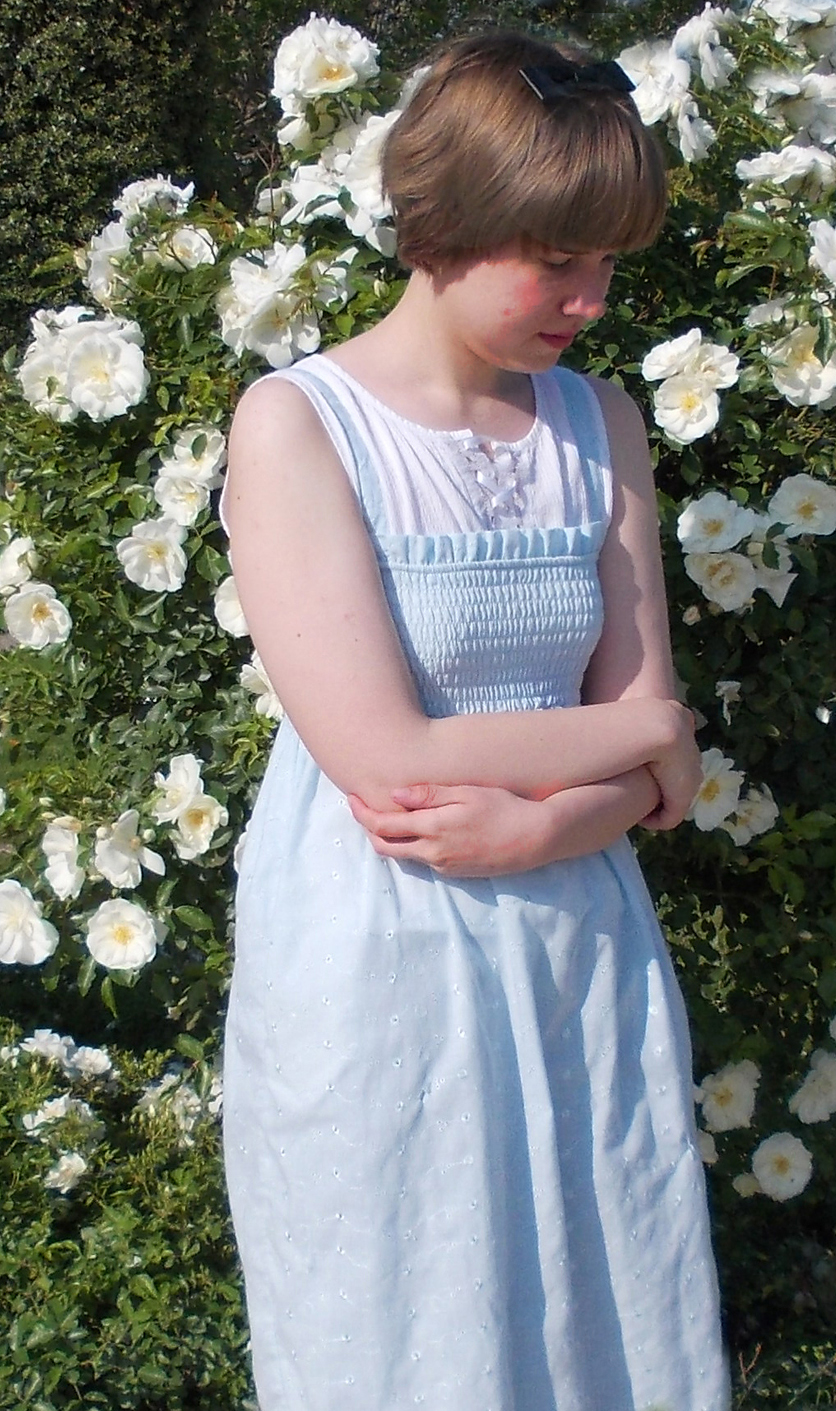
blush de roses et de roches aWhat exactly are physiological reactions?

Imagine you are a young teenage girl. You are waiting in the math hall, and that handsome senior with an air of indifferent confidence strolls past you on the way to calculus. Normally you are watching unseen, but today he looks you in the eye and says “Hi, how’s your day going?” Your heartbeat increases, you breath faster, you start to feel warm, and your face begins to turn red – otherwise known as blushing  – these are the physiological effects of surprise, even a pleasant surprise.

Now, imagine you are a soldier sent to scope out the number of men guarding an enemy compound. After stealthily scaling the chain link fence, you slide between the fence and building, treading softly, trying to conform to the shadows.  You can hear unintelligible conversation. Then, there is sudden silence followed by the click of a semi-automatic weapon. Your heart races, your breathing becomes rapid, you start to sweat, your face begins to turn red – but it is far beyond blushing.

The physiological changes to in your body are similar for excitement and  fear, the difference is in the intensity.  The amount of a change, such as heart rate, are often used to measure emotions in experiments. These innate responses occur before people have a conscious realization of their emotional state. Some scientist have even proposed that the racing heart beat and clammy skin is a cue that lets a person realize he is feeling strong anxiety, fear and so on.

Recognizing how to describe physiological reactions in writing is the first step to putting the reader into the character at the moment that the unexpected happens.  Simply describing the scene puts the reader in the place of the voyeur, watching other’s lives as we often do, seated safe at home or in the theater in front of the big screen. Knowing what the characters feels inside puts us into their heads. This is something more easily captured in writing than it is by seeing a camera shot from the characters viewpoint, which often leaves the audience dizzy and not too sure of the details.

Cathartic writing, to rid oneself of obsession, stress and anger, has often been prescribed by psychologists. What I think about is not how it works to relieve the pent up emotions of the writer, as much as what it captures within the words.  Are the ardor, zeal and fury still there? I wonder when I write, tears streaming down my face,  or trembling in rage, how  much of it remains to be released when someone else reads it.


← Back

Thank you for your response. ✨

Posted in Literary devices, Teaching writing skills, Writer's resource | Tagged , , , , | 1 Comment

Unknown, unnerving

sky storm (6)While watching a military movie, that was unexpectedly full of death in gory detail (i.e. multiple flying body parts) my mind decided I had seen enough gruesomeness I started laughing. Unable to squelch the giggles, I told my husband that I had to use the toilet and left long enough for me to regain composure, and for the film to move onto something less horrifying. Months later I was describing this slightly embarrassing moment at work, giving it as a rational for not having seen but a handful of scary movies. One of my co-workers, a former helicopter pilot in Vietnam, told me that my reaction was normal in real war. He had seen some overwhelmed soldiers start laughing in the midst of the most terrifying situations.

Writers often wonder how they can achieve the heart-pounding, hair raising effects that the sounds and sights of cinema are able to produce. One of the ways to do this is by lightening up. Provide space to breath, so that the impact of horror is more horrible. Passages can continue the move the plot (yes, plot is still a necessity in horror)  that resonate with everyday  concerns and even provide brief humorous moments. The change in intensity is what heightens  the feeling of it. Shakespeare employed this technique of comic relief in his tragedies, carrying on the plot through the humorous conversation of unimportant palace guards, minor officials and grave diggers. And so did Hitchcock, from 39 Steps to Rear Window, he places his hero’s in somewhat embarrassing situations when it comes to the opposite sex that adds humor in between suspense. 

The images and nuances of sound in movies play on the viewers emotions.  But viewers become used to these effects and  their impact is lessened each time they see them again. So the search for the next special effect is never-ending. Watching a 1940’s noir film I sometimes felt like I was trying to peer through a rain of ink wash.  But I was intrigued how the use of the unknown, something lingering just beyond the edge of the grain film, kept my pulse high.  The unknown plays on one’s imagination and is probably as frightening as any concrete scene that a writer, or filmmaker, can conjure up. The difficulty with using the unknown is the inevitable need to provide some sort of the explanation (rational or not) for events. Otherwise the reader/audience tend to be fairly unsatisfied with the work.  But whoever said this kind of writing was easy to do, and still do it well?

← Back

Thank you for your response. ✨

Posted in Literary devices, Teaching writing skills, Writer's resource | Tagged , , , , , , | Leave a comment

Creating pungent memories

Vanilla1webcThe sense of smell is such a powerful memory enhancer that at one time people in the training business tried to capture its potential.  However, the difficulty with using smell to help people retain what they had learned is that very few smells are considered neutral. Most smells carry an association, either with something pleasant, or unpleasant. And people do not always agree on feelings evoked  by particular smells.

For example many people enjoy the pungent smell of vanilla, especially combined with sweet overtones such as in vanilla cookies. However, long ago when I was in college, I was approached by a shuffling, old man in a grocery store as I pondered which fresh fruit would best supplement the rather insipid, college cafeteria food. There was a familiar pungent smell exuding from him as he kept pestering me.  Then, I realized what it was when the stock boy shooed him away.  “Just ignore him,”  the boy told me. “He’s a vanilla drunk.” Now, imagine having that old man in your family and vanilla would might begin to smell revolting.

On the other hand, manure is not considered an enjoyable substance to smell. But I recall many enjoyable afternoons climbing up the wooden planks placed on the still warm, pile of manure behind my grandfather’s barn. My cousins and I would pretend that we were climbing a mountain; Indeed at the top I could see far into the other farms.  We would utter  threats to push each other into the pile with good nature laughs, but never carried these out. Even today, the whiff of fragrant manure as I drive past a cattle farm brings back images of those congenial times.

People begin to compile feelings connected to specific smells from the day they are born. By the time they reach adulthood they have subconsciously cataloged a huge number of smells according to responses based on the situations in which they encountered the smell. This can make the scent of roses luscious or unnerving , depending on your experience. When you use the powerful descriptor of smell in writing, how do you deal with the wide range of connections your audience may already have for the potent, scent of coffee or hot sweat? You must show how your character reads the smell. What’s in your mind must go down on paper, so the reader can also enjoy the acrid, but earthy, scent of warm manure on a lazy, summer day.

Photo of vanilla orchid by National Park Service (public domain)

← Back

Thank you for your response. ✨

Posted in Teaching writing skills, Writer's resource | Tagged , , , , | 1 Comment

The forgotten sense

stollen c

For an recent practice in sensory description, emerging writers chose a photo from their childhood–playing on a snow drenched hill, seeking warmth in the flicker of a fireplace, or splashing in a plastic pool to escape the summer heat.  For many  the photo showed them posed in starched clothes in front of a birthday cake. As part of the exercise, they were required to use descriptors for all their senses. Well, not quiet all senses but the five major ones. However, one did include the sense of balance in the dizzying sled ride down the snow drenched hill.

When it came to illustrating the required sense of taste, almost every nascent author choose to describe something that tasted sweet. Granted humans are only suppose to be able to differentiate between five tastes: sweet, sour, bitter, salty and the newly discovered one that we have been attracted to all along, the savory flavor found in meat. But it’s not that simple. In our experience, these tastes are combined in various percentages and mixed with the potent sense of smell. The results are almost infinite  variations in taste.

Descriptions of taste, like that of smell, have the power to invoke strong emotions, and bring memories lingering beneath the conscience to the surface. That is what Marcel Proust claimed. He said as an adult he remembered almost nothing of his childhood in Combray, except for a brief visit from a certain Charles Swann that interfered with his normal bedtime routine. At least this occurred until a bite of a madeleine sponge cake dipped in tea triggered a nostalgic episode of involuntary memory. Then, childhood memories began to trickle back, such as eating this same madeleine snack with his invalid aunt. Each memory lead to another, until they became a flood resulting in seven volumes about his neighbors in Combray entitled À la Recherche du Temps Perdu.  This masterpiece is commonly called Remembrance of Things Past in English, and includes the well-known classic about the doomed love affair of Charles Swann.

What is so powerful about taste? Our perception of how delicious food depends not just on the taste of the food itself, but also the color, the temperature, the smell, and most importantly, the people around us when we are eating. An adept description of taste actually affects all of our senses. But it takes a bit of skill to fully encompass taste with words; the English language doesn’t seem to be heavy with taste descriptors.

Finally, why did most of the writers tend to capture the memory of sweet tasting things? Memories of good times are more easily recalled than those of disappointing or stressful times. Good tastes are more memorable than bad ones. And, most of us have a sweet tooth.


← Back

Thank you for your response. ✨

Posted in Teaching writing skills, Writer's resource | Tagged , , , , | 1 Comment

Visualizing conversation

converse Ave Ledru-RollinImagine you are creating an everyday conversation of a fairly happy couple lunching at an outdoor café. The idea is to make it sound ordinary but still drop in some clues about the problems looming just beyond the horizon. However, you tire of using the ubiquitous  “said” after every sentence of dialog.

“How was your day?” she intones.

“The new president has made some unusual requests,”  he articulates.

“They cannot be as strange as what Mr. Rossi asked for today,” she utters.

“How would  you know?” he rejoins.

This couple already has deep problems beyond bizarre requests from the new president and Mr. Rossi.  The intellectual verbs used to replace “said” trend to drip with boredom. So, let’s try to add a little more feeling to the conversation and use words that are stronger.

“How was your day?” she demanded.

“The new president has made some unusual requests!”  he exclaims.

“They cannot be as strange as what Mr. Rossi asked for today,” she counters.

“How would  you know?” he retorts.

Now the couple seems aggressive and combative. However, that wasn’t really the idea. They are supposed to be a devoted couple, facing the challenges that the world throws at them as a united front. What could you do to add a little more empathy?

“How was your day?” she cajoles.

“The new president has made some unusual requests,”  he murmurs.

“They cannot be as strange as what Mr. Rossi asked for today,” she croons.

“How would  you know?” he implores.

The romantic way of speaking doesn’t exactly fit either. There are many times when those everyday words—said, asked, replied—are the best choice.  If it is necessary to capture an undertone of meaning that is not evident in the actual dialog, you can throw in an adverb such as “sympathetically,” or an adverbial phrase like “with concern.” You may have heard “Don’t use adverbs with dialog!” Ignore this advice, at least partially. The trick is not to cut them out completely, but use them sparingly to get across the mood of the speaker when necessary.

Another way of adding emotional impact to conversation is to describe the action of the speaker along with the words. What does sympathy look like in a face? The forehead wrinkles, the eyebrows slope down on the outside, the eyes peer ahead and then look down for a few seconds, and the mouth is shut with pursed lips. Describing a face takes a lot longer than to write “He said with concern.” This means you also have to be sparing with showing everything. Some emotions simply have to be told to keep the story going.

You should choose one aspect of a sympathetic face to insert as a cue to emotions in your dialog. “His brow wrinkled,” or “her eyes shifted to the floor.” You might still  have to tack on “with worry” to a facial expression because many readers do not catch on to descriptions of subtle emotions.

The following are descriptions of the seven universal emotions (according to psychologists Paul Ekman  and Wallace V. Friesen ):

  • Surprise – eyes open wide, eyebrows raised, mouth open slightly
  • Anger – eyebrows pulled down, lips tightened
  • Fear – eyebrows raised, mouth stretched open
  • Sadness – out edge of eyebrows and corner of lips both slanting downward
  • Disgust – eyes squinting, nose wrinkled, top lip pulled up
  • Contempt – the lips are raised only on one side, also known as the sneer
  • Happiness – portrayed by eyes crinkled at the corners, and mouth turned up.  If a person smiles using only the lips it appears fake—better known as the evil smile.

Many readers won’t necessarily be aware of the facial composition of the sinister smile when they read about it. However, they can quickly pinpoint a “fake smile” when they see one. Sometimes you just have to label things what they are rather than describing details for the reader visualize. Describing a face takes a lot longer than to write, “He lied.” Therefore, you have to use this technique just as sparingly as adding adverbs to dialog. The best technique may simply to have your characters say what they mean.

← Back

Thank you for your response. ✨

Posted in Teaching writing skills, Writer's resource | Tagged , , , | 1 Comment

Transformations

dead butterfly

For a recent assignment, students were to examine an advertisement. Questions led them to look at the visuals: subject of emphasis, originality of image, the placement of objects, type of people pictured. Then, they examined techniques such as use of  band wagon appeal, or slogans Finally, they were directed to evaluate the intended audience,  and validity of claims in the text. In the end students had to take all the answers and compile them into a composition. 

However, their writing basically read like a list of answered questions.  Taking something in one form and changing it into another form that appears organic is the art of transforming word phrases into writing. Like the metamorphosis of the butterfly it seems magical. Exactly how do you get students (or yourself) to take a fragmented stew of ideas and facts, and transform it into something intriguing?

The first piece of wisdom is not to rush the process. Jot down ideas over a period of time, and read about a range of subject matter before research begins full swing.  This helps to consider different viewpoints and select what is interesting. Meditating on an idea is the step most often omitted under the pressure to complete something–anything–to turn in for a grade, or to a prospective publisher.

Often things we do to simplify writing end up detrimental to the final product.  Let students figure out what questions to ask themselves, and they will have a deeper understanding. This allows them to delve into the subject, and retrieve relevant details that can be tied together. If they have no idea of what to look for first, have them choose a subject (topic or idea) and one to two others that parallel their chosen subject. Then compare these to see what differs, and describe the attributes that differs. Do this yourself for clues on how to narrow research.

Writing should continue on a regular basis. This allows practice in capturing the right words and phrases to show the essence of the subject. Lessons learned about transforming idea into writing in for one subject can be applied to others. It is a good idea to have scheduled chunks of class devoted to writing. Warn students to come prepared to work intensely for thirty minutes without interruption. Then stop, take a break, and do a completely different activity.

Review work frequently for progress. Look at the amount done and ask each student how far he or she can get by the next review. Do the same for yourself, if you have a hard time producing the ideas on paper. According to J.P. Guilford, transformation is processing information in a way that shows comprehension of changes [1].  So, slow down and enjoy the process of turning caterpillar ideas into butterfly prose.

[1] Guilford, J. P. (1983) Transformation abilities or functions. Journal of Creative Behavior, 17(2),75-83.

Photo by S.L. Listman

← Back

Thank you for your response. ✨


Posted in Teaching writing skills, Writer's resource | Tagged , , , , | 1 Comment

The complexity conundrum

02 steph oct 050While working with the development of a secondary language arts and literature curriculum, I had a co-worker say “If you don’t live by the 6 + 1 trait writing model, we are not going to get along.”

At the time I said nothing, but I probably could have used a snappy rejoinder, “Wow, such an impressive model. How could anyone have even written anything of quality before this model was created a mere twenty years ago?”

Yes, I admit that sarcasm is one of my bad characteristics. Of course, saying this would have embarrassed her because obviously people have been writing well for centuries. That is the problem with the passion that teachers show for any new model or mode of education. New fads keep occurring because the old ways do not work for everyone. But then neither do the new ones, so there is no sense in getting emotional or defensive over them.

Recycling of ideas in education is similar to the creation of Frankenstein’s monster – parts of old theories and notions, stitched together in new ways. Of course, this constant revamping would not be necessary if we would learn to add new ones to the old still living models rather than killing them off, with the death knell of ‘“paradigm shift.” Yes, the amount of theories and models are going to be overwhelming this way. However, overwhelming amounts of information on have been around eons before the Internet, and somehow humanity has managed.

When my dyslexic child was in fourth grade, I was given a writing workbook for her to use over the summer. If she followed the examples precisely, she should end up with well written paragraphs that would look exactly like everyone else’s paragraphs ( at least those that used the same book). So I took what worked from the workbook, and tried to make it mesh with other writing guidelines. Then, I gave her freedom to choose topics and mix up the methods and organization. Writing should be a creative activity and not simply rote learning.  

Unwillingness to deal with complexity is a greater problem in teaching than unfamiliarity with the latest instructional trend in composition. When we deal with complexity we will not all teach writing in the same way. But consider this, we do not want a boring world in which all students write in the same way either. They will make an effort to write when they have something to say, something unique or meaningful to themselves. No matter which set of techniques you use, techniques are futile to improve writing unless the content is worthwhile.

← Back

Thank you for your response. ✨

Posted in Education trends, The information age, Writer's resource | Tagged , , , | Leave a comment

The lesson of the limes

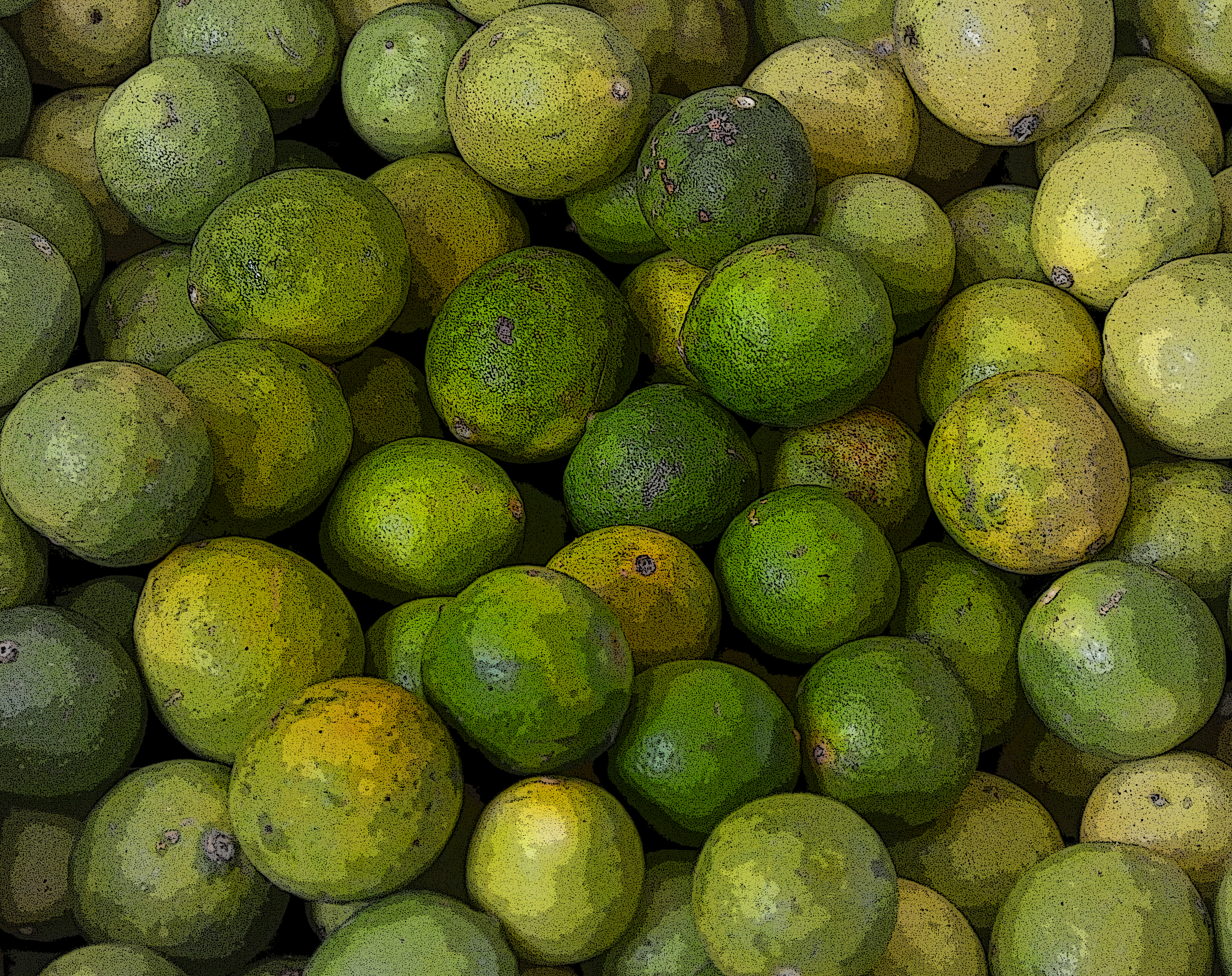
Limes-Oman“I’m so degraded, I owe at least a dozen limes.” Amy confesses. She is basically in a pickle, or perhaps more correctly out of pickles, pickled limes that is. She is deep into the fad of bringing limes to school to trade. But, Amy has been receiving more limes than she given away. With help from her sisters she replenishes her stash. However Amy’s  teacher has forbidden bringing limes to trade. She throws Amy’s precious forbidden fruit outside into the snow. Then, the teacher humiliates her. But Amy gains something from this horrible situation;  her mother pulls her out of school.

This episode from Little Women typically confuses the modern teenager. How could trading pickled limes become a be a fad. And what did Amy’s teacher have against them? However, current teachers have requested that certain popular trading items–Pokemon cards,  shaped rubber bands, and fidget spinners for, instance–be banned from school because of the disturbance these cause in classes.  

However, there is still a universal idea to be gleaned from the lime incident in Little Women. Amy was not innocent of wrong; even though the teacher’s reaction was too severe. Amy’s mother had warned her that this preoccupation with popular fads was going to cause problems. There is an absurdity to being caught up in fads, the smart phones with garish glittery cases, neon colored athletic shoes, and license character backpacks (which carry a trendy price tag as well). And, it is not just teenagers that assume these kinds of things guarantee the envy of others.

Adults also follow fads because they long for something new and different, but not so new and different as to scare conformists. They want a fad that others will flock too, also. What is the purpose of being the first person to have (fill in the blank), if nobody else really wants one? That is why fads play particular havoc with the arts. When a creative person experiments to perfect a new type of writing, visual art or music, they long for it to be acknowledged and accepted. Once it is accepted into the mainstream, multitudes of others copy it. Like a copy of a copy the later renditions are lower quality.

In writing, a fresh new set of characters in a unique setting is not allowed to exist for only one magnificent tale. They must be used in story after story until the audience notes a decline in the plots and character development. Rather than let a single creative narrative stand as it is, we milk it for as many stories as possible. The uniqueness fades quickly.  Creating  a work of art that spawns a fad has its own price. Amy got off easy with public humiliation and the loss of her precious limes.

Art work from photo by Tristan, CC BY SA


← Back

Thank you for your response. ✨

Posted in Literature, Writer's resource | Tagged , , , , | Leave a comment

Allusions and airs

Imagine you are discussing a current government situation with a friend. You mention an insight you learned about behind-the-scenes working of government while in our capitol. Perhaps you briefly mention that when George Bush explained this the first time, you didn’t quite catch it, but now you understand. 

You’ve implied that you talked personally with the former president. However you could have simply heard his explanation while sitting in a hotel room in Washington D.C. and listening to the evening news. What you are doing is leaving a hint about a famous person that you hope will be understood in a manner to make you seem more important—name dropping.

Allusions are literary name dropping. They make your writing—the setting, the situation, and the characters—seem more important because of their relation to famous ones. However, a weakness that I see increasing in current writing is the superficial use of allusions. Characters are compared to others based on appearance rather than action. I suppose this occurs because authors are alluding to what appears on the screen rather than in books. However, if allusions are going to help your reader connect to the character, they should deal with actions and motives.

Shakespeare was a master of using allusions as short-cuts in developing characters and conflicts. For example, in Hamlet, Shakespeare makes allusions to Greek mythology, Roman literature and the Bible. Hamlet, a prince of Denmark, despises his uncle who his mother married within a month of the death of his father, the former king. Hamlet decides to keep mum and not to tell everyone that he suspects his uncle was complicit in the death of his father. But the prince has a hard time not letting his feelings leak out. Rather than a direct verbal attack, Hamlet compares his father to his uncle as “Hyperion to a satyr.” Hyperion was the Greek sun god, a fairly noble one; the satyr (more familiar to modern audiences) was a lecherous, half man-half goat creature of myth.

During the play the Prince Hamlet requests itinerant actors perform a play at his palace for the “entertainment” of his mother, among others. For this play within a play Shakespeare uses Hecuba’s stirring funeral speech as written by the Roman poet Ovid in Metamorphoses Ovid. According to ancient literature Hecuba was the Trojan queen who grieved eloquently at the death of her husband and son. But the purpose of this illusion was not just to throw around Shakespeare’s knowledge of classical literature. It was to portray a parallel situation so the audience could see how Hamlet was trying to embarrass his own mother because of her hasty marriage to a questionable man.

Hamlet also refers to Cain and Able, from Genesis in the Bible in reference to his uncle and his own deceased father. This is an obvious allusion to fratricide, so that the less learned among Shakespeare’s audience would realize that Hamlet was practically stating that his father’s murderer was none other than his own brother. The majority of modern readers would catch that last reference even if they missed the other two.

In Shakespeare’s day, literary allusions were flung left and right during a play. The Baird didn’t underestimate the intelligence of his audience and they appreciated that. If you were watching a play and caught the meaning of an allusion, you thought of yourself as a learned person. For those that didn’t, well, there was plenty of lowbrow humor and sexual innuendo to keep them entertained.

← Back

Thank you for your response. ✨

Posted in Literary devices, Literature, Writer's resource | Tagged , , , , , | Leave a comment

Figures of seeing

Beowulf.firstpageReading ancient literature is difficult not just because of archaic words, but also ambiguous figures of speech that attempted to help the reader see the image and not just hear the words. Translate an early English text, such as Beowulf into completely modern words and students would still stumble over kennings (old idioms), such as whale road, sail road and swan road. All of these descriptive phrases are used in place of the word sea, as is the Latin word mere. Huge whales and sailing ships travel the ocean, but I’ve never seen  swans there (I suppose they may be found in estuaries that border the sea). Writers realize it sounds boring to use the same word over and over again. Sometimes they are too eager to to use alternatives.

When I read in Beowulf of a person described as a breaker of rings, I could see somebody hacking gold rings apart. Could it be a thief preparing his latest heist to  be melted? Actually it is leader, a minor king or chieftain, who may have gotten his gold by trading openly, as opposed to the stealth of a thief. The leader is a giver of rings as well as a breaker of rings. I suppose a more successful chieftain could give his loyal followers entire rings rather than breaking them into parts in order to have enough to reward them all.

But can you imagine the difficulties that that someone from that period would have reading our common writing, even if it was translated into old English, (and it did not discuss any technology that didn’t exist at their time). Are our highways, freeways, and interstates any less confusing than whale roads, sail roads and swan roads? These are distinct types of roads that conjure up distinct images for us, but in reality they overlap. 

Recently I was reading an email from my daughter in response to one I sent about how to cut mats with multiple openings to display pictures of a recent art fair. I concluded by saying the pictures had to be the “same direction.” She responded by saying there was no mixing of portraits and landscapes. That threw me for a second because I knew some of the pictures were of people, and others of the trees in park in which the art fair took place. Then, I realized she was referring to the orientation of the pictures. Rectangular pictures have been aligned either horizontally or vertically for eons. But now we have a new kenning, a new way of describing orientation based on how it is described in the print options.

Figures of speech fill our conversation and our writing with words pertinent to our time and our location. It is hard to see those common phrases as not necessarily being ordinary. Seeing outside of our own existence is struggle. Learning to understand figures of speech from another time and place is one of the steps to really understanding diversity.


← Back

Thank you for your response. ✨

Posted in Literary devices, Literature, Writer's resource | Tagged , , , | Leave a comment