Vibrant verbs

fun run 2Writers can throw around the terms used to describe interesting language – sensory images, unusual syntax, well-developed descriptions, and vibrant verbs. But incorporating these into writing and preserving the flow is a challenge. Recently I worked with some nascent writers trying to conjure vibrant verbs to replace the old, tired, common ones.

Actually, the common verbs are quite useful (which is why they are common). Did you ever try to carry on a conversation and not use some form of have, get, go, do or say? As the first exercise the participants had to tackle finding vivid variations of the past tense of “said” the past tense of say.

When I write dialogue I am acutely aware of how many times I have employed “said.” However, it interferes with the flow of the dialog if I have to keep stopping to search for alternate words. My own solution was to create a handy list of words for “said” that indicated basic emotions–timid, angry, scornful, happy, excited, surprised, scared and sad. Unfortunately “screamed” describes multiple emotions and using it every time it popped up in my list was equivalent to constantly crying wolf. To be honest, when I write I end up using “said” more than anything else. I’ve heard readers don’t notice this, and I hope that’s true.

In the second exercise the participants had to replace “walk” in the sentence “He walked across the room.” The new verbs had to express walking in a manner that indicated the person was slow, fast, in pain, exhausted and overjoyed. The tendency is to use adverbs or metaphors. I had to repeatedly explain the idea was to exchange the verb, using one word only. There is a pleasure in economy of writing, using few words even if it does sacrifice the richness of description. When one came up with “He walked across the room, sliding like a slimy snail.” I had to admit it was creative and worked just as well as “He slithered as across the room.”  

In the end we basically performed charades. I asked a volunteer to walk slowly across the room while others yelled out single words to describe what she was doing. They managed to come up with crept, crawled, shuffled and slunk. As we moved on to the remaining verbs, I realized that when a person walks  slowly  or with pain, it looks very similar. They still managed to come up with variations such as stumble, stagger, and totter. My favorite verb replacement “He slouched across the room” sounded more like the walk of an self-conscious teenager, a category that definitely fit some of my participants.

In the end, everyone borrowed from their neighbor to find the minimum of five verbs for each style of walking. By the time we finished we were all a bit bored with reading the same “vibrant verbs” over and over again.

← Back

Thank you for your response. ✨

Posted in Style and voice, Teaching writing skills, Writer's resource | Tagged , , , | 1 Comment

How to rant like a literature professor

Standard_Poodle_black_male_sitting (2)“That was the year I came to class at the start of the new semester and found only one student to sign up for Drama from Aeschylus to O’Neill.” Do you know who Aeschylus or O’Neill were?  I assume you know who Ray Bradbury was. The words comes from Ray Bradbury’s book “Fahrenheit 451.” We  might be going the same direction as Ray Bradbury predicted.

For required reading, my daughter had “Three Cups of Tea” in eighth grade, “Kite Runner” in ninth grade and “A Long Way Gone” in tenth grade and “A Thousand Splendid Suns” in eleventh grade. She felt only “A Long Way Gone” was a quality book.  She also realized she was receiving a very lopsided and inadequate education. Why? Evidently the canon of books by dead white men, had been replaced an even more restricted one – living authors that wrote about violence in Africa and the Middle East. The tendency was to concentrate on current, easily consumable, best-sellers in order to get students to read. Students need more help understanding literature that is not from their time. They can read the best sellers as they please. 

Students will read classic literature if someone is willing to spend the time to walk them through this, even when it is difficult. My daughter is dyslexic. When she was much younger, I asked her pediatrician to refer her for testing. He told me “Read to her, constantly.” So I did. Often, I read old books I had enjoyed as a child, but she still learned that reading was fun and a way to connect with other people. Sometimes, I obtained recordings on computer if she wanted them, because reading was hard for her. However, she relished the time we sat down and read together the most.

My daughter asked about the classics that I would recommend; I gave her a long and varied list. She chose “Anna Karenina,” “Faust” and “The Scarlet Letter” over the past three summers. The books were difficult, so we started having discussions. She realized authors are not irrelevant because they wrote in the style of their time. They are not boring just because their books required a lot of thinking. Sometimes we talked about why they were deemed classics, and what the author was trying to do. Soon, my son (four years older) started joining in the discussions. Now, my daughter is both dyslexic and a gifted student, although she was not identified as one until eleventh grade.

Just getting a student to read doesn’t give them the richness they need.  We are very conceited to think that books written in our time are the most important. There is a reason that some literature from the past has lasted so long, while the rest of it has been forgotten. Classics often require higher reading skills, but they also provide a more diverse picture of life – not just what has occurred in the past ten years. If this doesn’t happen students unfamiliar with classics become teachers unfamiliar with classics and the information is lost to the next generation. If they do not understand what is a classic from the past, how are they going to be able to determine a classic from the present?

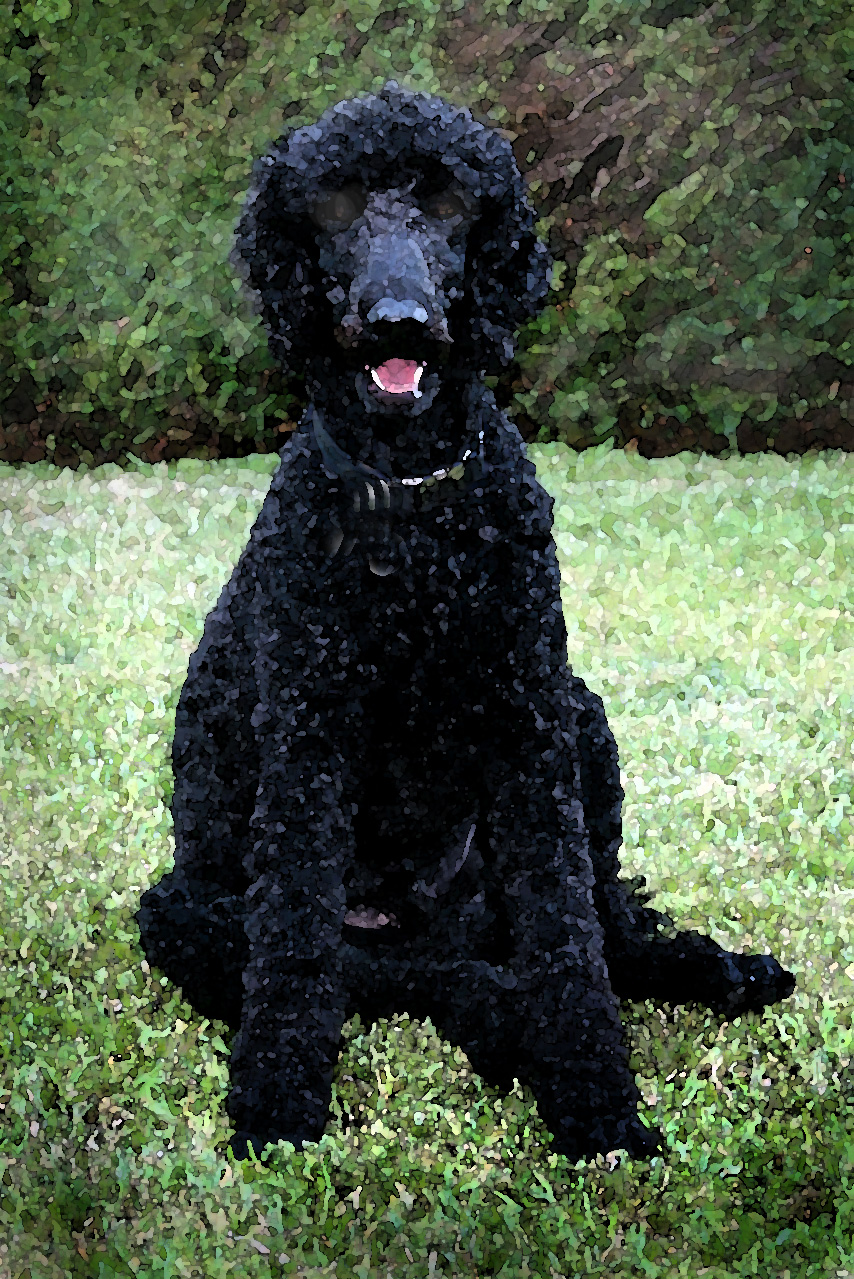
Recently an American literature teacher who works in a German school read a story he had written. He asked what the class thought his black dog in his story symbolized. My daughter answered Mephistopheles who first appeared as a black poodle in the German classic “Faust.” It fit because the dog was an indication how the main character, who seemed religious, had committed a horrible crime. However, the poor guy, a recent literature graduate, didn’t even know who Mephistopheles was.

Art from photo by A. Wray, CC BY SA

← Back

Thank you for your response. ✨

Posted in Literature | Tagged , , , , , , , , | Leave a comment

Superhuman weakness

A-fest12 004cAt one time there was a “story” circulating about a famous producer of modern supernatural fiction movies, and an unknown screen writer.
The famous producer says “I have a new idea for a movie.”

“What’s the plot?” asks the writer.

“There’s this boy, and he’s really a robot.” the producer answers.

“That’s a plot device, not a plot.” the writer responds.

The American public has an on going love affair with superheros and a lot of writers want to cash in on this. Yet, we keep on recycling the classic superheros. Why? When you give a character a supernatural powers, you can easily become preoccupied with the special ability. Every crisis that arrives is another chance to showcase the special power. Although the crowd of spectators may be astonished, the hero finds solving the problem as natural as breathing. So having a superpower does not guarantee an interesting plot, anymore than having a boy actually be a robot will keep audiences coming to theaters. If a story contains a character with powers so that problems can be quickly overcome, essentially there is no conflict, no plot–just a plot device.

Carefully crafting an interesting hero with unique powers requires attention to other things. For example, what are the character’s weaknesses? They need to have both an Achilles’ heel and a personality flaw.  The physical weaknesses is like Superman’s Kryptonite or the dragon’s soft spot. There may be a plant, an element, a delicious food that doesn’t bother us ordinary humans but it can drain the supernatural character’s power or even cause death.

The personality flaw actually helps us relate to the hero with super powers.  We automatically assume that characters that walk and talk like people (at least some of the time) also share the  traits of human nature. However, a superhero could have a drastically different way of thinking or feeling (or lack of feeling). This kind of character is more difficult to create but is ultimately more fascinating when well developed.

In a discussion with high school aged writers about the changes in literary rules for vampires, many of them lamented the fact that the new breed of vampire doesn’t have to watch out for sunrise. They seem just like humans only stronger, immortal and with a taste for blood, not necessarily human blood. However, one astute student noted that even the modern “humanized” vampires were more interesting when stories revolve around their interactions with humans and the conflicts that resulted. So the superhero with the fantastic new power that you have created needs to care about humans and be involved their society. The plot may not differ much from man of the age-old man versus man plots. But the addition of the superhuman power, and superhuman weakness, can make the plot more intriguing.


← Back

Thank you for your response. ✨

Posted in Literature, Story structure, Writer's resource | Tagged , , , , | 1 Comment

Avoiding flat earths

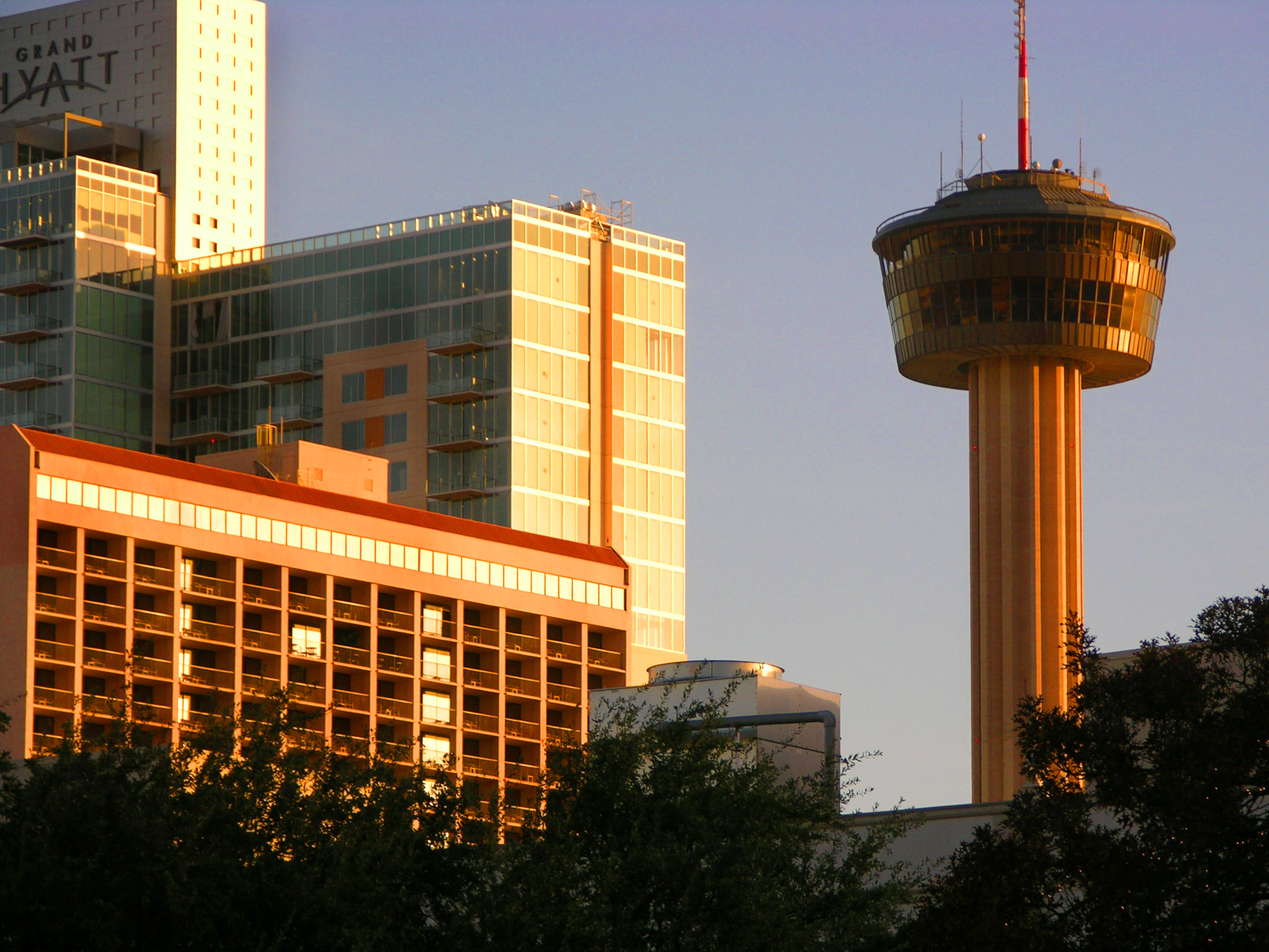
A few years ago, over the holidays, I stayed at a hotel on a scenic bend in the Riverwalk in San Antonio. It had been build in little over 200 days. How? Concrete cast room units, already decorated, were stacked in place. The rooms were still very nice, just identical. The prefab structure even had little wrought iron demi-balconies that evidently only the pigeons could access as evidence by the multiple layers of white bird excrement.

Sometimes, science fiction/fantasy authors would like the same kind of pre-fab world–an intriguing, complex landscape already laid out for them. Simple plug in characters and start the action. On the other hand, if that has  occurred, the reader must somehow be familiar with this particular world. People picking up this fantasy must have encountered it before, and obviously not everyone has read the same canon of literature. Lack of common knowledge among readers is especially true of fantasy. Each society has developed it’s own mythological backdrop, which often becomes the basis of fantastical literature.

Part of this trend to have an established fantasy world is based on public demand for works such as. J.R.R. Tolkien’s Lord of the Rings. He wrote this second venture into Middle Earth at his publisher’s insistence because his prior novel The Hobbit became unexpectedly popular. He based much of his made-up world on mythology–Germanic, Norse and Finnish. But, that did not mean that he got away without completing the tedious process of world building. This meant constructing the physical characteristics, flaws, and temperament of the world and its societies.

For example, in The Hobbit he gave details about the mountain in which the dragon Smaug lived. This story came to life with minutia about the appearance, the habits, and even the smell of this fire-breathing beast. Tolkien was somewhat restrained by the general ideas about mythical gold-hoarding dragons held by his audience. This was actually a benefit, which allowed him to elaborated even further, giving the dragon a unique personality and explaining the motives for his reign of terror on the local people.

Tolkien took these personalities of places even further in The Lord of the Rings. Regions within Middle Earth have unique characteristics–the humble homey Shire, the angry Misty Mountains, the eerily unnerving Dead Marshes, and the delicately balanced Isengard trying to flourish on the border of a wasteland.

For me and a number of other readers these passages detailing the imaginary world piques our interest. They are not simply pages of unnecessary exposition. Basing a fantasy world loosely on some existing culture or mythology that has been transported to another time and space does not do away with the need to flesh out the culture. The author must include ironic details about the society and describe the uniqueness of the environment to provide a well-rounded world for all readers. A fictional world can be flat, round or well-developed, just like a character.

← Back

Thank you for your response. ✨

Listman

Posted in Literature, Writer's resource | Tagged , , , , , , | Leave a comment

Unhuman geography

pen estonians (3)cScience Fiction and Fantasy do not describe the type of plot as much as the setting – a world in which imagination changes some of the rules. It is a world in which coming of age, adventure, mystery, romance, war or philosophical musings still take place. (Science fiction and fantasy novels should really have dual genre classifications.) It is actually a world that shares much more in common with the ‘real world’ than it differs from it, or it simply would not make sense to the readers.

Before embarking on creating your own world, you need to decide exactly what those differences are, as well as the limitations imposed on them. What kind of things need to be considered? How about a brief human geography lesson:

Population: Who lives there? Are they like earth-like people, animals and plants, or something else? If they are something else, limit your species drastically to prevent writing an alternate biology book.

Settlement: What kind of places do they live in? Metropolis, cities, villages, nomadic camps or massive hives?

Culture: How do language, religion, and education differ between groups in the society?

Political: How is the state organized? Even in a small group such as a family there has to be structures of leadership and division of labor.

Economic: How do they gain sustenance, protect themselves from the elements, produce goods and trade with others? Denizens of imaginary worlds must do some kind of work to survive.

Health: The medical rules depend on the species inhabiting your world (are they like earth or not) and their level of development. Characters will have to deal with the challenges of illness and death.

Development: What is the standard of living and quality of life in your world? Is it changing…. for better or for worse?

History: This is an area that I like to spend a lot of time on which prevents me from actually writing. Most readers don’t want lengthy back stories, so it often works best just to give hints about the history as needed,  unless it is a very intriguing history.

In fact, the final challenge is informing your audience of the differences without writing an alternate history for your world at the beginning of the novel.  The rules of your world should be introduced sporadically but before they are actually needed. If one or more of these imaginary characteristics (especially super human powers) are going to get your characters out of a sticky problem, make sure to introduce them far enough in advance.  In business just-in-time training is all the vogue, in writing just-in-time solutions are the mark of an amateur.

Artwork by S.L. Listman

← Back

Thank you for your response. ✨

Posted in Literature, Writer's resource | Tagged , , , | Leave a comment

Sci-fi delineated

sci-fi copyI, Robot is a collection of short stories that trace the development of robots until they take over running the world while humans remain blissfully ignorant of this fact.  In Perelandra, an earth man is sent to Venus  on a mission from God to counsel to the ‘Eve’ of that planet so she does not fall prey to the wiles of Satan’s agent. What does a work like Isaac Asimov’s, I, Robot  have in common with Perelandra by C.S. Lewis? Both are considered science fiction. That is the general classification for variety of seemingly disparate literature. What defines science fiction? Also what separates sci-fi from its twin, fantasy? It is a matter of time, travel, technology and transformation. These are the aspects that change the world in the book from the one we know.

Time: If a story takes place in the future, it is almost always considered science fiction in a broad sense. This allows authors to play with new technology (like cloning) or explore the possible outcomes of today’s issues (like global warming) when constructing their story. If the future society is regressing, that typically weighs heavily in the plot. However, if it appears to be advancing new technology is likely to contribute to the action. Our course, there is a third option. It could be a society just like ours, only with driverless cars and hover boards in widespread use. Novels in which the action is driven by magic (the basis for fantasy) can also occur in the future, but rarely do.

Travel: Many of the early sci-fi novels dealt with travel to unimaginable places, such as the moon (which we finally reached). However there is still a wealth of settings not visited by humans except in fiction, such as the center of the earth, the deep ocean trenches, or other planets. Jules Verne’s goal in his work was to describe the world through a series of Extraordinary Voyages. Of course, journeys that occur through time are a hall mark of science fiction. Also, works in this genre maybe be set on an imaginary planet, not only in the future but in the distant past. However, if the imaginary inhabitants of that place use magic more than machines, you have fantasy, such as Ursula Le Guin’s Earthsea series.

Technology: The best way to flaunt convention and write a science fiction novel set in the past, is create your own technology. Base the story on an intriguing invention that doesn’t exist in reality and is secretly possessed by a small research group, an ingenious inventor or even a mad scientist.  It doesn’t have to be confined to mechanical advancements–such as in the play, The Water Engine  by David Mamet. Bizarre biological and drug experiments are repeated themes and found in works like Island of Doctor Moreau, by H.G Wells.

Transformation: As mentioned earlier science fiction changes the world as we know it. When I was younger radiation was a favorite cause for special powers, until it became obvious that radiation simply weakens and eventually kills organisms. However, this idea stills shows up among rehashed super heroes.  In Sci-fi works, transformation is not caused by magic (as in fantasies) but the results could be the same. Advanced technology, visiting aliens, or a new microbe could result in humans becoming fairies, elves, vampires or shape-shifters. But, then you lose part of the fun of sci-fi in which you decide how humanity is changed, unrestricted by a cannon of fantasy creatures.

These four characteristics may define science fiction, but that is not all that is required. An imaginative, altered environment without a plot will not go far. There must be a hero with a problem to overcome, a problem that cannot be easily wiped away by the advances of science.  In fact, the problem may even be caused by these advances.


← Back

Thank you for your response. ✨

Posted in Literature, Writer's resource | Tagged , , , , , | 1 Comment

The problem with no problems

shadows that follow me (5)Dystopian novels  are much easier to write than those set in a utopia. Typically the main character manages to lift the veil hiding the ugly truth behind the society. For example in H.G. Well’s novella, The Time Machine, an English scientists travels to a distant future of dainty people living in an Eden-like setting.  First he perceives their lack of concern for each other and their fear of the dark, before realizing that they serve as cattle for the industrialized subterranean dwellers. The book is occasionally philosophical; the protagonist wonders if this warped society resulted from the upper class becoming dependent on the former slave class that was banished to the underground. However, the main character spends a lot more time running from the subterranean people than thinking about their origin.

A Modern Utopia, also by H.G. Wells has a fictional framework–the protagonist meets a man from a Utopian society on a distant island. But to a large extent the book is a philosophical essay. It describes the economy, the rights of women and so forth on this mythical stranger’s island. H.G. Wells kept trying to the Utopian novel right. First with In the Days of the Comet, which chronicles how an exploding comet from outer space wipes out the capitalist powers, so surviving humankind can rebuild the world correctly. Then, by writing Men Like Gods, set in a parallel universe, followed by the Future of Things, which is not really a novel in format but an imagined future history.

So has anyone actually managed to write about a Utopia with character development, rising and falling action, conflict, crisis and all those other reasons that I read books? Actually two of my favorites are Out of the Silent Planet by C.S. Lewis, and Lost Horizons by James Hilton. In each case the main character doesn’t search out or stumble upon the land of contented people but is kidnapped and taken there against his will. Naturally they view the place with the some suspicions as they are from a world full of greed, hatred, crime and war. The surprise is discovering the true nature of the society whether it be hidden in the canyons of Mars, or a valley in the Himalayas.

How does one create a gripping drama in a practically perfect world? Introduce some very imperfect humans.

Art by S. L. Listman

← Back

Thank you for your response. ✨

Posted in Literature, Story structure, Writer's resource | Tagged , , , , | Leave a comment

Highly desirable?

DSCN0762a wedding copyThere is a flood of dystopian novels compared to those that feature utopias because a society without problems has a tendency to be boring.  However, if you start reading The Republic by Plato, and you may discover that his ideal society has some pretty disturbing aspects.  The discourses that comprise The Republic supposedly record the discussions of the sage Socrates, who would eventually be executed for corrupting the youth. We really do not know how much Plato hid his own opinions behind the words that he claimed Socrates spoke.

The Republic proposes equal education for men and women, both physical and mental, so they could perform the same work. Then, he states what seems to follow logically. If men and woman are to have a status of equality, then marriage and the family must be abolished. The rulers will determine which people can mate and produce children. These children will be raised in state nurseries. There, they will be educated in the manner that the guardians of the state determine … this is beginning to sound a lot like a plot for a dystopian novel to me.

Thomas More‘s views of the family in Utopia is quite a bit different.  He used a device to make his book resemble factual reporting by quoting fake letters by real people about this mysterious island. On Utopia, marriage is alive and well. In fact the punishment for premarital sex is required celibacy and the punishment for adultery is the same as for many other crimes–slavery.  Every family on the island has household slaves wearing gold chains. I wonder is More knew how soft and malleable pure gold actually is. They would make chains that could be easily escaped.

Tommaso Campanella, a Dominican monk and theologian from the 17th century had curious ideas for family and reproduction in his Christian communist society described in City of the Sun. Men and women could be friends but sexual regeneration would be strictly regulated and follow set times determined by an astrologer–no emotional involvement allowed.

Of course, if you ask any group of people what their ideal society would be like, you will  get as many different beliefs as there are people, and some of them will be in direct opposition.  In the same way, reading books describing Utopian ideals through the century will show you the major concern of authors in times past–but not give you any clue on the formula to achieve the highly desirable, perfect society. 

← Back

Thank you for your response. ✨

Posted in Literature, Writer's resource | Tagged , , , , | 1 Comment

Too bad to be true

17 smog 023cSir Thomas More, a scholar, lawyer and statesman published a novel in 1516 describing a perfect civilization. According to the book, this too real to be true society existed on an imaginary island that he dubbed Utopia.  Of course, More was not the first to attempt to do this; he was heavily influenced by Plato‘s Republic, written over 18 centuries earlier. The utopian novel is an ancient idea.

The word More coined was used a few hundred years later by John Stuart Mill to create another new term, dystopia, a society too bad to be true. Dystopian literature is by no means new either. There are ancient texts that describe a society which is deeply flawed, and yet citizens continue to serve the powers that be, unaware of their enslavement.

The creator of modern works in this vein is often credited to the Russian author Yevgenv Zamyatin. He created a future world of complete human conformity in his novel We.  However, Jack London published Iron Heel over a decade earlier. London’s book described the rise of unscrupulous big business in an economic dystopia.

Dystopian novels almost always take place in a future society based on false ideals resulting in oppression. The particular flaw the society varies widely, based on what the author perceived as the existing threat to humanity. They often detail how humans are required to live in an enforced conformity to support theses skewed ideals, which  masquerade as the path to utopia. The environment that people inhabit is frequently artificial as well, highly urbanized with wild or natural areas restricted to the perimeter. The hero is typically awakened to the hidden controller of the flawed society by another character, an individualist that often does not survive. For the protagonist there is no going back. Once enlightened, the only options are escape, bringing down the society, or death.

Except in the case of one of the most famous dystopian novels 1984, which ended in a type of brainwashing. George Orwell feared the rise of authoritarian governments under the guise of protection of the common people. He depicted how this situation would result in a small oligarchy reaping all the benefits at the expense of the working class in Animal Farm, an allegory that is uniquely without an individual protagonist as well as his more frightening novel, 1984.

In Brave New World, the worship of technology allows the upper classes to experience lives devoted to pleasure and possessions at the sacrifice of the genetically engineered lower classes. Aldous Huxley introduces an upper caste man raised in the savage regions into his dystopian world to show the hopelessness of being free to live selfishly but forbidden to feel any kind of moral qualms.

Sometimes the human desire to erase the memory of any unpleasantness or pain is what leads to the twisting of a civilization into a dystopia. Such is the case in Ray Bradbury’s book burning society in Fahrenheit 451, and the deceptively innocent looking community in The Giver by Lois Lowry.

Of course, there is currently the flood of newer dystopian novels on the market. But, as the popularity of this genre rises many have forgotten the original use of it as a warning, and not simply a high adventure account of the overthrow of an evil government.

Posted in Literature, Writer's resource | Tagged , , , , , , , | 1 Comment

Glare of the limelight

Dscn0139crop

While watching a recent bone crunching pro-football game on TV, I saw a player dive into a fracas and come up the fumbled football. He took off for his goal, running for the sidelines to avoid being pummel by a pile of opposing players.  With the TV camera in close I could see his grin as his teammates gave him congratulatory fists to the his helmet. It looked like his head was being knocked around inside his helmet.

“Doesn’t that hurt him?” I asked.

“Players frequently do things to their own players that would result in a penalty if they did  it to an opponent,” was the response of a more sage sports aficionado.

If you read many of the current sports books you will find there is a much darker side to sports than the painful  celebratory punching that occurs between team members. The same sports aficionado advised me that “There is probably a greater percentage of felons who have worn an NFL uniform than the percentage of felons in the general public.”

So I decided to look back at classis sports novels to trace the “cultural development” of this bad reputation, only to find that there is a paucity of sports novels written before 1950. One of the most well-known, The Natural by Bernard Malamud, loosely based the life of Eddie Waitkus, was published in 1952. The novel has a darker, more realistic ending than the popular movie. The baseball prodigy, who loses his best years is a more reckless character that doesn’t succeed in his comeback and fails to win the big game for the pennant.

Occasionally there are more light hearted views of the sporting life such as George Plimpton’s Paper Lion, a real account story of how he gained access into the Detroit Lions’ training camp practices despite obvious ineptitude as a athlete.  But other than the scrubbed clean sports books for preteens and younger, many of the current “true stories” in sports describe a litany of gambling, dirty dealing and drugs that make the opponents seem like the least of the player’s worries.

Even in Friday Night Lights, H.G. Bissinger’s candid coverage of one dramatic season for the Permian High School Panthers,  there are painful revelations about high school football. The town gathers ritualistically to cheer on its athletes, who lose much in their gamble to become a stars, and are discarded as soon as they are no longer useful.  Sports have been around since ancient times, but their imprint on anything resembling literature has been fairly weak until recently. I suppose the heroes of the playing field have replaced the heroes of battle. And you are probably well aware of all the novels about the darker side of war.

← Back

Thank you for your response. ✨

Posted in Literature, Writer's resource | Tagged , , , , , | 1 Comment