Everyday Fantasies

Years ago when I coached teams of graded school-aged children for Odyssey of the Mind, I learned about imagination in the psyche of the preadolescent child. Some children wanted to be conformists and preferred not to suggest ideas that were not familiar. It was more important that their idea was acceptable to the majority of their peers. Other children would come up with “crazy” ideas. They would have to sort through all the bizarre, unworkable variations to find some that would work. 

Writing with a dose of fantasy woven into a familiar plot is closer to the tastes of the conformists. They like reading the adventures in unreality because this fits into their view of what a story should be. Students who are very conscious of what their peers think, prefer the same thing. In movies this is currently superheroes, and in books this is fantasy, tales of the wizards and magical creatures. They have a feel of familiarity, the echo of  frequently repeated fairy tales. The villain is not even human most of the time. So, there is no need to fear that this story will reflect some tragedy that may occur to them in real life.

Insert a bit of magic into this real world setting and viola, the author has eliminated the need for most of the boring worldbuilding.

The magic school setting is an example of a young adult (YA) fantasy theme that keeps appearing. It does not require a terribly sophisticated audience and uses the real world situation of a group of students that attend a boarding school together (at least the real world situation for upper class youth). Insert a bit of magic into this real world setting and voila, the author has eliminated the need for most of the boring worldbuilding. The storytelling can begin almost instantly. If the plot begins to drag, just inject a new magical peril, like a troll or a dragon from a fairytale.

Fantasy novels still require creativity to write, but many authors try not to vary too far from proven plots and currently acceptable tropes. In the past fantasy was often viewed as a lesser genre by adults. But, those readers who grew up at the same time as me saw fantasy break into the realm of respectable literature. Now, it is encroaching on the fewer and fewer realistic works appearing for that demographic. When I recently attended a seminar for authors of (YA) books, the speakers were all writing fantasy works. Nobody seemed to be creating realistic novels for this age group. So, there should be room for my work about the struggles and trials of ordinary teenagers, right? Probably not.

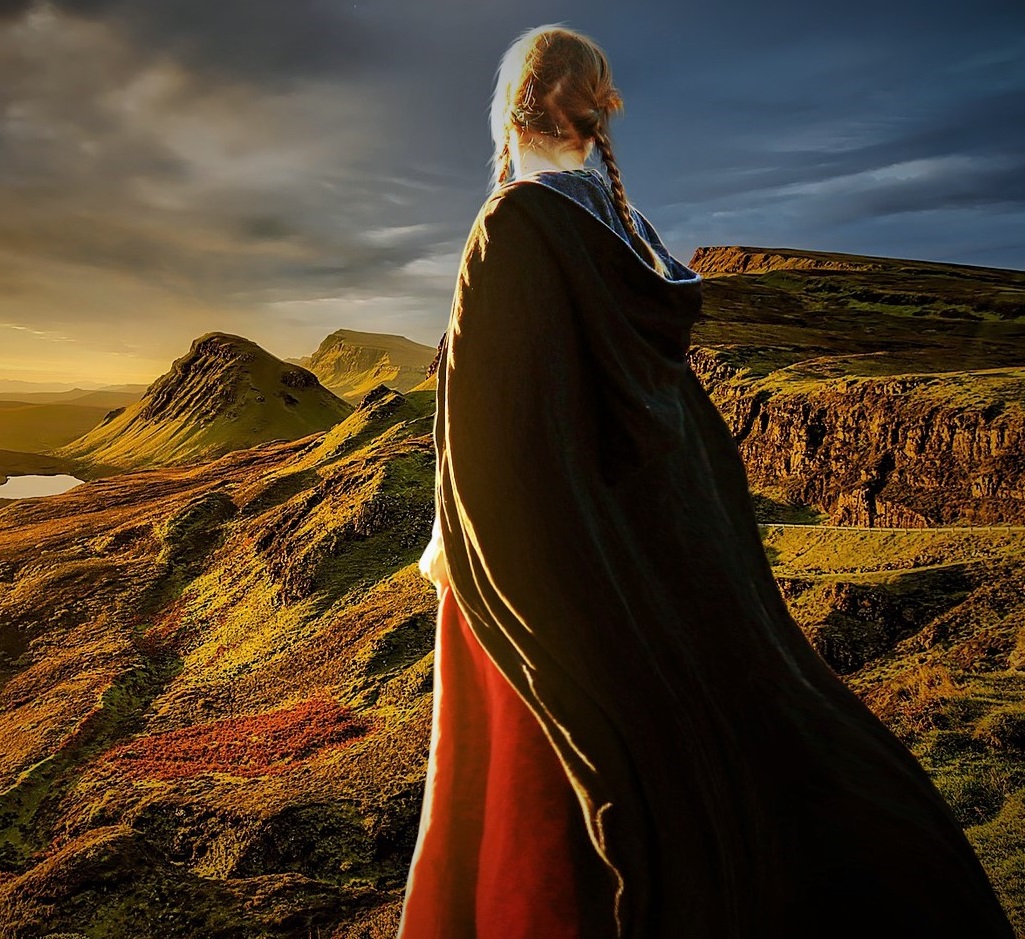
Illustration by www.pikist.com

Posted in Literature, Novels, Trends in books | Tagged , , , | Leave a comment

Predicting the Future of AI

In science fiction, predictions of a future that did not occur were made by authors such as Jules Verne, H.G. Wells, Robert Heinlein, Ray Bradbury, Arthur C Clark, and Isaac Asimov. No one has traveled to the center of the earth, and considering the heat and pressure that exist there, no one probably ever will. Neither have we seen advancements to colonizing Mars or creating androids indistinguishable from humans. Their imaginative fiction is still interesting to read, even if it did not follow the path of our own development.

Hardcore science fiction readers may mourn the loss of science fiction writers who keen insights into possible futures. Ray Bradbury with his prescience about technology predicted wall size TV’s in a kind of theater room and “clam shells” that a people stuck in their ears to replace the world’s noise with music in Fahrenheit 451. However, the past writers were taking pot shots when guessing about power of new technology such as computers.

We have yet to see humans on another planet or a computer with truly independent thought processes, even though Arthur C. Clarke wrote stories making these events seem plausible. Tales of space travel to distant solar systems (or even galaxies) are entertaining. However, the amount of time it takes for light from these places to grace our skies is mind boggling. Would humans ever be able to reach them? Therefore, travel in outer space is being usurped by journeys into inner space. The new frontiers in science-fiction literature are virtual reality (VR) and artificial intelligence (AI).

Travel in outer space is being usurped by journeys into inner space.

The VR and AI that exist today are used in very prosaic ways, such as recalling steps for a mechanic, teaching your phone to recognize your voice or completing the drudgery of finding research. These are not exactly thrilling plot lines. Jaron Lanier, one of the founders of virtual reality, argues that computers will never become masters of matter and life. As humans we don’t have the intelligence to produce ones that run programs that are not cumbersome and error-prone, because we are error-prone. Science fiction authors are again taking potshots at predicting the future by creating virtual reality and artificial intelligence that is sophisticated beyond human cunning.

The real threat, according to Jaron Lanier, is the belief that our collective wisdom can spawn ideas superior to that of a few individual humans. The “hive mind” relieves individuals of responsibility for actions. A pack of anonymous people online can turn into a vicious mob. So, if an author is looking for a new twist on the use of artificial intelligence in fiction, one only has to look as far as the errors made by masses in the name of science in the past. It may not be the dangerous self-growth of artificial intelligence that drives the plot towards the crises, but how humans use it in their very fallible and irresponsible ways.

Photo by K.N. Listman

Posted in Writing trends | Tagged , , , | Leave a comment

Searching for a Quest

I first encountered Lord of the Rings while I was in high school and J.R.R. Tolkien was still alive. Like most people in the United States I had never heard of him before. However, my friends were enthused about a trio of dog eared paperback books they passed around. It was a good way to keep oneself occupied during the less interesting classes. I couldn’t get the first book from anyone who had the set, so I started with the second, and then finished the third book. I was so enamored with this tale, I went back and read the first book. It still thrilled me, even though I knew how it would end. I wouldn’t get hold of a copy of The Hobbit until much later.

Much, much later a friend of mine who had a desk cluttered with Star Wars memorabilia, and raved about each movie, admitted that she never finished Lord of the Rings because she just couldn’t get into it.  Obviously, you can’t write the perfect quest for all people, because their expectations differ. But most quests, even those not in fantasy or science fiction, share similarities. First is that the trip is not aimless, but has a goal, whether it is reached or not. In some twists, the treasure that the adventurers seek is not the one they find. Some things are more valuable than wealth.

In some twists, the treasure that the adventurers seek is not the one they find.

The following are some standard quest goals:

  • A fabled treasure or magic object that imbues the owner with tremendous power (probably the most common)
  •  A rare substance which can stop a plague or prevent another kind of disaster (also common)
  • A special person that the main character needs to gain power, prevent a pending disaster or stop the homeland from dying. (a combination of the those just mentioned)
  • A new homeland because the old one is dying or overrun by a hoard. This is the typical post apocalyptic journey (also common).

Less frequently found is the protagonist who seeks a group of people to give who need his knowledge and power to prevent some of the previously mentioned disasters. So the idea of taking an item to its destruction, as in Lord of the Rings, or finding an item that must be destroyed is not used as often either–at least before Tolkien’s time. 

No matter what quest is chosen, the writer usually indicates the value of the quest before the characters start trekking for weeks on end. Which brings us to the next problem. What kind of trials and obstacles will your characters face? This requires a variety and not just repeated battles. The danger can come from surviving dangerous terrain, severe weather, wild animals, or the deceit of friends as well.

How do you find inspiration for all of these ideas? Borrow events, from the present, from past history and from mythology. Myths are not always restricted to ancient civilizations. People secretly have a grand desire to be strong enough to be in charge of their destiny like an ancient hero or a future scientific whiz. People continue to be  enthralled by anything that promises great fame, fortune and power. But, what if all those wonderful things people wanted were destroying humanity? Then, the brave hero must go on a quest into a new world to find a solution to that problem.

You would have another quest to write.

Posted in Novels, Story structure, Writing trends | Tagged , , , , | Leave a comment

Defining Sci-Fi

In Perelandra, an earth man is sent to Venus  on a mission from God to counsel the ‘Eve’ of that planet so she does not fall prey to the wiles of Satan’s agent. I, Robot is a collection of short stories that trace the development of robots until they take over running the world while humans remain blissfully ignorant of this fact.  What does a work like Perelandra by C.S. Lewis have in common with Isaac Asimov’s, I, Robot?  Both are considered science fiction. What defines this seemingly disparate genre and also separates it from its twin, fantasy? Let’s look at some classics to determine this. 

Time:  Most stories taking place in the future are considered science fiction.  This allows authors to play with new technology (like cloning) or explore the possible outcomes of today’s issues (like global warming). Future societies do not have to progress but can return to a more primitive state that resembles the medieval world of fantasy. Any magic is usually chalked up to the natural abilities, such as harnessing the force of the universe in the Star Wars series. If the inhabitants of an imaginary place that exists outside of our time uses magic more than machines, that denotes a fantasy, such as Ursula Le Guin’s Earthsea series.

Travel: Many of the early sci-fi novels dealt with travel to unimaginable places, such as the moon, which we have reached but not colonized. However, there is still a wealth of settings not yet visited by humans except in fiction including the center of the earth or the surface of other planets. Jules Verne said the goal of his work was to describe the world through a series of extraordinary voyages. He is definitely a science fiction author. Journeys that occur through time are a hallmark of this genre, so works may be set not only in the future but also in the distant past. 

Journeys that occur through time are a hallmark of this genre, so works may be set not only in the future but also in the distant past. 

Technology: Travel to distant times and solar systems requires technology that does not yet exist. Of course, there could also be a society just like ours, only with driverless cars and hoverboards in widespread use. Perhaps, the best way to flaunt convention and still write a science fiction novel set in the past is to create your own technology. Base the story on the history of an intriguing invention, which never really existed. Have it secretly possessed by a small research group or an ingenious inventor–such as in the play, The Water Engine  by David Mamet. 

Transformation: Science fiction changes the world as we know it. When I was younger radiation was a favorite cause for special powers, until it became obvious that radiation simply weakens and eventually kills organisms. However, this idea still shows up along with new microbes that change existing life into forms we have never seen. Technology can also include yet to be discovered advances in bioengineering  that lead to bizarre results, such as those found in the Island of Doctor Moreau, by H.G Wells. 

These four characteristics may define science fiction, but that is not all that is required. An imaginative environment needs an equally ingenious plot, and a protagonist with a problem to overcome–a problem that cannot be easily wiped away by the advances of science.  In fact, in the doomsday version of science fiction, the problem may even be caused by scientific advances.

Posted in Literary devices, Writing trends | Tagged , , , | Leave a comment

A Series of World Building Woes

I am tentative about announcing a series because I recall the thrill of reading Kidnapped by Robert Louis Stevenson when I was much younger. In this historical fiction a teenager escapes imprisonment on a ship and flees through the wild highlands of Scotland with the assistance of an actual historical murderer, Alan Breck Stewart. Stevenson wrote a sequel to this book named after the main character, David Balfour. The beginning section, in which David encounters Stewart again piqued my interest. However, the rest of this novel devolved into a love story that was pale in comparison to the first book.

Despite my fear of launching into a series that I could not complete, I started playing with plots for an alternate world series. Initially, a small group of people cross a mountain range and encounter a land with signs of a flourishing civilization that had disappeared, or so they thought. Then, they started running into the inhabitants of that fallen empire. But, I wanted my characters to deal with problems that have plagued people throughout the history of our real world to give me enough fuel for my series.

Series do not have to be started with the intention of creating one. A complete first novel, which would seem to be a stand-alone work, can be expanded. There are numerous ways to do this. Minor details of plots are often not completely wrapped up in the first book and can serve as a basis for the next. The books that follow can explore the life and times of lesser characters as they move into the limelight as the protagonist. In addition, the author can move back in time to prior adventures, such as the origin story of the main character, or forward to show the character’s influence on the future of their “world.” 

When Orson Scott Card wrote Ender’s Game it was a novelette complete in itself. First, he expanded it into a novel, introducing new characters. Then, he started a series based on the characters found in this Hugo Award winning science fiction tale. The next one, Speaker for the Dead takes place in the future, 3000 years later. Ender’s Shadow, a parallel novel, retells Ender’s story from the viewpoint of his very different friend, Bean. The Shadow series continued with the story of Bean’s children. There are now sixteen novels to tell the saga of Ender, his siblings and friends. 

It is not easy to create a fresh new story each time. Books in the series should grow the sphere of the original characters. It would be nice if I could come up with a series of problems that make up one overarching challenge for the main character in the rare case that he or she became unexpectedly popular. Then, I realized the solution was to use Card’s tactic. Build my alternate world and create enough ancillary characters that could appear with problems of their own in each new novel in the series.

My alternate world scheme would not leave me alone in peace. I couldn’t figure out how to develop new plots when I had yet to build my world. Then, I realized I had almost duplicated the society in Britain after the Roman leaders pulled out the military, leaving the people to fight migrants and invaders as they saw fit. Their newcomers arrived by sea, and not over mountains. As I started researching this era, the scarcity of documents from that time period became a challenge. I wanted a realistic history, but the only ones written were penned by two clerics, more interested in defending their religious views than recording history. The later documents were not reliable.

Then, I recalled a student who approached me moaning because she couldn’t find any factual information for a history class report on King Arthur. I informed her that everything she had heard about him was a legend. Historians did not know if he really existed. I was facing the same problem as my new series was set to occur during the time that Arthur was supposed to have lived. I had thought that changing my alternate world to a real historical time period would make it easier. But, I would still be building a world for my characters almost from scratch.

Posted in Characters, Creativity, Literary devices, Story structure, Writer's resource, Writing trends | Tagged , , , | Leave a comment

Messrs & Co

Vernacular language can both draw in readers and become a pitfall. When we understand the vernacular, we feel a closeness to the author, having come from the same world and using those same words. Acronyms and abbreviations are no different. If abbreviations like HEA, ISBN, OTP, or WIP sound strange, we assume the author is just not like us, even though these are abbreviations specific to the writing profession. Acronyms are no longer based on our location or our generation, but our interests. I can converse with people on the other side of either ocean through the internet. But, we still tend to gather in cliques based on the hobbies and professions that form our language.

One of my favorite shortcuts is using AKA when listing the common name for a plant behind the scientific designation–Bellis perennis, AKA daisy. In addition to “also known as” this abbreviation is the name for a people group in the Central African Republic and another one in Pradesh, India. It also stands for Alpha Kappa Alpha, and I am not a sorority girl. So, AKA fails the test of being a useful acronym for me.

There are even older ones that we use without understanding. Do you know the difference between i.e. and e.g. Would it even help if you knew the words behind these initials? First, i.e. stand for “id est”–Latin for “that is.” The abbreviation e.g. is more complex. It means “exempli gratia,” which can be translated as “for example.” Ditching these Latin abbreviations and using the English words is acceptable for almost any kind of publication.

Most of us know what to do when an invitation ends with RSVP. I inform the people that I am attending, so they will supply enough food, chairs, or whatever is needed. However, I can do this without comprehending what “Respondez s’il vous plait” means. My computer word processing program obviously doesn’t understand this phrase as it indicates these are not recognized words. This is a warning to people that believe everything you see marked incorrect by a spell/grammar check is wrong.

If I spy a person cutting across the field in a four-wheel drive vehicle, I may comment on that culprit off-roading in a Jeep. GP, which stands for General Purpose vehicle, morphed into Jeep when used by the US Army a few wars ago. Radar and sonar are also words with a military origin, as is my son’s favorite sport–scuba diving. New technologies leave a trail of new words formed from acronyms. Recently, I’ve received a number of inquiries from people who claim they are specialists at increasing the SEO of my website. Few explain what that means. However, if people understand the definition of SEO, they could do the research to improve the traffic to their own websites without hiring these experts. Unexplained acronyms are a way of making people feel less competent and in need of professional help.

But, I have my revenge. I throw in a few old abbreviations and acronyms–not the i.e. or e.g. from Latin times. Instead I use those only one to two hundred years old. They are harder to decipher because English spelling was not standardized. If my reply is addressed to “Messrs & Co” what do I mean? This is a polite 18th century abbreviation for multiple men owning a single business.

What is my conclusion concerning the use of acronyms in writing? Nearly all of them will place a piece in a specific time, which is not bad. Just leave clues to what they mean. Finally, I offer a bit of dubious wisdom from one of our founding fathers that touches on the use of abbreviations and acronyms.

You should never trust a man who has only one way to spell a word

Thomas Jefferson


Thomas Jefferson, The Works of Thomas Jefferson, Federal Edition (New York and London, G.P. Putnam’s Sons, 1904-5)

Posted in exclusion, Group psychology, Literature, Nonfiction, Social media | Tagged , , , | Leave a comment

The Life Cycle of a Cliché

What is the difference between a trite phrase and cliché one? The similarity we know. Both are overused. Either term is applicable to many common expressions. Trite phrases are often descriptive: busy as a bee, red as a rose, bright as the sun. A command to “think outside the box” in order to stop using trite phrases employs a cliché. These are often well-worn but useless chunks of advice thrown back at people when a person cannot provide a real answer.

Often clichés have around a thirty year life cycle. The phrase becomes popular with adolescents and “twenty-somethings.” Then, the over-used saying drops in popularity after that time. The formerly “hip” phrases often regain a following when the generation grows older and start reoccurring in movies and TV programs due to nostalgic appeal. However, give an over-used phrase few years hiatus after that and it becomes largely incomprehensible to the next generation. It’s not wise to load your books with them unless you are writing period pieces. Trite phrases and clichés date books and make them seem no longer current.

Humans have the bizarre desire to repeat what other people say and still sound unique.

Humans have the bizarre desire to repeat what other people say and still sound unique. At one time all that is now considered trite was original, fresh and new. These phrases lingered on the periphery of written and spoken society. At some time in the future, current worn-out phrases will probably return to anonymity.

Comments like “twenty-three skidoo” and “Mrs. Grundy” are very rarely used today. They might be included in writing that deals with the period from1900 to 1930s. They might still pepper the dialog of characters from those times. We are often more familiar with positive sounding trite phrases from the past and still willing to praise something as the “bee-knees” or the “cat’s pajamas” today. There is a reason that derogatory terms like “Mrs. Grundy” disappear from our speech. We don’t openly explain what we dislike about this too proper and precise woman. The next generation is timid about using our clichés, not because they are too common, but because they don’t know what they mean.

However, there is another fate for frequently quoted phrases that remain in use. They may become idioms. Translators still struggle to convert our favorite idioms like “it’s time to hit the road,” into other languages. But, we keep using them. In college I studied literature/languages and during one class I discovered Shakespeare referred to jealousy as a “green-eyed monster” and a pointless search as a “wild goose chase.” When I learned koine Greek (the kind of Greek used during the Roman empire), I found that many of their idioms had transferred into English. Perhaps, that is because the early educated people were trained in Greek and Latin.

Unlike clichés and trite phrases, an idiom has staying power, which allows us the freedom to use them when we write.

Posted in languages, Style and voice, Translations, Writing trends | Tagged , , , , | Leave a comment

Writing Like You Speak

When reading an author’s discussion thread, I noted that more than one person assumed the trick to creating a unique writer’s voice was “writing like you talk.” There is some truth to this if you are a good verbal storyteller. A storyteller often uses “colorful language” to appeal to people who comprehend their regionalisms. Reaching a larger crowd requires more than a smattering of colloquial phrases. Write like you speak and you may be understood by your neighbor today. But, readers removed by a few years, a few hundred miles, or a few rungs on the socioeconomic ladder, must work harder to read what you have written. 

In a discussion on a book written by a prominent newscaster one person observed, “You can really hear him speaking as you read it, and that really slows you down.” The book mimicked the newscaster’s conversational style. However, without the vocal inflections the text was harder to interpret. I prefer reading to listening for the very reason that I can read about three times faster than I can listen. This led me to consider the complications of writing like you speak.

Most people tend to be more dramatic and less accurate when speaking. This allows them to be heard over competing voices. Frequent repetition is a hallmark of speech making. People use filler speech, such as “when you think about things,” because they are actually thinking about things–such as what to say next. One of the biggest drawbacks to writing this way is increased word count for the amount of content. This may be at the root of my friend’s perception that reading a book written in that manner, “really slows you down.” 

Tone is necessary in writing. Much of how we interpret what people say is by interpreting their tone of voice. But because there is no audible tone in writing, it requires unique phrases to achieve the same impact as vocal inflections. Use of current catch phrases and regional interjections set the tone for the text, but may contribute little to the content

People use filler speech, such as “when you think about things,” because they are actually thinking about things–such as what to say next.

Occasionally, I enjoy books by authors who write in the vernacular, in small doses. Mark Twain actually got his start as a lecturer who made his living by talking. His novels were published as serial installments in magazines for a reason. Short passages in folksy language are interesting. However, I witnessed too many students dread the time they spent slogging through his imitation of Old English speech in The Prince and the Pauper. I eventually had to give up on his unabridged version of A Connecticut Yankee in King Arthur’s Court.

So, when you write like you speak, recall when conversations with another person who chattered on assuming their tone of voice made them sound interesting. Remember all the meandering thoughts and unfinished sentences. Then, edit your work to remove these but keep the tone. People may pay attention when you speak because that is polite. However, you’ll never know when they stopped reading what you have written.

Posted in Ideas for writing, Style and voice, Teaching writing skills, Trends in books | Tagged , , | Leave a comment

Story with a View

When intriguing characters with challenging goals appear in my random daydreaming, my mind fastens on them as I imagine their life. I am flooded with decisions to make. Which events from the past formed this character? What frustrates them? What  inherent weaknesses affect them? How are they going to grow enough to reach their goal? 

Once the plot for this character forms in my mind, I have another decision to make. Which point of view (POV) will I use to tell the story? The first person narrator is my go-to choice. Normally, I find this POV the easiest to write. I don’t have to worry about what to reveal to the reader. They are only privy to what my narrator knows. 

The main character for my most recent work in progress is just barely an adult, an outsider in a town that distrusts him, but a town that desperately needs his knowledge. However, he has little idea of the deceit lurking around him. This particular character would have to keep sneaking around in places where he would get discovered or overhearing conversations that he should not hear in order to comprehend the full danger. This kind of behavior didn’t seem to fit his candid manner. Therefore, I need another character’s viewpoint to reveal the secret snares that the main character faces to keep the reader in suspense. What are my other options?

Sometimes the best first person POV is an observer. I know this is contrary to the idea that the main character should propel the story forward. “Always start with the main character” is standard advice, and I want the viewpoint character to be the one with the richest inner struggles and conflicts. However, observers are the main characters who tell the story as they see it occur in many novels—from Ishmael in Moby Dick to Nick Carraway in the Great Gatsby. 

Third person limited, like the first person viewpoint, only lets the reader see what one character observes.

I have written in the third person POV before and could attempt this again. Of course, my most frequent choice is third person limited. Like the first person viewpoint, it only lets the reader see what one character observes. I can include interior thoughts, expressed as if writing in first person and marked by italics. The third person deep POV is just a way of telling the reader of what the character is thinking, similar to first person POV. But, the author can do this for multiple characters, so it is easy to slip into head hopping if I am not careful.

In my case, I needed multiple third person POVs so that the reader would be privy to the knowledge of more than one character. The major difficulty with this style of writing is remembering to stay with one character’s thoughts until the end of a chapter (or at least the end of a section). Otherwise, I have the same problem as the author attempting the almost impossible task of writing multiple first person viewpoints. The readers’ heads keep spinning trying to figure out whose viewpoint they are seeing. That is even more challenging than the omnipotent third person viewpoint in which the author has the option of revealing anyone’s ideas and even the consensus of an entire crowd. With such freedom, third person omnipotent POV requires that I be discriminating and show only what the readers need to know.

Finally, I decided that the main character’s step-mother knew enough to introduce the conflict. Because she is ambivalent towards her step-son, the reader is never sure whether she will even warn him of dangers looming ahead or not. In her attempts to pacify the town’s leaders, she might not even protest their devious plans. Then, I could switch to the viewpoint of the main character, her step-son, as the conflicts heated up. However, I decided to come back to the step-mother’s POV at the end, even though she is a secondary character, because her role required the most growth.  

There are no hard and fast rules for choosing POV characters. Sometimes I just have to write scenes from one viewpoint and then another to see what works best. Whichever POV I select, it must compliment the story itself.

Posted in Literature, Novels, Writer's resource, Writing trends | Tagged , | Leave a comment

Comments About Commas

Among literary devices, one of my favorites is polysyndeton. Despite its fancy name this is a plain device and easy to use. Simply repeat “and” after every word in a list. Polysyndeton provides quick and simple emphasis.

“While driving through a wildlife preserve in Oklahoma I spied llamas and zebras and ostriches and emus and water buffalo. However, I saw no wildlife native to the state.” 

Isn’t it pretentious to use a lengthy Latin term for a literary device that imitates the way a child speaks? Not at all. No commas were used in my list. But, the repetition of “and” made the meaning clear. Such clarity cannot be attributed to the Oxford comma. This punctuation mark, which I prefer to call the serial comma, gained its infamy in a legal case. The lack of a comma between the last items in a list dealing with overtime payments for delivery drivers cost a dairy in Maine five million dollars. 1

Some writers believe such vast sums of money to be of the utmost importance. They don’t want anyone to challenge the sanctity of the Oxford comma. But, using the serial comma doesn’t always work. I found that out when I asked for feedback on a story. The main character, a recent college graduate, reflected on his three day visit to the immense city of Paris in which he meets three women. He never caught the name of the first one, but he knew her intended career, to sing in the opera. By the second day he was a bit wiser and learned more about the second and third young ladies when conversing with them. So, the sentence states, “He compared the stunning opera singer, Brigitte, and Tova.” 

Some readers assumed Brigitte was synonymous with the want-to-be opera singer. The commas around her name indicated an appositive. Using the serial comma to separate the last two items in the list didn’t make the meaning clear but muddled it. If I leave out the comma after Brigitte, it becomes obvious that the young man is weighing the attributes of three different people. The ardent Oxford comma aficionado would say, “You must reword your list so that the comma works.” I could have used “and” between each woman he considered because polysyndeton works where the Oxford comma fails. “He compared the stunning opera singer and Brigitte and Tova.” No comma is needed.

Why is preference for the Oxford comma so proudly proclaimed? Evidently it reveals a certain kind of personality. Claiming affinity for the Oxford comma has been noted on dating sites as a way to show erudite sophistication (especially on Tinder).2 On the other hand, people on Reddit find championing a comma a bit pretentious. I find people who use a specific type of comma as a way to judge other people’s value as a way to turn a useful punctuation mark into a ridiculous obsession. 

What would others think about me if I boldly described myself as polysyndeton proponent?

1 https://www.nytimes.com/2018/02/09/us/oxford-comma-maine.html

2 https://www.gq.com/story/oxford-comma-enthusiasts-unites

Posted in Ideas for writing, Literary devices, Literature | Tagged , | Leave a comment