Living in a “weed-out” world

grass (1)The move to on-line degrees in higher education has been occurring since the beginning of the twenty first century and predictions abound that this will happen for almost all college courses, by the time the pandemic subsides.

Currently e-learning is relegated to upper level classes with independent student research and projects, and those memorization-heavy entry level courses formerly known as “weed-out classes.” These are typically freshman year classes aimed to eliminate weaker students. However, they may not even contribute to what students need for their degrees as they are often based on heavy amounts of information or large number of assignments rather than critical thinking and problem solving skills. 

Student often no longer go through the complex process of figuring out what they need to know. Higher level thinking skills do not exist in vacuum but must be connected to a course of study. They require a greater depth of understanding in a particular domain. In the effort to teach a plethora of technical information, the requirements to use executive functions and higher level thinking may be fading from the education received in colleges and universities.

It may be shorted sighted for employers to expect college graduates to have already honed new skills in whatever form of technology the company uses, but they do. They often weed-out prospective employees based on lack of current technical skills rather than lack of critical thinking ability.

Half a century ago, as an art major, I had to rely on chemistry for printmaking and photography, and I used geometry and trig to creating computer art before the software was developed which eliminated the need for math. Producing a constant flow of innovative and well crafted art work required integration of other knowledge from other fields. The weed-out classes do not provide that.

Koebler, Jason. Experts: ‘Weed Out’ Classes Are Killing STEM Achievement April 19, 2012 (viewed 23 Jan 2013)



Posted in Education trends, Technology in education, The information age | Tagged , , , , , , , , , | 1 Comment

Creative mess

DSCN0746Psychologists often study creativity like a kind of pathology, researching causes of creativity, methods to diagnosis it, and determining best practices. The creative person is often contradictory because the strongest drive in creative people is to not be like other people, even other creative people. During the 1950s, when creativity research was acknowledged as a legitimate scientific subject, Psychologist Frank Barron tested and conducted in-depth interviews with writers, architects, research scientists, and mathematicians  at University of California in Berkeley.

According to Barron the highly creative person is “both more primitive and more cultivated, more destructive, a lot madder and a lot saner than the average person.” Creative people could appear and actually be conventional in many ways. However, “they tend to rebel against conformity as they accompany their own private visions down lonely, untrod paths.” They also could appear highly neurotic on personality tests while having an ego strength that could deal with stress, and psychological pain.

Barron attempted to describe the psychology of imagination, which found the need for both order and disorder. According to his research the creative writer espoused originality, complexity, independence of judgment, and aesthetics sensitivity. His creative subjects often took extremely complex elements to produce a final product that was elegant and deceptively simple.

Creative people can hold two opposite views at the same time and yet see no contraction, because they were prone to “integration of dichotomies.” They can be both naive and knowledgeable, emotional and logical, disciplined and free spirited. When you think about it, an either or view does not necessarily make life easier. It is a refusal to deal with ambiguity that naturally abounds. The highly creative person’s tolerance for ambiguity and messiness is balanced by a strong desire to bring order. “It was a powerful motive to create meaning and to leave a testament of the meaning which that individual found in the world, and in himself in relation to the world.”

Barron, Frank and Harrington, David M., Creativity, Intelligence, and Personality by Frank Barron. Annual Review of Psychology, 32 (1981): 439–476.


Posted in Creativity, Education trends | Tagged , , , , , | 1 Comment

Group IQ

Picture 012a3One of the tricks in getting groups to be more creative is tohave a hand in determining who goes into the group. A number of gurus on increasing group creativity will mention the need for greater diversity in groups. How exactly does this work?

Wooley and Malone performed research on “group IQ.” Members of a group were tested for IQ individually and then randomly assigned to a team. Each team  was required to complete a number of complex tasks such as creative brainstorming, and solving puzzles. Interestingly enough the teams containing the people with higher IQs did not do any better. However, the teams that had women did. The more women there were on a team, the better they did at the tasks, unless the team was entirely female.

Choi and Thompson found that rotating new members into already existing groups improved their performance in creative tasks. It was the influence of the “newcomers” that exerted a positive impact so that people already residing in the group increased both the number and diversity of ideas.

Of course, there are certain people you just don’t want to include in a group because it would drag the other people down, such as pessimists.  Right? Not at all. According to Haimowitz when people are primed to think about difficult situations with negative outcome before work, their creative output was higher.  “Negative affect draws attention to problems and signals that effort needs to be invested to solve a problematic situation.”  The negative affect provides incongruent ideas that might not normally be considered a solution.  But this negative affect has to decrease to achieve the breakthrough idea. On other hand the person who starts positive and stays positive, remains less creative.

But, can diversity be so great that it interferes with group creativity? Wooley and Malone point out that both extremely homogenous and extremely diverse groups simply aren’t as intelligent. So like anything, diversity can be pushed too far, but without it the group will just keep on churning out the same stagnant ideas.


Choi, Hoon-Seok and Thompson, Leigh. Old wine in a new bottle: Impact of membership change on group creativity. Organizational Behavior and Human Decision Processes, Volume 98, Issue 2, November 2005, Pages 121–132
Haimowitz, B. For worker creativity, it helps to think negative, new research finds, Academy of Management. April 22, 2013
Woolley, A. and Malone, T. Defend Your Research: What Makes a Team Smarter? More Women, Harvard Business Review Magazine June, 2011.
Posted in Creativity, Education trends | Tagged , , , | 1 Comment

Stuck in a group

1024px-Allegorie_op_visserij (2)_edited-2The concept of group synergy, the belief that combined abilities of people in groups produces better ideas than individuals  is often praised. However, most research points in the opposite direction. Suppose your assignment is to work with a group to come up with new solutions to age old problems, or maybe create a plot for a new movie. What can you do to improve your chances of at least some modicum of success?

First, it helps to understand human characteristic that prevent people from effectively sharing knowledge with others.  It is almost impossible to grasp what others know, or deduce what they need to know from us. Sharing of information takes time. It helps to have initial sessions that are simply for the purpose of  describing what each person knows without the pressure to come up new ideas or commit to any new plan of action.

Clearly defining why we know what we know is another hurdle that may be nearly impossible to overcome.  People base knowledge on various underlying assumptions. So have the group take the time to provide sources for the information each one contributes. Personal opinions and experience are fine, but they must be identified as such.

How often have you been in a group discussion in which one of two people spend most of the time talking?  Skill in mediating a discussion  enables a equitable contribution from various members. Take a timer and explain the time limits. After people have used up their allotted minutes, they must be silent and listen to others. This spreads the contribution made by various members and forces them to consider the importance of what they are actually saying.

Next, realize that people fear loss of status if they share their knowledge and creativity. This is a legitimate concern and with no easy solution. A facilitator needs to refrain from making their own contributions while openly acknowledging the contribution of others.

Finally, choose a variety of activities to get out of the rut of group brainstorming sessions. Let the people question and critique each other’s ideas (but not each other as people.) Alternate between group and individual activities, with individual activities taking place away from the presence of the group. Simply having others around, possibly looking over your shoulder, tends to limit creativity. Try improvisational tasks that do not require collaboration with others, such as explanation of a theory. Finally, alter the mode of output so that group members produce results that are verbal, visual, constructed, active, quantitative and qualitative.

By now you should realize that it takes far more time for a group to produce creative ideas than an individual. However, the bonus to this method is the sense of is community and connectedness. More varying viewpoints promotes the acceptance of the creative ideas…. if and when the group actually produces them.

Artwork based on painting attributed to Willem Eversdijck (circa 1620–1671)

Nemeth, Charlan J., Personnaz, Bernard,. Personnaz, Marie., and Goncalo, Jack A. (2004) The liberating role of conflict in group creativity: A study in two countries. European Journal of Social Psychology, 34, Issue 4, 365–374.
Oltra, Victor and Newell, Sue.(2006)  Knowledge Management Projects and the Learning Cycle: Synergy or Fallacy?  OLKC 2006 Conference at the University of Warwick
Sawyer, Keith.  (2008) Group Genius: The Creative Power of Collaboration , Basic Books
Shalley, C. E. (1995) Effects of coaction, expected evaluation, and goal setting on creativity and productivity. Academy of Management Journal, 38, 483-503.
Posted in Creativity, Education trends | Tagged , , , , , | 1 Comment

Sweet solitude

switzerland1Does group work encourage creativity? Not according to the art and writing instructors that I surveyed determine which classroom environments induced creativity. Encouraging students to work in groups is suppose to improve creativity, but most instructors observed the opposite result.

More unique ideas surfaced when the learners worked on projects individually. Students collaborating in groups did not seem able to piggyback on each others’ ideas to produce elaborate and sophisticated products. Sometimes everyone followed a leader’s instruction, but the leader rarely was the most creative person. Others spent time in long discussions. Then, under time pressures they put together something that had already been done before and therefore was already familiar to the group. In a few cases, the  disagreement between members caused the end product to appear piecemeal and shoddy.

Brainstorming has been touted as the way for groups to multiply innovative thinking in the workplace. Groups sessions produce more ideas if people spend alone time considering and conceptualizing ideas first. However, the best performance as far as number and quality of ideas occurs when there is a brief group session followed by individuals brainstorming on alone and on their own. In research conducted in a manufacturing company a whopping 23 of 24 groups produced a greater quantity of high quality original ideas when brainstorming alone, than in groups (Dunnet et al, 1963).

In another experiment in which people worked on simulated work tasks, one group worked alone and the other worked in the presence of other people. The results of those working in isolation were consistently judged more creative. It appears as if the very presence of others decreases creative output (Shalley 1995). This may be because we are unwilling to trying out new ideas and techniques that may flop in front of others.

Yet, often people assume that working in teams increases creativity. Is this just another fad? Research has actually been completed to discern why this mystique of greater creativity within teams exists despite so much evidence to the contrary. Allen and Hecht (2004)  have proposed it is the psychological benefits of teamwork contribute to this illusion. People with strong needs for social interaction feel more satisfied when working in a team, even if the results show lower quantity or quality of ideas. Teams have social appeal because inclusion in a team provides a sense of belonging. However, teams tend to enforce similar social behavior and thought patterns that are more restrictive than those imposed by an individual leader.  Belonging is based on conforming, and conformity is in essence the opposite of creativity.


Allen, Natalie J.  and Hecht, Tracy D.  (2004) The ‘romance of teams’: Toward an understanding of its psychological underpinnings and implications. Journal of Occupational and Organizational Psychology, 77, 439–461.
Dunnette, Marvin D.; Campbell, John; and Jaastad, Kay. (1963) The effect of group participation on brainstorming effectiveness for 2 industrial samples. Journal of Applied Psychology, Vol 47(1), Feb 1963, 30-37.
Shalley, C. E. (1995) Effects of coaction, expected evaluation, and goal setting on creativity and productivity. Academy of Management Journal, 38, 483-503.
Posted in Creativity, Education trends | Tagged , , , , , , , , | 1 Comment

Mentors and money

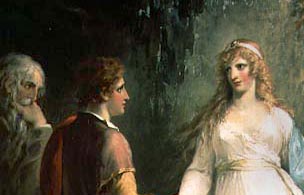
Telemachus_and_Mentor_cropIn the epic poem the Iliad, Telemachus father Odysseus was absent twenty years; first at war and then wandering on his long route home. Meanwhile his Telemachus grew to an adulthood without a father. Having pity on the youth, the goddess Athena disguised herself as an old man, took on the pseudonym “Mentor”  and became his guide. For the novice in writing finding an appropriate mentor with seems almost essential, but most of us are not as lucky as Telemachus.

Often an aspiring author seeks to further their experience and searches for someone of standing to help them. But, mentors are real people, not deities with immortality and powers.  A voluntary mentorship takes time away from an author’s own productive work. Why would they want to enter into this kind of relationship? One obvious answer is for the ego boost. It is a great self-esteem builder to have someone select you as their role model, especially in a field where success is based on subjective judgment. The second reason is that the mentor desires to maintain quality work in their area. However, this kind of relationship is not widespread.

Some mentorships are organized programs in upper levels of education.  In many educational creative writing programs the instructor to essentially performs the duty of a mentor among a small hand-picked group who are paying nicely for this privilege. Mentors unlike instructors, can only work with a few individuals, making this kind of relationship very elite (Churchman). This also leads to marginalizing individuals that differ from the instructor. The Iowa Writers Workshops were initially promoted as collaborative. But by members own accounts, these workshops were male dominated and majority of praise and criticism was based on the precepts of the instructor (Bishop).

So what does the poor novice writer do? There seems to be no option other than shelling out the money. The more you pay for the succession of conferences, workshops and courses, the more you are likely to actually meet a successful writer and receive individual attention. These connections are as important as learning the craft of writing if anyone else is ever going to see your work.

Illustration “Calypso receiving Telemachus and Mentor in the Grotto” by William Hamilton – http://www.wengraf.com/wengraf/ham-cal.htm. Licensed under Public domain via Wikimedia Commons –
Bishop, Wendy. “Teaching undergraduate creative writing: myths mentor and metaphors” Journal of Teaching Writing .pp 83-102
Churchman, Deborah. “Fertile Times for Creative Writing: More College Courses Every Year.” New York Times 8 Jan 1984: 42-43
Posted in Creativity, Writer's resource | Tagged , , , , , , | 1 Comment

Wanted mentors: Dead or Alive

Old_Man_with_Water_StudiesIn the city of Florence, Italy stands the cathedral Santa Maria del Fiore with a massive brick dome, a masterpiece in its day, built without the wooden framework required to hold up a dome while the mortar dried. Yet, it took centuries before anyone could build a larger one. The architect, Filippo Brunelleschi, was a goldsmith by trade who learned the secrets of architecture by examining  the work of Roman builders who died centuries before him.

In the sketch book of Leonardo da Vinci is the diagram of a unique machine for lifting heavy weights to great heights. He didn’t invent it. Filippo Brunelleschi did. However, da Vinci observed and recorded this machine in use long after its real inventor died and so he is often credited with inventing it (King 2000).

“Describe the person who influenced you the most.” That is a generic writing prompts that students (and the people who grade their writing ) hate the most. Students feel constrained to show this imperfect person in glowing terms, with all the interesting flaws omitted in favor of complimentary vagueness. Some try to explain how they try to emulate a celebrity and the results is complimentary vagueness, without enough personal information to peak anyone’s interest.

However, give this assignment to students who show promise of great creativity and the results with be different. They will paint a vivid picture of the person that inspired them, warts and all. And, they may even describe in detail the influence that came from experiencing the works of a person that they have never met. According to research, creative people are influenced the most by associates working in the same field, with a close second of influence by a paragon of in their field whose life and work they followed without being personally acquainted (Simonton 1984).

Creative people, such as writers, need living, breathing mentors to help steer them through the often discouraging  journey of producing original work. A long term study following the life of students with higher creative scores on the Test of Creative Thinking, found that having a mentor was significantly related to level adult creative achievement.  (Torrance 1995)

 “Regardless of their own views, (mentors) encourage and support talented individuals in expressing and testing their ideas …. They protect individuals from the counter-reactions of their peers long enough to permit them to try out some of their ideas. They keep the structure of the situation open enough so that creativity can occur.” (Torrance 1995)

Drawing: Leonardo da Vinci c. 1513, public domain

King, Ross (2000). Brunelleschi’s Dome. Walker Publishing (Penguin Books in 2001)
Simonton, D.K. (1984) Popularity, Content and Context in 37 Shakespeare plays Poetics. 1986, Vol. 15, p 493 – 510.
Torrance, E.P. (1995) Why Fly?: A Philosophy of Creativity. New Jersey: Ablex
Posted in Creativity | Tagged , , , , , , , | 1 Comment

What kind of childhood?

Club_03_VorbereitungenAccording to a review on the childhood of exceptionally creative individuals–“The growth of creativity in a young person suggests the effects of powerful nurturing and support” (Piers 2000).  But what this research suggests does not occur most of the time. Contrary to the view of  psychologists, like Maslow, who see creativity resulting from an enriched environment, creative people record a different story.  Rather than recalling a caring and supportive situation in childhood, their own recollections indicate a harsh, far less than ideal environment.

Many creative individuals recall stern and almost cruel parenting in which acceptance was not unconditional, but based on performance. Their talent was not encouraged so much as demanded by another family member (usually the father). They described their upbringing as “more correct than warm” (Gardner 1993). Often childhood experiences of actors and writers appear in their creative works. Conflicts in the home actual seem to contribute to their ability to conjure dramatic scenes and poignant plots (Goertzel 1962).

A biographical study of over 500 renowned creative individuals uncovered another  negative childhood experience. “Orphanhood” seems to be a more frequent plight for them. The death of one or both parents during the individuals’ childhood was somewhere between two to three times more common than for the general population (Eisenstadt 1978). Illness also seemed to be a greater problem with approximately 25% of renown creative individuals suffering serious or chronic illness in their childhood years (Goertzel et al 1978).

However, we should not assume the these difficulties outweighed the advantages that were typically available to the exceptionally creative person as a youth. Prior to the twentieth century notable authors, artists, musicians, and renown scientists and theoretical mathematicians came almost exclusively from the middle and upper classes. It would have been difficult to make their mark of originality without the additional education and opportunity that disposable wealth could provide (Cox 1926).

So it seems the childhood of many prominent creative people had a larger dose of unpleasantness in it, but that stress may have been the impetus that drove them to concentrate so intently on their gift.

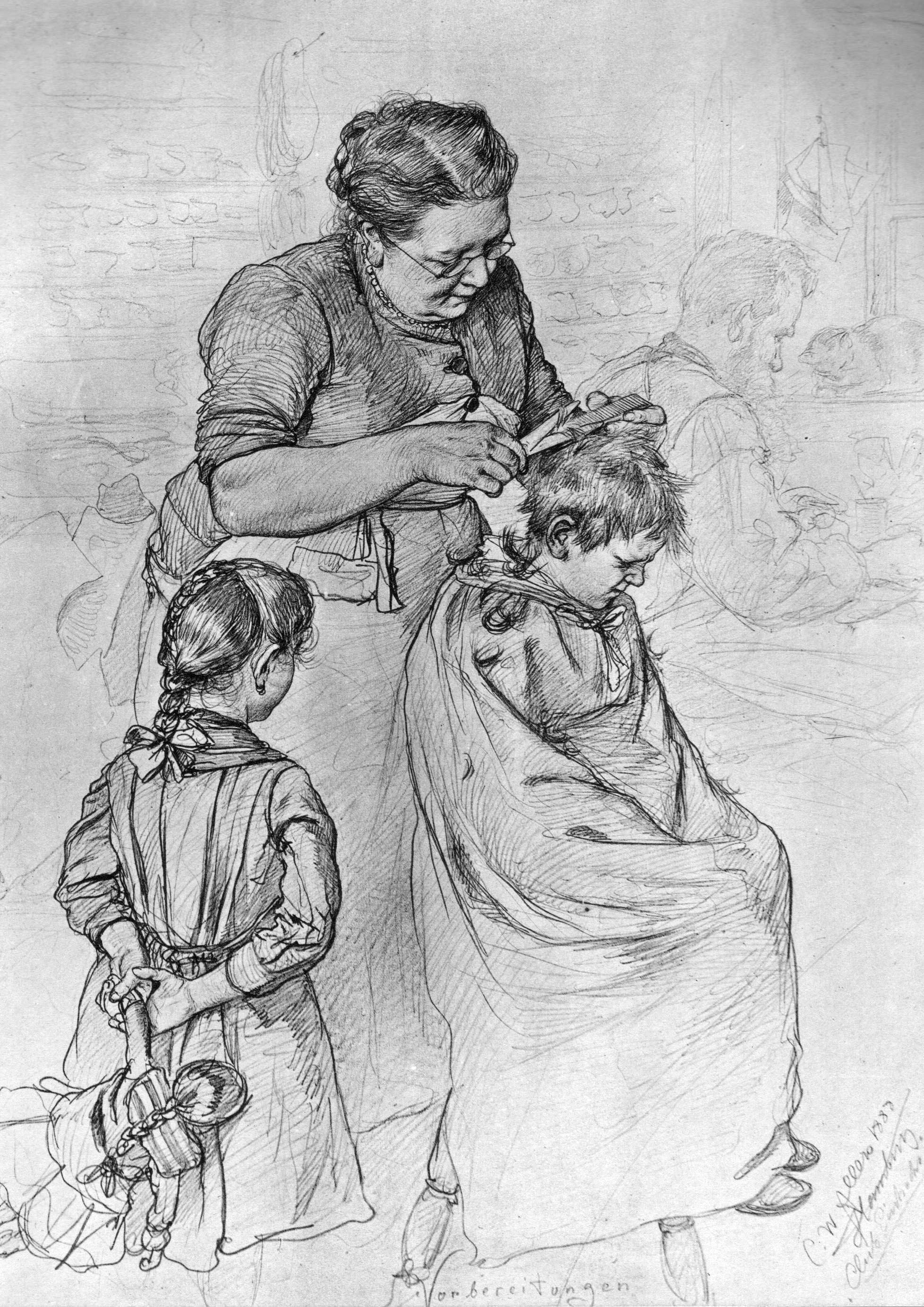
Illustration “Club 03 Vorbereitungen” by Christian Wilhelm Allers – Buch “Club Eintracht” von C.W. Allers. Licensed under Public domain via Wikimedia Commons
Cox, C.M. (1926) The Early Mental Traits of Three Hundred Geniuses. Volume IIin Genetic Studies of Genius, edited by L.M. Terman. California: Stanford University
Eisenstadt, J.M. (1978) Parental Loss and Genius. American Psychologist. March 1978, p211 – 223.
Goertzel, V. and Goertzel, M.G. (1962) Cradles of Eminence. London: Constable.
Goertzel, M.G., Goertzel, V. and Goertzel, T.G. (1978) Three Hundred Eminent Personalities. San Francisco: Josey Bass.
Gardner, H. (1993) Creating Minds. New York: Basic Books.
Worth, Piers J. (2000). “Localised creativity: a life span perspective”. PhD thesis, The Open University.


Posted in Creativity | Tagged | 1 Comment

Beyond Self-Confidence

800px-2445_-_Milano_-_Università_statale_-_Adolfo_Wildt_(1868-1931)_-_Sant'Ambrogio_-_Foto_Giovanni_Dall'Orto,_22-Feb--2008Now that innovation is essential to business, the educational institutions are attempting to encourage rather than quash creativity. With the revival of creativity as a money-making traits comes the recurring discussion of the how difficult creative people are. So what exactly makes creative people unlikeable for much of the population? Recent research at the University of North Carolina (Silvia et al, 2011) pinpointed the offensive characteristic–arrogance.

Similar to other research, Silvia’s study used college students who self-reported their creative abilities and personality traits. A lot of the traits measured using the five factor model did not seem to matter. Creative people described themselves as both extroverted and introverted, emotional and rational, conscientious and unconcerned.  The agreeableness did not seem to have a bearing on creativity either, except for one aspect.

Highly creative students scored lower than average on the honesty-humility scale. They were simply more arrogant.  According to the study “This finding is consistent with past work on arrogance, which is captured by the pretentiousness and immodesty defined by low honesty-humility.” Even though creative people can cooperate and are not overly hostile, their feeling of entitlement because of their perception of higher ability irks others.

This characteristic is not the same as narcissism. Narcissistic people rate themselves more highly in leadership and performance than others and responded with violent behaviors when their ego is threatened.  Arrogance is a type of social interaction rather than a consistently held internal  perception. Arrogance shows up in the company of others by exaggerating one’s own importance and being critical of other people. The person who shows arrogance may actually have a lower than average self-esteem.

However, arrogance in creative individuals tend to be countered by a greater openness to experience, which correlates to a willingness to accept other’s ideas–but not all of them.  In this case there is a feeling of superior judgment. Creative people do not defend their own ideas as much as their own judgment. They can sympathize and compromise with others, but they still believe that they know better.

And, we don’t like people who think they know better.

Sant’Ambrogio, sculpture by Adolfo Wildt (1868-1931) – Photograph by Giovanni Dall’Orto
P.J. Silvia., J. C. Kaufman, R. Reiter-Palmonc, B. Wigert, B. Cantankerous creativity: Honesty–Humility, Agreeableness, and the HEXACO structure of creative achievement. Personality and Individual Differences, Volume 51, Issue 5, October 2011, Pp 687–689
Posted in Creativity | Tagged , , | 1 Comment

Longer or shorter life?

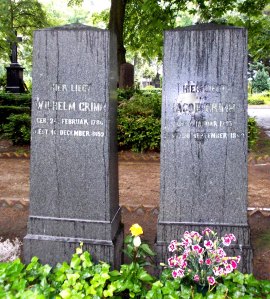
grimm's grave wIt is not terribly uncommon to find contradictory conclusions when it come to creativity research. However, adding fame to the mix increases the variation in finding because fame is something the individual does not control. Granted there are some creative people who purposely hide their works (such as Emily Dickinson) and others who spend more time flaunting their work than creating it (like Salvador Dali). However, the fame is usually due to the ideas of the society about the creative person.

Exactly how does fame affect the longevity of he artist. Despite being from Australia, C. R. Epstein and R. J. Epstein, decided to use the New York Times as the gauge of fame.  Under the assumption that anybody with an obituary in the New York Times had obtained some degree of fame in their field, they examined the age at death and occupation of these people to see if there was a correlation between types of careers and lifespan. (published in  QJM: An International Journal of Medicine)

It was no surprise to see creative performers, such as musicians and actors, die at the youngest age. The shocker is that the median age at death for this group was as old as 77.1 years. (These are people famous in New York and not Hollywood.) I tend to recall the notoriety of performers who died young in mid-career because their names are splashed across the media.  Actors and musicians often stop performing long before they reach their seventies. I tend to forget about these older performers, except when I hear that one has just died. Although I am occasionally surprised to see some alive and still performing with their names emblazoned on a casino billboard in Oklahoma.

Athletes were the next group to go at an average of 77.4 years, then artists, writers and composers (78.5 years). These type of creative people lived longer than performers, but not much. To put this whole study in perspective you need to realize most of the obituaries in the New York Times were for men, and the average life expectancy for a male in America  is 75.6 years. The individuals in this population were not just well known in their fields, they were wealthier and with wealth comes another set of parameters for longevity.  However, the women in this study died at an average of 78.8 years, younger than female average of 80.8.[1]

The next study shows how longevity seems to increase chances for fame in the very group whose life is most shortened by it–actors. This research showed the life span of all those ever nominated for an Academy Award in a leading or supporting role compared to life span of those in the acting in the same movies, and born in the same eras who never achieved this distinction.  In total, the life span of 1649 performers were analyzed to show that Academy Award winners lived 3.9 years longer than the other actors.  However, the award winners–at 79.7 years, and the non award winners–at 75.8 years, lived average life spans. Performers with longer careers participated in more films. [2]

However, when the lifespan of screenwriters was examined, the reverse was true. Academy Award winning screenwriters lived 3.6 years less than less famous screenwriters (74.1 versus  77.7 years).  But you may have noticed something else was reversed. These statistics, are based on fame in California instead of recognition in New York.[3]

So can any conclusion to be drawn on how creative careers or fame affects longevity? Only that most creative people fare as good or better than the average populations.

[1]Epstein, C.R. and Epstein, R.J. (2013), Death in The New York Times: the price of fame is a faster flame. QJM (2013) 106 (6): 517-521
[2] Redelmeier D.A. and Singh S.M.(2001) Survival in Academy Award-winning actors and actresses. Annual of Internal Medicine. 2001 May 15;134(10):955-62.
[3] Redelmeier D.A. and Singh S.M.(2001) Longevity of screenwriters who win an academy award: longitudinal study. BMJ. 2001 Dec 22-29;323(7327):1491-6.
Posted in Creativity | Tagged , , , , | 1 Comment