Mentors and money

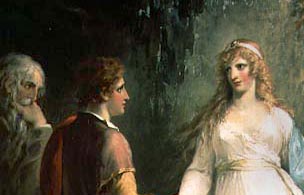
Telemachus_and_Mentor_cropIn the epic poem the Iliad, Telemachus father Odysseus was absent twenty years; first at war and then wandering on his long route home. Meanwhile his Telemachus grew to an adulthood without a father. Having pity on the youth, the goddess Athena disguised herself as an old man, took on the pseudonym “Mentor”  and became his guide. For the novice in writing finding an appropriate mentor with seems almost essential, but most of us are not as lucky as Telemachus.

Often an aspiring author seeks to further their experience and searches for someone of standing to help them. But, mentors are real people, not deities with immortality and powers.  A voluntary mentorship takes time away from an author’s own productive work. Why would they want to enter into this kind of relationship? One obvious answer is for the ego boost. It is a great self-esteem builder to have someone select you as their role model, especially in a field where success is based on subjective judgment. The second reason is that the mentor desires to maintain quality work in their area. However, this kind of relationship is not widespread.

Some mentorships are organized programs in upper levels of education.  In many educational creative writing programs the instructor to essentially performs the duty of a mentor among a small hand-picked group who are paying nicely for this privilege. Mentors unlike instructors, can only work with a few individuals, making this kind of relationship very elite (Churchman). This also leads to marginalizing individuals that differ from the instructor. The Iowa Writers Workshops were initially promoted as collaborative. But by members own accounts, these workshops were male dominated and majority of praise and criticism was based on the precepts of the instructor (Bishop).

So what does the poor novice writer do? There seems to be no option other than shelling out the money. The more you pay for the succession of conferences, workshops and courses, the more you are likely to actually meet a successful writer and receive individual attention. These connections are as important as learning the craft of writing if anyone else is ever going to see your work.

Illustration “Calypso receiving Telemachus and Mentor in the Grotto” by William Hamilton – http://www.wengraf.com/wengraf/ham-cal.htm. Licensed under Public domain via Wikimedia Commons –
Bishop, Wendy. “Teaching undergraduate creative writing: myths mentor and metaphors” Journal of Teaching Writing .pp 83-102
Churchman, Deborah. “Fertile Times for Creative Writing: More College Courses Every Year.” New York Times 8 Jan 1984: 42-43
Posted in Creativity, Writer's resource | Tagged , , , , , , | 1 Comment

Wanted mentors: Dead or Alive

Old_Man_with_Water_StudiesIn the city of Florence, Italy stands the cathedral Santa Maria del Fiore with a massive brick dome, a masterpiece in its day, built without the wooden framework required to hold up a dome while the mortar dried. Yet, it took centuries before anyone could build a larger one. The architect, Filippo Brunelleschi, was a goldsmith by trade who learned the secrets of architecture by examining  the work of Roman builders who died centuries before him.

In the sketch book of Leonardo da Vinci is the diagram of a unique machine for lifting heavy weights to great heights. He didn’t invent it. Filippo Brunelleschi did. However, da Vinci observed and recorded this machine in use long after its real inventor died and so he is often credited with inventing it (King 2000).

“Describe the person who influenced you the most.” That is a generic writing prompts that students (and the people who grade their writing ) hate the most. Students feel constrained to show this imperfect person in glowing terms, with all the interesting flaws omitted in favor of complimentary vagueness. Some try to explain how they try to emulate a celebrity and the results is complimentary vagueness, without enough personal information to peak anyone’s interest.

However, give this assignment to students who show promise of great creativity and the results with be different. They will paint a vivid picture of the person that inspired them, warts and all. And, they may even describe in detail the influence that came from experiencing the works of a person that they have never met. According to research, creative people are influenced the most by associates working in the same field, with a close second of influence by a paragon of in their field whose life and work they followed without being personally acquainted (Simonton 1984).

Creative people, such as writers, need living, breathing mentors to help steer them through the often discouraging  journey of producing original work. A long term study following the life of students with higher creative scores on the Test of Creative Thinking, found that having a mentor was significantly related to level adult creative achievement.  (Torrance 1995)

 “Regardless of their own views, (mentors) encourage and support talented individuals in expressing and testing their ideas …. They protect individuals from the counter-reactions of their peers long enough to permit them to try out some of their ideas. They keep the structure of the situation open enough so that creativity can occur.” (Torrance 1995)

Drawing: Leonardo da Vinci c. 1513, public domain

King, Ross (2000). Brunelleschi’s Dome. Walker Publishing (Penguin Books in 2001)
Simonton, D.K. (1984) Popularity, Content and Context in 37 Shakespeare plays Poetics. 1986, Vol. 15, p 493 – 510.
Torrance, E.P. (1995) Why Fly?: A Philosophy of Creativity. New Jersey: Ablex
Posted in Creativity | Tagged , , , , , , , | 1 Comment

What kind of childhood?

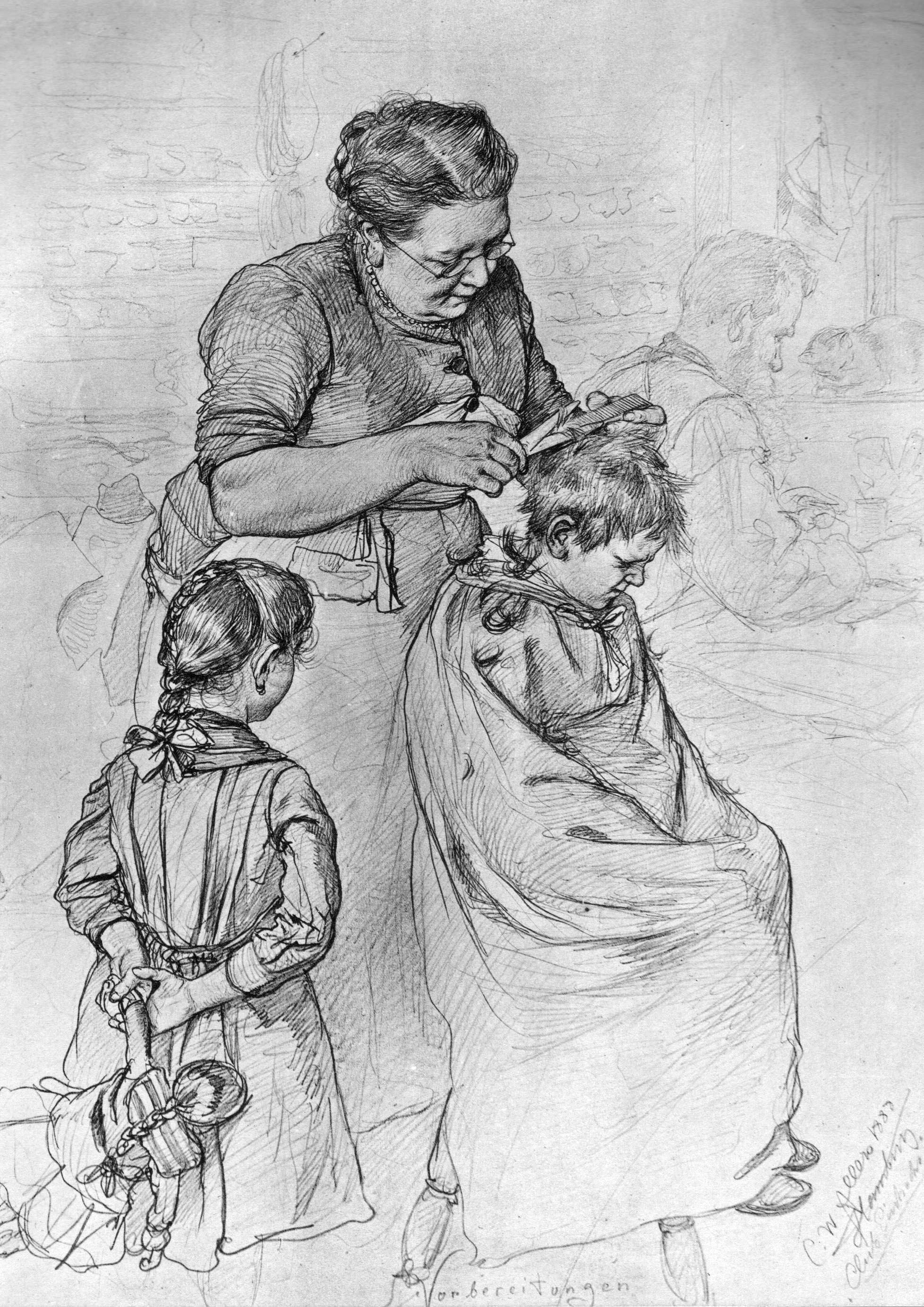
Club_03_VorbereitungenAccording to a review on the childhood of exceptionally creative individuals–“The growth of creativity in a young person suggests the effects of powerful nurturing and support” (Piers 2000).  But what this research suggests does not occur most of the time. Contrary to the view of  psychologists, like Maslow, who see creativity resulting from an enriched environment, creative people record a different story.  Rather than recalling a caring and supportive situation in childhood, their own recollections indicate a harsh, far less than ideal environment.

Many creative individuals recall stern and almost cruel parenting in which acceptance was not unconditional, but based on performance. Their talent was not encouraged so much as demanded by another family member (usually the father). They described their upbringing as “more correct than warm” (Gardner 1993). Often childhood experiences of actors and writers appear in their creative works. Conflicts in the home actual seem to contribute to their ability to conjure dramatic scenes and poignant plots (Goertzel 1962).

A biographical study of over 500 renowned creative individuals uncovered another  negative childhood experience. “Orphanhood” seems to be a more frequent plight for them. The death of one or both parents during the individuals’ childhood was somewhere between two to three times more common than for the general population (Eisenstadt 1978). Illness also seemed to be a greater problem with approximately 25% of renown creative individuals suffering serious or chronic illness in their childhood years (Goertzel et al 1978).

However, we should not assume the these difficulties outweighed the advantages that were typically available to the exceptionally creative person as a youth. Prior to the twentieth century notable authors, artists, musicians, and renown scientists and theoretical mathematicians came almost exclusively from the middle and upper classes. It would have been difficult to make their mark of originality without the additional education and opportunity that disposable wealth could provide (Cox 1926).

So it seems the childhood of many prominent creative people had a larger dose of unpleasantness in it, but that stress may have been the impetus that drove them to concentrate so intently on their gift.

Illustration “Club 03 Vorbereitungen” by Christian Wilhelm Allers – Buch “Club Eintracht” von C.W. Allers. Licensed under Public domain via Wikimedia Commons
Cox, C.M. (1926) The Early Mental Traits of Three Hundred Geniuses. Volume IIin Genetic Studies of Genius, edited by L.M. Terman. California: Stanford University
Eisenstadt, J.M. (1978) Parental Loss and Genius. American Psychologist. March 1978, p211 – 223.
Goertzel, V. and Goertzel, M.G. (1962) Cradles of Eminence. London: Constable.
Goertzel, M.G., Goertzel, V. and Goertzel, T.G. (1978) Three Hundred Eminent Personalities. San Francisco: Josey Bass.
Gardner, H. (1993) Creating Minds. New York: Basic Books.
Worth, Piers J. (2000). “Localised creativity: a life span perspective”. PhD thesis, The Open University.


Posted in Creativity | Tagged | 1 Comment

Beyond Self-Confidence

800px-2445_-_Milano_-_Università_statale_-_Adolfo_Wildt_(1868-1931)_-_Sant'Ambrogio_-_Foto_Giovanni_Dall'Orto,_22-Feb--2008Now that innovation is essential to business, the educational institutions are attempting to encourage rather than quash creativity. With the revival of creativity as a money-making traits comes the recurring discussion of the how difficult creative people are. So what exactly makes creative people unlikeable for much of the population? Recent research at the University of North Carolina (Silvia et al, 2011) pinpointed the offensive characteristic–arrogance.

Similar to other research, Silvia’s study used college students who self-reported their creative abilities and personality traits. A lot of the traits measured using the five factor model did not seem to matter. Creative people described themselves as both extroverted and introverted, emotional and rational, conscientious and unconcerned.  The agreeableness did not seem to have a bearing on creativity either, except for one aspect.

Highly creative students scored lower than average on the honesty-humility scale. They were simply more arrogant.  According to the study “This finding is consistent with past work on arrogance, which is captured by the pretentiousness and immodesty defined by low honesty-humility.” Even though creative people can cooperate and are not overly hostile, their feeling of entitlement because of their perception of higher ability irks others.

This characteristic is not the same as narcissism. Narcissistic people rate themselves more highly in leadership and performance than others and responded with violent behaviors when their ego is threatened.  Arrogance is a type of social interaction rather than a consistently held internal  perception. Arrogance shows up in the company of others by exaggerating one’s own importance and being critical of other people. The person who shows arrogance may actually have a lower than average self-esteem.

However, arrogance in creative individuals tend to be countered by a greater openness to experience, which correlates to a willingness to accept other’s ideas–but not all of them.  In this case there is a feeling of superior judgment. Creative people do not defend their own ideas as much as their own judgment. They can sympathize and compromise with others, but they still believe that they know better.

And, we don’t like people who think they know better.

Sant’Ambrogio, sculpture by Adolfo Wildt (1868-1931) – Photograph by Giovanni Dall’Orto
P.J. Silvia., J. C. Kaufman, R. Reiter-Palmonc, B. Wigert, B. Cantankerous creativity: Honesty–Humility, Agreeableness, and the HEXACO structure of creative achievement. Personality and Individual Differences, Volume 51, Issue 5, October 2011, Pp 687–689
Posted in Creativity | Tagged , , | 1 Comment

Longer or shorter life?

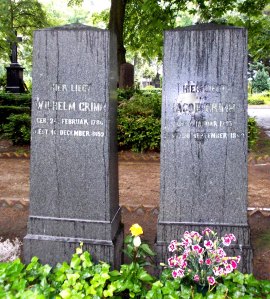
grimm's grave wIt is not terribly uncommon to find contradictory conclusions when it come to creativity research. However, adding fame to the mix increases the variation in finding because fame is something the individual does not control. Granted there are some creative people who purposely hide their works (such as Emily Dickinson) and others who spend more time flaunting their work than creating it (like Salvador Dali). However, the fame is usually due to the ideas of the society about the creative person.

Exactly how does fame affect the longevity of he artist. Despite being from Australia, C. R. Epstein and R. J. Epstein, decided to use the New York Times as the gauge of fame.  Under the assumption that anybody with an obituary in the New York Times had obtained some degree of fame in their field, they examined the age at death and occupation of these people to see if there was a correlation between types of careers and lifespan. (published in  QJM: An International Journal of Medicine)

It was no surprise to see creative performers, such as musicians and actors, die at the youngest age. The shocker is that the median age at death for this group was as old as 77.1 years. (These are people famous in New York and not Hollywood.) I tend to recall the notoriety of performers who died young in mid-career because their names are splashed across the media.  Actors and musicians often stop performing long before they reach their seventies. I tend to forget about these older performers, except when I hear that one has just died. Although I am occasionally surprised to see some alive and still performing with their names emblazoned on a casino billboard in Oklahoma.

Athletes were the next group to go at an average of 77.4 years, then artists, writers and composers (78.5 years). These type of creative people lived longer than performers, but not much. To put this whole study in perspective you need to realize most of the obituaries in the New York Times were for men, and the average life expectancy for a male in America  is 75.6 years. The individuals in this population were not just well known in their fields, they were wealthier and with wealth comes another set of parameters for longevity.  However, the women in this study died at an average of 78.8 years, younger than female average of 80.8.[1]

The next study shows how longevity seems to increase chances for fame in the very group whose life is most shortened by it–actors. This research showed the life span of all those ever nominated for an Academy Award in a leading or supporting role compared to life span of those in the acting in the same movies, and born in the same eras who never achieved this distinction.  In total, the life span of 1649 performers were analyzed to show that Academy Award winners lived 3.9 years longer than the other actors.  However, the award winners–at 79.7 years, and the non award winners–at 75.8 years, lived average life spans. Performers with longer careers participated in more films. [2]

However, when the lifespan of screenwriters was examined, the reverse was true. Academy Award winning screenwriters lived 3.6 years less than less famous screenwriters (74.1 versus  77.7 years).  But you may have noticed something else was reversed. These statistics, are based on fame in California instead of recognition in New York.[3]

So can any conclusion to be drawn on how creative careers or fame affects longevity? Only that most creative people fare as good or better than the average populations.

[1]Epstein, C.R. and Epstein, R.J. (2013), Death in The New York Times: the price of fame is a faster flame. QJM (2013) 106 (6): 517-521
[2] Redelmeier D.A. and Singh S.M.(2001) Survival in Academy Award-winning actors and actresses. Annual of Internal Medicine. 2001 May 15;134(10):955-62.
[3] Redelmeier D.A. and Singh S.M.(2001) Longevity of screenwriters who win an academy award: longitudinal study. BMJ. 2001 Dec 22-29;323(7327):1491-6.
Posted in Creativity | Tagged , , , , | 1 Comment

Age and creativity

aged023The very act of creativity means producing results that don’t resemble those produced by others. There is no easy way to arrive at a number for creativity. Instead a group of people, respected in the particular field, must view and judge the entire body of work from an extensive the sample in order to rank individual works. This kind of assessment is not easy to perform.

For example, in a recent joint study by Harvard and University of Washington (Davis and Weinstein, 2013) the researchers compared samples of visual art and creative writing by teenagers published between 1990 and 2011 to determine if creativity was increasing or decreasing.  Their conclusion was improvement existed in visual work, which showed greater sophistication and complexity, and a decline in the writing, which became simpler and more mundane. Davis concluded that “there are markers of creativity — like complexity and risk-taking and breaking away from the standard mold — that appear to have changed.” However, only fifty examples of writing were reviewed.[1]

Judging by actual products also changes the findings of creativity based on age. Children are not known for producing masterpieces of art, literature or music. But neither are elderly people. Lehman, (1962) found creative achievement in the arts was a bell curve with a single-peak as a function of age. Most writers produced their greatest work by age 45, but poets tended to peak as early as their thirties.[2]

Simonton’s study of the lives of creative geniuses led him to conclude that poets and mathematicians tend to peak the earliest of the disciplines in producing creative work.  Anyone who had studied English literature may recall that the many of the romantic period poets didn’t live past their thirties. There are exceptions to this trend for poets of course, such as  Robert Frost whose most well known work were written in his late forties and after.  Yet each of these had a time when their creative production rose fairly rapidly and then declined until their death. Novelists, philosophers and biologists seem to peak later and decline more slowly. This difference may be a result of the complexity of the product and ambiguity of their fields.[3]

Just as there is no single factor contributing to the creativity of individuals, there are no hard and fast rules when it comes to age and creativity. There are just trends that may not always hold true, because as all creative people know, rules are meant to be broken.

[1]Kelley, P. A decline in creativity? It depends on how you look, University of Washington News and Information, November 14, 2013
[2] Lehman, H. C. (1962). More about age and achievement. Gerontologist, 2, 141-148.
[3] Lehrer, J. ” Old Writers,” The Frontal Cortex, Posted on June 15, 2010
Posted in Creativity | Tagged , , , , , , | 1 Comment

Is creativity on a downhill slide?

02Just as the business world seems to be competing to attract creative workers, students’ scores on tests of creative thinking appear to be declining.

Education professor at the College of William and Mary Kyung Hee Kim analyzed scores from the Torrance Tests of Creative Thinking (TTCT) for students from kindergarten through twelfth grade. According to Kim, normative scores on the TTCT began the downward slide in 1984 or shortly after. Student’s scores at all grade levels have been gradually going down in the United States since that time. This, steady decline, as opposed to a drastic drop,  is not necessarily related to number of years in school, as younger students creativity is also declining. The decrease is most evident in the ability to elaborate, or produce details that support the main creative idea.  [1].

Is there a connection between new “innovative” products, and the decline of innovation? The drive for creativity in business is aimed at bringing in greater profits. The new “innovative” products are largely electronics and the applications used on them. However, these two types of products are now so complex that most people do not use all of their capability. They have been that way for about as long as creativity has been declining.  

An innovative product does not sell itself. The consumer must be convinced that they “need” this product, which is accomplished through creative marketing.  For example, new electronics such as tablets and smart phones actually have less capability than computers. Therefore, people must  buy into the idea that mobile electronics are necessary. They must feel the need to be connected and have the ability to reach others on the internet and access the vast pool of data on the web at any time. People also want to look cool doing so. It not just the ease and portability of new electronics that boost sales, it is also their image.

But, the very selling point of these items, the ability to connect to others and access  information and entertainment instantly may be leading to the lowering of creativity in students. The constant data influx leads people to scanning. According to Nicholas Carr “When we go online, we enter an environment that promotes cursory reading, hurried and distracted thinking, and superficial learning.” [2]

Of course, students attending school in 1984 rarely had access to a computer at home. The major innovation in 1984 was the mouse driven Macintosh with the graphic user interface; allowing anyone, not just the tech-smart computer “geeks’ to use it. Availability and use of home computers took off rapidly from that point.

Ironically, 1984 is also the year the word “cyberspace” appeared in William Gibson’s novel, Neuromancer as the idea of an illusionary world of data streaming to humans by intelligent machines. And of course 1984 is the title of the famous dystopian novel by George Orwell (pen name of Eric Arthur Blair). 

The decline of creativity–does it go hand in hand with the creation of innovations that do our thinking for us?

[1] Kim, Kyung Hee (2011). The creativity crisis: The decrease in creative thinking scores on the Torrance Tests of Creative Thinking. Creativity Research Journal, 23, 285-295.
[2] Carr, Nicholas (2010) The Web Shatters Focus, Rewires Brains | Magazine”. Wired.com. 2010-05-24. Retrieved 4 July 2010.
Posted in Creativity, Education trends | Tagged , , | 1 Comment

Conforming to divergency

punk_edited-2My first experience with creative problem solving competitions involved a group of rather ambitious second graders. Rather than opting for the easier non-competitive primary challenge they insisted on a difficult one. They spent hours trying to build structures out of fragile materials such as thin balsa wood sticks and pasta that actually withstood some weight. Then, they had to come up with a performance to tie everything together. We largely ignored practicing for the spontaneous problem solving challenge.

They built a sturdy structure that received a higher score than students in grades above them. But, they scored last in the spontaneous problem solving challenge.  Afterwards we brainstormed on what went wrong.  They had been give a question, “What would you take on a trip to the moon?” Only one answer had been given more than the minimum point, and as they recalled only one answer had been completely “out there.” One girl wanted to bring a shopping mall to the moon.

These seconds graders were not lacking creativity as much as they lacked experience in what others perceived as creative. After they understood what was expected of them, their scores soared on spontaneous problem solving challenges. However,  I noticed that two of the students refused to give up practical answers and therefore did not come up with as many possible solutions. Restricting the search to an answer that really would work seemed to be a personal choice.

All of this musing on past experience with children and creativity brings me to a notion currently made popular by Sir Ken Robinson.  The idea is that children are born creative and the school systems educate the creativity out of them. After all his research shows that 98% of children age three to five are creative but only 2% of adults 25 year-olds are. [1] Actually only one research project showed this.  It was a 1968 study by George Lands described in Breaking Point and Beyond.

Most definitions of creativity include both originality and usefulness. Throwing usefulness out the window in a test of divergent thinking changes the results.  My second grade group learned how to increase their spontaneous problem solving scores not by being more creative, but by “conforming” to what the judges were seeking.  Children often respond the way that they think you want them to. If you want a large number of answers, they will readily “carpet bomb” without regard to how much sense each answer makes.

Other researchers have not replicated George Lands’ result of drastically reduced creativity in adults. A long term study of students who took the Torrance Test of Creative Thinking in the late fifties and early sixties found a significant correlation between children that scored high on the test and later real world creative achievement as adults (especially for  the males). [2] The creativity scores did show some fluctuation based on grade, but the percentage of creative younger students was not significantly greater than the percentage of older ones. Many of the younger students did not score as high. One reason that this differs from George Lands’ results is that Torrence’s test is not just a one dimensional test of divergent thinking.

So, if you read that research shows that children are born creative and it is educated out of them by society, read further. Creativity means coming up with ideas that are different from the rest of society, but also useful. If most children come up with random unsuitable responses to a questions, they are not being more creative, but rather imitating other children.

Photo credits: Immanuel Giel,  Niko punkPuknáč, Quercusrobur  (CC by 3.0)
[1] From Glasgow, A conference in March, 2005, by the Scottish Book Trust, http://people.goshen.edu/~marvinpb/11-13-01/Effects-of-Stereotypes.html
[2] Mark A. Runco, Garnet Millar, Selcuk Acar, & Bonnie Cramond (2010) Torrance tests of creative thinking as predictors of personal and public achievement: A fifty-year follow-up.  Creativity Research Journal, 22, 361-368.
Posted in Creativity, Education trends | Tagged , , , , | 1 Comment

Competitive disadvantage for creative women

510px-Defense.gov_photo_essay_080814-A-8804H-006 Every time I hear someone ask how to intrinsically motivate students, I have to laugh inside. The very definition of intrinsic means to come from inside of a person, not from an outside source, such as a teacher, instructor, trainer or anyone else employed in the field of getting people to learn. But maybe I should tell them that they need not worry about intrinsic motivation. Although it is touted as a way to improve learning, when it comes to improving one’s level of recognition in a field – even recognition for creative accomplishments – extrinsic motivation seems to trump strictly internal goals every time.

Consider the root of competitiveness.  People work harder to do something not just to excel in their own sight, but to be recognized by the public as better than someone else.  The Olympic medalist who bemoans winning silver may have spent months of solitary training, but the crushed expression at coming in second reveals the high level of extrinsic motivation involved.

Men seem to compete more readily than women. Evidently the male characteristic of trying harder if someone else is paying attention starts young. It is noticeable early in grade school (Gneezy 2002).  Not only do the males make more effort when competing, they are more willing to take the risks. Why? Because they typically predict that they will perform better than they actually do. (Niederle & Versterlund 2005).

Many societies have placed a premium on competition. Even creative individuals  in the arts and sciences must compete for resources with which to do their work.  These resources have been habitually controlled by men (Simonton 1994). The decision to award these resources in often based on competition, and with creativity of ideas being a particularly subjective judgment, resources are often awarded to the most competitive people.  People who promote themselves as being the best win – not necessarily the people who are the best (Gneezy 2002).

It becomes obvious how this tendency carries over into the creative fields. F. Barron’s (1972) study of young artists at the San Francisco Art Institute and at the Rhode Island School of Design yielded similar observations. When the students were asked if they thought their work was “particularly unique or good40% of the men and 17% of the women agreed. These statistics were basically reversed when he asked the flipped side of this, with 40% of the women and 14% of the men feeling that that their work was inferior to others at the institute. Interestingly, these were not real indications of quality. Overall the woman’s work was as high a quality as the men’s. Barron attributed this disparity to a difference in self image.

However, this self-image may be due to social conditioning, not innate differences between men and women. In the few matrilineal cultures in which women control the resources, they behave in a similar competitive manner to men of other cultures. (Gneezy & List 2013). It has often been noted that women can also be competitive. However, they tend to limit this to competition against other women, which is done in a more covert and less openly aggressive manner. To make an impact on the world with their creativity would require a different style of competitiveness. So what exactly occurs when women try this?

Photo: 2012 London Games. Defense.gov_photo_essay_080814-A-8804H-006.jpg/Public domain.


Barron, F. (1972) Artists in the Making. New York: Seminar Press
Gneezy, U. (2002) Gender and Competition, Do Competitive Environments Favor Men More Than Women? Capital Ideas, Vol. 4 No. 2 | Fall 2002
Gneezy, U. and List, J. (2013) Where Women Are More Competitive Than Men, Time
Niederle M., and Lise Versterlund, L. (2005) “Do Women Shy Away from Competition? Do Men Compete too Much?” NBER Working Paper Series, National Bureau of Economic Research , 1050 Massachusetts Avenue, Cambridge, MA 02138
Simonton, D. K. (1994). Greatness: Who makes history and why. New York: Guilford Press.
Posted in Creativity | Tagged , , , , , , , , | Leave a comment

Is there a hidden price in creativity for women?

Berlin12 116No matter how many different studies  are performed using different measurements in testing creativity for males and females there seems to be a consistent result. There is no difference.  Kogan (1974) found that when creativity test scores for students were compared girls had a slight advantage, so it is improbable that innate gender differences in creativity could explain why creative accomplishment of men heavily outweigh those of women. So what causes this imbalance?

  • Is it how society perceives men and women in creative fields?
  • Is it the perception that creative women have of themselves?

Of course perception is a delicate matter. Do we view ourselves as other’s see us, or do other’s see us as we view ourselves? Cause and effect are difficult to detangle.

Amabile  (1982) tested creativity hypotheses using products, not test, as measurement. Her “grading” technique was consensual assessment. Basically experts in the field of art, poetry and fiction judged the products, most of them agreeing on which were the best. The judges looked at products, but did not have information about the people creating them. Basically they found no difference in creativity between men and women. But while gender did not make a difference monetary reward did. In a later study (Amabile et al, 1986) she found that artists, who sometimes worked for commissions, were told they were producing for pay, they tended to make products that were less original.

Other researches did similar studies on how rewards affected creativity in students and noted that these results varied, based on the gender of the student. Baer (1998) had eighth grade girls and boys writing poetry simply for themselves and for the possible of a reward. The negative impact of the reward on originality was largely confined to the girls. Conti, Collins, and Picariello (2001) also discovered that that female subjects were less creative in competitive situations than male subjects. Finally Koestner, Zuckerman & Koestner (1989) research how specific and general praise affected the performance of college students.  using college students as subjects. Their conclusion? “Women tended to display more intrinsic motivation in the no-praise condition than in the two praise conditions, whereas men showed the reverse pattern.”

In each of these situations it would seem that the females do not lack creativity, but are de-motivated by the possibility of being recognized for it in competitive situations. Is there a price to be paid for this recognition that does not exist for males?

When Frank Barron interviewed artists at the San Francisco Art Institute and at the Rhode Island School of Design he found that women view their work with more detachment and less passion. Yet “when asked whether they would still paint if they had no results or success, only half the men said they would continue to paint, but all of the women did.” (Piirto, 200o) So although the dedication to art seemed weaker, the persistence was actually stronger.

The conclusion reached by Ruth & Birren (1985) is that women “appear more interested in the creative process itself than in its end-product. Women sometimes have difficulties in externalizing their inner creative processes or have a lower need of achievement in creative endeavors.” Is it simply a  matter of men putting more effort into gaining fame for their creative work because this extrinsic motivator drives them? Or do women sense a price to be paid if they continue producing more creatively and compete with men? As mentioned earlier, detangling cause and effect of perception is difficult, so I will continue to try, but may not be able to answer this question.

AMABILE, T. M. (1982). Social psychology of creativity: A consensual assessment technique. Journal of Personality and Social Psychology, 43, 997-1013.
AMABILE, T. M . Hennessey  B.A. & Grossman  B. S.(1986) Social Influences on Creativity: The Effects of Contracted-for Reward. Journal of Personality and Social Psychology, 50, 14-23
BAER, J. (1998). Gender differences in the effects of extrinsic motivation on creativity. Journal of Creative Behavior, 32, 18-37.
CONTI, R., COLLINS, M., & PICARIELLO, M. (2001). The impact of competition on intrinsic motivation and creativity: Considering gender, gender segregation, and gender-role identity. Personality and Individual Differences, 31, 1273-1289.
KOESTNER, R., ZUCKERMAN, M., & KOESTNER, J. (1987). Praise ,involvement, and intrinsic motivation. Journal of Personality and Social Psychology, 53, 383-390.
KOGAN, N. (1974). Creativity and sex differences. Journal of Creative Behavior, 8, 1-14.
PIIRTO, J. (2000) Why are there so few? (Creative women: Visual artists, mathematicians, scientists, musicians), Davidson Institute for Talent Development.
RUTH, J.-E., & BIRREN, J. E. (1985). Creativity in adulthood and old age: Relations to intelligence, sex and mode of testing. International Journal of Behavioral Development, 8, 99-109.


Posted in Creativity | Tagged , , , , , , | Leave a comment