The real deal

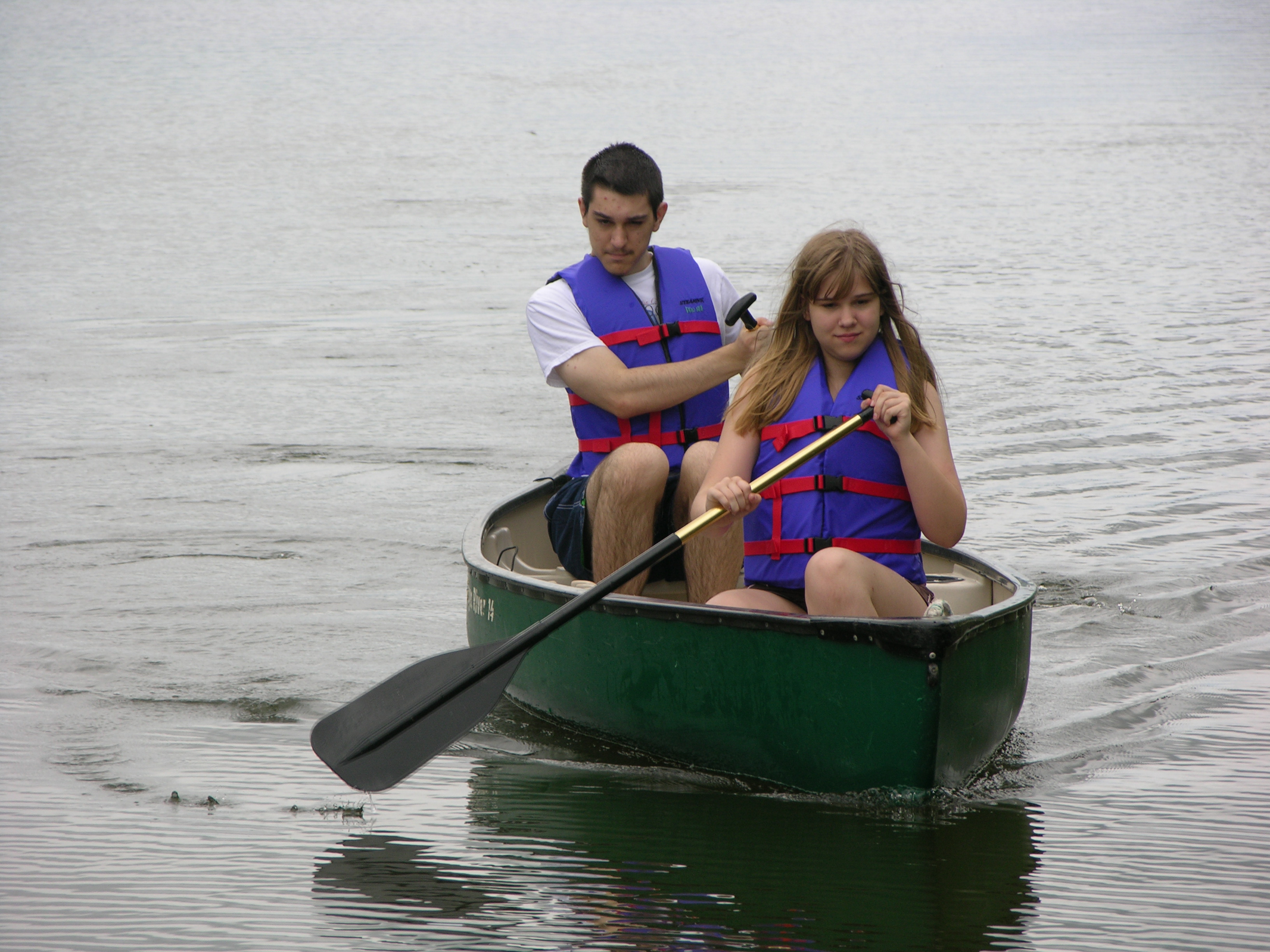
17oklahoma07 051a“I rented a canoe on Saturday – it was quite an oar deal!”

The students’ task was to describe the source of humor in a series of five puns. Then they developed their own set of puns. Despite the cheesiness of the examples, secondary students seem to enjoy the activity. In a way it was more authentic writing than many of their other assignments. After all, even though there is not a large population of people who make their living as comedy writers, there are a host of trainers, such a defensive driving instructors, who insert their own comedy into their courses.

This exercise in humor might be expanded with a realistic assignment in writing. Students prepare a humorous training script for a job that they choose because they understand it. The job may be boring – such as working is a school cafeteria – the training script should not be.

Then I might share the kind of writing that we frequently read or hear – advertisements. For example, a few years ago my family vacationed on Lake of the Arbuckles in Oklahoma. We stayed at a particular cabin because we like the way it was described in the advertisement. After I read it, I ask the class to imagine that they are renting out their house or apartment to vacationers. The assignment – write their own advertisement to describe their place. (Some people in our area actually did this for Superbowl XLV at Cowboy Stadium in Arlington.) I tell them to portray their place in an honest manner and still provide incentive for someone to stay there, such as something unique about the house decor, or nearby sites a tourist might want to see.

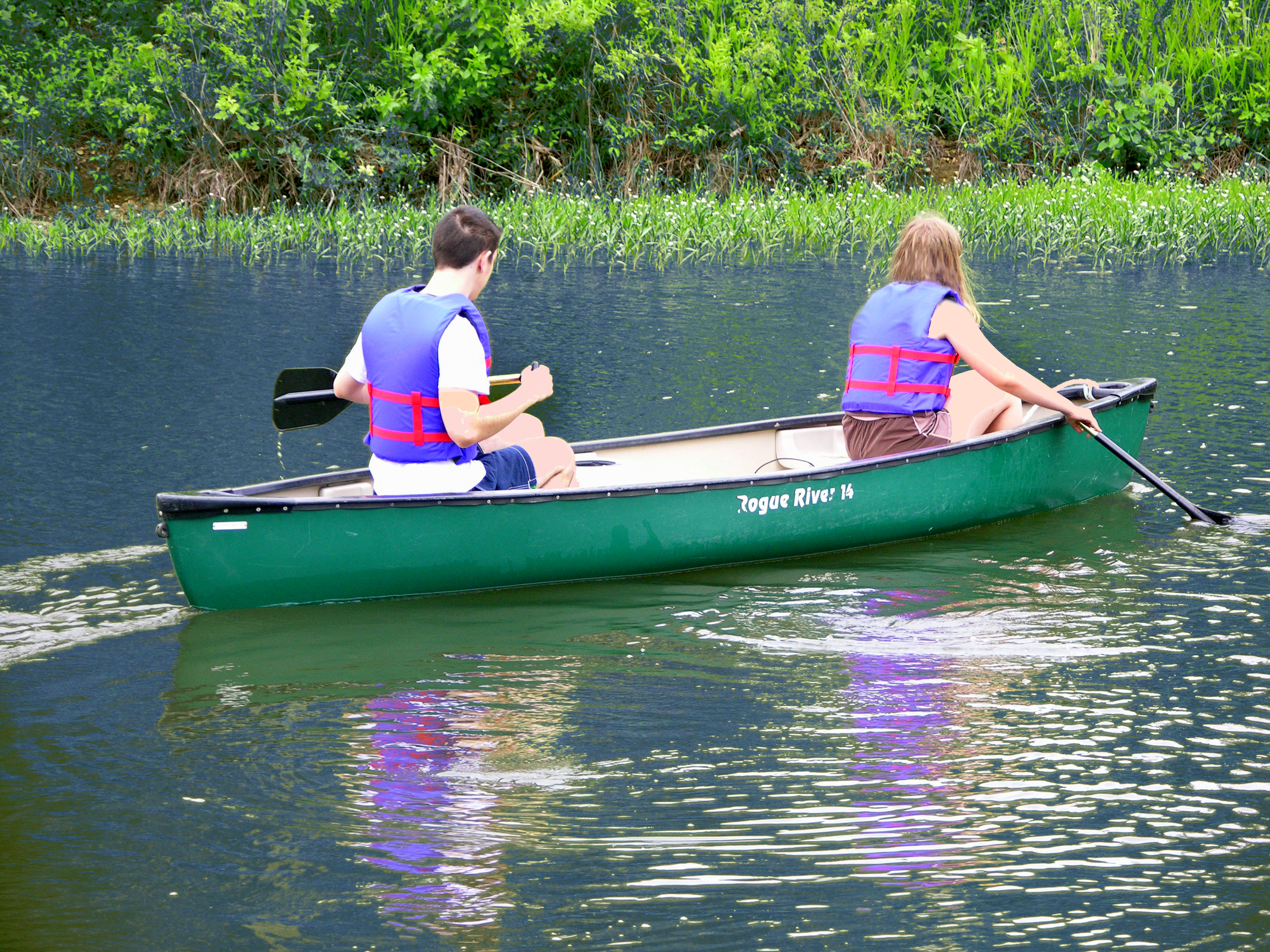
Finally, I tell them a write short narrative based on real life, such as illustrated by the photo above. The cabin where we stayed had its own canoe. My son, an ex-Boy Scout, was eager to try it out and his little sister insisted on accompanying him. As an experienced helmsman, my son sat in the back and gave his sister instructions – rowing requires coordination between the people in the canoe. However, she frequently confused her left and right. They ended up almost stuck on a bank more than once. My son explained “After a while I realized it didn’t matter what I said, I just had to row twice as hard as her to get the canoe going in the right direction.”

This kind of short narrative – humorous, dramatic or touching – is found in many print and on-line magazines. For years short contributions from readers have been a staple in the Reader’s Digest. Recently the Smithsonian sponsored a series in which people described their home towns. I have students select a publication and write two or more short narratives that could be submitted, based on what is required. When these assignments are all done, I encourage students to submit their best work for publication. Noodle Tools and Reach Every Child are sites to search for possible publishers for young authors.

Just remember:

1) Make sure that the parents give written permission for their child to publish the writing.

2) Never pay to have work published. Many literature collections and magazines will not pay for contributions, but other more competitive publishers offer small amounts. After all getting paid for work is what many of us assume defines authentic work.

← Back

Thank you for your response. ✨

Posted in Teaching writing skills, Writer's resource | Tagged , , , , , , | Leave a comment

The unexpected discovery

Image

RER track Aulnay-sous-Bois, near Paris, France

Often when students are asked to write a personal narrative about their experiences we don’t expect a story, just a description of a lesson learned. I feel like throwing up my hands in frustration when a student says “I never learned nothing.” I remind them that they discovered how to navigate through the school, get favors from teachers and pass with as little work as possible. They just don’t recall how they learned these things. A daily journal is one way to help students keep track.

I decided to practice this discipline myself on my first visit to Paris. At the end of an exhausting day of “memorable” sight-seeing, I would struggle to recall how to return to my hotel on the metro. There, I was tempted to collapse on the bed, turn on the TV to the BBC and immerse myself in a familiar language.  Instead I recorded short notes on things I did not expect. I was fully prepared for the metro to be confusing, but I did not expect it to be burrowed so far into the earth. I had to climb two stories of stairs at La Forche, lugging a small wheeled suitcase that seemed to increase in weight with every step. Neither did I expect the help I received from an African family in toting my luggage.

When I finally reached my destination, the metro car was mostly emptied. I stood there alone stupidly waiting for the door to open automatically; it did not. Finally, the man on the outside of the car noted my confusion and pushed the button on the door so it would open and I could exit.

It is these kind of daily observances that I share with my students, not “le museum magnifique.” The ordinary “not what I expected” experiences are much closer to their lives. I try to be humble and tell them about things that I should have known, but did not, so that they do not feel so embarrassed about describing how they learned small, but important lessons.

There are a few things I do to encourage this is class.  One is a game called “I have never.” Every person describes something that they have never done, which they believe most people have. Every one else who has done this stands up. The point is to get the most people to stand up. I usually start with something such as “I have never gone swimming in a pool.” (I don’t know how to swim.) Lack of experience actually helps a student win the game. It also helps student to see how they are unique and being able to relate this uniqueness is important in writing.

Another activity is “forecasting.” Students write down predictions for their lives for the following week. Then the following week the record how close they came to what actually happened. This can also be adapted and used as a daily writing exercise to help students transition into a daily journal.

Finally, I try to encourage a unique personal content in the journals; I tell the students not to be concerned about what everyone else is writing. I don’t want to be bored by reading the same thing over and over again. Neither should they worry about usage or spelling. Instead, concentrate on ideas in their raw form. The journal is something that they keep and refer to when it is time to write one of those personal narratives, which is really about a lesson learned.

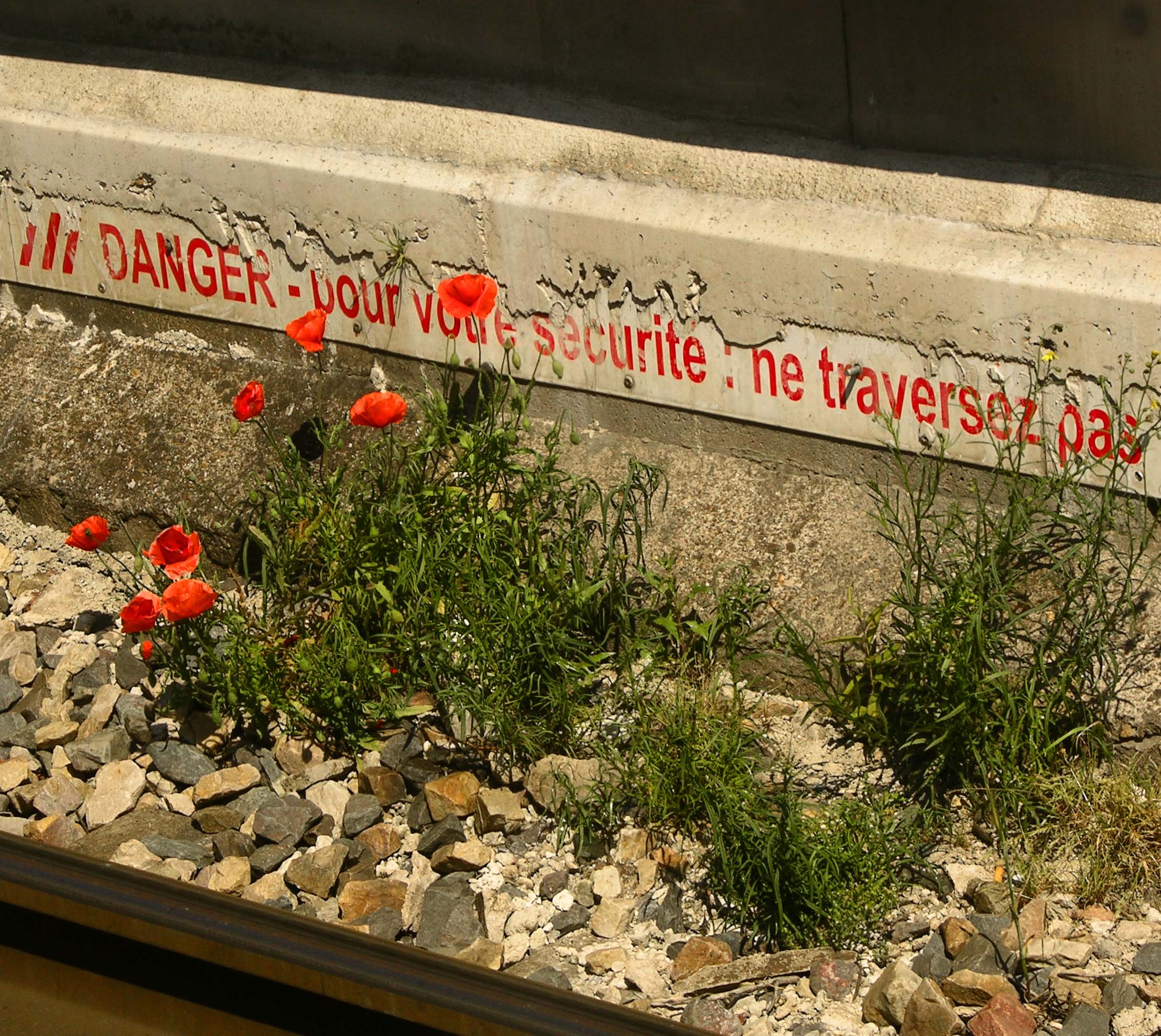
One thing I learned in France – it is impolite to take pictures of the tiny but beautiful personal gardens unless you know the people who live there. They let me know this by staring suspiciously out of their windows. So I took pictures of a few of the ubiquitous red-orange poppies that managed to grow inside the railroad track. It was not what I expected.

← Back

Thank you for your response. ✨


Posted in Teaching writing skills, Writer's resource | Tagged , , , , , | Leave a comment

A tale of two writers

JanphaRecently, I observed eighth graders working on a writing assignment. The prompt, “Write about a decision you made” was an uninspired one that usually failed to provoke much of a worthwhile response from struggling students. (Honestly, how many major decisions did you make by the time you were twelve?) Most students instinctively knew that they had been going with the flow as parents, coaches, teachers, and dominating peers pulled the strings. I questioned whether assigning a composition on the topic would  change that reality. However, the main problem with the one size fits all prompt was that the students differed. It created an additional challenge dealing with students with varying disabilities.

This particular rainy Friday, I was providing support for two students. The first one (I’ll call her Syndey) was writing about the consequences of a decision to ride a bike that had been sitting in the garage over the winter without making sure it was road worthy–an honest, but not exactly an earth shaking decision. Her rough draft was hard to read:  her handwriting was almost illegible; she left out words and punctuation marks; and sometimes there seemed to be no relationship between one sentence and the next. I read two of these severed sentences aloud, trying to deduce the glue that was suppose to hold them together. As I read the word “decent” Sydney corrected me, “It says decadent.” Decadent actually made sense.

Starting over from the beginning, I read the entire draft out loud with Sydney filling in the gaps. I began to recognize planning, reflection, and even humor in her thoughts about her risky bike ride. However, much of this did not make it to her paper in comprehensible form. She was not able to process words in writing at the same level as she was thinking, resulting in errors and omissions that spoiled the composition. Towards the end she got frustrated trying to fill the required two pages with her simple premise and began to ramble. “Don’t read any more,” she begged me near the end. She was aware of her failures, but didn’t know how to start fixing them.

The other student (I’ll refer to him as Charles) wrote about the deciding to attend the AVID class (a decision essentially made by the school counselor). This composition had all those glowing phrases to make the opportunity seem like a dream come true. Also, I could not have asked for a cleaner example of handwriting and spelling. However, the first paragraph began with “I was so excited to get the letter,” and proceeded to state that AVID was a wonderful opportunity that taught him so much. The second paragraph, which began with “I was so excited to get to the first class,” and again reiterated that AVID was a wonderful opportunity that taught him so much. In case the reader did not understand, he repeated this information again in the third paragraph. So I asked him to alter the almost identical content of the paragraphs, select a particular focus for each one and add details about the focus.

Charles immediately started writing and came back. He was so excited about the first day of class because the teacher ” would always be there for me.” My response (regretfully a bit sarcastic for a seventh grader) was “Wow, you could tell the future. You knew the teacher would always be there for you on the day you met her!”  Charles wrote in generalities, processing words as sound bytes that he strung together in the way he had heard them before. He was excelled at parroting, and until he hit middle school this deficiency in abstract thinking had not been a problem.

Obviously both students needed remedial help for disorder of written expression, but not the same kind. So often schools jump from one writing program to another because they never seem to work for all the students, and they never will. Improving problems with written expression require programs tailored to the student’s specific weaknesses.

← Back

Thank you for your response. ✨

Posted in Teaching writing skills, Writer's resource | Tagged , , | Leave a comment

Compositional Divide

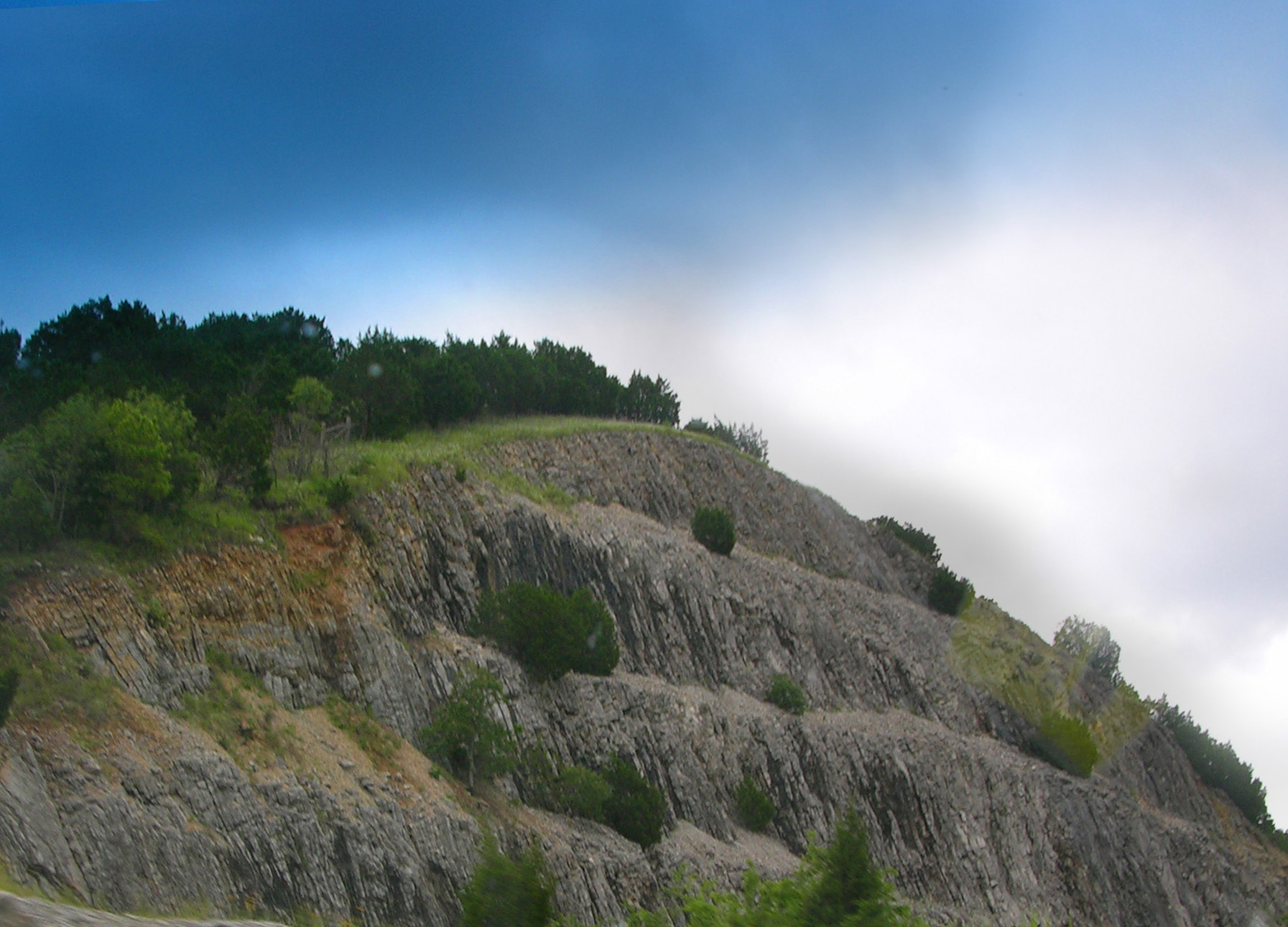
mountaintopTeachers have often heard how basic skills, such as memorization of content is required before higher level skills such as creating a new product can occur. Students are supposed to master how to recognize letters and sounds before combining phonemes to make words, comprehending written phrases, infer meanings and evaluating themes. However, the way some students acquire skill in writing flies in the face of this theoretical structure.  Rather than being a single peak, it is like a series of mountain ranges that vary in their structure.

Students may not perceive many of the letters in a word correctly; they may have little grasp of how sounds make up words. But they may have understanding of content due to a strong deductive ability.  They may have a great insight and misread “was” with “saw.” Students with reading and writing disabilities often process the written word in a different manner that results in performance gaps. What the student is able to think does not get expressed well in writing.

These students need remediation in the areas in which they struggle. Three years to learn basic rules of reading is often not enough. They need additional practice with higher level phonetic spelling rules, punctuation and usage. There are educational programs published to help students with this kind of learning disability. The best program materials are recognizable by reams and reams of pages going through a logical, systematic introduction of letters and sounds for words from simple to complex five or six syllable words. They are not exactly thrilling reading and writing exercises, but they are necessary for some students to achieve.

Difficulty writing legibly often results in a cascading set of other problems with writing. This physical struggle to write can result in omitted words and jumbled meanings. However, these students may be very talented at drawing, an indication that a different part of the brain is used for image perception.  Additional practice with handwriting can be useful, but it will slow down the student’s writing and may not help with the omissions – a result of the difficulty of transferring thoughts to paper rapidly enough. The most practical answer to this problem is for the student to learn to type on a word processor.

Teachers need to use different strategies with students that are better at lower order thinking skills, but have deficits in abstract reasoning. They can memorize correct spelling and punctuation, and repeat words, and phrases, but may not always comprehend beyond a basic level. They tend to have difficulty putting information together in an interesting manner. They write what they have heard before. These students need to go beyond simple brainstorming before they begin writing a draft. They may need to create an outline with a section for each paragraph. Sentence outlines actually force them to complete the thoughts. The teacher needs to review the content of this outline before the students ever attempt to write composition.  Ask them to visualize scenes from the outline and ask for details until they are able to focus on the thoughts and images that are behind the words they use.  It also helps for these students to use word processors as they write in order to insert ideas, examples, events, descriptions, and details at appropriate places.

One of the best strategies to help all writers is look at samples of each one’s work and help them to list goals that they want to achieve. If these goals are specific enough, the students will be doing different types of writing assignments at the same time.  This is necessary if they are to improve.

← Back

Thank you for your response. ✨

Posted in Teaching writing skills, Writer's resource | Tagged , , , , | Leave a comment

How much is their work worth?

Dec 026 c copyIn 1992, Dallas Public Schools tried out a reading/language arts portfolio assessment. A research project examined how well this portfolio program worked and found that the school district was unprepared to provide the time, money and technical quality required to make the portfolio program successful. An initial red flag was the poor inter-rater reliability for those assessing the portfolios. Basically the rating depending more on which person did the rating and how well the teacher understood the samples than it depended on the students own abilities.[1]

This is always the rub in a portfolio based assessment – it is easier to grade products that are created according to a standard set of instructions, but these products may have no more connection to the student’s actual class work than a standardized test. If the products differ, based directly on classroom instruction, the raters have the unenviable position of trying to compare apples to oranges – and pears, apricots, kiwifruit, etc. How exactly you grade portfolios containing different types of work fairly?

Joseph Renzulli is well known for a three level model for gifted students published in 1978. At the third or highest level, students would select their own area (within guidelines) for an investigation that would require students to acquire advanced level knowledge and skill, produce authentic products and present them to an audience. If students were going to be spending weeks doing these investigations, there had to be some way of grading them (progress reports and report cards must go out). Sally M. Reis teamed with Renzulli to create the Student Product Assessment Form (SPAF) to help determine the value of completely different products bases on similar processes. [2]

Besemer & O’Quin developed specific criterion based method of grading products found in Creative Product Semantic Scale (CPSS) and  Creative Product Analysis Matrix (CPAM). These are based on a three-factor model of creativity.

1) Novelty in concept, process, methods and materials

Subscales

  • Surprising
  • Originality

2) Resolution – how well the product functions, or solves the problem for which it was created

Subscales

  • Logicalness
  • Usefulness
  • Value
  • Understandability

3) Elaboration/synthesis – stylistic components

Subscales

  • Organic
  • Well-crafted
  • Elegant or refined

Some of these factors are most evident in visual and performing arts; however, Besemer & O’Quin maintain that these criteria may also be used to rate products in other fields.[3]

Educators just have to come to terms with the fact that there is no easy way to implement a consistent wide scale grading of products. The difficulty increases as products are become more specific to class instruction, as opposed to state mandated criteria. Probably the best solution is a portfolio comprised of both of these types of products. However, whatever difficulties are faced, the value of students possessing a portfolio of quality products when they finish high school is something that can no longer be ignored.

Photos by S.L.Listman

[1] Shapley, K.S. & Bush, M.J. (1999). Developing a valid and reliable portfolio assessment
in the primary grades: Building on practical experience. Applied in Measurement in Education, 12 (2), 111-133.
[2] Reis, S.M. & Renzulli, J.S. (1991). The assessment of creative products in programs forgifted and talented students. Gifted Child Quarterly, 35, 128-134.
[3] Besemer, S.P. & O’Quin, K. (1999). Confirming the three-factor Creative Product Analysis Matrix model in an American sample. Creativity Research Journal, 12 (4), 287-288.

← Back

Thank you for your response. ✨

Posted in Creativity, Education trends, Gaming in education | Tagged , , , | Leave a comment

Defining the portfolio

pen_art is cDo you regret the time lost with state mandated assessments? What if the products being assessed were actually part of the learning experience. That is one of the ideas behind the move to assess students through their portfolios. However, before students head helter-skelter into creating work for their portfolios, some planning needs to occur. Both teachers and students should know the purpose of the portfolio. There are basically four types and students are likely to keep more than one:

Instructional portfolio contains work selected by the student based on teacher input. As a teacher, you use this collection of work to prod the student into reflecting on own thought processes, and to help student pin down long-term goals. The student sets a general goal such as “I want to write exciting stories.” The teacher directs the student to set specific objectives for this goal such as “plan development and resolution of conflict in plot” or “create mood through vivid images.” This kind of portfolio helps provide a framework for individualized instruction.[1]

Personal/professional portfolio is aimed at whatever goals the student wants to achieve. The student is the primary stakeholder in this portfolio, and therefore, the most important person in selecting the products.  However, don’t expect students to select work without guidance. A good rule of thumb is to have half the pieces concentrated on one area to show depth of work, and the other half distinctly different in concept design to show breadth of work.

Program/college entry portfolios are limited to the type and number of entries that the admitting institution requires. It often resembles a professional portfolio, and includes samples of the students’ best work, with careful attention to format and organization. It may also contain biographical data, transcripts and test scores.[2] If students are having a difficult time determining what needs to go into their personal/professional portfolio have them research what the best institution for their area of interest requires for a portfolio.

Assessment portfolio provides data for student records or school accountability, but it has to include whatever products and evaluation data required by the school, district, or state. Ideally this kind of portfolio contains both samples of the student’s best work and pieces that are responses to required assignments. However, because it is difficult to grade different products using same scale, the requirements tend to be rigid.

Kentucky was one of the first states to adopt a writing portfolio as one of the ways to measure students statewide. Other states such as Ohio, Rhode Island, Connecticut and Hawaii are all moving to requiring a “senior project” as a high school graduation requirement.[3] Iowa, Kansas, Michigan, Mississippi, Missouri, New Jersey, North Carolina, Oklahoma, Utah, Virginia, Washington, West Virginia, and Wisconsin are adopting the use of an alternate assessment portfolio. If you have ever experience the adoption of this kind of assessment school, you’re probably familiar with the trials involved. (How many weeks do you want to spend grading?) These states’ have published grading rubrics for portfolios that you can adapt to your own needs. There is no need to reinvent the wheel to make education more relevant.

Art work by S.L.Listman

[1] Cole, K.B. & Struyk, L.R. (1997). Portfolio assessment: Challenges in secondary education. High School Journal, 80(4), 261- 272.

[2] Lankes, A.M. (1998). Portfolios: A new wave in assessment. T H E Journal, 25 (9),18-19. Paulson, F.L, & Paulson, P.R. (1991). The making of a portfolio. (ERIC)

[3]  Dietz, S. et al, (2010). State high school tests: Exit exams and other assessments. Center on Education Policy, Washington, DC.

← Back

Thank you for your response. ✨

Posted in Creativity, Education trends, Writer's resource | Tagged , , , , , , | Leave a comment

The case for the case

case2Portfolio – a portable case for holding papers – a simple name for a collection of works into which a person has poured hours of deliberation and sweat. Today the portfolio is just as likely to be stored on a flash drive that fits into the palm of a hand as in a case. But its purpose is still the same – to demonstrate the quality of work a person can do.

Prospective buyers and employers have been scrutinizing people’s portfolios for centuries. At one time most schools encouraged students to produce works worthy of their portfolio. However, with the increased popularity and ease of standardized testing, the production of quality work has often taken a back seat to test scores. Are the multiple-choice standardized tests scores easier to compare – Yes.  Are they a more accurate indicator of higher order thinking skills – not according to a sizable portion of educators.[1]

But, there are draw backs to requiring educational portfolios. Selecting pieces for it can be a mammoth task. This requires that students learn to keep track of all  stages of their  work–unfinished and preliminary work, and not just completed produces. Often they seem to struggle just to find yesterdays homework.

First, students must know what kind of things they must be able to put their hands on in order to review their own development, discuss work with teachers or peers, and finally fill their portfolio. Students should share with each other to present alternate ideas on how to track their work. Finally, using electronic storage, with appropriate back ups becomes a necessity to keep massive amounts of work in the classroom.

This task of maintaining what they have produced actually works better if the students determine how they will do this. Forcing a uniform system on all students often creates a disadvantage for capable students who do not think about organization in the same way. The portfolio should include documentation of a project in various stages (initial concept or sketch, rough and final draft), students’ ideas on the selection of products, and teachers’ written assessments of products. It also helps to have another teacher of the same subject to review possible portfolio products. That does double the work, but also makes the selection process easier and more accurate.

In 1983, Teresa Amabile first promoted use of “consensual assessment,” a way to grade the creative products without depending on any particular definition of creativity. Instead it relied on the knowledge and experience of judges. For this kind of comparative rating to work, the creative products must be from the same domain (i.e., writing, music, computer science). The judges must be very familiar with domain and should not confer with the other judges or do anything else to impose their criteria on the others.[2]

More recently, John Baer found that different kinds of experts (practitioners, critics, educators) in one field tend to agree on creativity. One group of judges rated the creativity of student poems, and stories and the following year, a different group with similar backgrounds evaluated the same works with similar results. But a major drawback remains with this “consensual assessment” technique it that it requires products be compared with each other because there are no norms.[3]

Even though a statewide comparison would be impossible using this technique, it works well on a small scale. When students finish school and enter the workforce, prospective employers will basically be doing the same thing__gathering in small groups to compare the resumes and work samples and using this comparison to determine who will be the most promising next, new employee.

[1] Cole, K.B. & Struyk, L.R. (1997). Portfolio assessment: Challenges in secondary education. High School Journal, 80(4), 261- 272.
[2] Beattie, D.K. (2000). Creativity in art: The feasibility of assessing current conceptions in the school context. Assessment in Education, 7, 175-192.
[3] Baer, J. (1994). Performance assessments of creativity: Do they have long-term stability? Roeper  Review, 17(1), 7-11

← Back

Thank you for your response. ✨

Posted in Creativity, Education trends | Tagged , , , , , | 1 Comment

Elaboration: the hardest part of creative writing

Elaboration is the process of presenting and developing an idea, by adding more detail to  explain the exterior situation so that the reader gains privileged access to interior thoughts of authors. Forming creativity into a product that someone else can absorb is such hard work that people often avoid it. This keeps ideas in the brain and off paper, not to be shared with others.

In Narrative writing the more descriptive a passage is, the slower it seems. However, the descriptions set a mood and allow the reader to feel like they are inside the story. Elaboration through setting the scene and revealing interior motivations allow readers to see what an author saw inside of their head.

In Informational writing the depth of explanation uses key details to develop the topic. This provides a rationale for what has occurred, is occurring, or could occur in the future. Elaboration builds on key ideas and exposes the cause behind effects.

In Opinion pieces elaboration expound on reasons that support opinions and conclusions. Without elaboration the connection between reader and the ideas of the author is weak or completely lacking.

After one has spun off multiple new possible ways of being creative it is time to stop the spinning and do the work to push one idea as far as possible. Elaboration is the act of  embellishing or adding details to an idea to enrich the initial concept.[1] This adding of details would seem to be the easiest of the creative tasks; however, elaboration scores based on the Torrance Tests of Creative Thinking are continuing to drop indicating an increased need to teach this particular creative skill. [2]

[1] Torrance, E. (1988). The nature of creativity as manifest in its testing. In Sternberg, R. (Ed.), The nature of creativity. New York: Cambridge University Press.
[2] Kim, Kyung Hee (2012) Yes, There IS a Creativity Crisis! http://www.creativitypost.com/education

← Back

Thank you for your response. ✨

Posted in Creativity, Education trends | Tagged , , | 1 Comment

The ogre of orginality

prom 2011 (7) copy

The creative writer combines originality, complexity, independence of judgment, and aesthetic sensitivity according to the research of Frank Barron, who was known for his in-depth studies of the creative mind. His subjects often took extremely complex elements to produce a final product that was elegant and deceptively simple.

Barron found that creative people could hold two opposite views at the same time and yet see no contraction. Basically, they could be both naïve and knowledgeable, emotional and logical, or disciplined and free spirited.[1]

Such dichotomies tend to become better integrated  as people grow older. For creative adolescents, this lack of integration may appear as moodiness or fickle thinking as they try to balance ideas at opposite poles. For example, adolescents may push the envelope when it comes to being different from older people, but not from their peers. In fact this age group exhibits more conformity to their classmates than any other.

As teenagers are highly prone to conformity, they pay a lot of attention to what their classmates do. Grading based on originality encourages them to break this pattern of behavior. Of course, originality is determined by how an idea differs from those of one’s peers.  Rather than ask how a teacher can grade students based on what other students do, inquire how they cannot do this.

For a teacher comparing the work of students to each other becomes second nature with a few setting the bar for the rest of the class. However, originality is determined by how an idea differs from those of one’s peers, and not how much it follows the lead of those that the teacher favors. After students complete their assignments it is valuable for them to compare their ideas to others in their class. During this time they must to be encouraged not to imitate but differentiate when working.

Generating ideas that are original and different from others around them is extremely valuable for adolescents. These ideas are springboards to innovations and solutions to  problems of the future.

Barron, Frank and Harrington, David M., Creativity, Intelligence, and Personality by Frank Barron. Annual Review of Psychology, 32 (1981): 439–476

← Back

Thank you for your response. ✨

Posted in Creativity, Education trends | Tagged , , , | 2 Comments

Too rigorous for creativity

reading2A teacher voiced his frustration about getting gifted students past the hurdle of simply looking at events of a story to the uncover the devices that the author used in writing the story.  The students need to interpret the effect these literary devises had on the readers.

At that point I worked with children who had made this leap, despite needing help in reading due to dyslexia.  They did this because they were attempting to write stories themselves.  I suggested to the teacher that he could have students write short fiction so they could understand the process that an author went through. His response, “The curriculum is too rigorous and doesn’t allow time for creative writing. They can take that course if they want to.”

I don’t find this the most sensible route to take for many reasons. Bloom’s taxonomy used to place Evaluation on the top rung. The critique  was above the creator of the work. But, that was determined to be backwards and Synthesis was moved above Evaluation.

Overloading students with too much information without allowing them to practically implement what they have learned stifles their higher thinking skills. This leads to a kind of knowledge that de-emphasizes critical thinking. Why limit what has been learned by refusing to have the students make real products?

The reasons normally given: having students make creative products is a messy and inaccurate exercise that teachers dread, and how exactly do you grade this kind of work. The teacher is not the only one that needs to tackle this problem. Students are going need to know how to apply their effort towards tasks requiring imagination.

When faced with this challenge, teachers can ask for student input on grading criteria. Projects that call for large doses of creative input can be made easier by putting everyone through the process from start to finish. Grading, which requires evaluation skills, is something students need to learn in order to produce more innovative work. After all, the definition of creativity requires that a product be both original and useful.

[1]  Torrance, E. (1999). Torrance test of creative thinking:  Norms and technical manual.  Beaconville, IL: Scholastic Testing Services.

← Back

Thank you for your response. ✨

Posted in Creativity, Education trends | Tagged , , , , | 1 Comment