The Crazy Writer

Writers, like other creatives, tend to exhibit pathological symptoms from time to time. So, psychologists have studied the life of writers, researching their unconventional behavior like they examine the pathology of a disease. Writers can appear contradictory because the strongest drive in creative people is to not be like other people, even other creatives.

During the 1950s, when creativity research was first acknowledged as a legitimate scientific subject, Psychologist Frank Barron tested and conducted in-depth interviews with writers, architects, research scientists, and mathematicians  at University of California in Berkeley. According to Barron the highly creative person is “both more primitive and more cultivated, more destructive, a lot madder and a lot saner than the average person.” Creative people could appear and actually be conventional in many ways. However, “they tend to rebel against conformity as they accompany their own private visions down lonely, untrod paths.”

The highly creative person… is a lot madder and a lot saner than the average person.

Frank Barron

Writers could appear highly neurotic on personality tests while having an ego strength that could deal with stress  and pain of creating products from their imagination. According to Frank Barron the psychology of imagination finds the need for both order and disorder. In his research the creative writer espoused originality, complexity, independence of judgment, and aesthetics sensitivity. Those that he studied often took extremely complex elements to produce a final product that was elegant and deceptively simple.

Creative people can hold two opposite views at the same time and yet see no contraction, because they are prone to “integration of dichotomies.” They can be both naive and knowledgeable, emotional and logical, disciplined and free spirited. Think about it—an either or view does not necessarily make life easier. It is a refusal to deal with ambiguity that naturally abounds. The highly creative person’s tolerance for ambiguity and messiness is balanced by a strong desire to bring order. “It was a powerful motive to create meaning and to leave a testament of the meaning which that individual found in the world, and in himself in relation to the world.”

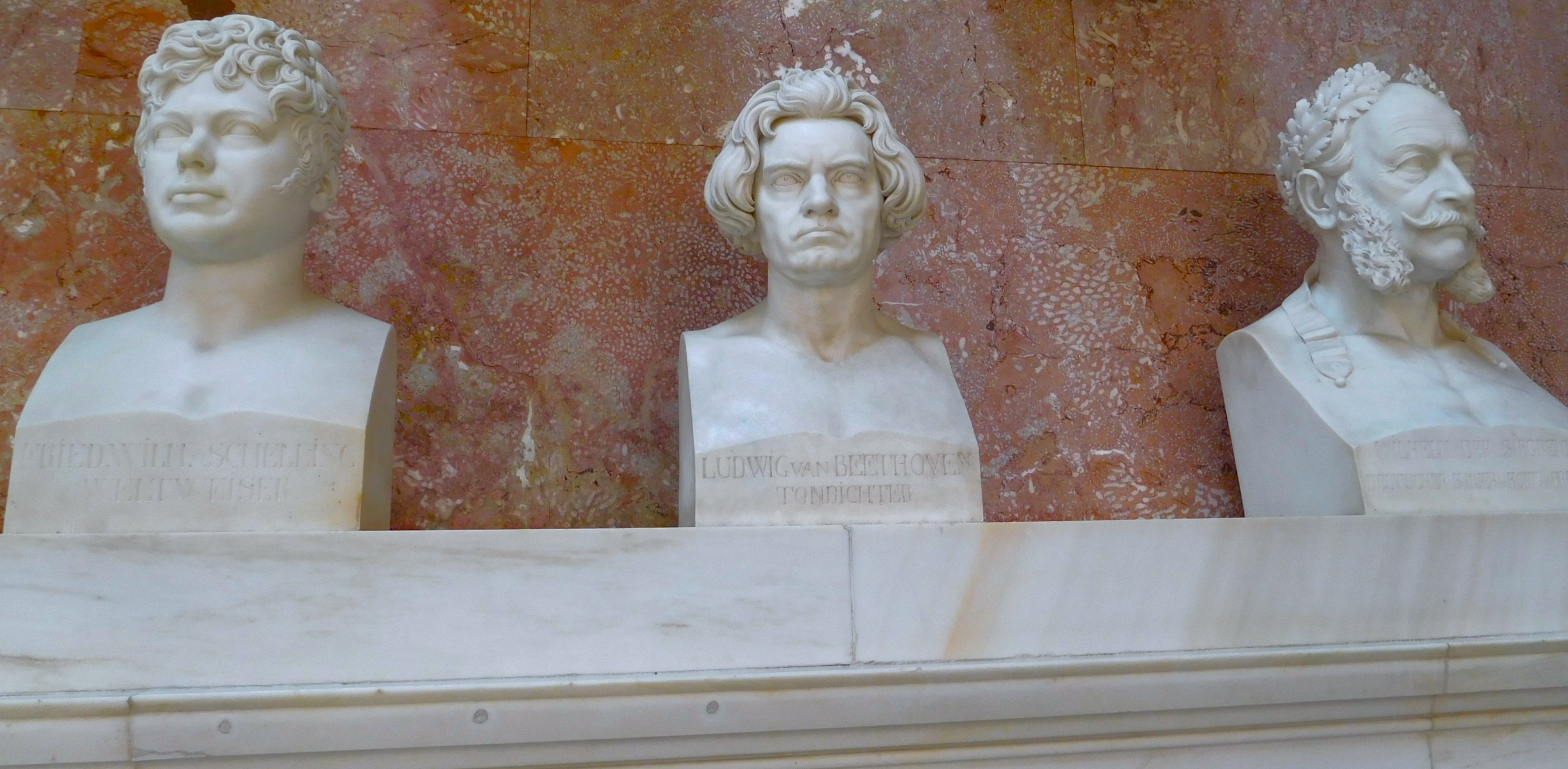
Photo of busts in Wahalla Memorial, Germany by K. N. Listman

Barron, Frank and Harrington, David M., Creativity, Intelligence, and Personality by Frank Barron. Annual Review of Psychology, 32 (1981): 439–476.

Posted in Creativity, Group psychology, Literature, Mental health | Tagged , , | Leave a comment

Writing and Age

As writers get older and improve at their skill, they sometimes bemoan the lost years of youth—time when they had more energy and yet were not writing. There are excuses that we give ourselves. Getting an education, working to pay for rent and groceries, time spent raising children all subtract from the time required to produce quality novels. Literary masterpieces don’t come from adolescents, but they are not as frequently produced by elderly people either.

Susan Eloise Hinton (better known as S.E. Hinton) of Tulsa, Oklahoma, began writing her first novel, The Outsiders, in 1965 at the age of 17. She had it published in 1967 and is one of the youngest writers to gain fame for her works. She continued to write young adult novels and children’s books, but time in between books increased to decades. Frank McCourt, of New York City, did not publish his first novel until he was 66. His autobiography, Angela’s Ashes, won the Pulitzers Prize. Then, he wrote two more memoirs and a few shorter pieces before he died in 2009. 

Most writers produced their greatest work by age 45, but poets tended to peak as early as their thirties.

So writers can start at any age, right? However, these two authors are outliers. H. C. Lehman who studied creativity and age found creative achievement in the arts was a bell curve with a single-peak as a function of age. Most writers produced their greatest work by age 45, but poets tended to peak as early as their thirties.[2] 

A cursory study of literature reveals a number of poets—Robert Burns, Percy Shelly, Alexander Pushkin, George Gordon (also known as Lord Byron) and Edgar Allan Poe—didn’t make it into their forties. There are exceptions to this trend. Robert Frost wrote his most well-known works in his late forties and fifties. However, poets with a longer life often stopped producing as much work.

D. K. Simonton also studied the lives of creative geniuses and concluded that poets tend to peak the earliest of the artistic disciplines. Yet, no matter at what age each poet started to produce renown work, their creative production rose fairly rapidly and then declined until their death. The good news? His research showed that novelists seem to peak later and decline more slowly. This may result from the complexity of novels and a greater ambiguity in this field of writing.[2]

Just as there is no single factor contributing to the creativity of individuals, there are no hard and fast rules when it comes to age and creativity. There are just trends that may not always hold true, because as all creative people know, rules are meant to be broken.

Photo of San Angelo, TX by K.N. Listman 

[1] Lehman, H. C. (1962). More about age and achievement. Gerontologist, 2, 141-148.

[2] Lehrer, J. ” Old Writers,” The Frontal Cortex, Posted on June 15, 2010

Posted in Creativity, Generational differences, Literature, Novels, Poetry | Tagged , , , , | Leave a comment

Who Are the Grammar Police?

As I perused research about grammar police, I found one study with a conclusion that I had already deduced myself. No matter how much of a thought provoking story or essay that I create, the people who notice every misspelling and usage error in my writing may still assume that I am ignorant based on these errors. However, when a person does this, they have given me a clue to their personality. A larger percent of these grammar judges are  disagreeable–certifiably disagreeable as diagnosed using the Five Factor Personality Analysis (often called the Big Five).

One of the traits measured in this assessment is level of Agreeableness. Subsets of agreeableness include trusting, high moral standards, altruism, cooperative, modest and sympathetic. People that score low in two of or more of these characteristics are considered to be closer to the disagreeable end of this trait spectrum

Now, for the research. Subjects were sent emails to read, both with and without spelling and grammar errors. Those that downgraded their estimation of the person who had written the email based on the number of errors that they found also scored low on Agreeableness in the Five Factor Personality Analysis. Of course, that is no big deal. Like me, you probably expected that result.

One of the other factors measured in this analysis is degree of Extroversion. Overall introverts were not as generous with their estimation of the unknown people writing these emails as the extroverts. Introverts who indicated that good grammar was important to them were more sensitive to these errors and could detect more of them. So, they downgraded the likability of the email’s author more severely than introverts who didn’t care about grammar. A definite correlation existed for the introverts between how much (or how little) they cared about grammar and how much they expected to like these unknown email correspondents.

Results for extroverts were a little perplexing because some extroverts said grammar mattered, but behaved as if it did not. “Surprisingly, extroverts who reported grammar as more important were less sensitive to typos than extroverts who felt good grammar was less important.”[1] 

Some extroverts said grammar mattered, but behaved as if it did not.

Why were they not noticing the typos? Did they overestimate their ability at spelling and grammar? Or was this lack of self-awareness intentional? This research may have provided a serendipitous insight into self-awareness and why it is rising on the list of desired traits of leaders. Past researchers have found that executives are predominantly extroverts. 

Self-aware people are introspective and tend to be introverted. These are common characteristics of writers. They think about their own values and motives compared to their actions. But as hard as they try, they soon realize they are incapable of behaving consistently according to their own values. There are different ways to respond to this realization: change values to match actions,  intently focus on every error and spiral into depression or give up being self-aware because nobody is perfect. Evidently extroverts use this last option. Simply avoiding reflecting on the effects of their actions is their preferred way of dealing with internal conflict. 

This lower self-awareness has some negative side effects when leaders fail to accurately estimate their own skill or understand their own motivation. High self awareness among writers can cause excruciating self-doubt. We have yet to see whether self-awareness can be adjusted one way or the other by external instruction. This may be as difficult as teaching  extroverts and introverts to behave like someone at the opposite end of that spectrum.

Photo by K.N. Listman

[1] Boland JE, Queen R (2016) If You’re House Is Still Available, Send Me an Email: Personality Influences Reactions to Written Errors in Email Messages. PLoS ONE 11(3): e0149885. doi:10.1371/journal.pone.0149885
Posted in Style and voice, Teaching writing skills, Writer's resource, Writing trends | Tagged , , , , , | Leave a comment

Is Creativity Fair?

Creative people often feel driven to be different, to strive for the original idea and take it as far as possible despite the deprivation and pain that results. They fear that inspiration may abandon them and leave them stranded, or the world may decide that the masterpiece into which they have poured blood, sweat and tears is useless and ugly. They may not see their ability as being  a fortunate circumstance. In fact, most of the evidence for innate creativity is based on the negatives associated with this trait.

One negative is the similarity of creative thinking to schizophrenic thinking. Researchers find increasing evidence for the genetic basis for schizophrenia, as they search through family trees of schizophrenics.  There appears to be a larger than average number of people in creative fields in these family trees. In the same manner, examining the families of famous creative people reveal more members exhibiting types of psychopathology than found in an average population.  Abnormal thinking includes:

  • Delusional thinking, which is similar to using divergent associations
  • Over inclusive thinking, or paying attention to seemingly irrelevant details
  • Uncontrolled flexibility, evidenced by jumping from idea to idea [1]

Do those sound a lot like creative traits? The difference is that the creative person has a stronger ability to make judgments to determine when this kind of behavior will be acceptable, a characteristic controlled by the prefrontal cortex. [2]

The second evidence for innate creativity is associated with a problem that many writer’s bemoan–the unpredictability of inspiration. For those most known for creative output, the peak often tends to come near the beginning of their career. Then, creativity tends to fluctuate, going up and down, but only occasionally reaching the earlier height. If creativity were a learned behavior it should improve more frequently. However, the ability to come up with a creative product seems to be “a chaotic sequence of hits and misses.” [3]

No one seems to be able to explain why some people keep after their creative pursuit when it is heavily discouraged. 

Finally, no one seems to be able to explain why some people keep after their pursuit of creativity when it is heavily discouraged. Reams of articles come out on how to encourage creativity in education and the workplace, but it appears some manage to keep a unique perspective without encouragement. Businesses have an increasing desire for creative products. But this desire for these products is in opposition to their treatment of most creative people. Those that produce creative ideas are generally disliked.[4] Why would a creative person continue coming up with the kind of ideas that cause social rejection if it was only something they learned to do–not something they did intuitively? Apparently social rejection increases imaginative thinking–at least  in those that are already nonconforming types. According to a study from Johns Hopkins:

“Rejection confirms for independent people what they already feel about themselves, that they’re not like others. For such people, that distinction is a positive one leading them to greater creativity.”[5]

It just isn’t fair. One person gets to be born with an enviable imagination, the ability to come up with new, innovative ideas, or create artistic masterpieces and the next person does not. Many cringe at the idea that creativity could be an innate and inheritable trait …. including those that have this trait.

Photo from Wikimedia Commons

[1] Kuszewski, A. (2009) The Genetics of Creativity: A Serendipitous Assemblage of Madness, http://www.grupometodo.org
[2] Jung-Beeman, M., Bowden, E., Haberman, J., Frymiare, J., Arambel-Liu, S., Greenblatt, R., Reber, P., Kounios, J. (2004). Neural activity when people solve problems with insight. PLoS Biol 2(4): e97
[3] Feist, G.J. (1998) A meta-analysis of personality in scientific and artistic creativity, Personality and Social Psychology Review, 2, 290-309
[4] Olien,J (2013) Inside the Box, People Don’t Actually Like Creativity.
[5] Johns Hopkins University news release, August 21, 2012, Don’t Get Mad, Get Creative: Social Rejection Can Fuel Imagination, JHU Carey Researcher Finds
Posted in Creativity, exclusion, Mental health, Self-awareness | Tagged , | Leave a comment

Surviving Creativity

When I was much younger I studied Abraham Maslow’s Hierarchy of Needs. Despite his theory that fulfillment of physical and psychological needs leads to self-actualization and creativity, I found many creative people driven by something else–something that often causes them to ignore basic needs.

About twelve years ago I first caught sight of the “Artist’s Hierarchy of Needs,” an upside down version of Maslow’s triangle. It balances on the tiny point of self-actualization. This hierarchy applies to more than visual arts and includes writers and others who often find creating more important than eating or sleeping. So it’s time to give others their fair shake and look at some competing ideas about what constitutes creativity.

Sigmund Freud, the father of modern psychotherapy, saw creativity as a socially acceptable defense mechanism for expressing socially unacceptable urges. In other words being creative was the way to sublimate that pesky sex drive. He felt the creative process was driven by the unhappy suffering of unfulfilled fantasies. For him being creative was akin to being neurotic.[1]

Sarnoff Mednick is most famous for his research that associates psychosocial disorders–such as acting like a criminal–with genes that you inherit from your parents. He also came up with the associative theory of creativity, the idea that a person comes up with original ideas as a response to stimulus–sort of like drooling when you smell fresh hot cinnamon rolls. When a stimulus hits the senses, a creative individual’s response would be to think of an extremely remote and barely related idea. Mednick created a test using words based on the theory that the more remote the test taker’s response was from the original word, the more creative that person was. So an extremely creative response could be nonsensical. [2]

Carl Rogers saw creativity in a similar light to Abraham Maslow. He thought creativity was the result of healthy psychological growth, and the highest form of self-actualization. He saw creative people as being wonderfully balanced, open to new experiences, with internally based control.[3] I’m sure most creative people would like to view themselves this way. However, many are honest and admit to deep insecurities. Of course, most of us have run into a few of the difficult, smug, prima donna types.

When people are working on their latest novel they become so fulfilled that they forget about other things–like food and sleep.

Mihaly Csikszentmihalyi does not see creativity as strictly residing within a person, rather it is an interaction between a person and society. Social systems and cultures determine what is original idea and what is not. To be considered a creative author, an individual must strike a balance between coming up with a novel idea and relating it to accepted conventions. Otherwise this work would be viewed as either boring or gibberish. He also describe the idea of flow, an intensified response to a creative urge that causes artists to ignore time. When people are working on their latest novel they become so fulfilled that they forget about other things–like food and sleep.[4] So, creativity can be dangerous to your health.

Finally, we come full circle to Albert Rothenburg who proposes that creative people use a certain kind of thinking that allows them to consider two opposite concepts at the same time–like two objects occupying the same space resulting in something new. His research shows that creative thought processes are not logical and actually resembled those of the mentally ill. However, creative people are actually aware that they are indulging in ‘insane’ thinking while they are doing this–at least most of the time.[5]

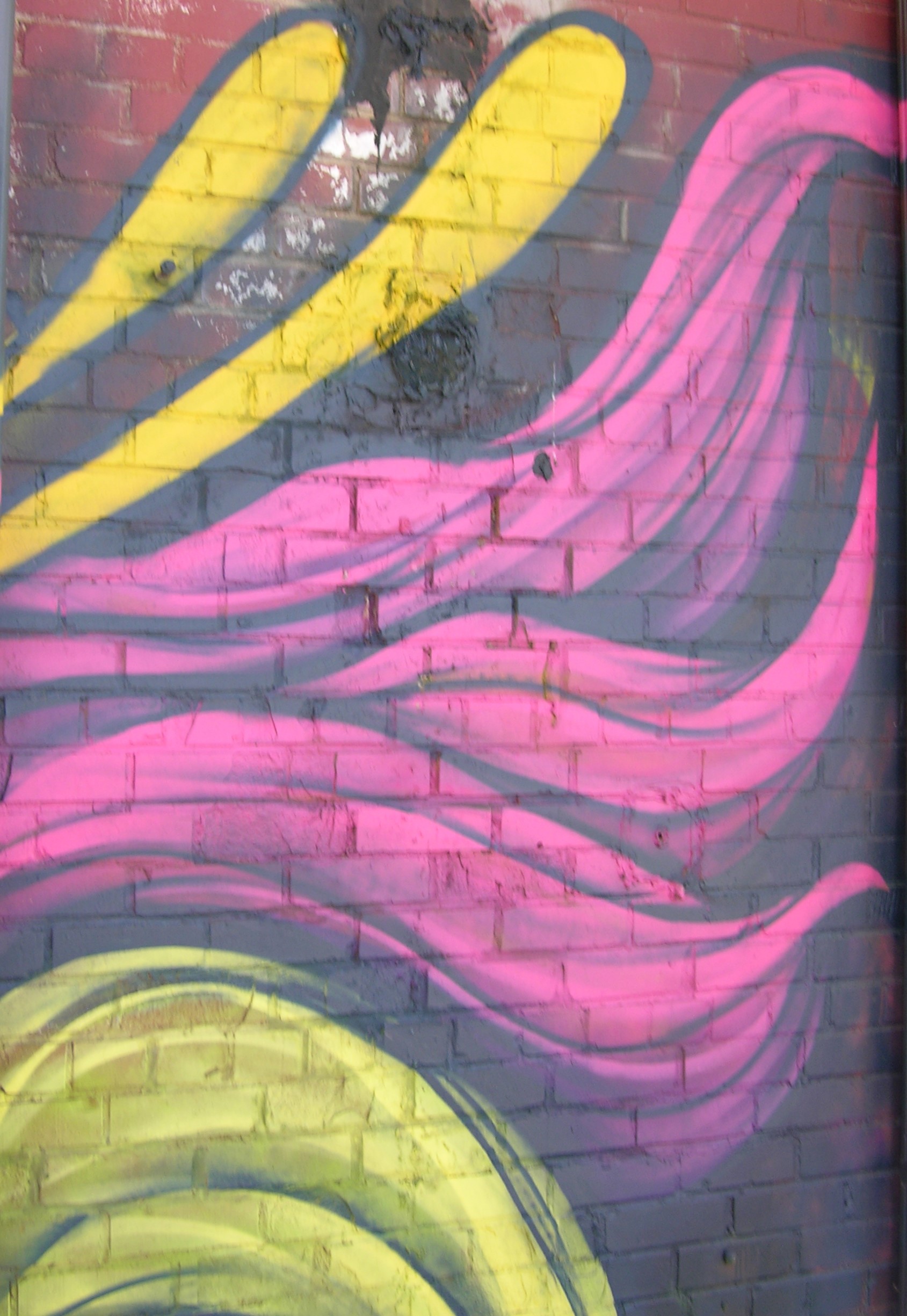
Photo of mural in Plaza District, Oklahoma City, OK by K.N. Listman

[1] Rothenburg, A. &  Hausman. C., (1976). The creativity question.  Durham, NC: Duke University Press.
[2] Mednick. S. (1962) The associative basis of the creative process. Psychological Review. 69, 220-232.
[3] Rogers, C. (1962). Toward a theory of creativity. In Parnes, S. Harding, H. (Eds.) A source book for creative thinking. New York: Scribners.
[4] Csikszentmihalyi, M. (1988). Society, culture, and person: A systems view of creativity. In Sternberg, R. (Ed.), The nature of creativity. New York: Cambridge University Press.
[5] Rothenburg, A. &  Hausman. C., (1976). The creativity question.  Durham, NC: Duke University Press.
Posted in Creativity, Ideas for writing, Literature | Tagged , , , | Leave a comment

How Monumental Should Fantasy Heroes Be?

Fantasy provides a kind of escapism for young adults (and even some older adults). Characters come from a less technological era, in which a teenager could be considered an adult capable of making all their own decisions. The popular fantasy trend of superheroes harkens back to antiquity with characters such as Thor and Odin, heroes from Norse mythology. Other heroes include Greek deities, and the legendary Black Panther of Wakanda. However, these fantasy-based stories sometimes suffer from having more interesting villains than protagonists. 

For example, consider people’s preferences in the competition between Thor and his adopted brother, Loki. This son of ice giants and the god of mischief originated from another place and another race and could not fit in. Thor had the greater strength, and sometimes a greater tendency to behave like a spoiled brat. However, when Thor matured, he became less interesting while Loki still intrigued audiences. This led to Loki, who was initially a villain, becoming the main character in a newly spawned television series. 

This problem has occurred before. Clark Kent in the 1980’s Superman movies was fearless except in matters concerning Lois Lane. But, that seemed like an unnecessary worry. She never failed to be impressed by his ability to fly through the clouds and take bullets for her without getting injured. However, many members of the audience preferred the antics of Lex Luthor, a man not as handsome as Superman. His intelligence and penchant for scheming often failed him. But, he was more a complex and more relatable character. It seems hard to design superheroes without making them boringly perfect.

The mark of an excellent writer is being able to produce villains who see themselves as right, and yet the audience sees through this façade.

The mark of an excellent writer is being able to produce villains who see themselves as right, and yet the audience sees through this façade, realizing their evil intentions. Sometimes this is accomplished by having the villain be insane. But, these authors often misunderstand mental illness. The relatable villain is more likely to be a normal person who has decided on a course of action that is cruel to others for an ultimate cause that he rationalizes as good. It helps to avoid creating a totally vicious villain. If the author expects a reader to be engrossed by impending danger and wondering who will survive, both sides need some redeeming qualities.

In real life, people are frequently eager to point out their own faults when they see them in others. They view their own determination as persistence while the other person’s similar attitude is just plain stubbornness. In well written fiction, the reader can also detect the similarity between a person’s accusation against others and their own actions. A wise person once pointed out that real people, who refuse to acknowledge their own shortcomings, often become the cruelest towards people with these same faults. This wisdom can be used in real life, but can also help when creating an engrossing hero and villain.

Photo of Walhalla Monument, Germany by K.N. Listman

Posted in allusions, Characters, Literary devices, mythology, Novels, Trends in books | Tagged , , | Leave a comment

Everyday Fantasies

Years ago when I coached teams of graded school-aged children for Odyssey of the Mind, I learned about imagination in the psyche of the preadolescent child. Some children wanted to be conformists and preferred not to suggest ideas that were not familiar. It was more important that their idea was acceptable to the majority of their peers. Other children would come up with “crazy” ideas. They would have to sort through all the bizarre, unworkable variations to find some that would work. 

Writing with a dose of fantasy woven into a familiar plot is closer to the tastes of the conformists. They like reading the adventures in unreality because this fits into their view of what a story should be. Students who are very conscious of what their peers think, prefer the same thing. In movies this is currently superheroes, and in books this is fantasy, tales of the wizards and magical creatures. They have a feel of familiarity, the echo of  frequently repeated fairy tales. The villain is not even human most of the time. So, there is no need to fear that this story will reflect some tragedy that may occur to them in real life.

Insert a bit of magic into this real world setting and viola, the author has eliminated the need for most of the boring worldbuilding.

The magic school setting is an example of a young adult (YA) fantasy theme that keeps appearing. It does not require a terribly sophisticated audience and uses the real world situation of a group of students that attend a boarding school together (at least the real world situation for upper class youth). Insert a bit of magic into this real world setting and voila, the author has eliminated the need for most of the boring worldbuilding. The storytelling can begin almost instantly. If the plot begins to drag, just inject a new magical peril, like a troll or a dragon from a fairytale.

Fantasy novels still require creativity to write, but many authors try not to vary too far from proven plots and currently acceptable tropes. In the past fantasy was often viewed as a lesser genre by adults. But, those readers who grew up at the same time as me saw fantasy break into the realm of respectable literature. Now, it is encroaching on the fewer and fewer realistic works appearing for that demographic. When I recently attended a seminar for authors of (YA) books, the speakers were all writing fantasy works. Nobody seemed to be creating realistic novels for this age group. So, there should be room for my work about the struggles and trials of ordinary teenagers, right? Probably not.

Illustration by www.pikist.com

Posted in Literature, Novels, Trends in books | Tagged , , , | Leave a comment

Predicting the Future of AI

In science fiction, predictions of a future that did not occur were made by authors such as Jules Verne, H.G. Wells, Robert Heinlein, Ray Bradbury, Arthur C Clark, and Isaac Asimov. No one has traveled to the center of the earth, and considering the heat and pressure that exist there, no one probably ever will. Neither have we seen advancements to colonizing Mars or creating androids indistinguishable from humans. Their imaginative fiction is still interesting to read, even if it did not follow the path of our own development.

Hardcore science fiction readers may mourn the loss of science fiction writers who keen insights into possible futures. Ray Bradbury with his prescience about technology predicted wall size TV’s in a kind of theater room and “clam shells” that a people stuck in their ears to replace the world’s noise with music in Fahrenheit 451. However, the past writers were taking pot shots when guessing about power of new technology such as computers.

We have yet to see humans on another planet or a computer with truly independent thought processes, even though Arthur C. Clarke wrote stories making these events seem plausible. Tales of space travel to distant solar systems (or even galaxies) are entertaining. However, the amount of time it takes for light from these places to grace our skies is mind boggling. Would humans ever be able to reach them? Therefore, travel in outer space is being usurped by journeys into inner space. The new frontiers in science-fiction literature are virtual reality (VR) and artificial intelligence (AI).

Travel in outer space is being usurped by journeys into inner space.

The VR and AI that exist today are used in very prosaic ways, such as recalling steps for a mechanic, teaching your phone to recognize your voice or completing the drudgery of finding research. These are not exactly thrilling plot lines. Jaron Lanier, one of the founders of virtual reality, argues that computers will never become masters of matter and life. As humans we don’t have the intelligence to produce ones that run programs that are not cumbersome and error-prone, because we are error-prone. Science fiction authors are again taking potshots at predicting the future by creating virtual reality and artificial intelligence that is sophisticated beyond human cunning.

The real threat, according to Jaron Lanier, is the belief that our collective wisdom can spawn ideas superior to that of a few individual humans. The “hive mind” relieves individuals of responsibility for actions. A pack of anonymous people online can turn into a vicious mob. So, if an author is looking for a new twist on the use of artificial intelligence in fiction, one only has to look as far as the errors made by masses in the name of science in the past. It may not be the dangerous self-growth of artificial intelligence that drives the plot towards the crises, but how humans use it in their very fallible and irresponsible ways.

Photo by K.N. Listman

Posted in Writing trends | Tagged , , , | Leave a comment

Searching for a Quest

I first encountered Lord of the Rings while I was in high school and J.R.R. Tolkien was still alive. Like most people in the United States I had never heard of him before. However, my friends were enthused about a trio of dog eared paperback books they passed around. It was a good way to keep oneself occupied during the less interesting classes. I couldn’t get the first book from anyone who had the set, so I started with the second, and then finished the third book. I was so enamored with this tale, I went back and read the first book. It still thrilled me, even though I knew how it would end. I wouldn’t get hold of a copy of The Hobbit until much later.

Much, much later a friend of mine who had a desk cluttered with Star Wars memorabilia, and raved about each movie, admitted that she never finished Lord of the Rings because she just couldn’t get into it.  Obviously, you can’t write the perfect quest for all people, because their expectations differ. But most quests, even those not in fantasy or science fiction, share similarities. First is that the trip is not aimless, but has a goal, whether it is reached or not. In some twists, the treasure that the adventurers seek is not the one they find. Some things are more valuable than wealth.

In some twists, the treasure that the adventurers seek is not the one they find.

The following are some standard quest goals:

  • A fabled treasure or magic object that imbues the owner with tremendous power (probably the most common)
  •  A rare substance which can stop a plague or prevent another kind of disaster (also common)
  • A special person that the main character needs to gain power, prevent a pending disaster or stop the homeland from dying. (a combination of the those just mentioned)
  • A new homeland because the old one is dying or overrun by a hoard. This is the typical post apocalyptic journey (also common).

Less frequently found is the protagonist who seeks a group of people to give who need his knowledge and power to prevent some of the previously mentioned disasters. So the idea of taking an item to its destruction, as in Lord of the Rings, or finding an item that must be destroyed is not used as often either–at least before Tolkien’s time. 

No matter what quest is chosen, the writer usually indicates the value of the quest before the characters start trekking for weeks on end. Which brings us to the next problem. What kind of trials and obstacles will your characters face? This requires a variety and not just repeated battles. The danger can come from surviving dangerous terrain, severe weather, wild animals, or the deceit of friends as well.

How do you find inspiration for all of these ideas? Borrow events, from the present, from past history and from mythology. Myths are not always restricted to ancient civilizations. People secretly have a grand desire to be strong enough to be in charge of their destiny like an ancient hero or a future scientific whiz. People continue to be  enthralled by anything that promises great fame, fortune and power. But, what if all those wonderful things people wanted were destroying humanity? Then, the brave hero must go on a quest into a new world to find a solution to that problem.

You would have another quest to write.

Posted in Novels, Story structure, Writing trends | Tagged , , , , | Leave a comment

Defining Sci-Fi

In Perelandra, an earth man is sent to Venus  on a mission from God to counsel the ‘Eve’ of that planet so she does not fall prey to the wiles of Satan’s agent. I, Robot is a collection of short stories that trace the development of robots until they take over running the world while humans remain blissfully ignorant of this fact.  What does a work like Perelandra by C.S. Lewis have in common with Isaac Asimov’s, I, Robot?  Both are considered science fiction. What defines this seemingly disparate genre and also separates it from its twin, fantasy? Let’s look at some classics to determine this. 

Time:  Most stories taking place in the future are considered science fiction.  This allows authors to play with new technology (like cloning) or explore the possible outcomes of today’s issues (like global warming). Future societies do not have to progress but can return to a more primitive state that resembles the medieval world of fantasy. Any magic is usually chalked up to the natural abilities, such as harnessing the force of the universe in the Star Wars series. If the inhabitants of an imaginary place that exists outside of our time uses magic more than machines, that denotes a fantasy, such as Ursula Le Guin’s Earthsea series.

Travel: Many of the early sci-fi novels dealt with travel to unimaginable places, such as the moon, which we have reached but not colonized. However, there is still a wealth of settings not yet visited by humans except in fiction including the center of the earth or the surface of other planets. Jules Verne said the goal of his work was to describe the world through a series of extraordinary voyages. He is definitely a science fiction author. Journeys that occur through time are a hallmark of this genre, so works may be set not only in the future but also in the distant past. 

Journeys that occur through time are a hallmark of this genre, so works may be set not only in the future but also in the distant past. 

Technology: Travel to distant times and solar systems requires technology that does not yet exist. Of course, there could also be a society just like ours, only with driverless cars and hoverboards in widespread use. Perhaps, the best way to flaunt convention and still write a science fiction novel set in the past is to create your own technology. Base the story on the history of an intriguing invention, which never really existed. Have it secretly possessed by a small research group or an ingenious inventor–such as in the play, The Water Engine  by David Mamet. 

Transformation: Science fiction changes the world as we know it. When I was younger radiation was a favorite cause for special powers, until it became obvious that radiation simply weakens and eventually kills organisms. However, this idea still shows up along with new microbes that change existing life into forms we have never seen. Technology can also include yet to be discovered advances in bioengineering  that lead to bizarre results, such as those found in the Island of Doctor Moreau, by H.G Wells. 

These four characteristics may define science fiction, but that is not all that is required. An imaginative environment needs an equally ingenious plot, and a protagonist with a problem to overcome–a problem that cannot be easily wiped away by the advances of science.  In fact, in the doomsday version of science fiction, the problem may even be caused by scientific advances.

Posted in Literary devices, Writing trends | Tagged , , , | Leave a comment