Creativity and Charisma

DSCN0565c.jpgLook though recent articles on leadership and you will find that creativity to be in high demand. IBM’s Institute for Business Value conducted a survey of 1,500 chief executives and discovered that creativity had risen to top as the most valuable attribute of a leader. The ability to generate new idea, and solve problems creatively has become the new competency that is supposed to ensure the success of a business in tight economic times. [1]

But you cannot keep adding to new competencies without some sacrifice.  Basically any business needs to consider which attributes, such as team player or works well with others, that they are willing do without in when they hire a creative person. Øyvind L. Martinsen of the BI Norwegian Business School recommends that “An employer would be wise to conduct a position analysis to weigh the requirements for the ability to cooperate against the need for creativity.” [2]

One of those attributes that might have to be sacrificed to obtain a creative leader, is having a person who fits the appearance of leadership.  Research from Netherlands indicates that in business culture, groups expect the leader to conform to the norms. Those who establish a group identity and are typical of a group tend to be more influential because it appears that their self interests are also the group’s interest. [3] Following company culture to ensure success is pretty much the opposite from being original.

In a study in India, employees were rated for “leadership potential and creative idea expression.” The result showed that employees perceive as creative were not perceived as good leaders. The same is true in the United States. However, in research people expressing creative ideas are more accepted as leaders if they are also charismatic. Unfortunately this research fed the creative ideas to people with  presented them in a highly charismatic manner and those whose acted in a more staid manner. Both groups were acting, and the ideas presented by them were the same. The control environment in which research studies are performed makes it hard to determine how creativity personality traits and charisma actually interact. [4]

Research on creative people almost never mentions charisma. Most indicate people like the ones that observed by Martinsen, who “are obstinate and find faults and flaws in ideas and people.” They are more concerned about what they achieve rather than how much others like them. So employees may like leaders who exhibit charisma and businesses may demand leaders who are creative. But the chances of getting both are very rare.

 

[1] Kern, F. (2010,  May 18)  What Chief Executives Really Want. Bloomberg Businessweek. Retrieved Jan 13, 2014 from  http://www.businessweek.com/innovate/content/may2010/id20100517_190221.htm
[2] BI Norwegian Business School (2013, April 2). The hunt for the creative individual. Science Daily. Retrieved January 11, 2014, from http://www.sciencedaily.com­/releases/2013/04/130402091133.htm
[3] van Knippenberg, D., van Knippenberg, B., De Cremer, D., & Hogg, M. A. (2004). Leadership, self, and identity: A review and research agenda. The Leadership Quarterly, 15(6), 825-856
 [4] Mueller, J. S. Goncalo, Jack. Kamdar, Dishan (2011) Recognizing Creative Leadership: Can Creative Idea Expression Negatively Relate to Perceptions of Leadership Potential. Cornell University ILR School.  Retrieved 2014, Jan 13 from http://digitalcommons.ilr.cornell.edu/cgi/viewcontent.cgi?article=1342&context=articles
Posted in Creativity, Group psychology, Leadership | 1 Comment

How to inspire others

Picture 012a3Ask the average Joe on the street what makes a good leader and a frequent answer will be high confidence. But that is only part of the equation. Charismatic leaders must show solidarity with the people in order to win their approval. They must be seen as representative of the group. People want to know that leaders share their sentiments– feel the same way that they do. 

If a leader wishes to be a pathfinder, out of in front of the crowd, the crowd will not perceive them to be as appealing. This results is pressure on the leader not only to perform, but also to appear to belong.

Leaders must also express the high standards that they hold for themselves along with the confidence that followers can meet these standards simply by association. One of the most important rules of speaking to enhance charisma is to make statements that show moral conviction. New leaders often initially gain sway over their audiences by appealing to the moral high ground.[1]

The more emotional the appeal of the leader, the more influential the leader is. Also, the more likely the followers will act harshly against those they reject due to a perceived lack of morality.  One of the problems with a charismatic leader in politics is that an appeal to fight against the common enemies is often a way to rise to fame. This often creates an “us against them” culture with people who are not that much different.

Still, the search is on to learn the secrets of enhancing one’s influence. In a study at the University of Lausanne, managers at Swiss companies were taught principles of charismatic leadership over a 3 month period. The specific skills: how to  “inspire” other to buy in to their ideas using non-verbal influencing such as emotional expressiveness. They also learned to talk about the hot topics of leadership, such as moral convictions and lofty goals. They learned to speak like a leader using analogies and anecdotes. After three months there was some change. However the researchers admitted, “Our results also showed that a substantial investment must be made to produce medium effects.” [2]

So, charismatic behavior can be taught. Are moderate effects enough to justify the investment of money and time required for training and practice of the skills to inspire?  The question remains–can other skills that could be learned during this same time frame more valuable?

[1] Howell, J. M., & Frost, P. J. 1989. A laboratory study of charismatic leadership. Organizational Behavior and Human Decision Processes, 43: 243–26
[2] Antonakis, J., Fenley, M., & Liechti, S., Can Charisma Be Taught? Tests of Two Interventions. Academy of Management Learning & Education, 2011, Vol. 10, No. 3, 374–396


Posted in Emotional intelligence, Leadership, Manipulation, Persuasion | 1 Comment

Literary devices and charisma

Edwin_Escobar_Luz

“Edwin Escobar Luz” by Herbert Rouge – Own work. Licensed under CC BY-SA 4.0 via Wikimedia Commons –

Most people determine a leader’s charisma using nonverbal characteristics, such as conveying emotional states, demonstrating passions through gestures and compelling use of vocal intonation. But charismatic leaders still have to have some to content their speeches. The goal of charisma, after all is to inspire people to act on your words.  However, be careful to keep your message simple and not say too much. The more complex the speech is, the more the listeners have to use of higher level thinking, and the less inspired they will be by the speaker. So what techniques do you use to fill in the words if you only have one simple point to make?

Start by collecting stories and anecdotes that convey the idea of your point. During one of the typically boring college dinner presentations that I attended, the professor retold a summary of the plot of Moliere’s Tartuffe, a comedy about a religious hypocrite. His account focused on how the characters behaved in ways that were for show, instead of being honest. There wasn’t really any more to his speech than that one simple point of the importance of being honest. However recounting the story, even though it was a fictional play, made it interesting.

Next, learn to master the use of metaphors, or the use of symbolic images to relay a point. However, be careful of over using them. I recall a particular associate at work who constantly used cooking metaphors to explain procedures. Of course the idea of comparing difficult work to the making of a delicious cake or hearty stew was appealing so I listened raptly. However, after a while I realized these culinary comparisons really provided no clue how to obtain the goals he had in mind.  Charismatic leaders have to have at least one clear action that they want their followers to perform.

Do you want your speech to be remembered? Think about the memorable quotes from past political leaders and you will see something in common. They use rhetoric devices, which is basically a way of saying statements in manner that resembles poetic writing.

An example of repetition with variation is John F. Kennedy famous statement from his inaugural address:

 “My fellow Americans, ask not what your country can do for you, ask what you can do for your country.”

Another rhetoric example is the use of contrasting ideas, tied together with alliteration and parallel syntax in this quote by Winston Churchil:

“Success is not final, failure is not fatal: it is the courage to continue that counts.”

If you boil these memorable statements down to their essence you realize that each politician is asking their audience to give up something. In Kennedy’s case he asked people to actively support to their country; Churchill requested they keep trying after obvious national failure during World War II. Both of these requests required sacrifice, dressed up through the use of rhetorical devices.

There are other core verbal characteristics of charismatic leaders, but these are the basic literary devices used to extend a simple idea into a stirring speech. Remember literary devices from past English classes? Maybe you learned something useful in them that you did not realize at the time.

Posted in Leadership, Literary devices, Manipulation, Persuasion | 1 Comment

Next generation of charisma

rocker aOne of the buzz words used to promote teaching managers charismatic behavior is transformational leadership. It is touted as the next generation improvement on the old standby, transactional leadership. Transactional leadership is based on providing extrinsic motivators. In other words transactional leaders provided more rewards for better performance. A contingent reward system apparently works up to a certain point and then no more. Perhaps the employees are satisfied with their current recompense, or find the rewards are not worth the effort. Most likely employees don’t want to consume their entire life with work.

Transformational leadership is a theory that replaces part of the contingent reward system by providing an intrinsic motivation. In other words it supposed to make follower’s increase their own expectations of themselves.  Of course, employees still expect pay and expect pay increases with increased experience.  Only an infinitesimal number of people work for the sheer pleasure of it. Still how exactly does one change people’s ideas of how much they are willing to give to their company? Transformational leadership theories provides a three-pronged approach.

The first and most important is providing employees with a sense of vision and mission for their job. Think back to when you were a child and were asked “What do you want to be when you grow up?” Only the would-be comics answered “cubicle worker.” Many of us replied with a “service” profession; doctor, teacher, policeman, etc. because their work seemed applicable to us in a way that actuary, accountant and environmental engineer did not. For most people it requires someone with gift of persuasion to convince employees they should redouble their effort because what they do actually matters, whether it is a service position or not. So charisma is one of the major components of transformational leadership.

The second is making the work itself more interesting and fulfilling.  Part of this is empowerment, or allowing people make decisions and have more inputs into their work. However before employees have power to make decisions, they need know how to predict results and be responsible for the failure when they do not come out as predicted. Transformational leadership adds the idea of employees learn to think critically about their work. This also means they may question decisions that management makes or constantly suggest improvements to the chagrin of co-workers who are used to the way things are. Most important they need a boss that will allow them to push their limits, try new things and fail. Ouch!

The third component really depends on which theory of transformational leadership that you ascribe to. Bernard M. Bass found individualized consideration to be a key point of transformational leadership. The leader is to provide development plans for employees based on individual needs. Although he noted that focus on team or organizational goals increased the sense of mission, this had to be balanced by one on one coaching and mentoring. Inspiring speeches had to be moderated by individual attention. Boas Shamir, on the other hand, proposes greater emphasis on sense of belonging. Therefore the goal of leadership should be to provide social identification with the group so that employees will go the extra mile.

As well as disagreeing on the major components of transformational leadership, there other areas the transformational theorists need to clear up. The underlying processes required to provide employees with a sense of vision and mission, and ways to make work more interesting and fulfilling are not delineated, but tend to rely on anecdotal information. Research has been conducted on transformational leadership for over 30 years now. People may have a more favorable perception of charismatic leaders, but what exactly do they do to contribute to people’s performance?

Shamir, B., House, R. J., & Arthur, M.B. (1993). The motivational effects of charismatic leadership: A self-concept theory. Organizational Science, 4(4), 577-594.
Bass, B.M. (1990). From transactional to transformational leadership; Learning to share the vision. Organizational Dynamics, 18(3), 19-36.
Posted in Leadership, Persuasion | Leave a comment

Charisma’s black eye

black eye 2Research on charisma which shows that people who exhibit emotional expressiveness are rated the highest in charisma by others. People can be taught this very skill, and improve it by spending time delivering speeches in front of the mirror, watching their face and hand gestures, and recording their voice to improve inflection. One response was difficulty with teaching people to be charismatic, was teaching them this skill without enabling them to become like Hitler who did practiced these techniques.

With the rise of appealingly and strong but eventually destructive leaders in the twentieth century, charisma has gotten a black eye. People who want to work a crowd can become skilled in replicating facial expressions, voice and movements to convey strong feelings. They can learn to use settings to maximize their appearance of presence. And it does work; at least it worked well for one of the leaders rated as the most charismatic speakers of the 20th century. Adolf Hitler spent hours mastering the delivery of speeches that drew crowds like a magnet. Before he did his ideas were largely ignored.

Charismatic leadership skill peddlers have renamed the techniques they teach. “Transformational leadership” is one of the new monikers used for those who can induce others to follow their vision in today’s businesses. This kind of leadership also includes mastering skills to determine what vision should be, and the best method to achieve it. But it is mainly based on the ability to sell that vision. Therefore, behaving and speaking in a charismatic manner are the cornerstones of transformational leadership.

The classic idea is of a charismatic leader that arises in a country in crisis (runaway inflation, massive unemployment, etc.) This leaders promises better life, an economic turn-around. And the cost is current sacrifice. Neo-charisma is aimed at corporations.Why has charismatic leadership in business has become so important?

The growth of cost competition has made the prospect of maintaining profits increasingly difficult. Companies need to have their employees producing more, without paying more. They need an economic turn-around. People are more willing to sacrifice and spend more time spent at work for a charismatic leader. This is the ideal way for the board of directors wants to sell their vision for bringing a company out of pending crisis. Maybe, there is not that much difference between the classic idea of charisma and the new one.

Antonkias, J. Fenley, M. and Liechti, S. Can Charisma Be Taught? Tests of Two Interventions. Academy of Management Learning & Education, 2011, Vol. 10, No. 3, 374–396.
Barling, J. Weber, T. Kelloway, E. K.. Effects of transformational leadership training on attitudinal and financial outcomes: A field experiment. Journal of Applied Psychology, Vol 81(6), Dec 1996, 827-832
Friedman, H. S. Prince, L. M. Riggio, R. E and DiMatteo, M. R. Understanding and Assessing Nonverbal Expressiveness: The Affective Communication Test, Journal of Personality and Social Psychology 1980, Vol. 39, No. 2, 333-351
Macias, A. “Why Hitler was such a successful orator” Business Insider. May 13, 2015, 1:35 PM  
Posted in Leadership, Persuasion | Tagged , , , | 1 Comment

Charisma and Emotions

DSC_3033 smileEmotional expressiveness seems to be the major component of charisma. When other people can reflect our emotions, or show reactions to events that match our own, we are more likely to trust them.  In order to reflect another person’s emotions you need to have emotional sensitivity, or the ability to detect how someone else is feeling. Reading emotions is akin to feeling what others are feeling, but does not necessarily provide insight into what drives others into action. Understanding motives to act requires reading thought processes, which is a cognitive skill. Sensitivity to emotions, on the other hand is closely related to be empathy.

The ability to empathize may be more intuitive and innate than learned. Higher levels of empathy are connected with higher quantities of the hormone oxytocin  Higher levels of empathy also means higher level of anger against those that causing pain to the group whom is regarded with sympathy. The student of charisma can learn how to can learn how to engender empathy for one group in order to manipulate an outburst of hatred against an opposing group.

Emotional control is another important component of charisma. While emotional sensitivity allows you to read others emotions, even when they try to hide them, strong emotional control allows you to hide your own emotions. It enables you to appear calm to others, even when deep down inside you are panicking, by simply thinking of a situation in which you would be calm. The goal here is not to remain cold, aloof and uncaring in appearance, but to hide fear, distress, disgust etc. by masking them with another emotion. The key to emotional control is the ability enact emotions on cue when you do not want to be transparent. This kind of control can be taught, but not without learning emotional expressiveness also.

Social expressiveness, like emotional expressiveness, is a skill that can be learned. In fact the characteristics of charisma that involve learning the rules of society and how to play a role in society must be learned. However, some people seem to pick them up which less effort. These are people who pay more attention to people than things and processes. These are the people who are more likely to learn the unwritten rules of society or what society expects them to behave like as a leader. These people spend a great deal of their life observing how other behave and monitoring other’s reactions to one’s own behavior. Unfortunately these people who are high in the social aspects of charisma, tend to be not to be high in creativity or highly skilled in use of technology.

The request managers to be creative, tech savvy and charismatic, will only perpetuate the necessity of hiring them for one set of skills and teaching them another. Evidently, business leaders think it is easier to teach them emotional expressiveness, sensitivity and control.

Ronald E Riggio Ph.D., Cutting-Edge Leadership, What Is Your Charisma Quotient? Psychology Today, Sept 21, 2014
Body Language Of Empathy Is Genetically Wired Say Scientists Published: Wednesday 16 November 2011 at 2am PST http://www.medicalnewstoday.com/articles/237743.php
Paul Bloom, September 25, 2015 The Dark Side of Empathyhttp://www.theatlantic.com/science/archive/2015/09/the-violence-of-empathy/407155/
Posted in Creativity, Emotional intelligence, Leadership, Manipulation, Persuasion | Leave a comment

Teaching Charisma

Caspar_enderlein,_retorica,_1610-11_ca. (1)Charisma can be learned. This is not a new revelation. For millennia people have been teaching others the how to speak in a persuasive manner. In fact if you look up the definition of “rhetoric” you will find it was taught to achieve the same goals as “charisma,” the purpose being to move your audience to action.

Rhetoric was once part of formal education not only in ancient Greece, but also in the Middle East, China and Europe. Aristotle broke rhetoric down into its components – the three types of arguments that could be combined to persuade any audience: emotional, logical, and moral.  Romans then created the rules for designing a persuasive discourse called the five canons. Uncover the three types of arguments, put them together using the five canons, and the speaker should become ultimately persuasive. But they also began to sound a lot like each other.

So what is the difference between rhetoric and charisma? For one thing charisma is based more on the appearance of the speaker than the content of the speech. People judge others as being charismatic when their body language shows they are open and friendly, but also when they show great power. The charismatic person must strike a balance: too friendly is soft, too powerful is frightening. Finally there is the skill of showing presence or seeming larger than life.

Also charisma is not concerned with appeal to logic and emotions, but mostly rests on appeal to emotions. Observers that rate charisma in research show it is largely based on the use of non-verbal communication to send emotional signals. In order to teach people how to have emotional expressiveness, it has to be broken down into measurable factors. Essentially learning charisma is like taking acting lessons. People learn to control facial expressions, body movement and vocal intonations.

When people hear the word rhetoric; it also brings to mind a negative connotation. It is not just method for making persuasive speeches. It may mean an insincere argument, or words that are spoken without any significance.  How did rhetoric, a once respected subject, come to have a derogatory connotation in our modern culture? Perhaps it was due to its codification. Now that the components of charisma have been examined and deconstructed, the same thing may happen to it. I can imagine people discussing the latest speech by their leader “He talked a lot, but really didn’t say anything. It was just so much charisma.”

O.F. Cabane. The Charisma Myth: How Anyone Can Master the Art and Science of Personal Magnetism
S. Friedman, L. M. Prince, R. E. Riggio, and M. R. DiMatteo. Understanding and Assessing Nonverbal Expressiveness: The Affective Communication Test, Journal of Personality and Social Psychology 1980, Vol. 39, No. 2, 333-351
Photo: “Caspar enderlein, retorica, 1610-11 ca.” by Sailko – Own work. Licensed under CC BY-SA 4.0 via Wikimedia Commons – https://commons.wikimedia.org/wiki/File:Caspar_enderlein,_retorica,_1610-11_ca..JPG#/media/File:Caspar_enderlein,_retorica,_1610-11_ca..JPG
Posted in Emotional intelligence | Leave a comment

What is a soft skill?

Father_and_Son_-_geograph.org.uk_-_1247314There is no precise definition of the components of emotional intelligence. However they are often similar to what has been previously referred to as “soft skills.”

Recently list of the top soft skills desired for managers included resolving conflicts, negotiating, correcting people, planning, organizing, preventing errors and solving problems. What piqued my interest was the fact that the last four are not really soft skills. They are based more on cognitive knowledge than on the ability to understand and influence people. They require breaking down goals into tasks that have to be completed, the ability to estimate required amount time and resources, the foresight to see what could possibly go wrong, and ability to think creatively. These are skills requiring more logic than emotional intelligence. So why would they be considered soft skills?

People  who excel at problem solving are often considered arrogant; they tend to not be humble and exaggerate the importance of their own work. If they did not, they probably would discard innovative solutions and follow the road of conforming with the majority. This means they are often not easy to work with and there is an essential conflict between the working of the creative mind and the mind that excels at influencing others. However, even if the ability to solve the problem may have little to do with people skills, the ability to get others to buy into a creative solution is often dependent on them.

That is the quandary of dividing skills sets. When you refer to them as soft or hard; emotional or cognitive, or people or technical, you are creating an arbitrary dividing line. Some of both skill sets are necessary. Problem solving is difficult because it requires people to switch back and forth between “emotional” thinking needed to deal with people, and “logical” thinking needed to deal with processes.

In a national survey, employers said that technical skills were not as necessary as the following: listening and oral communication, adaptability and creativity, confidence, motivation, initiative, and pride in one’s work. However, try telling that to people who have been disciplined for overstepping the boundaries of their position due to initiative and sense of pride in what they do.

People who  are self-motivated often take off in their own direction based on what they see needs to be done. If they communicated their intentions before the results came in, the answer would often be “No.” Managers may want the results of creativity, taking initiative and pride that drives a person to excellence. But they often find employees with these qualities hard to deal with. It seems as if the insistence of the importance of soft skills over hard skills basically boils down to the employers wanting employees who embody two opposite skills at the same time.


Posted in Emotional intelligence, Manipulation, Persuasion | Leave a comment

How friendly are you?

Foto de verdadeiro samigos by VinimsThere is fascination that I have with psychometric tests. It seems like the creators of these assessments have faced the impossible tasks of trying to capture complex aspects of personality with a series of phrases and sentences on which subjects must rate themselves. Recently I went through the somewhat tedious tasks of assessing myself and a friend who seems to be of very different temperament on a series of personality tests. It was tedious because I did all the scoring, carefully noting which items were to be reversed and checking twice to ensure accuracy.

Not surprisingly I tended to score higher in test of conscientiousness and process orientation behavior while my friend was higher in extroversion and ability to deal with people. However, the results of one test in particular interested me, the Friendliness Scale, created by John M. Reisman. Predictably, I turned out to be far less friendly than her according to this test.  But the odd thing is that I have at least as many friends as she does.

It occurred to me that the difficulty with this scale and many other psychometric tests is their basis on self-perception. I may perceive that I not very willing to drop everything and help someone else in need. However, in reality I may do this more often that some people who believe they do this frequently. When I compare myself to others I do not hear myself complimenting others nearly as much. But words of praise are not always the same. I tend to reserve mine for what appears to be a struggle to achieve. I have noted that people tend to respond to praise that is individualized and meaningful to specific events.

When I read the instructions on the Friendliness Scales I found that research had shown that lower scores were not predictive of fewer friends. Low scores correlated with less satisfaction with friendship. However, Reisman never address the apparent incongruity of people having as many friends despite dissatisfaction with their friends. Is it possible that people who scored lower are not less friendly but more demanding of both themselves and others within friendships? Reisman’s analysis of the components of friendship was not that deep. Much of it was based on anecdotal accounts and apparent current societal standards.

Do emotionally intelligent people really have a greater insight into these other people’s emotions? Or do they perceive emotions based on the less demanding standard that only regards the “typical” feeling that the average person shows?

A person’s self perception also affects the kind of characters that they are drawn to when reading fiction. An empathetic person, who assumes that they are emotionally intelligent, will find a character that can read hidden emotions more believable. Do emotionally intelligent people really have a greater insight into these other people’s emotions? Or do they perceive emotions based on the less demanding standard that only regards the “typical” feeling that the average person shows?

People with a systematic way of deducing the traits of other people will scoff at this mind reading character as being too good to be true, and a fantasy projection of the author. They demand carefully delivered actual clues, such as Arthur Conan Doyle labored to provide in his Sherlock Holmes series. For a writer, finding an audience is not always a matter of following prescribed rules. It is often the openness of the individual author to reveal their perspective of humanity that matters to the reader.

As with the friendliness scale, the high score was not based on having more friends, but enjoying them more. Initially authors may not have huge quantities of readers, but they will gain loyalty if readers enjoy their books more.

Dr. John M. Reisman (1983) “SACRAL: Toward the Meaning and Measurement of Friendliness.” Journal of Personality Assessment, 47, 405-13

Posted in Emotional intelligence | Tagged | 1 Comment

The cost of charisma

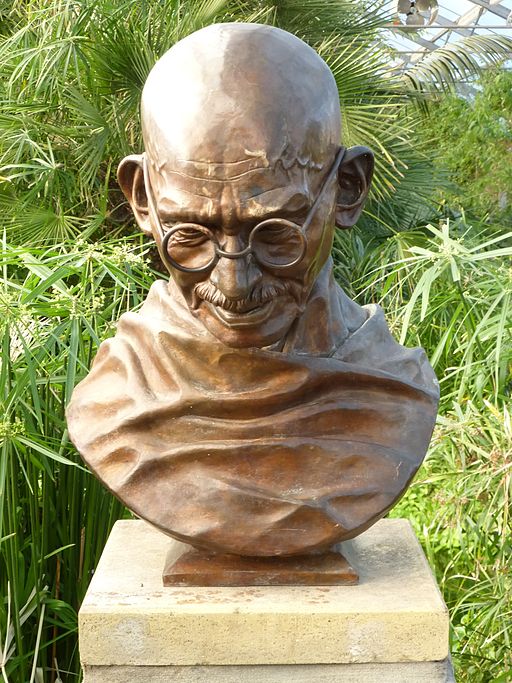
Bust_of_Mahatma_Gandhi,_Saughton_Park,_Edinburgh_(1997)

According to author Olivia Fox Cabane, “All forms of charisma come at a cost; what the cost is depends on the charisma style you choose.”

Charisma–that characteristic charm that allows the speaker to inspire others into action–comes from the Greek word meaning divine gift. There are very few humans who do not wish to be able to speak and have their words influence the actions of others. But, there are few who actually have the gift to do so. And, this is a good thing  because the influence of charisma has a price.

When we see a person as inspirational, we feel their status is higher than ours. This results in a suppression of our own emotion. Even when we adopt the emotion of the charismatic leader, we do so in a manner that blunts exhibiting our own feelings. 

Everyone needs to be able to suppress the show of feelings some of the time.  After all, tantrums are a sign of preschool level of maturity. We often rein in the exhibition of fear or anger that might ruin a relationship. But, when emotions are suppressed long-term as in the relationship of the follower to the charismatic leader, there are negative effects. People who suppress emotions repeatedly do not feel rapport with others and are less willing to form friendships. So, associating with a charismatic leader over a period of time causes most people to become emotionally reserved, essentially isolating the person who inspired them in the first place. The charismatic person may persuade others to champion his ideals, but this influence also precludes them from being his friend.

Interestingly people around others who suppress their emotions, show a rise in blood pressure, indicating an increase in stress. People with high authority are able to create a presence. They exude a sense of being larger than life, as if they take up more space than those of us who gather at their feet. And, in creating this sense of space they distance themselves from the emotional support that they actually need to receive from others.

So do you still want to have the gift of charisma?

http://socrates.berkeley.edu/~keltner/publications/(2012)%20PSPB%20Impett%20et%20al.pdf
http://www.forbes.com/sites/danschawbel/2012/04/13/how-to-master-the-art-and-science-of-charisma
http://www.nuigalway.ie/cisc/documents/cisc_seminar_mkilduff_awestruck.pdf
Posted in Uncategorized | 1 Comment