Charisma’s black eye

black eye 2Research on charisma which shows that people who exhibit emotional expressiveness are rated the highest in charisma by others. People can be taught this very skill, and improve it by spending time delivering speeches in front of the mirror, watching their face and hand gestures, and recording their voice to improve inflection. One response was difficulty with teaching people to be charismatic, was teaching them this skill without enabling them to become like Hitler who did practiced these techniques.
With the rise of appealingly and strong but eventually destructive leaders in the twentieth century, charisma has gotten a black eye. People who want to work a crowd can become skilled in replicating facial expressions, voice and movements to convey strong feelings. They can learn to use settings to maximize their appearance of presence. And it does work; at least it worked well for one of the leaders rated as the most charismatic speakers of the 20th century. Adolf Hitler spent hours mastering the delivery of speeches that drew crowds like a magnet. Before he did his ideas were largely ignored.

Charismatic leadership skill peddlers have renamed the techniques they teach. “Transformational leadership” is one of the new monikers used for those who can induce others to follow their vision in today’s businesses. This kind of leadership also includes mastering skills to determine what vision should be, and the best method to achieve it. But it is mainly based on the ability to sell that vision. Therefore, behaving and speaking in a charismatic manner are the cornerstones of transformational leadership.

The classic idea is of a charismatic leader that arises in a country in crisis (runaway inflation, massive unemployment, etc.) This leaders promises better life, an economic turn-around. And the cost is current sacrifice. Neo-charisma is aimed at corporations.Why has charismatic leadership in business has become so important?

The growth of cost competition has made the prospect of maintaining profits increasingly difficult. Companies need to have their employees producing more, without paying more. They need an economic turn-around. People are more willing to sacrifice and spend more time spent at work for a charismatic leader. This is the ideal way for the board of directors wants to sell their vision for bringing a company out of pending crisis. Maybe, there is not that much difference between the classic idea of charisma and the new one.

Antonkias, J. Fenley, M. and Liechti, S. Can Charisma Be Taught? Tests of Two Interventions. Academy of Management Learning & Education, 2011, Vol. 10, No. 3, 374–396.
Barling, J. Weber, T. Kelloway, E. K.. Effects of transformational leadership training on attitudinal and financial outcomes: A field experiment. Journal of Applied Psychology, Vol 81(6), Dec 1996, 827-832
Friedman, H. S. Prince, L. M. Riggio, R. E and DiMatteo, M. R. Understanding and Assessing Nonverbal Expressiveness: The Affective Communication Test, Journal of Personality and Social Psychology 1980, Vol. 39, No. 2, 333-351
Macias, A. “Why Hitler was such a successful orator” Business Insider. May 13, 2015, 1:35 PM  
Posted in Leadership, Persuasion | Tagged , , , | 1 Comment

Charisma and Emotions

DSC_3033 smileEmotional expressiveness seems to be the major component of charisma. When other people can reflect our emotions, or show reactions to events that match our own, we are more likely to trust them.  In order to reflect another person’s emotions you need to have emotional sensitivity, or the ability to detect how someone else is feeling. Reading emotions is akin to feeling what others are feeling, but does not necessarily provide insight into what drives others into action. Understanding motives to act requires reading thought processes, which is a cognitive skill. Sensitivity to emotions, on the other hand is closely related to be empathy.

The ability to empathize may be more intuitive and innate than learned. Higher levels of empathy are connected with higher quantities of the hormone oxytocin  Higher levels of empathy also means higher level of anger against those that causing pain to the group whom is regarded with sympathy. The student of charisma can learn how to can learn how to engender empathy for one group in order to manipulate an outburst of hatred against an opposing group.

Emotional control is another important component of charisma. While emotional sensitivity allows you to read others emotions, even when they try to hide them, strong emotional control allows you to hide your own emotions. It enables you to appear calm to others, even when deep down inside you are panicking, by simply thinking of a situation in which you would be calm. The goal here is not to remain cold, aloof and uncaring in appearance, but to hide fear, distress, disgust etc. by masking them with another emotion. The key to emotional control is the ability enact emotions on cue when you do not want to be transparent. This kind of control can be taught, but not without learning emotional expressiveness also.

Social expressiveness, like emotional expressiveness, is a skill that can be learned. In fact the characteristics of charisma that involve learning the rules of society and how to play a role in society must be learned. However, some people seem to pick them up which less effort. These are people who pay more attention to people than things and processes. These are the people who are more likely to learn the unwritten rules of society or what society expects them to behave like as a leader. These people spend a great deal of their life observing how other behave and monitoring other’s reactions to one’s own behavior. Unfortunately these people who are high in the social aspects of charisma, tend to be not to be high in creativity or highly skilled in use of technology.

The request managers to be creative, tech savvy and charismatic, will only perpetuate the necessity of hiring them for one set of skills and teaching them another. Evidently, business leaders think it is easier to teach them emotional expressiveness, sensitivity and control.

Ronald E Riggio Ph.D., Cutting-Edge Leadership, What Is Your Charisma Quotient? Psychology Today, Sept 21, 2014
Body Language Of Empathy Is Genetically Wired Say Scientists Published: Wednesday 16 November 2011 at 2am PST http://www.medicalnewstoday.com/articles/237743.php
Paul Bloom, September 25, 2015 The Dark Side of Empathyhttp://www.theatlantic.com/science/archive/2015/09/the-violence-of-empathy/407155/
Posted in Creativity, Emotional intelligence, Leadership, Manipulation, Persuasion | Leave a comment

Teaching Charisma

Caspar_enderlein,_retorica,_1610-11_ca. (1)Charisma can be learned. This is not a new revelation. For millennia people have been teaching others the how to speak in a persuasive manner. In fact if you look up the definition of “rhetoric” you will find it was taught to achieve the same goals as “charisma,” the purpose being to move your audience to action.

Rhetoric was once part of formal education not only in ancient Greece, but also in the Middle East, China and Europe. Aristotle broke rhetoric down into its components – the three types of arguments that could be combined to persuade any audience: emotional, logical, and moral.  Romans then created the rules for designing a persuasive discourse called the five canons. Uncover the three types of arguments, put them together using the five canons, and the speaker should become ultimately persuasive. But they also began to sound a lot like each other.

So what is the difference between rhetoric and charisma? For one thing charisma is based more on the appearance of the speaker than the content of the speech. People judge others as being charismatic when their body language shows they are open and friendly, but also when they show great power. The charismatic person must strike a balance: too friendly is soft, too powerful is frightening. Finally there is the skill of showing presence or seeming larger than life.

Also charisma is not concerned with appeal to logic and emotions, but mostly rests on appeal to emotions. Observers that rate charisma in research show it is largely based on the use of non-verbal communication to send emotional signals. In order to teach people how to have emotional expressiveness, it has to be broken down into measurable factors. Essentially learning charisma is like taking acting lessons. People learn to control facial expressions, body movement and vocal intonations.

When people hear the word rhetoric; it also brings to mind a negative connotation. It is not just method for making persuasive speeches. It may mean an insincere argument, or words that are spoken without any significance.  How did rhetoric, a once respected subject, come to have a derogatory connotation in our modern culture? Perhaps it was due to its codification. Now that the components of charisma have been examined and deconstructed, the same thing may happen to it. I can imagine people discussing the latest speech by their leader “He talked a lot, but really didn’t say anything. It was just so much charisma.”

O.F. Cabane. The Charisma Myth: How Anyone Can Master the Art and Science of Personal Magnetism
S. Friedman, L. M. Prince, R. E. Riggio, and M. R. DiMatteo. Understanding and Assessing Nonverbal Expressiveness: The Affective Communication Test, Journal of Personality and Social Psychology 1980, Vol. 39, No. 2, 333-351
Photo: “Caspar enderlein, retorica, 1610-11 ca.” by Sailko – Own work. Licensed under CC BY-SA 4.0 via Wikimedia Commons – https://commons.wikimedia.org/wiki/File:Caspar_enderlein,_retorica,_1610-11_ca..JPG#/media/File:Caspar_enderlein,_retorica,_1610-11_ca..JPG
Posted in Emotional intelligence | Leave a comment

What is a soft skill?

Father_and_Son_-_geograph.org.uk_-_1247314There is no precise definition of the components of emotional intelligence. However they are often similar to what has been previously referred to as “soft skills.”

Recently list of the top soft skills desired for managers included resolving conflicts, negotiating, correcting people, planning, organizing, preventing errors and solving problems. What piqued my interest was the fact that the last four are not really soft skills. They are based more on cognitive knowledge than on the ability to understand and influence people. They require breaking down goals into tasks that have to be completed, the ability to estimate required amount time and resources, the foresight to see what could possibly go wrong, and ability to think creatively. These are skills requiring more logic than emotional intelligence. So why would they be considered soft skills?

People  who excel at problem solving are often considered arrogant; they tend to not be humble and exaggerate the importance of their own work. If they did not, they probably would discard innovative solutions and follow the road of conforming with the majority. This means they are often not easy to work with and there is an essential conflict between the working of the creative mind and the mind that excels at influencing others. However, even if the ability to solve the problem may have little to do with people skills, the ability to get others to buy into a creative solution is often dependent on them.

That is the quandary of dividing skills sets. When you refer to them as soft or hard; emotional or cognitive, or people or technical, you are creating an arbitrary dividing line. Some of both skill sets are necessary. Problem solving is difficult because it requires people to switch back and forth between “emotional” thinking needed to deal with people, and “logical” thinking needed to deal with processes.

In a national survey, employers said that technical skills were not as necessary as the following: listening and oral communication, adaptability and creativity, confidence, motivation, initiative, and pride in one’s work. However, try telling that to people who have been disciplined for overstepping the boundaries of their position due to initiative and sense of pride in what they do.

People who  are self-motivated often take off in their own direction based on what they see needs to be done. If they communicated their intentions before the results came in, the answer would often be “No.” Managers may want the results of creativity, taking initiative and pride that drives a person to excellence. But they often find employees with these qualities hard to deal with. It seems as if the insistence of the importance of soft skills over hard skills basically boils down to the employers wanting employees who embody two opposite skills at the same time.


Posted in Emotional intelligence, Manipulation, Persuasion | Leave a comment

How friendly are you?

Foto de verdadeiro samigos by VinimsThere is fascination that I have with psychometric tests. It seems like the creators of these assessments have faced the impossible tasks of trying to capture complex aspects of personality with a series of phrases and sentences on which subjects must rate themselves. Recently I went through the somewhat tedious tasks of assessing myself and a friend who seems to be of very different temperament on a series of personality tests. It was tedious because I did all the scoring, carefully noting which items were to be reversed and checking twice to ensure accuracy.

Not surprisingly I tended to score higher in test of conscientiousness and process orientation behavior while my friend was higher in extroversion and ability to deal with people. However, the results of one test in particular interested me, the Friendliness Scale, created by John M. Reisman. Predictably, I turned out to be far less friendly than her according to this test.  But the odd thing is that I have at least as many friends as she does.

It occurred to me that the difficulty with this scale and many other psychometric tests is their basis on self-perception. I may perceive that I not very willing to drop everything and help someone else in need. However, in reality I may do this more often that some people who believe they do this frequently. When I compare myself to others I do not hear myself complimenting others nearly as much. But words of praise are not always the same. I tend to reserve mine for what appears to be a struggle to achieve. I have noted that people tend to respond to praise that is individualized and meaningful to specific events.

When I read the instructions on the Friendliness Scales I found that research had shown that lower scores were not predictive of fewer friends. Low scores correlated with less satisfaction with friendship. However, Reisman never address the apparent incongruity of people having as many friends despite dissatisfaction with their friends. Is it possible that people who scored lower are not less friendly but more demanding of both themselves and others within friendships? Reisman’s analysis of the components of friendship was not that deep. Much of it was based on anecdotal accounts and apparent current societal standards.

Do emotionally intelligent people really have a greater insight into these other people’s emotions? Or do they perceive emotions based on the less demanding standard that only regards the “typical” feeling that the average person shows?

A person’s self perception also affects the kind of characters that they are drawn to when reading fiction. An empathetic person, who assumes that they are emotionally intelligent, will find a character that can read hidden emotions more believable. Do emotionally intelligent people really have a greater insight into these other people’s emotions? Or do they perceive emotions based on the less demanding standard that only regards the “typical” feeling that the average person shows?

People with a systematic way of deducing the traits of other people will scoff at this mind reading character as being too good to be true, and a fantasy projection of the author. They demand carefully delivered actual clues, such as Arthur Conan Doyle labored to provide in his Sherlock Holmes series. For a writer, finding an audience is not always a matter of following prescribed rules. It is often the openness of the individual author to reveal their perspective of humanity that matters to the reader.

As with the friendliness scale, the high score was not based on having more friends, but enjoying them more. Initially authors may not have huge quantities of readers, but they will gain loyalty if readers enjoy their books more.

Dr. John M. Reisman (1983) “SACRAL: Toward the Meaning and Measurement of Friendliness.” Journal of Personality Assessment, 47, 405-13

Posted in Emotional intelligence | Tagged | 1 Comment

The cost of charisma

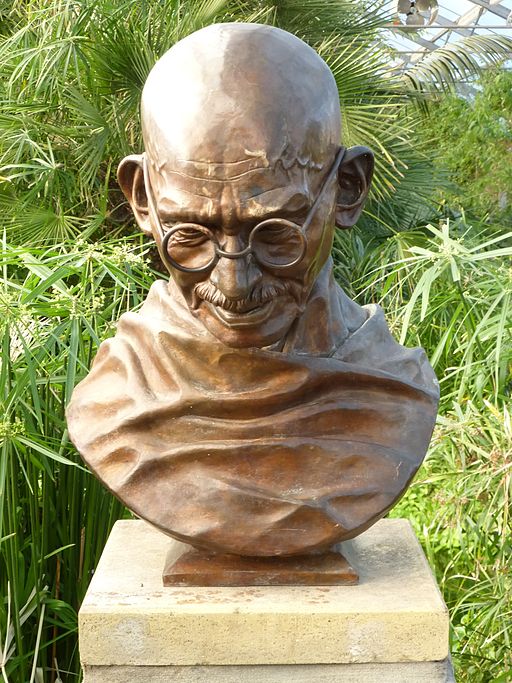
Bust_of_Mahatma_Gandhi,_Saughton_Park,_Edinburgh_(1997)

According to author Olivia Fox Cabane, “All forms of charisma come at a cost; what the cost is depends on the charisma style you choose.”

Charisma–that characteristic charm that allows the speaker to inspire others into action–comes from the Greek word meaning divine gift. There are very few humans who do not wish to be able to speak and have their words influence the actions of others. But, there are few who actually have the gift to do so. And, this is a good thing  because the influence of charisma has a price.

When we see a person as inspirational, we feel their status is higher than ours. This results in a suppression of our own emotion. Even when we adopt the emotion of the charismatic leader, we do so in a manner that blunts exhibiting our own feelings. 

Everyone needs to be able to suppress the show of feelings some of the time.  After all, tantrums are a sign of preschool level of maturity. We often rein in the exhibition of fear or anger that might ruin a relationship. But, when emotions are suppressed long-term as in the relationship of the follower to the charismatic leader, there are negative effects. People who suppress emotions repeatedly do not feel rapport with others and are less willing to form friendships. So, associating with a charismatic leader over a period of time causes most people to become emotionally reserved, essentially isolating the person who inspired them in the first place. The charismatic person may persuade others to champion his ideals, but this influence also precludes them from being his friend.

Interestingly people around others who suppress their emotions, show a rise in blood pressure, indicating an increase in stress. People with high authority are able to create a presence. They exude a sense of being larger than life, as if they take up more space than those of us who gather at their feet. And, in creating this sense of space they distance themselves from the emotional support that they actually need to receive from others.

So do you still want to have the gift of charisma?

http://socrates.berkeley.edu/~keltner/publications/(2012)%20PSPB%20Impett%20et%20al.pdf
http://www.forbes.com/sites/danschawbel/2012/04/13/how-to-master-the-art-and-science-of-charisma
http://www.nuigalway.ie/cisc/documents/cisc_seminar_mkilduff_awestruck.pdf
Posted in Uncategorized | 1 Comment

Emotional control

colorpencil1011-cThe more emotionally intelligent one is the more ability one has to perceive, understand, and manage emotions. Not just one’s own, but other people’s also. Those who possess this kind of intelligence are more able to manipulate others, but their influence doesn’t extend to everyone equally. They most easily manipulate others who also perceive the world in an emotional manner. In other words, those people who have a deep desire to influence, also succumb to the influence of others.


On the other hand, logic-based individuals often strive to be correct and are frequently considered aloof. But this reputation for aloofness may be a result of logical people not being as vocal in our culture. You may have noticed that people who have a technical bent and tend to analyze the world around them and often have friends of a similar ilk. However, the more emotional people express feelings openly and out loud. They also tend to associate with people like them, but their communication is more noticeable and seems more common in our culture than is actually is.

A person who can control emotions may be able to disguise their true feeling and exhibit another, without any appearance of guise. This motivation to control emotions is based on the desire to influence others. However, this influence extends to how people feel rather than what they know or are willing to learn. Jochen Menges led research at the University of Cambridge which showed that people actually remember less of the content of an inspiring speech. They would claimed to recall more of it, but when asked to scrutinize what had been said, they could not remember as much as they could from a more mundane speech.

Watch a room full of empathetic, out-going people and you will find that they start reflecting each other’s actions and speech patterns. Watch closely and you will be able to detect who is the influencer and who are the imitators, because the imitators become less expressive. The imitators seem to follow the lead of the person with the most charisma, while they are actually suppressing their own emotions to fit in. The person who remains skeptical of showing feelings may stand out, but control of emotions does not always have the face of stoicism. It often has the face of someone considered emotionally intelligent.

Art by S.L. Listman

http://www.nuigalway.ie/cisc/documents/cisc_seminar_mkilduff_awestruck.pdf
Posted in Emotional intelligence, Group psychology, Leadership, Manipulation, Psychology | Tagged | 1 Comment

EQ versus IQ

jeff 081wEmotional intelligence is touted as the necessary skill to get ahead in the business world. Tech savvy, logical reasoning and high IQ are not enough. These traits/skills cannot propel you to the places you can get if you understand emotions, or rather are adept at swaying others’ emotions so people feel how you want them to feel.

Often leaders in business prefer to be surrounded by teams of people that are emotionally perceptive because they process information in the same way. The skills they prize are those that establish their status. The ability to resolve conflicts, persuade others to take correction and negotiate differences are valuable skills when dealing with people who are constantly comparing themselves to others.

However, before launching into building your E.Q. you might want to examine evidence that emotional intelligence is not added to logical intelligence. Rather these are two different ways of perceiving the signals sent by people around you.  For the emotionally intelligent crowd, good communication does not refer to clear transfer of ideas and concept as much as it does the ability to persuade others to follow your lead, or support your position.

Theories dating back to the Stoics of ancient Greece have pitted emotion against cognition. In most cases these theories were espoused by those that preferred cool headed logic. In that vein, psychologists from universities in Manchester and London, performed an experiment to see if using emotionally charged terms interfered with people’s ability to use logic. Subject were asked make logical inferences on statements that contained neutral words and emotional words. They were more likely to draw valid inferences when dealing with the neutral words and invalid ones when dealing with emotional words. Still researchers tend to find that emotions in moderation may help people make better decisions. After all most decisions deal with other people and are not just exercises in logic written on paper.

http://csjarchive.cogsci.rpi.edu/proceedings/2003/pdfs/49.pdf
Posted in Emotional intelligence, intelligence, Leadership, Psychology | Leave a comment

Kind and harsh

cropped-christmas06-collide.jpgTwo research studies on the nature or empathy have caught my attention recently. One has found a genetic basis for empathy or at least the appearance of being kind and friendly. In this experience people watched the interaction of couples who they did not know for a brief period of time and then rated each individual’s empathy. Those with the highest rating for showing that they were able to understand other’s emotions had a statistically higher percentage of particular combination of oxytocin receptors which allowed more of this hormone to enter their nervous system.

The other study showed that people who had higher levels of oxytocin showed a tendency to take sides with people in need and while becoming harsher in their treatment of the person competing with the one in need. The competitor did not have to do anything wrong or harmful. Apparently the presence of oxytocin creates an empathy that is one-sided, spurring sympathy for one party and a dislike of the other.

Research about oxytocin as a hormone determining level of affection has brought to light its increase as a person takes joy in another’s pain. Evidently increase in oxytocin occurs when a person takes pleasure in some social interaction, not just empathy for others but also Schadenfreude.

This reinforces my suspicion most wonderful new “discoveries” such as a hormone that makes us more loving and affectionate, are actually two-sided. Our tendency is to avoid considering the dark side. We want to bask in our feeling of empathy towards the abused and our hatred of the abuser. However as such we may become willing followers of feed on our empathy coupled with rage. According to columnist Paul Bloom:

“There is a history of this sort of thing. Lynchings in the American South were often sparked by stories of white women who were assaulted by blacks, and anti-Semitic attacks prior to the Holocaust were often motivated by tales of Jews preying on innocent German children. Who isn’t enraged by someone who hurts a child? Similar sentiments are used to start wars. As the U.S. prepared to invade Iraq in 2003, newspapers and the Internet presented lurid tales of the abuses committed by Saddam Hussein and his sons.”

Finally as there is a dark side to empathy, is there a converse bright side to being cold hearted?

Body Language Of Empathy Is Genetically Wired Say Scientists Published: Wednesday 16 November 2011 at 2am PST http://www.medicalnewstoday.com/articles/237743.php
Paul Bloom, September 25, 2015 The Dark Side of Empathyhttp://www.theatlantic.com/science/archive/2015/09/the-violence-of-empathy/407155/
Shamay-Tsoory SG, Fischer M, Dvash J, Harari H, Perach-Bloom N, Levkovitz Y (Nov 2009). “Intranasal administration of oxytocin increases envy and schadenfreude (gloating)”. Biological Psychiatry 66 (9): 864–70. doi:10.1016/j.biopsych.2009.06.009. PMID 19640508.
Posted in Group psychology, Manipulation, Mental health | Tagged , , , , | Leave a comment

Empathetic words

2011-08-23-008The use of pronouns and other functional words may provide a clue about our social status, our tendency to tell the truth, or how well we perform in academics. However in many circles today the desired characteristic is “emotional intelligence.” What exactly is this? Empathy, or the ability to sense what others are feeling usually ranks high on the lists of characteristics used to describe emotional intelligence. Is it possible to tell how empathetic a person will be by their speech patterns?

In order to find out, it helps to be able to judge the level of empathy in people. Ways of measuring empathy for research include a self-report survey such as the emphatic concern scale of the Interpersonal Reactivity Index developed by M.H. Davis. According to Davis empathy is defined as “reactions of one individual to the observed experiences of another.” It doesn’t measure this trait by how often a person says “Ah, I feel for you.” Rather it is how much an individual agrees or disagrees with statements such as: “I would describe myself as a pretty soft-hearted person.”

Evidently empathy is not shown by uttering certain words as much as body language. Empathy is evidenced by “more head nods, more eye contact, more smiling, more open body posture” according to Aleksandr Kogan, at the University of Toronto at Mississauga. Kogan measured empathy in his research by rating scales used by observers watching touching scenes between couples talking about a painful experience in their life. However Kogan used this research to validate another way to measure empathy – the level of the hormones, oxytocin. Variations in increase in the level of two hormones: oxytocin and vasopressin create the feeling of empathy according to University at Buffalo researchers Michael J. Poulin and Annette E. K. Buffone.

But the action of seeing oneself in another’s position is a two-edged sword. Let us look as one of the statements indicating greater empathy on the Interpersonal Reactivity Index: “When I see someone being taken advantage of, I feel kind of protective towards them.”  The person that you are being protective towards may sense the kindness of your word and actions. However the person that you are protecting them from will sense something more like aggression. The expression of empathy may be shown by two different behaviors. Indeed Poulin and Buffone studies have shown that oxytocin and vasopressin increase both when a person shows greater compassion towards an individual and greater harshness to the individual’s adversary.

What words show a person is empathetic? It depends whether you are the object of their empathy or the brunt of their reaction to empathy for another.

Davis, M. H. (1983). Measuring individual differences in empathy: Evidence for a multidimensional approach. Journal of Personality and Social Psychology, 44, 113– 126.
Body Language Of Empathy Is Genetically Wired Say Scientists. Published: Wednesday 16 November 2011 at 2am PST http://www.medicalnewstoday.com/articles/237743.php
Compassion for one person may lead to aggression toward another. Published: Sunday 9 November 2014 at 12am PST http://www.medicalnewstoday.com/articles/285095.php?sr
Posted in Emotional intelligence, Mental health, Psychology | Tagged , , , | Leave a comment