Creating a team-like atmosphere in classes

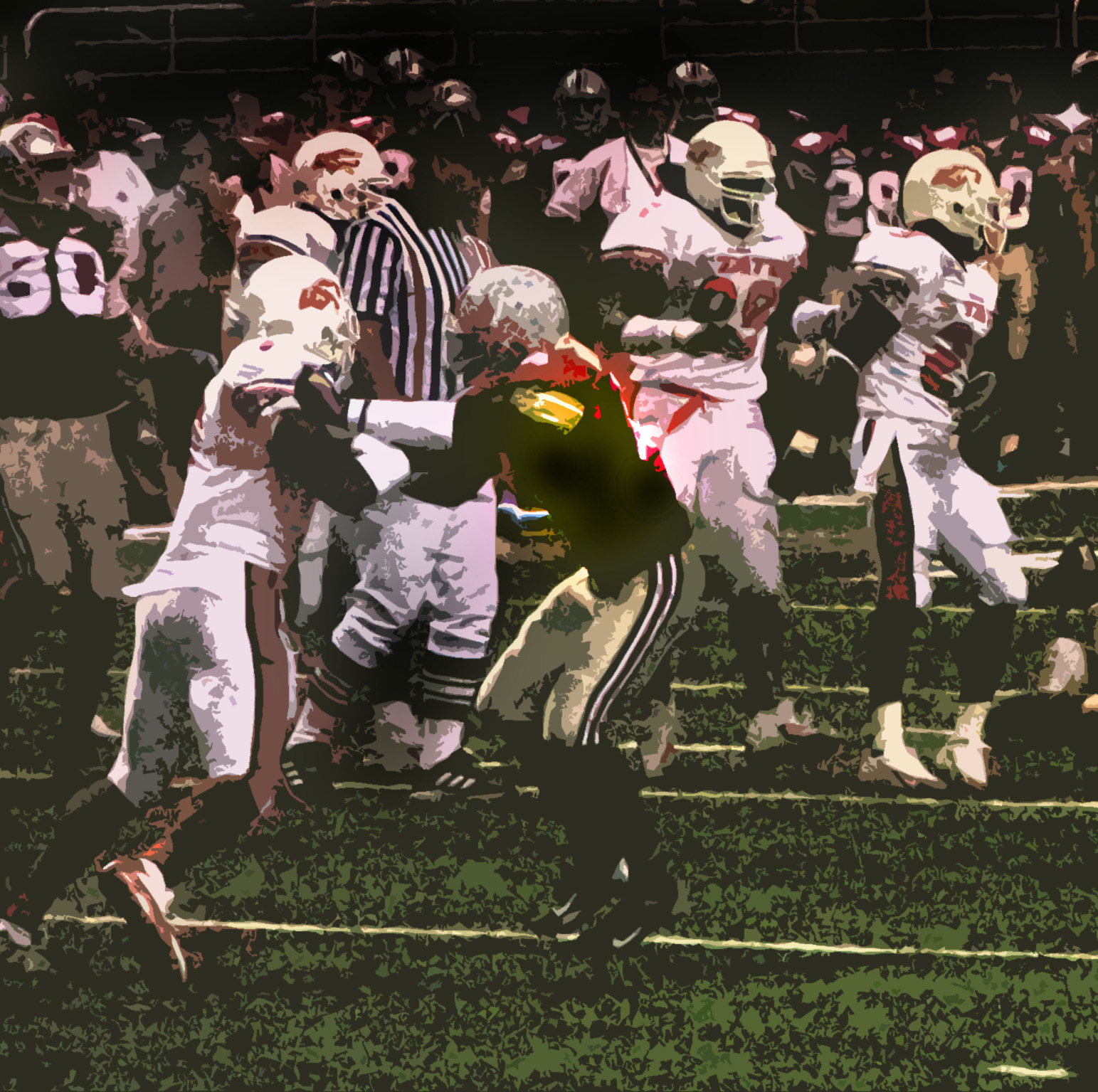
football_edited-1Imagine a group of athletes from different sport that all have a  general idea about playing positions in the other sports. However, they  have little  to no idea how their skills stack up against other in their group, whom they barely know. They have never played together, and they are told “You are now a team; you decide who plays what position. This week we will play baseball, next week we’ll mix up the teams and play football.”  Most class group assignments are actually based on this model. Much of the work required is deciding how to organize the team before anyone actually gets anything done.

Encouraging students to work as teams in class has many shades of difference from getting a group of athletes to work as a team. Sports teams are formed to wage athletic “war” and win against other teams. In classes the goal is to create a viable product rather than to win. The decision making that goes into teamwork to achieve specific goals by creating products are often removed from the athlete. They do not decide what position they play, who directs the team,  or how much practice is required.  Often even eating, sleeping and exercise habits are prescribed by others to ensure peak physical performance. Students expect coaches to be concerned with their activities outside of sports. After all, school grades and behavior are often tied to whether or not a student is allowed to compete.

However there are some commonalities. I have seen some groups in which one or two students do most of the work, just like star athletes that carry a team. Only the rest of the team gains nothing from this because the objective is to learn rather than win. However, this is also what happens in the real world on the job, and the people slacking do reap benefits.

Try setting student teams at competition with each other for a limited number of passing grades – like a strict curve in which as many students must fail as those that receive A’s. This is the academic version of tryouts for limited slots. Students who could do the work would be cut because the class had a limited size, or those would could not might remain if there were no excelling students. However, determining which students should be in a particular level class doesn’t work the same way as determining who should be playing on a team. If it was you would probably find not so much an increase in effort as a sudden rash of cheating, sort of like the rise in performance enhancing drugs in sports when athletes must do well to keep their jobs.


Posted in Education trends | Tagged , , , , , | 1 Comment

Who is responsible for learning?

swimmerOne of my friends mentions the local swim team as a possible activity for my children in the summer. For the first one it was a good fit. When younger he had taken a swim class, it  had only two students due to the overlapping the first week of school. He had opportunity to practice frequently at a friend’s pool. When the second child was the same age, it was a different story. The initial swimming class had been over crowded and useless; the friend with a pool had moved away.  It was fine to put the older child on a team with coaches.  But the second one needed a swimming teacher.

How many times have you overheard  teacher discussing a class say the words “they should already know how to…”  For students who just require coaching to learn, that is probably true. They have already been exposed to the many things that students are supposed to know by the time they get to school. They are familiar with the concepts of letters and reading, numbers and math, locations and maps. However, for the few students who do not have easy access to books, maps and calculators (let alone computers) these are foreign concepts.

As the number of lower socio-economic status students increase in pockets of this country, so does the challenge of teaching. In the early twentieth century, teachers had lower expectations of students. In the past, students stayed  beyond sixth grade in if they liked learning and their parents could afford to not have them working.  Parents and the children themselves where considered the ones responsible for knowing how much education was necessary. Now education is required until age 18, and the teachers themselves are more highly educated today. 

But we seem to have reversed these roles of teachers and parents. Recently I read an article with the following quote. “Although teachers play the predominant role in student achievement, substantial research has confirmed that parents play an important supportive role.” [1]

What happens when you reverse the relative importance of the parent and teachers in the success of the students? Teachers are not always able to fill in the gaps. Teachers resist having the quality of their instruction quantified based on student achievement because they realize they cannot always overcome the handicaps resulting from poverty or unstable family life. There is no one to make sure that students learn what “they should already know how to …” unless they are taught somewhere else than at school.

Most students just need a lot more personalized in depth instruction and not just guidance along the way. The same class, with the same instruction, will not suffice for both the student receiving an abundance of enrichment and support at home, and the one that has to struggle to find food. If we are honest and let parents know that they play the primary part in their child’s success in school, will they become more involved?

When my child took the swimming lessons, she had individual instruction; she was the only student. As unrealistic as that kind of one on one attention seems for schools, it is exactly what the parents provide that makes the difference in student achievement.

 [1] “Those Persistent Gaps” by Paul E. Barton and Richard J. Coley  Educational Leadership, December 2009/January 2010 (Health and learning Issue).


Posted in Education trends | Tagged , , , , , | 1 Comment

Teaching academics like athletics?

versus

Sometimes students wish academic classes were more like performance based sports, but how would it work? How do they respond differently to coaching for physical skill versus teaching a cognitive skill?

Warm ups

In athletics students spend time warming up with exercise routines before hitting the field to actually perform the sport. Why. To stretch their muscles  and slowly raise the heart rate. These routines are to loosen joints, which help to decrease injuries, and increase blood flow because the stress of sports requires more oxygen. The warm up prepares the body to be pushed beyond normal  physical activity.

in a class room teachers typically use warm-ups as a classroom management technique to get students quiet and focused. Sometimes they also serve as a daily assessment to identify students that are falling behind. In an upper level academic class, there are typically no warm-ups. Why?  Learning is a class is not beyond normal mental activity.no warm-ups.  are often disposed of as a waste of time. 

Practice versus initial learning

With coaching the emphasis in on practice. after the warm up, the coach watches the students practice most of the time. The emphasis is on instruction to master new skills. Although, there is time to practice in class students are expected to perform newly learned skills on their own at home without the teacher present.  The teacher requires more unsupervised effort than the coach does.

Effort versus attentiveness

Coaches watch students to assess skill level, to make sure they are exerting effort and to ensure they are not goofing off. They often depend on other students to help them with this, as the athletic classes are typically larger. Making more effort at running increases a student’s ability in track. Making more effort in math, may allow a student to solve problems faster, but will not result in learning how to find derivatives of an equation. After all this is a procedure uncovered by someone older and more educated than the students.

Teachers  most often watch students to make sure they are behaving properly. There are some visible cues to indicate comprehension, but students do not always show these.  The student must concentrate to master academic skills and attentiveness is not always observable. However, disruptive students almost always detract from instruction. Teachers may set up a systems in which the students who are advancing through class faster help struggling students. However, they usually let students seek help and give it as they see fit. Teachers cannot tell precisely what skills students have mastered until they see the assigned work. So a lot of assignments have to be made.

Obvious versus out-of-sight accomplishments

Instruction on coaching indicates feedback is given to show that the coach cares rather than to let students know how well they are performing because athletes already know this.[1] They constantly watch what others are doing, comparing themselves to others. They tend to copy those who perform the best.

In a class room, copying the work of the best performer in class won’t help any. Students must master the thinking processes themselves. The ability to learn is basically an invisible skill, which each student must be able to do on their own. Finally, students are not always sure if they have mastered new skills. Sometimes they transpose two different procedures – especially in math and foreign languages. So the teacher must be constantly asking question and quizzing students in order to provide feedback to show students how well they are doing.

So if you are considering teaching academics like athletics, think again. There are a few commonalities between the two, but it will work no better than having students sit in a circle and learn the strategy for a game without ever practicing.

[1] Coaching Principles, (2012) http://www.asep.com/courses/ASEP_Previews


Posted in Education trends | Tagged , , , , , | 1 Comment

Living in a “weed-out” world

grass (1)The move to on-line degrees in higher education has been occurring since the beginning of the twenty first century and predictions abound that this will happen for almost all college courses, by the time the pandemic subsides.

Currently e-learning is relegated to upper level classes with independent student research and projects, and those memorization-heavy entry level courses formerly known as “weed-out classes.” These are typically freshman year classes aimed to eliminate weaker students. However, they may not even contribute to what students need for their degrees as they are often based on heavy amounts of information or large number of assignments rather than critical thinking and problem solving skills. 

Student often no longer go through the complex process of figuring out what they need to know. Higher level thinking skills do not exist in vacuum but must be connected to a course of study. They require a greater depth of understanding in a particular domain. In the effort to teach a plethora of technical information, the requirements to use executive functions and higher level thinking may be fading from the education received in colleges and universities.

It may be shorted sighted for employers to expect college graduates to have already honed new skills in whatever form of technology the company uses, but they do. They often weed-out prospective employees based on lack of current technical skills rather than lack of critical thinking ability.

Half a century ago, as an art major, I had to rely on chemistry for printmaking and photography, and I used geometry and trig to creating computer art before the software was developed which eliminated the need for math. Producing a constant flow of innovative and well crafted art work required integration of other knowledge from other fields. The weed-out classes do not provide that.

Koebler, Jason. Experts: ‘Weed Out’ Classes Are Killing STEM Achievement April 19, 2012 (viewed 23 Jan 2013)


Posted in Education trends, Technology in education, The information age | Tagged , , , , , , , , , | 1 Comment

Creative mess

DSCN0746Psychologists often study creativity like a kind of pathology, researching causes of creativity, methods to diagnosis it, and determining best practices. The creative person is often contradictory because the strongest drive in creative people is to not be like other people, even other creative people. During the 1950s, when creativity research was acknowledged as a legitimate scientific subject, Psychologist Frank Barron tested and conducted in-depth interviews with writers, architects, research scientists, and mathematicians  at University of California in Berkeley.

According to Barron the highly creative person is “both more primitive and more cultivated, more destructive, a lot madder and a lot saner than the average person.” Creative people could appear and actually be conventional in many ways. However, “they tend to rebel against conformity as they accompany their own private visions down lonely, untrod paths.” They also could appear highly neurotic on personality tests while having an ego strength that could deal with stress, and psychological pain.

Barron attempted to describe the psychology of imagination, which found the need for both order and disorder. According to his research the creative writer espoused originality, complexity, independence of judgment, and aesthetics sensitivity. His creative subjects often took extremely complex elements to produce a final product that was elegant and deceptively simple.

Creative people can hold two opposite views at the same time and yet see no contraction, because they were prone to “integration of dichotomies.” They can be both naive and knowledgeable, emotional and logical, disciplined and free spirited. When you think about it, an either or view does not necessarily make life easier. It is a refusal to deal with ambiguity that naturally abounds. The highly creative person’s tolerance for ambiguity and messiness is balanced by a strong desire to bring order. “It was a powerful motive to create meaning and to leave a testament of the meaning which that individual found in the world, and in himself in relation to the world.”

Barron, Frank and Harrington, David M., Creativity, Intelligence, and Personality by Frank Barron. Annual Review of Psychology, 32 (1981): 439–476.


Posted in Creativity, Education trends | Tagged , , , , , | 1 Comment

Group IQ

Picture 012a3One of the tricks in getting groups to be more creative is tohave a hand in determining who goes into the group. A number of gurus on increasing group creativity will mention the need for greater diversity in groups. How exactly does this work?

Wooley and Malone performed research on “group IQ.” Members of a group were tested for IQ individually and then randomly assigned to a team. Each team  was required to complete a number of complex tasks such as creative brainstorming, and solving puzzles. Interestingly enough the teams containing the people with higher IQs did not do any better. However, the teams that had women did. The more women there were on a team, the better they did at the tasks, unless the team was entirely female.

Choi and Thompson found that rotating new members into already existing groups improved their performance in creative tasks. It was the influence of the “newcomers” that exerted a positive impact so that people already residing in the group increased both the number and diversity of ideas.

Of course, there are certain people you just don’t want to include in a group because it would drag the other people down, such as pessimists.  Right? Not at all. According to Haimowitz when people are primed to think about difficult situations with negative outcome before work, their creative output was higher.  “Negative affect draws attention to problems and signals that effort needs to be invested to solve a problematic situation.”  The negative affect provides incongruent ideas that might not normally be considered a solution.  But this negative affect has to decrease to achieve the breakthrough idea. On other hand the person who starts positive and stays positive, remains less creative.

But, can diversity be so great that it interferes with group creativity? Wooley and Malone point out that both extremely homogenous and extremely diverse groups simply aren’t as intelligent. So like anything, diversity can be pushed too far, but without it the group will just keep on churning out the same stagnant ideas.


Choi, Hoon-Seok and Thompson, Leigh. Old wine in a new bottle: Impact of membership change on group creativity. Organizational Behavior and Human Decision Processes, Volume 98, Issue 2, November 2005, Pages 121–132
Haimowitz, B. For worker creativity, it helps to think negative, new research finds, Academy of Management. April 22, 2013
Woolley, A. and Malone, T. Defend Your Research: What Makes a Team Smarter? More Women, Harvard Business Review Magazine June, 2011.
Posted in Creativity, Education trends | Tagged , , , | 1 Comment

Stuck in a group

1024px-Allegorie_op_visserij (2)_edited-2The concept of group synergy, the belief that combined abilities of people in groups produces better ideas than individuals  is often praised. However, most research points in the opposite direction. Suppose your assignment is to work with a group to come up with new solutions to age old problems, or maybe create a plot for a new movie. What can you do to improve your chances of at least some modicum of success?

First, it helps to understand human characteristic that prevent people from effectively sharing knowledge with others.  It is almost impossible to grasp what others know, or deduce what they need to know from us. Sharing of information takes time. It helps to have initial sessions that are simply for the purpose of  describing what each person knows without the pressure to come up new ideas or commit to any new plan of action.

Clearly defining why we know what we know is another hurdle that may be nearly impossible to overcome.  People base knowledge on various underlying assumptions. So have the group take the time to provide sources for the information each one contributes. Personal opinions and experience are fine, but they must be identified as such.

How often have you been in a group discussion in which one of two people spend most of the time talking?  Skill in mediating a discussion  enables a equitable contribution from various members. Take a timer and explain the time limits. After people have used up their allotted minutes, they must be silent and listen to others. This spreads the contribution made by various members and forces them to consider the importance of what they are actually saying.

Next, realize that people fear loss of status if they share their knowledge and creativity. This is a legitimate concern and with no easy solution. A facilitator needs to refrain from making their own contributions while openly acknowledging the contribution of others.

Finally, choose a variety of activities to get out of the rut of group brainstorming sessions. Let the people question and critique each other’s ideas (but not each other as people.) Alternate between group and individual activities, with individual activities taking place away from the presence of the group. Simply having others around, possibly looking over your shoulder, tends to limit creativity. Try improvisational tasks that do not require collaboration with others, such as explanation of a theory. Finally, alter the mode of output so that group members produce results that are verbal, visual, constructed, active, quantitative and qualitative.

By now you should realize that it takes far more time for a group to produce creative ideas than an individual. However, the bonus to this method is the sense of is community and connectedness. More varying viewpoints promotes the acceptance of the creative ideas…. if and when the group actually produces them.

Artwork based on painting attributed to Willem Eversdijck (circa 1620–1671)

Nemeth, Charlan J., Personnaz, Bernard,. Personnaz, Marie., and Goncalo, Jack A. (2004) The liberating role of conflict in group creativity: A study in two countries. European Journal of Social Psychology, 34, Issue 4, 365–374.
Oltra, Victor and Newell, Sue.(2006)  Knowledge Management Projects and the Learning Cycle: Synergy or Fallacy?  OLKC 2006 Conference at the University of Warwick
Sawyer, Keith.  (2008) Group Genius: The Creative Power of Collaboration , Basic Books
Shalley, C. E. (1995) Effects of coaction, expected evaluation, and goal setting on creativity and productivity. Academy of Management Journal, 38, 483-503.
Posted in Creativity, Education trends | Tagged , , , , , | 1 Comment

Sweet solitude

switzerland1Does group work encourage creativity? Not according to the art and writing instructors that I surveyed determine which classroom environments induced creativity. Encouraging students to work in groups is suppose to improve creativity, but most instructors observed the opposite result.

More unique ideas surfaced when the learners worked on projects individually. Students collaborating in groups did not seem able to piggyback on each others’ ideas to produce elaborate and sophisticated products. Sometimes everyone followed a leader’s instruction, but the leader rarely was the most creative person. Others spent time in long discussions. Then, under time pressures they put together something that had already been done before and therefore was already familiar to the group. In a few cases, the  disagreement between members caused the end product to appear piecemeal and shoddy.

Brainstorming has been touted as the way for groups to multiply innovative thinking in the workplace. Groups sessions produce more ideas if people spend alone time considering and conceptualizing ideas first. However, the best performance as far as number and quality of ideas occurs when there is a brief group session followed by individuals brainstorming on alone and on their own. In research conducted in a manufacturing company a whopping 23 of 24 groups produced a greater quantity of high quality original ideas when brainstorming alone, than in groups (Dunnet et al, 1963).

In another experiment in which people worked on simulated work tasks, one group worked alone and the other worked in the presence of other people. The results of those working in isolation were consistently judged more creative. It appears as if the very presence of others decreases creative output (Shalley 1995). This may be because we are unwilling to trying out new ideas and techniques that may flop in front of others.

Yet, often people assume that working in teams increases creativity. Is this just another fad? Research has actually been completed to discern why this mystique of greater creativity within teams exists despite so much evidence to the contrary. Allen and Hecht (2004)  have proposed it is the psychological benefits of teamwork contribute to this illusion. People with strong needs for social interaction feel more satisfied when working in a team, even if the results show lower quantity or quality of ideas. Teams have social appeal because inclusion in a team provides a sense of belonging. However, teams tend to enforce similar social behavior and thought patterns that are more restrictive than those imposed by an individual leader.  Belonging is based on conforming, and conformity is in essence the opposite of creativity.


Allen, Natalie J.  and Hecht, Tracy D.  (2004) The ‘romance of teams’: Toward an understanding of its psychological underpinnings and implications. Journal of Occupational and Organizational Psychology, 77, 439–461.
Dunnette, Marvin D.; Campbell, John; and Jaastad, Kay. (1963) The effect of group participation on brainstorming effectiveness for 2 industrial samples. Journal of Applied Psychology, Vol 47(1), Feb 1963, 30-37.
Shalley, C. E. (1995) Effects of coaction, expected evaluation, and goal setting on creativity and productivity. Academy of Management Journal, 38, 483-503.
Posted in Creativity, Education trends | Tagged , , , , , , , , | 1 Comment

Mentors and money

Telemachus_and_Mentor_cropIn the epic poem the Iliad, Telemachus father Odysseus was absent twenty years; first at war and then wandering on his long route home. Meanwhile his Telemachus grew to an adulthood without a father. Having pity on the youth, the goddess Athena disguised herself as an old man, took on the pseudonym “Mentor”  and became his guide. For the novice in writing finding an appropriate mentor with seems almost essential, but most of us are not as lucky as Telemachus.

Often an aspiring author seeks to further their experience and searches for someone of standing to help them. But, mentors are real people, not deities with immortality and powers.  A voluntary mentorship takes time away from an author’s own productive work. Why would they want to enter into this kind of relationship? One obvious answer is for the ego boost. It is a great self-esteem builder to have someone select you as their role model, especially in a field where success is based on subjective judgment. The second reason is that the mentor desires to maintain quality work in their area. However, this kind of relationship is not widespread.

Some mentorships are organized programs in upper levels of education.  In many educational creative writing programs the instructor to essentially performs the duty of a mentor among a small hand-picked group who are paying nicely for this privilege. Mentors unlike instructors, can only work with a few individuals, making this kind of relationship very elite (Churchman). This also leads to marginalizing individuals that differ from the instructor. The Iowa Writers Workshops were initially promoted as collaborative. But by members own accounts, these workshops were male dominated and majority of praise and criticism was based on the precepts of the instructor (Bishop).

So what does the poor novice writer do? There seems to be no option other than shelling out the money. The more you pay for the succession of conferences, workshops and courses, the more you are likely to actually meet a successful writer and receive individual attention. These connections are as important as learning the craft of writing if anyone else is ever going to see your work.

Illustration “Calypso receiving Telemachus and Mentor in the Grotto” by William Hamilton – http://www.wengraf.com/wengraf/ham-cal.htm. Licensed under Public domain via Wikimedia Commons –
Bishop, Wendy. “Teaching undergraduate creative writing: myths mentor and metaphors” Journal of Teaching Writing .pp 83-102
Churchman, Deborah. “Fertile Times for Creative Writing: More College Courses Every Year.” New York Times 8 Jan 1984: 42-43
Posted in Creativity, Writer's resource | Tagged , , , , , , | 1 Comment

Wanted mentors: Dead or Alive

Old_Man_with_Water_StudiesIn the city of Florence, Italy stands the cathedral Santa Maria del Fiore with a massive brick dome, a masterpiece in its day, built without the wooden framework required to hold up a dome while the mortar dried. Yet, it took centuries before anyone could build a larger one. The architect, Filippo Brunelleschi, was a goldsmith by trade who learned the secrets of architecture by examining  the work of Roman builders who died centuries before him.

In the sketch book of Leonardo da Vinci is the diagram of a unique machine for lifting heavy weights to great heights. He didn’t invent it. Filippo Brunelleschi did. However, da Vinci observed and recorded this machine in use long after its real inventor died and so he is often credited with inventing it (King 2000).

“Describe the person who influenced you the most.” That is a generic writing prompts that students (and the people who grade their writing ) hate the most. Students feel constrained to show this imperfect person in glowing terms, with all the interesting flaws omitted in favor of complimentary vagueness. Some try to explain how they try to emulate a celebrity and the results is complimentary vagueness, without enough personal information to peak anyone’s interest.

However, give this assignment to students who show promise of great creativity and the results with be different. They will paint a vivid picture of the person that inspired them, warts and all. And, they may even describe in detail the influence that came from experiencing the works of a person that they have never met. According to research, creative people are influenced the most by associates working in the same field, with a close second of influence by a paragon of in their field whose life and work they followed without being personally acquainted (Simonton 1984).

Creative people, such as writers, need living, breathing mentors to help steer them through the often discouraging  journey of producing original work. A long term study following the life of students with higher creative scores on the Test of Creative Thinking, found that having a mentor was significantly related to level adult creative achievement.  (Torrance 1995)

 “Regardless of their own views, (mentors) encourage and support talented individuals in expressing and testing their ideas …. They protect individuals from the counter-reactions of their peers long enough to permit them to try out some of their ideas. They keep the structure of the situation open enough so that creativity can occur.” (Torrance 1995)

Drawing: Leonardo da Vinci c. 1513, public domain

King, Ross (2000). Brunelleschi’s Dome. Walker Publishing (Penguin Books in 2001)
Simonton, D.K. (1984) Popularity, Content and Context in 37 Shakespeare plays Poetics. 1986, Vol. 15, p 493 – 510.
Torrance, E.P. (1995) Why Fly?: A Philosophy of Creativity. New Jersey: Ablex
Posted in Creativity | Tagged , , , , , , , | 1 Comment