Creativity and the blame game

Hendrick_ter_Brugghen_blame 4The emphasis on creativity as a way to provide an economic boost has been followed by a plethora of publications on how to be more creative. But taking those ideas to heart may not be the best move. More than one study has shown that expressing creative ideas  hurts a person’s chances of being considered leadership material.

Wharton Business College and Cornell University found that people judged creative by their colleagues were also seen as having less leadership potential than their peers with ordinary ideas. Another study attempted to determine exactly why this occurred. This second study required college students to watch other students pitch solutions to a problem. Some of the proposals were both original and useful, fitting the definition of creative ideas. A second set of students try to sell ordinary, well-known ideas. It really was the creativity of the ideas, not the  personal warmth, or competence of the presenter that correlated with lower perceptions of leadership ability.[1] Why is this?

The novelty of trying a new concept stretches the mind. How exactly will the innovation work? What will the outcome be? Trying new ideas to solve problems leaves us in a haze of unpredictability.  Therefore, innovation is often eschewed because people do not want change. They are comfortable with the “tried and true” even when these fail to work as well as they used to.

Michael Kirton’s long term study compared two different styles of creative problem solving. At one end of the continuum was the Adaptive style manager. This person tried to improve within the current model of the existing organization. They made changes incrementally and were seen as dependable and efficient. Their ideas were more easily accepted by the employees. But most important, if they made a misjudgment, or if one of their solutions turned out to be a mistake, people tended to forgive them. At the other end of the continuum were the Innovators. This group of managers reached for breakthrough changes for the organization. They did not try to conform to the status quo, but were seen as unique, original, visionary and ingenious. They were also criticized, and often fell out of favor if they were mistaken and their novel ideas did not work.[2]

There seems to be a double standard when it comes to “mistake forgiveness.” If a manager proposes new ideas, there is resistance both to the ideas and the individual proposing it. If the ideas fail, the manager receives all the blame. However, if they try traditional solutions without success, there seems to be little recrimination. After all, who would have guessed that the same old thing would not work anymore?
[1] A Bias against ‘Quirky’? Why Creative People Can Lose Out on Leadership Positions http://knowledge.wharton.upenn.edu/article/a-bias-against-quirky-why-creative-people-can-lose-out-on-leadership-positions/ (accessed Jan 26 2014)
[2] Kirton, M.J. (1976). Adaptors and innovators: A description and measure. Journal of Applied Psychology, 61, pp. 622 – 629.
Posted in Creativity | Tagged , , | 1 Comment

Normal people?

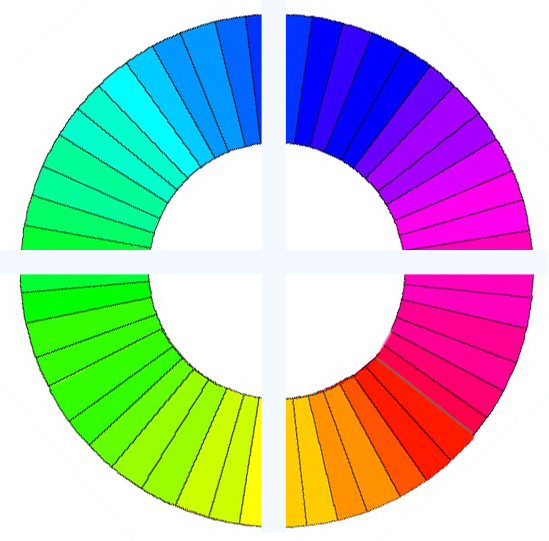
571px-Color_discWilliam Moulton  Marston theory published in his book Emotions of Normal People [1] is known by its initials DISC. It bears resemblance to the four temperaments recorded by the ancient Greek physician Hippocrates. Marston even created a diagram connecting the color wheel (with slightly more green) with his four ’emotions.’

  • D – Dominance is exhibited by the desire to prevail over others and exercise control by being aggressive, strong-willed and taking action. It resembles the Choleric  type.
  • I -Inducement is shown when people desire to lead or prevail on others using influence, persuasion or by invoking alliances. A bit like the gregarious Sanguine character without the self-indulgence
  • S- Submission is demonstrated when a person gives up or yields authority to another. It is the passive side of a Phlegmatic.
  • C- Compliance is a technique for adjusting to aggression. The person conforms or is courteous but underneath is indifferent to the attempts of others to predominate, which reflects the cautious but independent Melancholic.

Initial research for this theory was actually done among prison inmates (not exactly a normal population) and then tested among college students. It was a division of four nodal points of primary emotion,  not four different personalities. People exhibited some of all of these responses, but not in equal strength.

Both Dominance and Inducement were primary emotions exhibited by people wanting to be movers and shakers, while Submission and Compliance showed passive acceptance of surroundings. It resembled the extrovert/introvert dichotomy in that extroverts tolerate and even crave stimuli, while introverts seek calmer surroundings.

Dominance and Compliance were both  ways to deal with an antagonistic environment while Inducement and Submission were aimed at favorable environments. For some this is equivalent to thinking which prefers processes, in which one doesn’t deal with people as opposed to feeling in which people’s emotions are the impetus for behavior.

Creativity resulted as a combination of Dominance and Compliance. Marston who thought he supported the feminist ideas of the day, still saw men as creating more in the world of art because of their tendency to value Dominance higher than Compliance. He saw women’s contribution to art being more skillful and intricate based on a Compliance. Leadership on the other hand is seen as a combination of Dominance and Inducement. As Inducement increases, Compliance decreases; the person becomes more of a charismatic leader, but fails to attend to the actual tasks required to put new ideas into concrete form.

Finally Marston attributed overly aggressive exhibitions of Dominance to secretions of glandular substances; it seemed that endocrine system had replaced the Hippocrates’ body fluids in producing the four temperaments.

[1] Marston, W.M.(1928) Emotions of Normal People  https://archive.org/stream/emotionsofnormal032195mbp#page/n7/mode/2up
Posted in Creativity | Tagged , , | Leave a comment

Personality per the ancient Greeks

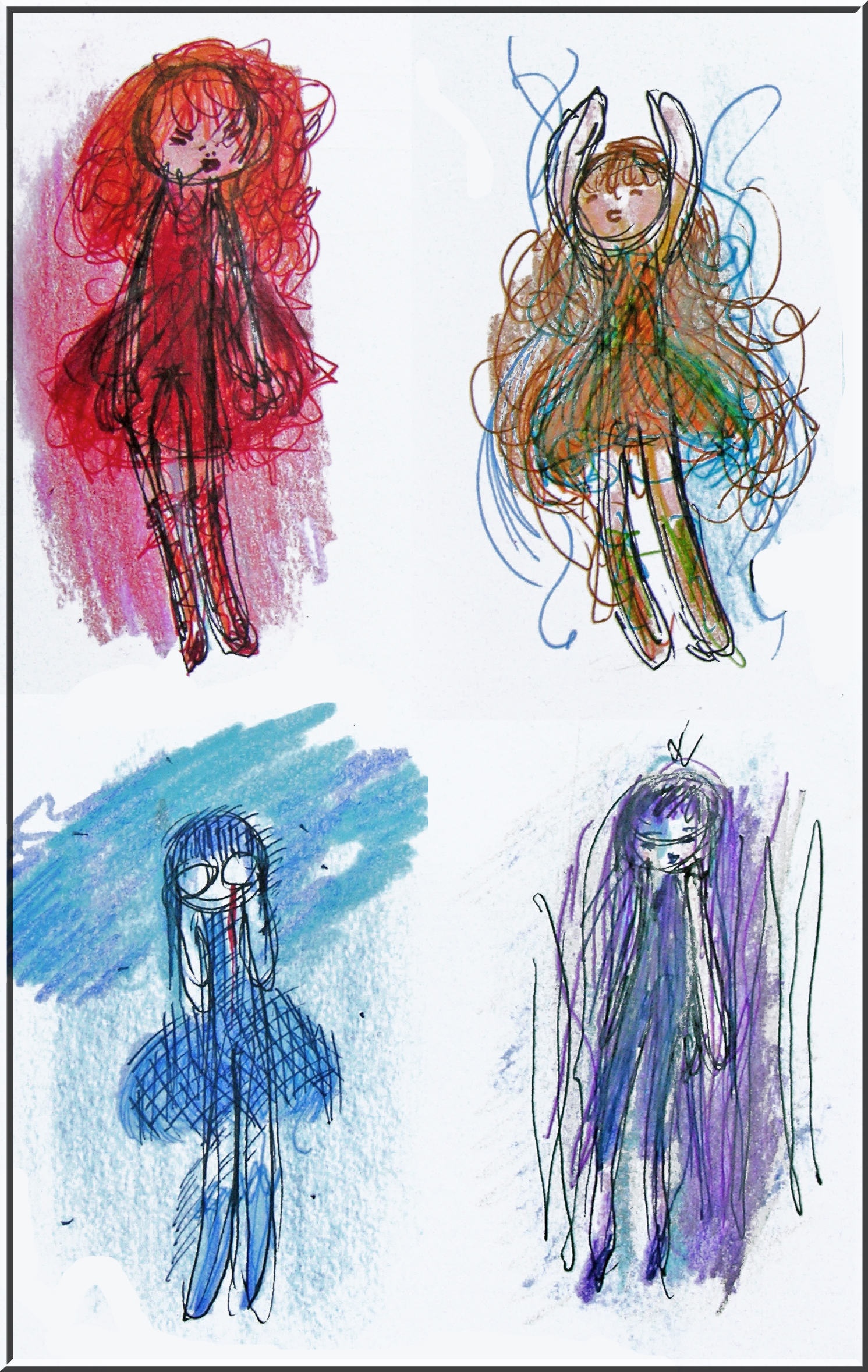
kachina_paper dolls 4 copyMany of the current personality tests are built on older theories—sometimes much older theories. Around 2400 years ago, the physician Hippocrates described his idea that human moods were caused by an excess or lack of basic body fluids. Too much blood and you became giddy and talkative, too little and you would become morose. Feeling lazy? Blame it on too much phlegm. He probably borrowed this ideas from someone before him whose name we no longer know.

Although this was not a sound medical observation, the idea of four different temperaments caught on and has hung on for millennia. The word temperament comes  from the same word as tempera paint and means to mix. So philosophers, physicians and psychologist kept mixing four different factors to obtain their palette of personalities.

According to the ancients Greeks these were:

  • Choleric—ambitious, energetic, aggressive, even tyrannical.
  • Sanguine—charismatic, impulsive, pleasure loving and self-indulgent.
  • Phlegmatic—observant, steady, calm sometimes to point of plain laziness
  • Melancholic—independent, cautious, moody and the most often depressed

Think about modern ways of categorizing human traits—the Five Factor analysis has four “normal” factors and one to determine how “neurotic” a person is. The Myers-Briggs Personality Inventory uses four factors expressed in opposing pairs. There is also the Four Color personality sorter, and DiSC which stands for four dominant traits. That’s the one we will look at more closely.

In the early twentieth century psychologist William Moulton Marston created his own personality theory from observing prison inmates, and he also created a cartoon character (Her name is Wonder Woman). His theory has been changed into one that is known by the initials DiSC. Marston’s four quadrants were originally called Dominance, Inducement, Submissive and Compliance. The last three titles have been changed to more pleasing names—Influence, Steadiness and Conscientiousness—so that a modern company can provide psycho-metrics for businesses with more acceptable descriptions.

Marston’s original theory does have something interesting to say about the creative  personality. He theorized that creativity resulted as a combination of Dominance and Compliance. This would be exhibited by a person alternately showing aggression or compliance to the aggressor. Sounds a bit like the moody melancholic, doesn’t it?

Finally, Marston decided that the extreme aggression of the highly dominant person could be caused by the excess of a substance in the human body, not exactly a fluid, but a hormone transported in body fluids. If you want to find out more about Marston’s theory read his book. Emotions of Normal People is available on Internet Archive—free, a lot cheaper than an original Wonder Woman comic. https://archive.org/details/emotionsofnormal032195mbp

Art work by S.L. Listman
Posted in Creativity | Tagged , , , | 2 Comments

Do we really want creative leaders?

creative productsLook though recent articles on leadership and you will find that creativity to be the newest rage. A few years back  (in 2010 to be exact) IBM’s Institute for Business Value conducted a survey of 1,500 chief executives and discovered that creativity had risen to top as the most valuable attribute of a leader. The ability to generate new idea, and solve problems creatively became the new competency that was suppose to ensure the success of a business in tight economic times. [1]

More recently a study by London School of Economics, showed that creative employees have more impact on innovation than an industry being part of the creative sector. Findings in this study “raise questions about the dominant perception of the creative industries as an ‘innovative’ sector.”  They also suggest that ” it might be more appropriate to focus on creative workers regardless of the sector in which they work.”[2] So not only are leaders to add creativity to their list of accomplishments, they are to encourage to add creative employees also.

But you cannot keep adding to new competencies without being willing to sacrifice some of the currently expected ones.  Basically any business needs to consider which attributes they are willing do without in order to hire a creative person. Øyvind L. Martinsen of the BI Norwegian Business School  recommends that “An employer would be wise to conduct a position analysis to weigh the requirements for the ability to cooperate against the need for creativity.” [3]

One of those attributes that might have to be sacrificed is leaders who fit the appearance of leadership.  Research from Netherlands indicates that in business, groups expect the leader to conform to the norms. This established a group identity and leaders who are typical of a group tend to be more influential because it appears that their self interests are also the group’s interest. [4] How many times have you been told to learn the company culture to ensure success at employment? Doing so is pretty much the opposite from being original.

In a study in India, employees at a refinery were rated for “leadership potential and creative idea expression.” The result showed  “that perceptions of creative performance did negatively and significantly relate to perceptions of leadership potential.”[5] In other words the more creative the ideas appear to others, the less they are willing to trust in the person’s leadership abilities. Is it the same in the USA as India? Further research conducted in United States universities showed that expressing creative ideas did lower perceptions of leadership ability. However when the person also appeared to be charismatic, their leadership qualities were not questioned as much. [5] Evidently the trait that people connect with  leadership in the United States is the ability to speak well and impress others.

However, as I look through studies on creative people I find scarce mention of the characteristic of charisma. Most indicate creative people in business are like the ones observed by Øyvind L. Martinsen.  They “are obstinate and find faults and flaws in ideas and people.”[3] Apparently, they are more concerned about what they achieve than how much others like them. On the other hand, charismatic people gain their power by drawing others, and they usually appear likable to do this. However, after extensive reading, I found few studies examining the relation of charisma and creativity. As the super “winning” personality rises in estimations of leadership, this relationship is something that needs to be considered.


[1] Kern, F. (2010,  May 18)  What Chief Executives Really Want. Bloomberg Businessweek. Retrieved Jan 13, 2014 from  http://www.businessweek.com/innovate/content/may2010/id20100517_190221.htm
 [2] Florida, Richard. (2013,Sep 12) The Real Reason Creative Workers Are Good for the Economy, The Atlantic Cities. Retrieved Jan 13, 2014 from http://www.theatlanticcities.com/jobs-and-economy/2013/09/real-reason-creative-workers-are-good-economy/6804/
[3] BI Norwegian Business School (2013, April 2). The hunt for the creative individual. Science Daily. Retrieved January 11, 2014, from http://www.sciencedaily.com­/releases/2013/04/130402091133.htm
[4] van Knippenberg, D., van Knippenberg, B., De Cremer, D., & Hogg, M. A. (2004). Leadership, self, and identity: A review and research agenda. The Leadership Quarterly, 15(6), 825-856
[5] Mueller, J. S. Goncalo, Jack. Kamdar, Dishan (2011) Recognizing Creative Leadership: Can Creative Idea Expression Negatively Relate to Perceptions of Leadership Potential. Cornell University ILR School.  Retrieved 2014, Jan 13 from http://digitalcommons.ilr.cornell.edu/cgi/viewcontent.cgi?article=1342&context=articles
Posted in Creativity | Tagged , , | Leave a comment

Creativity and social skills: a chicken and egg question

Bass guitarist for Socials Kills

Bass guitarist for Social Kills

Creative people are known for being  antisocial, hard to get along with, or just plain “crazy.”  Sometimes these epithets occur because these people have a tendency to do something causes much of the population to cringe–criticize authorities. When the criticism is leveled at the artsy crowd it sometimes seems to bounce off of their stubborn heads as if they didn’t care. But do they?

A recent study by Øyvind L. Martinsen, a professor at BI Norwegian Business School, describes seven characteristics that appear significantly more often in creative people. He compared the personality profiles of working actors, musicians, artists and marketing students to those working in  more mundane fields, and found that creative people “have a rebellious attitude due to a need to do things no one else does.” They also “have a tendency not to be very considerate, are obstinate and find faults and flaws in ideas and people.” Marketing students had personality profiles similar to that of the artists, but the artists showed less ambition. The performers (actors and musicians) were the most sociable group, and also the most narcissistic.[1]

A number of other research studies have similar findings. E.P. Torrance, well known for developing tests to measure creative thinking, uncovered the fact that even more creative children tend to have anti-authoritarian ideas and will challenge their teachers more frequently than their conventional peers.[2]

Researchers using the Five Factor Personality model as a basis to study creative students and adults reflect what both Torrance and Martinsen found. Among the population producing original work there is a strong positive relationship with openness to experience, and an inverse (negative) relationship between agreeableness and creativity.  [3]

Martinsen attributed the rebellious attitude as part of the need to be original. Creative people resist imitating others. So if imitation is flattery, what is the refusal to imitate? Often people react as if that individual doesn’t see what they do or say as good enough. They tend to reject those that reject what they have done. Aloofness and secretiveness may be the artists response to this rejection., as it does help. The anti-social and obstinate behavior could very well be a protection for those heading down an unconventional road. So which came first, creativity or anti-social tendencies?


[1] BI Norwegian Business School (2013, April 2). The hunt for the creative individual. Science Daily. Retrieved January 11, 2014, from http://www.sciencedaily.com­/releases/2013/04/130402091133.htm
[2] Torrance, E.P. & Khatena, J. (1970) What Kind of Person Are You? A brief screening device for identifying creatively gifted adolescents and adults. Gifted Child Quarterly, 14, 71-75
[3] King, L.A. Walker, L.M. Broyles, S.J. Creativity and the Five-Factor Model. Journal of Research in Personality, Volume 30, Issue 2, Pages 189-203 (2013)
Posted in Creativity | Tagged , , , , , , | 1 Comment

Extrovert or Introvert?

Christmas06 054 b

 “One of the more consistent findings from the personality literature of artists is that they tend to be rather introverted” [1]

It seems logical for the creative people, particularly the artist, writer, and composer, to be introverted individuals.  They are willing to spend long hours alone working to produce a masterpiece. Society has a tendency to see them as eccentric and unsociable.  J. W. Fleenors research using the Meyers-Briggs Type Indicator, showed a rise in creativity ratings by others connected with a rise in introversion.[2]

On the other hand some research results have found a link between higher extraversion and higher creativity. Harrison Gough found this correlation using the Meyers-Briggs Type Indicator[3] as did L.A. King using the Five Factor Model .[4] The place of the creative persons in the introvert-extrovert continuum seems  inconclusive.

Robert McCrae used divergent thinking to determine levels of creativity and his review of research showed  that “creativity is particularly related to the personality domain of openness to experience.”[5] Of course this comes as no surprise. A person’s openness to experience is evidenced by showing a wide range of interests,  exhibiting aesthetic appreciation and judging in an unconventional manner. All of these are attributes we connect with originality.  But he also discovered another connection, scores on intelligence test increase with scores on the openness to experience scale of the Five Factor Model.  However he found that intelligence is strongly linked to increased introversion, while creativity is not. “it appears that both creativity and intelligence are related to openness, whereas intelligence independent of creativity is associated with introversion.”[5]

To score high in openness to experience the participant must describe themselves as intellectual, analytic, original, and innovative. Both intelligence as measured by IQ and creativity is elevated when this score is higher.  But intelligent people also have higher introversion scores. Why? Creativity is not just a test of achievement, but a comparison to show that achievement is original or divergent from what currently exists. If you want to be known for originality, at some point you have to let everyone know that you are doing something different. The measurement of a creativity depends on the culture as well as the person.

According to Mihaly Csikszentmihalyi, who has followed the life of creative individuals in long term research:

Creative people tend to be both extroverted and introverted. We’re usually one or the other, either preferring to be in the thick of crowds or sitting on the sidelines and observing the passing show. In fact, in psychological research, extroversion and introversion are considered the most stable personality traits that differentiate people from each other and that can be reliably measured. Creative individuals, on the other hand, seem to exhibit both traits simultaneously.[6]

 [1] Sternberg, R.J. ed. Handbook of Creativity, Cambridge University Press
 [2] Fleenor, J. W. (1997). The relationship between the MBTI and measures of personality and performance in management groups. InC. Fitzgerald & L. Kirby (Eds.), Developing leaders: Research and applications in psychological type and leadership development  (p. 128). Palo Alto, CA: Davies-Black Publishers.
 [3] Gough, Harrison. Studies of the Myers-Briggs Type Indicator in a personality assessment research institute. Paper presented at the Fourth National Conference on the Myers-Briggs Type Indicator, Stanford University, CA (July, 1981)
 [4] King, L.A. Walker, L.M. Broyles, S.J. Creativity and the Five-Factor Model. Journal of Research in Personality, Volume 30, Issue 2, Pages 189-203 (2013)
 [5] McCrae, R. R. Creativity, divergent thinking, and openness to experience, Journal of Personality and Social Psychology, Vol 52(6), Jun 1987, 1258-1265
 [6] Csikszentmihalyi, M. The creative personality, published on July 01, 1996 – last reviewed on June 13, 2011
Posted in Creativity | Tagged , , , | 1 Comment

A twist in traits

dec steph 104The Myers Briggs Type Inventory (MBTI) is probably  one of the most widely known personality type assessments. Isabel Briggs Myers and her mother Katharine Cook Briggs developed it from theories recorded by the well know psychologist Carl Jung. Neither Myers or Briggs were trained in psychology or psychometric testing, but they did their homework, and learned from people who were. The MBTI was never promoted as a precise psychological test but more of a type sorter to help people understand those that had differing responses to the world around them.

So naturally people would use this inventory to try to determine the personality markers of a creative person.  But, this has not been easy. When David W. Keirsey, author of the book Please Understand Me based on the work of Myers and Briggs, reviewed the types he deduced that the creative artisan personality was likely to exhibit the following:

  • Introversion (rather than extroversion)
  • Sensing (rather than intuitive)
  • Feeling (rather than thinking)
  • Perceptive (rather than judging)

This does not match the highly creative person’s profile based on the Five Factor Model research, which include higher extroversion, openness to experience, and lower agreeableness.  Of course, Keirsey’s ideas are purely theoretical, without research that tested creative populations.

However, there are researchers who did this. The MBTI-Creativity Index developed by Harrison Gough, Ph.D. indicates that creative people  will show the following as the stronger of each pair.

  • Extroversion (rather than introversion)
  • Intuitive (rather than sensing)
  • Thinking (rather than feeling)
  • Perceptive (rather than judging)

Gough’s creative population mainly came from peer-nominated people in the fields of music, art, writing, research science and architecture. J. W. Fleenor also used the MBTI assessment on creative managers and found similar results. However, he found that the introverted personality was more predominant.

I was actually part of some impromptu research on this. A department of twenty artists (including me) all took the MBTI a little over 35 years ago where I worked. Thirteen of the sixteen types showed up and no type was found more than twice. Only one person had Keirsey’s typical artist profile (ISFP). We were all degree-holding artists (fine arts or graphic design) working in the training industry. There should have been a predominant cluster of traits, but there wasn’t. So, much for determining creativity using the MBTI.

Resources

Fleenor, J. W. (1997). The relationship between the MBTI and measures of personality and performance in management groups. InC. Fitzgerald & L. Kirby (Eds.), Developing leaders: Research and applications in psychological type and leadership development  (p. 128). Palo Alto, CA: Davies-Black Publishers.
Gough, Harrison. Studies of the Myers-Briggs Type Indicator in a personality assessment research institute. Paper presented at the Fourth National Conference on the Myers-Briggs Type Indicator, Stanford University, CA (July, 1981)
Jung,  Carl Gustav (August 1, 1971). Psychological Types (Collected Works of C.G. Jung, Volume 6). Princeton University Press. 
Keirsey, David (1998). Please Understand Me II: Temperament Character Intelligence Prometheus Nemesis Book Company. 
Myers, Isabel Briggs, and Mary H. McCaulley. Manual: A Guide to the Development and Use of the Myers-Briggs Type Indicator. Palo Alto, California. Consulting Psychologists Press. 1992
Posted in Creativity | Tagged , , , , | 1 Comment

Creative Semantics

055 monitor brain

 Early psychology was considered a science that dealt with the causes and treatment of mental illness. Famed psychologist such as Sigmund Freud worked with neurotic and psychotic patients. His theories of psychoanalysis and resulting model of mental structure were based on his work with his patients and his own inner struggles. Freud’s own life experiences wielded one of the strongest influences on his theory of personality.

But psychology based on one person’s experiences is not enough. U.S. Air Force Personnel Laboratory became involved in developing a model to show the broad spectrum of people’s personalities in the 1960s. Ernest Tupes and Raymond Christal developed the Five Factor Model of personality. They reviewed other’s research to find a set of traits that would form this model. Still they clung to the idea of psychology showing the differences between healthy and unhealthy traits. The names that they gave each factor–Surgency, Agreeableness, Dependability, Emotional Stability, and Culture–were chosen because they sounded positive.

Surgency refers to a high level of energy, confidence and enthusiastic interaction with others. The opposite would be lethargy, timidity or sadness.  However, surgency was connected with extroverted behavior. The opposite of this would introversion which is no longer considered negative. Extroversion at its high end includes aggressiveness and risky excitement seeking, which are not considered positive traits. The higher scores in sensation seeking of the extrovert was found to correlate with higher creativity, but other traits of the extroverted personality, such as talkativeness, resulted in less creative work.

One of the traits that defines Agreeableness is compliance. But, Noncompliance with authority is a characteristic of the creative people according to many researchers, such as Hans Eysenck and Paul Torrance,  population. So creative people score lower in Agreeableness, even if they are friendly.

Dependability is now named Conscientiousness and describes with how responsible, organized, or hard working a person is. This factor usually correlates negatively with creativity in research. I am reminded of the old saying “All work and no play makes Jack a dull boy.” However people low in creative ability, tend to have more creative accomplishments than one would suspect if they are higher in this factor.

Emotional Stability, which again seems like a positive trait was replaced by the name at the opposite end of the scale, Neuroticism.  Even though the assumption was made that Emotional Stability would enhance creativity, no correlation was found between the two.

Finally Culture is the relation of the person to arts and intellectual pursuits: music, writing, acting, even  gourmet food, high couture dress, and technological advancements. These are what creative people produce.  However, this factor also rate acceptance of liberal political and social ideas. It has been renamed to match what it was meant to measure, Openness to Experience. As this characteristic is described as artistic, original and imaginative, it would be a bit of a shock if a creative person did not score higher in Openness to Experience.

The Five Factor Model of personality now goes by the acronym OCEAN. Each factor is  recognized as a continuum with a wide normal range in the middle and extremes at either end. It is no longer a test of five healthy versus five unhealthy characteristics. It is still the most widely used personality model for psychology studies but even as the names and interpretation of the traits have gone through changes, it will be challenged by new models of human personalities.  Will these simply be another change in semantics?

Resources
Eysenck, H.J.  Creativity and Personality: Suggestions for a Theory, Psychological Inquiry, 1993, Vol. 4, No. 3, 147-178
King, L.A. Walker, L.M. Broyles, S.J.  Creativity and the Five-Factor Model. Journal of Research in Personality2013Volume 30, Issue 2, Pages 189-203 
McCrae, R.R and John, O.P. An Introduction to the Five-Factor Model and Its Applications, http://psych.colorado.edu/~carey/Courses/PSYC5112/Readings/psnBig5_Mccrae03.pdf (Viewed Jan. 1 2014)
Tupes, E. C , & Christal, R. E. (1961). Recurrent personality factors based on trait ratings (USAF ASD Tech. Rep. No. 61-97). Lackland Air Force Base, TX: U.S. Air Force.
Torrance, E.P. & Khatena, J. (1970) What Kind of Person Are You? A brief screening device for identifying creatively gifted adolescents and adults. Gifted Child Quarterly, 14, 71-75
Posted in Creativity | Tagged , , , | 1 Comment

Creative compared to whom?

Map_students copyIn the twentieth century, experimental psychological shifted from the study of the mentally ill to research on the cognitive and personality development of basically normal people. Soon there was a plethora of  theoretical models on the formation of personality, with different ways of rating personality–too many. In 1961, Ernest Tupes and Raymond Christal  sorted through the major theories to see what factors were used repeatedly and settle on five of these named surgency, agreeableness, dependability, emotional stability, and culture. [1]

This model has been tweaked frequently and the factors renamed; they are typically referred to as Extroversion, Agreeableness, Conscientiousness, Neuroticism and Openness to Experience. [2] But the theoretical model was only the beginning. Other psychologists developed questionnaires to test for these factors, and performed research to determine the norms where the average for a population lies. Then, they started  performing experiments based on the factors. More than half a century later we find many of these experiments cannot be replicated.

This does make sense if you look at how these experiments are constructed. According to a 2013 study conducted by Southern Methodist University in Texas, creative ability and creative accomplishments are higher for people with higher scores in Openness to Experience and Extroversion, and lower for people scoring higher in Agreeableness. So it would seem that you can identify creative people because they enjoy a greater variety of things, but are not necessarily as nice as the average person. Those results are not new and agree with E. P. Torrance’s research in the 1960’s.

But it isn’t that simple. First, you need to know research was based on 75 subjects in Texas universities. Also, creative ability was based on a test measuring verbal creativeness, and creative accomplishments were self-reported, which may have skewed the results to show extroverts as more creative. [3] Creativity based on by personality assessments depends on population being tested, as well as the criteria for being called creative. Would extroversion still have a positive correlation with creativity if ability had been measured by visual creativity rather than verbal? What would occur if creative achievement was judged by peers rather than self-reported?

Recently, I took the Five Factor Model test on a website. My scores on the Five Factor Model have remained fairly stable for decades. When I was compared to other people taking the same test on the internet, rather than existing norms, my score changed. I discovered that I had suddenly become much more extroverted and agreeable and a lot less neurotic. Comparing myself to average person who takes a self-reported psychometric tests on the Internet is not the same as an intentionally random group selected across the United States. However, selecting populations from the internet is a new method to find people for research projects.

I should not be surprised at the fact that I now appeared more extroverted and agreeable. My children did warn me that introverts and trolls tend to hang out on the Internet.

[1] Tupes, E. C , & Christal, R. E. (1961). Recurrent personality factors based on trait ratings (USAF ASD Tech. Rep. No. 61-97). Lackland Air Force Base, TX: U.S. Air Force.
[2] McCrae, R.R and John, O.P. An Introduction to the Five-Factor Model and Its Applications, http://psych.colorado.edu/~carey/Courses/PSYC5112/Readings/psnBig5_Mccrae03.pdf (Viewed Jan. 1 2014)
[3] King, L.A. Walker, L.M. Broyles, S.J. Creativity and the Five-Factor Model. Journal of Research in Personality, Volume 30, Issue 2, Pages 189-203 (2013)
Posted in Creativity | Tagged , , , , , , | 1 Comment

The edge of psychotic

IMAGE0043a copy

Writing synopsis of creativity research has led me to realize how much my spelling has deteriorated.  Mostly I rely on the word processor’s spell check, but sometimes it doesn’t recognize the scientific terms; other times it doesn’t recognize my vague resemblance of the actual word.  But when I keep running into the same word over and over again, I learn to type it right the first time.  So after a week of researching the creative personality I can accurately type out psychoticism even though it is not in my spell checker.

What does this trait, largely associated with mental illness and criminal behavior, have to do with creativity? Hans J. Eysenck developed a personality model based on three dimensions: Psychoticism, Extraversion, and Neuroticism. Using his three dimensional model he found that people with recognized artist achievement typically have a higher score on psychotic scale than non-creative people. These traits include:

  • recklessness
  • disregard for common sense
  • inappropriate emotional expression
  • non-acceptance of cultural norms
  • immaturity
  • anti-authoritative attitudes[1]

Eysenck noted that creativity had its roots in the “over inclusive thought process.” Basically this means that creative people view seemingly unrelated ideas as relevant to each other. This kind of thinking often confuses people with more conventional thinking. However, even though Eysenck compares the thought processes of creative people to that of schizophrenics, he never says they are insane. Rather he says the opposite–an original thinker is “a person high on psychoticism but not really psychotic.” [2]

That is confusing to me. I would really like to know what makes a different between the two. To be fair, others have also found similar connections. E.P. Torrance, psychologist, professor and developer of the Torrance Tests of Creative Thinking, noted that anti-authoritarian attitudes were also linked to creative output.[3] Harvard professor of psychiatry, Albert Rothenburg created a name for the illogical thought processes of creative people that resembled those of the mentally ill, Janusain thinking. This kind of illogical thought is was marked by being able to consider two opposite concepts at the same time; like two objects occupying the same space.[4]

The current emphasis on creative innovation as a key to solving humankind’s most persistent problems or providing unending economic growth unnerve me a bit. Both of these goals ignores the semblance between creativity and psychotic traits. These traits are seen in many great artists, writers and inventors whose lives were often in conflict with society and themselves. I also see these traits in troubled teenagers, who do not give any evidence of exceptional creativity. There is more to creativity than psychoticism, but it may not be possible to remove creative thinking from the kind of thinking that balances on the edge of psychotic.

[1] Porzio, S.K.  A Critical Review of Eysenck’s Theory of Psychoticism and How it Relates to Creativity, http://www.personalityresearch.org/papers/porzio.html (viewed 12/31/2013)
 [2] Eysenck, H.J.  Creativity and Personality: Suggestions for a Theory, Psychological Inquiry, 1993, Vol. 4, No. 3, 147-178
 [3] Torrance, E.P. & Khatena, J. (1970) What Kind of Person Are You? A brief screening device for identifying creatively gifted adolescents and adults. Gifted Child Quarterly, 14, 71-75
[4] Rothenburg, A. &  Hausman. C., (1976). The creativity question.  Durham, NC: Duke University Press.
Posted in Creativity | Tagged , , , , , , , | 1 Comment