Transformations

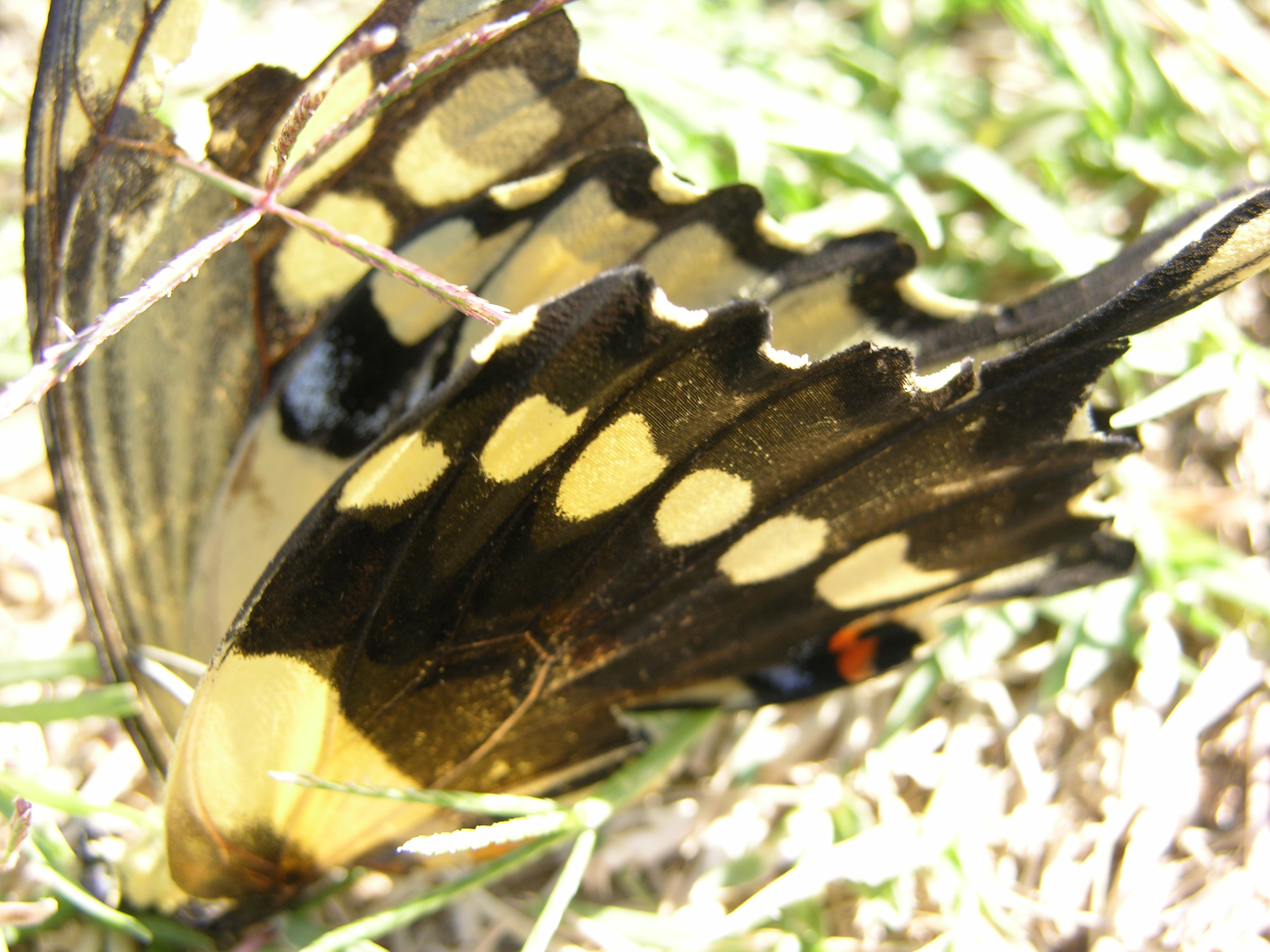
dead butterfly

For a recent assignment, students were to examine an advertisement. Questions led them to look at the visuals: subject of emphasis, originality of image, the placement of objects, type of people pictured. Then, they examined techniques such as use of  band wagon appeal, or slogans Finally, they were directed to evaluate the intended audience,  and validity of claims in the text. In the end students had to take all the answers and compile them into a composition. 

However, their writing basically read like a list of answered questions.  Taking something in one form and changing it into another form that appears organic is the art of transforming word phrases into writing. Like the metamorphosis of the butterfly it seems magical. Exactly how do you get students (or yourself) to take a fragmented stew of ideas and facts, and transform it into something intriguing?

The first piece of wisdom is not to rush the process. Jot down ideas over a period of time, and read about a range of subject matter before research begins full swing.  This helps to consider different viewpoints and select what is interesting. Meditating on an idea is the step most often omitted under the pressure to complete something–anything–to turn in for a grade, or to a prospective publisher.

Often things we do to simplify writing end up detrimental to the final product.  Let students figure out what questions to ask themselves, and they will have a deeper understanding. This allows them to delve into the subject, and retrieve relevant details that can be tied together. If they have no idea of what to look for first, have them choose a subject (topic or idea) and one to two others that parallel their chosen subject. Then compare these to see what differs, and describe the attributes that differs. Do this yourself for clues on how to narrow research.

Writing should continue on a regular basis. This allows practice in capturing the right words and phrases to show the essence of the subject. Lessons learned about transforming idea into writing in for one subject can be applied to others. It is a good idea to have scheduled chunks of class devoted to writing. Warn students to come prepared to work intensely for thirty minutes without interruption. Then stop, take a break, and do a completely different activity.

Review work frequently for progress. Look at the amount done and ask each student how far he or she can get by the next review. Do the same for yourself, if you have a hard time producing the ideas on paper. According to J.P. Guilford, transformation is processing information in a way that shows comprehension of changes [1].  So, slow down and enjoy the process of turning caterpillar ideas into butterfly prose.

[1] Guilford, J. P. (1983) Transformation abilities or functions. Journal of Creative Behavior, 17(2),75-83.

Photo by S.L. Listman

← Back

Thank you for your response. ✨


Posted in Teaching writing skills, Writer's resource | Tagged , , , , | 1 Comment

The complexity conundrum

02 steph oct 050While working with the development of a secondary language arts and literature curriculum, I had a co-worker say “If you don’t live by the 6 + 1 trait writing model, we are not going to get along.”

At the time I said nothing, but I probably could have used a snappy rejoinder, “Wow, such an impressive model. How could anyone have even written anything of quality before this model was created a mere twenty years ago?”

Yes, I admit that sarcasm is one of my bad characteristics. Of course, saying this would have embarrassed her because obviously people have been writing well for centuries. That is the problem with the passion that teachers show for any new model or mode of education. New fads keep occurring because the old ways do not work for everyone. But then neither do the new ones, so there is no sense in getting emotional or defensive over them.

Recycling of ideas in education is similar to the creation of Frankenstein’s monster – parts of old theories and notions, stitched together in new ways. Of course, this constant revamping would not be necessary if we would learn to add new ones to the old still living models rather than killing them off, with the death knell of ‘“paradigm shift.” Yes, the amount of theories and models are going to be overwhelming this way. However, overwhelming amounts of information on have been around eons before the Internet, and somehow humanity has managed.

When my dyslexic child was in fourth grade, I was given a writing workbook for her to use over the summer. If she followed the examples precisely, she should end up with well written paragraphs that would look exactly like everyone else’s paragraphs ( at least those that used the same book). So I took what worked from the workbook, and tried to make it mesh with other writing guidelines. Then, I gave her freedom to choose topics and mix up the methods and organization. Writing should be a creative activity and not simply rote learning.  

Unwillingness to deal with complexity is a greater problem in teaching than unfamiliarity with the latest instructional trend in composition. When we deal with complexity we will not all teach writing in the same way. But consider this, we do not want a boring world in which all students write in the same way either. They will make an effort to write when they have something to say, something unique or meaningful to themselves. No matter which set of techniques you use, techniques are futile to improve writing unless the content is worthwhile.

← Back

Thank you for your response. ✨

Posted in Education trends, The information age, Writer's resource | Tagged , , , | Leave a comment

The lesson of the limes

Limes-Oman“I’m so degraded, I owe at least a dozen limes.” Amy confesses. She is basically in a pickle, or perhaps more correctly out of pickles, pickled limes that is. She is deep into the fad of bringing limes to school to trade. But, Amy has been receiving more limes than she given away. With help from her sisters she replenishes her stash. However Amy’s  teacher has forbidden bringing limes to trade. She throws Amy’s precious forbidden fruit outside into the snow. Then, the teacher humiliates her. But Amy gains something from this horrible situation;  her mother pulls her out of school.

This episode from Little Women typically confuses the modern teenager. How could trading pickled limes become a be a fad. And what did Amy’s teacher have against them? However, current teachers have requested that certain popular trading items–Pokemon cards,  shaped rubber bands, and fidget spinners for, instance–be banned from school because of the disturbance these cause in classes.  

However, there is still a universal idea to be gleaned from the lime incident in Little Women. Amy was not innocent of wrong; even though the teacher’s reaction was too severe. Amy’s mother had warned her that this preoccupation with popular fads was going to cause problems. There is an absurdity to being caught up in fads, the smart phones with garish glittery cases, neon colored athletic shoes, and license character backpacks (which carry a trendy price tag as well). And, it is not just teenagers that assume these kinds of things guarantee the envy of others.

Adults also follow fads because they long for something new and different, but not so new and different as to scare conformists. They want a fad that others will flock too, also. What is the purpose of being the first person to have (fill in the blank), if nobody else really wants one? That is why fads play particular havoc with the arts. When a creative person experiments to perfect a new type of writing, visual art or music, they long for it to be acknowledged and accepted. Once it is accepted into the mainstream, multitudes of others copy it. Like a copy of a copy the later renditions are lower quality.

In writing, a fresh new set of characters in a unique setting is not allowed to exist for only one magnificent tale. They must be used in story after story until the audience notes a decline in the plots and character development. Rather than let a single creative narrative stand as it is, we milk it for as many stories as possible. The uniqueness fades quickly.  Creating  a work of art that spawns a fad has its own price. Amy got off easy with public humiliation and the loss of her precious limes.

Art work from photo by Tristan, CC BY SA


← Back

Thank you for your response. ✨

Posted in Literature, Writer's resource | Tagged , , , , | Leave a comment

Allusions and airs

Imagine you are discussing a current government situation with a friend. You mention an insight you learned about behind-the-scenes working of government while in our capitol. Perhaps you briefly mention that when George Bush explained this the first time, you didn’t quite catch it, but now you understand. 

You’ve implied that you talked personally with the former president. However you could have simply heard his explanation while sitting in a hotel room in Washington D.C. and listening to the evening news. What you are doing is leaving a hint about a famous person that you hope will be understood in a manner to make you seem more important—name dropping.

Allusions are literary name dropping. They make your writing—the setting, the situation, and the characters—seem more important because of their relation to famous ones. However, a weakness that I see increasing in current writing is the superficial use of allusions. Characters are compared to others based on appearance rather than action. I suppose this occurs because authors are alluding to what appears on the screen rather than in books. However, if allusions are going to help your reader connect to the character, they should deal with actions and motives.

Shakespeare was a master of using allusions as short-cuts in developing characters and conflicts. For example, in Hamlet, Shakespeare makes allusions to Greek mythology, Roman literature and the Bible. Hamlet, a prince of Denmark, despises his uncle who his mother married within a month of the death of his father, the former king. Hamlet decides to keep mum and not to tell everyone that he suspects his uncle was complicit in the death of his father. But the prince has a hard time not letting his feelings leak out. Rather than a direct verbal attack, Hamlet compares his father to his uncle as “Hyperion to a satyr.” Hyperion was the Greek sun god, a fairly noble one; the satyr (more familiar to modern audiences) was a lecherous, half man-half goat creature of myth.

During the play the Prince Hamlet requests itinerant actors perform a play at his palace for the “entertainment” of his mother, among others. For this play within a play Shakespeare uses Hecuba’s stirring funeral speech as written by the Roman poet Ovid in Metamorphoses Ovid. According to ancient literature Hecuba was the Trojan queen who grieved eloquently at the death of her husband and son. But the purpose of this illusion was not just to throw around Shakespeare’s knowledge of classical literature. It was to portray a parallel situation so the audience could see how Hamlet was trying to embarrass his own mother because of her hasty marriage to a questionable man.

Hamlet also refers to Cain and Able, from Genesis in the Bible in reference to his uncle and his own deceased father. This is an obvious allusion to fratricide, so that the less learned among Shakespeare’s audience would realize that Hamlet was practically stating that his father’s murderer was none other than his own brother. The majority of modern readers would catch that last reference even if they missed the other two.

In Shakespeare’s day, literary allusions were flung left and right during a play. The Baird didn’t underestimate the intelligence of his audience and they appreciated that. If you were watching a play and caught the meaning of an allusion, you thought of yourself as a learned person. For those that didn’t, well, there was plenty of lowbrow humor and sexual innuendo to keep them entertained.

← Back

Thank you for your response. ✨

Posted in Literary devices, Literature, Writer's resource | Tagged , , , , , | Leave a comment

Figures of seeing

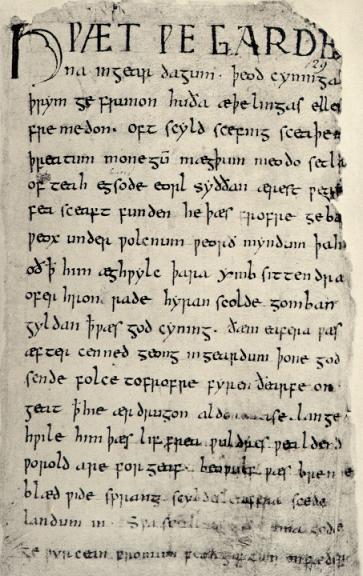
Beowulf.firstpageReading ancient literature is difficult not just because of archaic words, but also ambiguous figures of speech that attempted to help the reader see the image and not just hear the words. Translate an early English text, such as Beowulf into completely modern words and students would still stumble over kennings (old idioms), such as whale road, sail road and swan road. All of these descriptive phrases are used in place of the word sea, as is the Latin word mere. Huge whales and sailing ships travel the ocean, but I’ve never seen  swans there (I suppose they may be found in estuaries that border the sea). Writers realize it sounds boring to use the same word over and over again. Sometimes they are too eager to to use alternatives.

When I read in Beowulf of a person described as a breaker of rings, I could see somebody hacking gold rings apart. Could it be a thief preparing his latest heist to  be melted? Actually it is leader, a minor king or chieftain, who may have gotten his gold by trading openly, as opposed to the stealth of a thief. The leader is a giver of rings as well as a breaker of rings. I suppose a more successful chieftain could give his loyal followers entire rings rather than breaking them into parts in order to have enough to reward them all.

But can you imagine the difficulties that that someone from that period would have reading our common writing, even if it was translated into old English, (and it did not discuss any technology that didn’t exist at their time). Are our highways, freeways, and interstates any less confusing than whale roads, sail roads and swan roads? These are distinct types of roads that conjure up distinct images for us, but in reality they overlap. 

Recently I was reading an email from my daughter in response to one I sent about how to cut mats with multiple openings to display pictures of a recent art fair. I concluded by saying the pictures had to be the “same direction.” She responded by saying there was no mixing of portraits and landscapes. That threw me for a second because I knew some of the pictures were of people, and others of the trees in park in which the art fair took place. Then, I realized she was referring to the orientation of the pictures. Rectangular pictures have been aligned either horizontally or vertically for eons. But now we have a new kenning, a new way of describing orientation based on how it is described in the print options.

Figures of speech fill our conversation and our writing with words pertinent to our time and our location. It is hard to see those common phrases as not necessarily being ordinary. Seeing outside of our own existence is struggle. Learning to understand figures of speech from another time and place is one of the steps to really understanding diversity.


← Back

Thank you for your response. ✨

Posted in Literary devices, Literature, Writer's resource | Tagged , , , | Leave a comment

Word of media

ruokRecently we had to evacuate the school due to a gas leak. Students were jammed up against the back fence of a subdivision across from the school. Fire trucks roared past, lights flashing and phones were raised in the air capture the sight. I’m sure similar shots were posted in hundreds of Facebook pages. Within minutes a guy yelled “Check out Twitter # gas leak 2013.” The head fire inspector arrived in an SUV full of detection equipment, and we spent an hour outside waiting for him to do him job. At least the weather cooperated, sunny, with a slight cool breeze. In the end there was only a brief mention on the local news, without photos, even though I’m sure hundreds of posts about the event flooded the electronic media.

While waiting outside, my thoughts went back to a class discussion that occurred early in the week. Students were supposed to describe the effect of electronic media – Facebook, Twitter, Tumblr, etc. – on their writing. A teacher had lamented how the abbreviations used in text messages, such as LOL and IDK, had crept into other forms of writing. I actually first saw IDK as answer by a clueless student on a test five years ago.

However, I have used abbreviations in writing for years. In addition to technical acronyms, like radar and sonar, I include an older set of common abbreviations – CEO, ASAP, and RSVP (which is not even English) –  in everyday writing. Those ever pervasive abbreviations students use tend to give the nuances that are often expressed by tone of voice such as sarcasm (IMNSHO – in my not so humble opinion) or affection (143 – I love you).  They contain the frequently used phrases that we say in conversation just to show that we are listening (GR8 – great, VSF – very sad face), or about to leave (TTFN – ta, ta for now). Of course, some are attempts to hide real meaning of words from parents and other adults; like the slang that tends be reinvented every 5 years.

I have discovered that these abbreviations and variants of  L33T (elite) speak really affect the way students talk more than the way they write for classroom assignments. Most of them understand that these phrases are not proper words.  But they still struggle to figure how to replace them with a word that means the same thing in standard quasi-formal writing. The increased number of technical words to name new things that didn’t exist a few years ago is taking up room for vocabulary in their brain. This results in a loss of variety or richness in words. Students may know that N00B should be written as newbie in letters, but they have little concept of what a novice or fledgling is.

Many of the generation that did not grow up with internet at their fingertips have vocabulary that is just as limited. They are comfortable repeating the same words that they’ve heard their friends use. It marks them as a group. Pushing beyond this is difficult, but that is exactly what creative writing requires.

Recently I read a blog in which the writer used “drill down” and “deeper dive” (basically meaning the same thing). She inferred that her audience could guess her vocation from the use of these phrases; but her word choice really revealed how old she was.

← Back

Thank you for your response. ✨

Posted in Style and voice, Writer's resource | Tagged , , , | Leave a comment

The school of social networking

057With students glued to Facebook rather than paying attention in class, teachers begin to wonder if they could teach better using a social network instead. Social media and e-learning may be useful, but Facebook is by no means universal. The belief that everyone is using sometimes lead to further exclusion of more people than we realize.  There are four people in my household and each of us prefer different sites. Only two of us have Facebook accounts (I am one of those and I pay scant attention to it). Everyone follow the sites where discussions center around their interests, and the number of sites is growing. Forums are set up so viewers can see only what they want to on sites such as Pinterest and Tumblr.

Social media is a tool of technical tool; it can be viewed passively without any involved from the viewer.  The person posting on YouTube most often does not know who views or is affected by their video. Success is measure quantitatively, but number of hits – with impact remaining unknown. It does not require the relationship skills of setting expectations, giving encouragement and watching out for others – it is not the silver bullet to fix the problem with the school system. I instruct students in technology whenever I can because it is a necessary skill – but there are a lot of things (especially when it comes to pedagogy) that digital natives do not know and cannot learn even with the most sophisticated program. As my son the programmer pointed out all artificial neural networks are based on what humans have programmed and contain human errors.

← Back

Thank you for your response. ✨

Posted in Education trends, The information age | Tagged , , , , , | Leave a comment

Vibrant verbs

fun run 2Writers can throw around the terms used to describe interesting language – sensory images, unusual syntax, well-developed descriptions, and vibrant verbs. But incorporating these into writing and preserving the flow is a challenge. Recently I worked with some nascent writers trying to conjure vibrant verbs to replace the old, tired, common ones.

Actually, the common verbs are quite useful (which is why they are common). Did you ever try to carry on a conversation and not use some form of have, get, go, do or say? As the first exercise the participants had to tackle finding vivid variations of the past tense of “said” the past tense of say.

When I write dialogue I am acutely aware of how many times I have employed “said.” However, it interferes with the flow of the dialog if I have to keep stopping to search for alternate words. My own solution was to create a handy list of words for “said” that indicated basic emotions–timid, angry, scornful, happy, excited, surprised, scared and sad. Unfortunately “screamed” describes multiple emotions and using it every time it popped up in my list was equivalent to constantly crying wolf. To be honest, when I write I end up using “said” more than anything else. I’ve heard readers don’t notice this, and I hope that’s true.

In the second exercise the participants had to replace “walk” in the sentence “He walked across the room.” The new verbs had to express walking in a manner that indicated the person was slow, fast, in pain, exhausted and overjoyed. The tendency is to use adverbs or metaphors. I had to repeatedly explain the idea was to exchange the verb, using one word only. There is a pleasure in economy of writing, using few words even if it does sacrifice the richness of description. When one came up with “He walked across the room, sliding like a slimy snail.” I had to admit it was creative and worked just as well as “He slithered as across the room.”  

In the end we basically performed charades. I asked a volunteer to walk slowly across the room while others yelled out single words to describe what she was doing. They managed to come up with crept, crawled, shuffled and slunk. As we moved on to the remaining verbs, I realized that when a person walks  slowly  or with pain, it looks very similar. They still managed to come up with variations such as stumble, stagger, and totter. My favorite verb replacement “He slouched across the room” sounded more like the walk of an self-conscious teenager, a category that definitely fit some of my participants.

In the end, everyone borrowed from their neighbor to find the minimum of five verbs for each style of walking. By the time we finished we were all a bit bored with reading the same “vibrant verbs” over and over again.

← Back

Thank you for your response. ✨

Posted in Style and voice, Teaching writing skills, Writer's resource | Tagged , , , | 1 Comment

How to rant like a literature professor

Standard_Poodle_black_male_sitting (2)“That was the year I came to class at the start of the new semester and found only one student to sign up for Drama from Aeschylus to O’Neill.” Do you know who Aeschylus or O’Neill were?  I assume you know who Ray Bradbury was. The words comes from Ray Bradbury’s book “Fahrenheit 451.” We  might be going the same direction as Ray Bradbury predicted.

For required reading, my daughter had “Three Cups of Tea” in eighth grade, “Kite Runner” in ninth grade and “A Long Way Gone” in tenth grade and “A Thousand Splendid Suns” in eleventh grade. She felt only “A Long Way Gone” was a quality book.  She also realized she was receiving a very lopsided and inadequate education. Why? Evidently the canon of books by dead white men, had been replaced an even more restricted one – living authors that wrote about violence in Africa and the Middle East. The tendency was to concentrate on current, easily consumable, best-sellers in order to get students to read. Students need more help understanding literature that is not from their time. They can read the best sellers as they please. 

Students will read classic literature if someone is willing to spend the time to walk them through this, even when it is difficult. My daughter is dyslexic. When she was much younger, I asked her pediatrician to refer her for testing. He told me “Read to her, constantly.” So I did. Often, I read old books I had enjoyed as a child, but she still learned that reading was fun and a way to connect with other people. Sometimes, I obtained recordings on computer if she wanted them, because reading was hard for her. However, she relished the time we sat down and read together the most.

My daughter asked about the classics that I would recommend; I gave her a long and varied list. She chose “Anna Karenina,” “Faust” and “The Scarlet Letter” over the past three summers. The books were difficult, so we started having discussions. She realized authors are not irrelevant because they wrote in the style of their time. They are not boring just because their books required a lot of thinking. Sometimes we talked about why they were deemed classics, and what the author was trying to do. Soon, my son (four years older) started joining in the discussions. Now, my daughter is both dyslexic and a gifted student, although she was not identified as one until eleventh grade.

Just getting a student to read doesn’t give them the richness they need.  We are very conceited to think that books written in our time are the most important. There is a reason that some literature from the past has lasted so long, while the rest of it has been forgotten. Classics often require higher reading skills, but they also provide a more diverse picture of life – not just what has occurred in the past ten years. If this doesn’t happen students unfamiliar with classics become teachers unfamiliar with classics and the information is lost to the next generation. If they do not understand what is a classic from the past, how are they going to be able to determine a classic from the present?

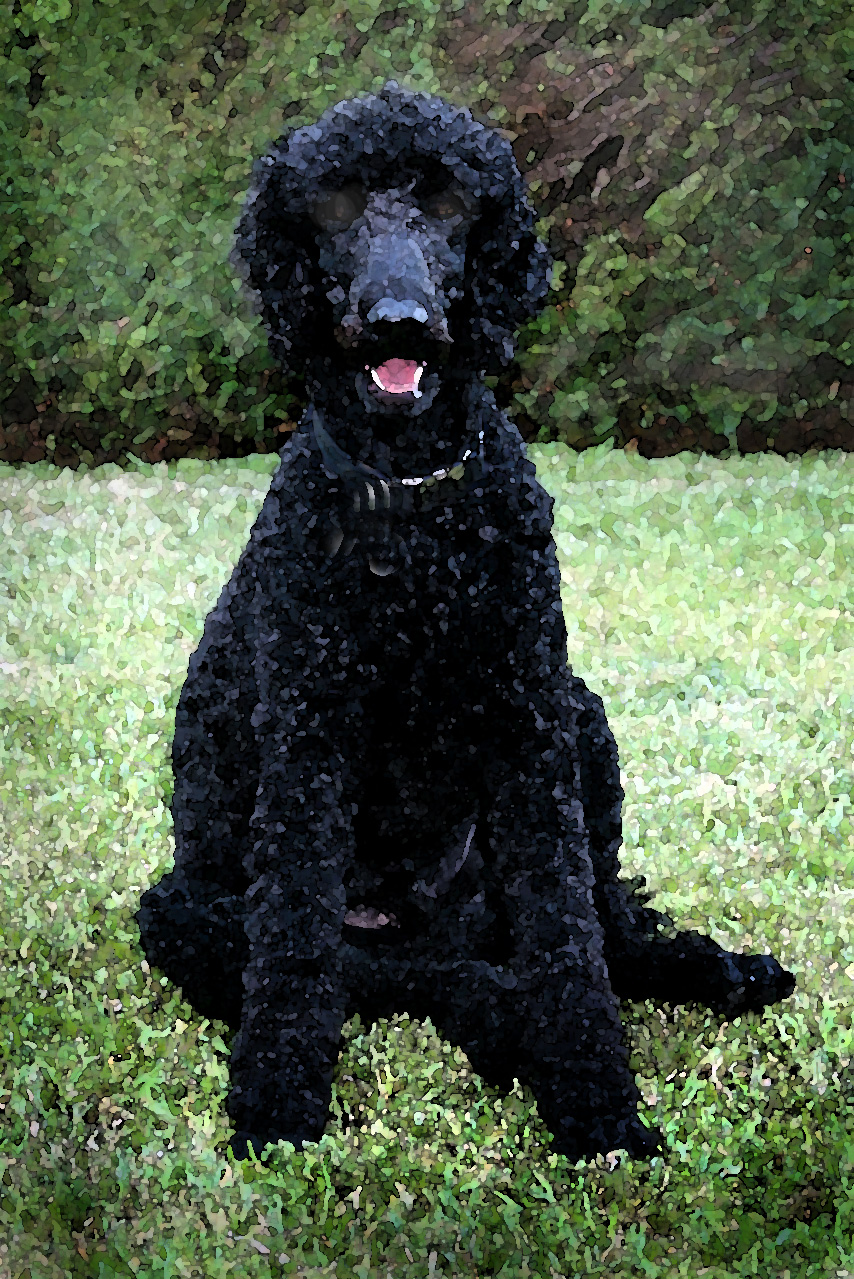
Recently an American literature teacher who works in a German school read a story he had written. He asked what the class thought his black dog in his story symbolized. My daughter answered Mephistopheles who first appeared as a black poodle in the German classic “Faust.” It fit because the dog was an indication how the main character, who seemed religious, had committed a horrible crime. However, the poor guy, a recent literature graduate, didn’t even know who Mephistopheles was.

Art from photo by A. Wray, CC BY SA

← Back

Thank you for your response. ✨

Posted in Literature | Tagged , , , , , , , , | Leave a comment

Superhuman weakness

A-fest12 004cAt one time there was a “story” circulating about a famous producer of modern supernatural fiction movies, and an unknown screen writer.

The famous producer says “I have a new idea for a movie.”

“What’s the plot?” asks the writer.

“There’s this boy, and he’s really a robot.” the producer answers.

“That’s a plot device, not a plot.” the writer responds.

The American public has an on going love affair with superheros and a lot of writers want to cash in on this. Yet, we keep on recycling the classic superheros. Why? When you give a character a supernatural powers, you can easily become preoccupied with the special ability. Every crisis that arrives is another chance to showcase the special power. Although the crowd of spectators may be astonished, the hero finds solving the problem as natural as breathing. So having a superpower does not guarantee an interesting plot, anymore than having a boy actually be a robot will keep audiences coming to theaters. If a story contains a character with powers so that problems can be quickly overcome, essentially there is no conflict, no plot–just a plot device.

Carefully crafting an interesting hero with unique powers requires attention to other things. For example, what are the character’s weaknesses? They need to have both an Achilles’ heel and a personality flaw.  The physical weaknesses is like Superman’s Kryptonite or the dragon’s soft spot. There may be a plant, an element, a delicious food that doesn’t bother us ordinary humans but it can drain the supernatural character’s power or even cause death.

The personality flaw actually helps us relate to the hero with super powers.  We automatically assume that characters that walk and talk like people (at least some of the time) also share the  traits of human nature. However, a superhero could have a drastically different way of thinking or feeling (or lack of feeling). This kind of character is more difficult to create but is ultimately more fascinating when well developed.

In a discussion with high school aged writers about the changes in literary rules for vampires, many of them lamented the fact that the new breed of vampire doesn’t have to watch out for sunrise. They seem just like humans only stronger, immortal and with a taste for blood, not necessarily human blood. However, one astute student noted that even the modern “humanized” vampires were more interesting when stories revolve around their interactions with humans and the conflicts that resulted. So the superhero with the fantastic new power that you have created needs to care about humans and be involved their society. The plot may not differ much from man of the age-old man versus man plots. But the addition of the superhuman power, and superhuman weakness, can make the plot more intriguing.


← Back

Thank you for your response. ✨

Posted in Literature, Story structure, Writer's resource | Tagged , , , , | 1 Comment