Wilde words

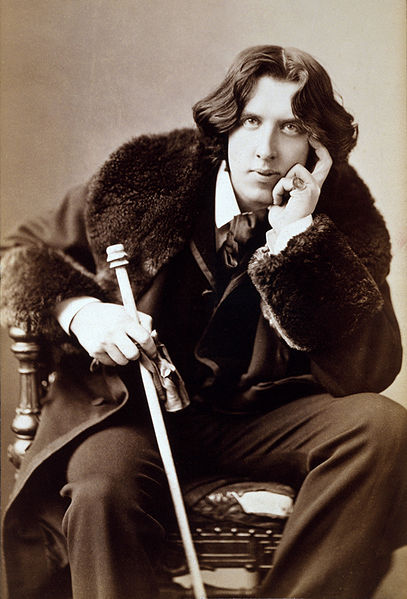
407px-Oscar_Wilde_3g07095u-adjust

Sometime in the eighties I noticed a shift in the focus of television sitcoms–the humorous situation was gradually being replaced by humorous banter. Witty retorts were more important than amusing events. In fact, often the events would be minimal. The entire plot may have been based solely on the character’s illusions, often nothing happened but clever conversations. Sometime the events in comedies actually struck a painful nerve. But, the audiences continued to laugh as the actors cut each other down a notch with witty retorts.

This is not the first time that ‘witty’ words have been prized over plot. Oscar Wilde, a 19th century Irish writer and poet wrote many poems, essays, short stories and plays. However, other than the fame achieved through his one novel The Picture of Dorian Gray, and his hit play, The Importance of Being Ernest, Wilde is mainly known for his epigrams, wry observations about life. An example of his wit is found in an article in the New York Tribune.

And, after all, what is a fashion? From the artistic point of view, it is usually a form of ugliness so intolerable that we have to alter it every six months.

Epigrams are short, clever statements (or poems) that have been recorded ever since Ancient Greece. Each culture has its own kind of humor but there are some basic devices:

Paradox–like Wilde’s quip about fashion it states an apparent contradiction or incongruity that on second glance may actually be true. Wilde is also quoted as saying the following concerning one of his critics in The New-York Herald:

If it took Labouchere three columns to prove that I was forgotten, then there is no difference between fame and obscurity.

Litote –a rhetoric device that uses a negative to discretely mention something that is not particularly pleasant without being too critical. As Oscar Wilde would write in “The Birthday of the Infanta”

He is really not so ugly after all, provided, of course, that one shuts one’s eyes, and does not look at him.

Euphemism–a softened ways of describing what we fear, such as death, or discuss inappropriate matters to like sex and violence. Similar to litote, a euphemism underplays the impact and the words true meaning. Oscar Wilde created his own in The Nihilist:

Experience, the name men give to their mistakes

Satire–is type of parody which ridicules the follies of society by seeming to imitate real events, but not quite. Satire can also be leveled against work of art and fiction and especially other writers. Familiarity with Shakespeare’s monologue from As You Like It makes the satirical restatement by Oscar Wilde more cutting:

 The world is a stage, but the play is badly cast

In each case there is an irony, a play on words where ordinary wisdom is twisted into a new meaning in a way that seems humorous–at least on the surface. But the underlying meaning may end up being as bitter as Oscar Wilde’s own end.

Photo by Napoleon Sarony [Public domain]
Posted in Literary devices, Literature, Writer's resource | Tagged , , , , , , , , | 2 Comments

The merits of fictional characters

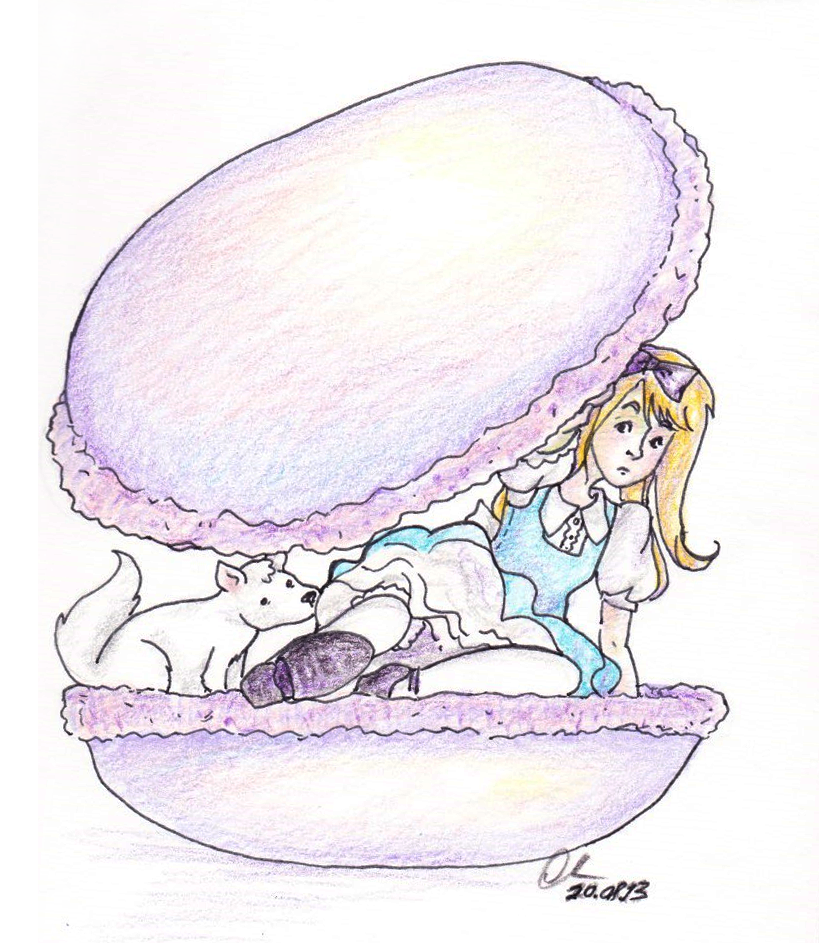
Macron02

Having seen discussion boards in which people spend time arguing about the merits of fictional characters, I would assume that a number of readers prefer these imaginary people to real ones. Fictional characters may be braver, more beautiful, or have greater ingenuity than real people so it is easier to become attached to them. But the real advantage is they don’t talk back and readers can imagine them however they desire. But, the same is not true for the people who create the stories. I can attest to a number of times that authors have related incidents in which characters they have created refuse to behave in the manner that the author envisions.

Characters live in the author’s heads, sometimes ignore their directives and even argue with them as the author tries to capture them with words. These finite words are the only way that reading audience may become acquainted with the character. There is the easy way to do this. Tell the audience directly that main character is a tall, muscular, fearless, and impatient man that speaks four different languages, has a preference for blonds and BMWs, and a severe allergy to peanuts. Then, there is the better way–write the narrative in a manner so the reader can observe the character, follow what he does, see how he reacts, hear what others say about him, and even listen to what he thinks about these other characters.

The next challenge is embellishing all the other less important characters, which is necessary unless you are writing a new version of Robinson Caruso. You cannot create them all with the same detailed development reserved for the main characters unless you want to drive your readers up a wall. Simply naming each character is confusing. We only want to spend the mental energy to keep track of the names of a few major characters and their sidekicks. Each minor character who is seen repeated times should still have a bit of individuality, like a quirk in behavior or a physical trait to make them distinguishable from the others.

So here are some usable shortcuts to creating characters:

Archetype–the embodiment of a collective set of characteristics for universal types of humans. Archetypes include the mentor, a wise old man or woman willing to share their wisdom with the hero, or the trickster, a lively characters whose loyal is always suspect.  Archetypes must be fleshed out with details to make them unique and different from other characters who are the same archetype, otherwise they are simply a stereo type.

Doppleganger–a character who looks identical to a main character. The doppleganger, can be an empathetic companion or an evil twin. Technically the doppleganger is an archetype, but their traits may be the same or opposite of their spitting image. They don’t have the boundaries of other archetypes.

Foil–a character who is pretty much the opposite of another, usually the protagonist. For example, a clumsy, shy foil would make your protagonist seem suave and cosmopolitan.

Semi-Round character–a partially developed character that has a contradictory trait or two to keep them from being flat and boring, such as an actor with stage fright.

Stock characters–a stereotype already created by the culture who behaves in an expected manner, such as the dumb blond or the ruthless drug dealer. Use the flat characters for those without enough importance to be named. They may appear once or twice and then they are gone from the story and often from the reader’s memory.

Creating complex characters for the protagonist, the antagonist and their cohorts is usually both more difficult and more satisfying for writer and the reader. Of course, some readers would rather simply be told what each character is like and they actually enjoy major characters who are stereotypes. Flat main characters are predictable and do not requiring any close observation or deep thought while reading. As a writer you have to decide who you are writing for and if you can live with your decision.

Artwork – Macaron by S.L. Listman


← Back

Thank you for your response. ✨

Posted in Literary devices, Story structure, Writer's resource | Tagged , , , , , , , , | 2 Comments

More than what you see

IMG_4708 imagery2The term ‘imagery’ brings to mind, of course, images–verbal pictures that allow us to peer into the world which an author has dreamed up.  Imagery sometimes implies page after page of descriptive detail–in which case you might risk having the readers fall asleep and start dreaming up their own worlds.  But, a story without enough visual detail leaves the characters moving in an unsubstantial shadow land.

Imagery should includes more than what you see in your mind’s eye. It also needs to bring to life the sounds, smells, tastes, and textures of the world you have created. One of the appealing aspects of writing is that you do not have to stick with the conventional. Music can be  ultramarine blue or a person’s scent can be rough and sand papery. Using these metaphors which cross the senses is  called synesthesia, a term referring to a neurological condition in which senses in one pathway involuntarily leads to another. A person with synesthesia may see the number 5 and sense the smell of cinnamon.

How do you include imagery without overloading the reader with unnecessary detail? Beyond the senses, imagery should reflect the interior mood of the characters. The characters are not omniscient and do not pay attention to everything. They regard what they find worthwhile out of love, fear, ambition, or other desires. The writers has to get inside the characters head to see, smell and hear the world as they do. The sound of rain may be the dance of water sprites, or the dull thudding of depression, depending on your character.

This should not be so difficult. Right? After all you created the character. However,  it feels a bit like self-induced schizophrenia to be considering how each of many characters perceive the world around them.  The other challenge is that imagery cannot be subtle or its significance is lost on the reader. There is no easy short cut to descriptive passages that draw in the reader. The best advice is to practice. Create imagery and cut it down unmercifully, like a prospector washing tons of gravel until only the glinting grains of gold remain.


Artwork – detail from The Shadows that Follow Me by S.L. Listman

Posted in Literary devices, Style and voice, Writer's resource | Tagged , , , , , | 2 Comments

Playing musical words

stephs (4)One of the quickest ways to make your writing voice stand out from the crowd is to master the use of literary devices. Some devices are just fancy names for specific types of diction and syntax.

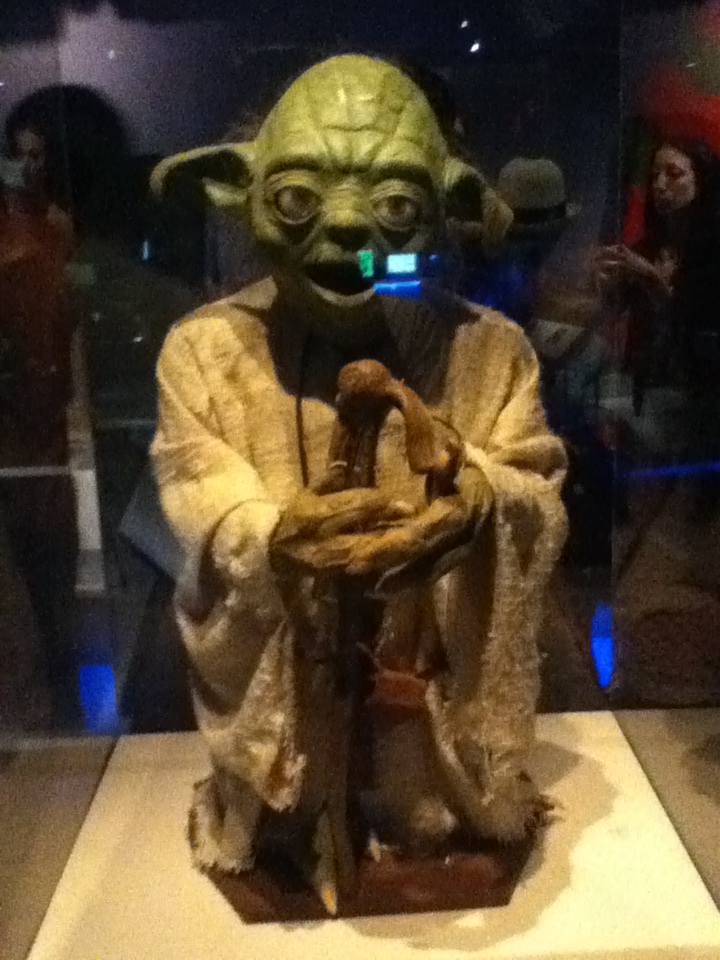
For example, anastrophe is a type of hyperbaton in which the position of a single word is changed from the normal syntax for emphasis. In case that definition doesn’t make sense,  you can just remember that anastrophe is what makes the speech of Yoda in Star Wars so distinctive.

However, there are many more literary devices that have potential. These involve selecting words for their actual sounds, as the sloshing, crackling, twinkling onomatopoeia words. I fondly think of these as the ‘musical’ literary devices. Longer words, with many syllables ending in vowels, like onomatopoeia, sound elegant, while short consonant bound ones, such as slang, carry a cocky connotation. I’ve witnessed people discussing whether it is more important to be intelligent or smart. To me that is a moot point, as both words mean the same thing. However, people base shades of meaning on types of sound. (This is important to remember when naming characters.)

You can consciously change your writing voice by selecting words that alliterate, or begin with the same sound. Be aware of overusing alliteration in a mnemonic manner such as persuasive writers and speakers are fond of doing. Every point you make does not have to begin with the same letter. Instead look at Robert Frost’s poem Birches which uses words beginning with “b” in a playful manner for his celebration of the simple joys of youth.

Consonance, or repeating a consonant at places other than at the beginning of words, as in “barn,” “turn” and “consternation” has a similar poetic effect. Assonance refers to the intentional repetition of vowel sounds, like the long “o” in Edgar Allan Poe’s Eldorado. English does not have a huge number of vowel sounds so that readers may not be swayed much by the effect of assonance. However, combine assonance with ending consonance and you have the ever popular sound of rhyming words. Again, don’t go overboard with this device.

The pleasantness or harshness of word when read aloud has a subtle impact on mood even when they are read silently. The word cacophony contains one element that makes a word harsh–the repetition of the “k” sound. Repeating other voiced consonant, such as “d,” hard “g” and “z,” also create a guttural sound. Euphony–the beautiful sounding effect–is created by using words full of unvoiced consonants such as the soft “s,” “l,” “j,” and the “f” sound, which is found in the middle of euphony.

Does getting down to the sound of letters really affect the way people perceive your writing? Have you heard of the Bouba/kiki effect? The sound of letters affects the way people perceive shapes (https://en.wikipedia.org/wiki/Bouba/kiki_effect). We probably all realize this is also occurring in writing, even if no one has managed to construct an experiment to prove it yet. So, keep on playing with musical words to embellish your tone of voice.

Posted in Literary devices, Style and voice, Writer's resource | Tagged , , , , , , , , | 2 Comments

Deciding on a direction

TX_dallas b

“Say what you are going to say, say it, and finally say what you have said.” I don’t know how many times I’ve heard this rule for organizing the written word repeated in the educational realm. But rules are meant to be broken. Following this rule consistently will end up putting your readers to sleep. So many formulas to create structure in writing breed boredom instead. Good writing requires movement towards a goal, without being completely predictable.

There are multiple types of graphic organizers to assist the writer in brainstorming: such as branching, bridging, and bubbling. However, consider exactly how the reader would comprehend a composition if you wrote it with one central idea and all the related sub-ideas jutting out in different directions? This would be like constantly returning to home between every leg of a road trip. There is no way to get away from the fact that reading is a linear activity. When you examine all the types of organizational schemes for writing they fit into one of two categories: time-based narrative (sequential) or subject-based (non-sequential). Organizing your thoughts as words actually requires a progression towards an end using one or both of these.

Fiction, biography, history, and the unbelievable true story are predominantly sequential. But flashbacks, flash forwards, clusters of events and parallel accounts all break into the march of time so the narrative doesn’t always move forward. There is a larger, overshadowing orderliness based on the theme.  Being conscious of this helps you know when to insert a time bending device, such as flashback, because it assists the reader in understanding the next step forward to reaching the goal.

Non-sequential writing may move from topic to topic based on location, people or some other criteria, such as a biological tree. However, the overarching movement is normally from a topic of less importance to one of greater impact. Subject-based writing may still contain many chronological narratives. In fact rarely do you find a book or article that is exclusively composed of sequential narrative or discussion of topics. Most writing is a blend.

Finally there is the matter of digression–the comment only barely relevant to your article, story or book. Many authors divert from their goal to expresses a pet peeve, or to praise a tangent idea. When is it okay to digress? There is no hard and fast rule. If there were, you would only be breaking it to keep your writing interesting. You must decide if the digression adds to the color of the story, gives insights to your view of the world or simply makes the piece incoherent. As with other characteristics of voice, organization requires judgment, and that is why it reflects your uniqueness.

← Back

Thank you for your response. ✨

Posted in Story structure, Style and voice, Writer's resource | Tagged , , , , , , | 2 Comments

The speed signs for writing

01 steph oct 025

The way we string together words and the type of words we use contribute to the “pace” of writing. Longer sentences with a plethora of subordinated clauses provide an intellectual sound to the writing. The reader takes more time to ponder the concepts presented, which may make the ideas seem as complex. This also forces the reader to slog through the work.

Short sentences with direct verbs are the antidote. However, few readers can stomach an entire work of short choppy bursts. When dependent clauses are avoided, flow is sacrificed. The trick to dealing with pace-changing techniques is knowing when the writing can be improved by putting on the brakes—to let the reader savor the experience of reading—or speeding up for drama.

A good exercise to show how this works is to take a paragraph out of academic writing and rewrite it. Revise it by changing passive verbs to the simple active ones. For good measure, reduce all the lengthy vocabulary to the more easily understood words that mean the close to the same thing. The passage will still contain most of the same concepts; it just will not sound as erudite. It will move faster because the reader can actually read it at a higher speed. You may also find that the sentences start repeating the same idea; a person can write quite impressive prose and still not say a lot.

Repetition can either move the story along or bring to a screeching halt. Repeating the same sentence structure (as long sentences are not convoluted phrases) makes reading easier and picks up the pace. However, sticking with the same sentence structure is the hall mark of an amateur writer. Repetition of types of phrases creates poetry, but doesn’t have to be confined to poems. If you want to add a striking cadence to prose, incorporate both repetition and speed changes to break the monotony.

Finally, changing pace in writing can alter the level of perceived politeness. For example, use of passive verbs, regarded with disdain by many professional writers, also slows down the pace. However, passive voice has its place. It creates a style that is gentler and less accusatory than its counterpart. “The door is to be closed whenever you leave the room,” takes a lot more words than “Close the door when you leave.” But, it sounds nicer and less demanding. In the same manner “The door was left open, again,” is a bit kinder than “You left the door open, again.”

When you drive a car, alternating rapidly between the gas and brake jerks the car uncomfortably. However, a sudden change in the pace of writing does not have the same effect as a lead-footed driver. Inserting a four word sentences between two long ones creates an interesting contrast. So, the best advice on the speed of writing is to not keep it the same.


Photo by S.L. Listman

← Back

Thank you for your response. ✨

Posted in Style and voice, Teaching writing skills, Writer's resource | Tagged , , , , | 2 Comments

Order matters how?

YodaPuppetWhile diction determines word choice, syntax determines where the words are placed. Language without syntax are words strung together with no method to the madness–in other words, nonsense. Our normal syntax mimics what we have heard before. Unique syntax requires mixing up that order without creating nonsense.

Do you recall Yoda’s distinctive style of speaking in the Star Wars movie series? Simply take the predicate object or predicate adjective at the end of a sentence and move it to the front. Voila–Yoda speak. “But what is a predicate object and predicate adjective?” you ask mystified. Basically it is everything in a normal syntax that follows after the verb.

Learning how to use syntax to create a unique voice requires a fundamental knowledge of grammar. I recall creating lengthy diagrams parsing complex sentences in my junior high days. But, diagramming went out of vogue (probably due to lack of time) just like junior high schools did (due to lack of space). However, diagramming is still a good multi-sensory technique to learn how syntax relates to meaning.

Choosing unexpected types of sentence is another way to play with syntax. Most languages contain the following types: those that make a statement (declarative), those that ask a question (interrogative), those that command an action (imperative), and those that scream in your face (exclamatory). Beware, the syntax of different types of sentences can be the same. “You are writing a book” fits into any of those categories depending on how it is delivered. The correct punctuation is crucial in this case.

Constantly using exclamations will give your writing a steady screaming voice. Readers will realize you are “crying wolf” most of the time. But what effect does constant use of questions have? Have you ever attempted to have a conversation speaking only in questions? Did it quickly disintegrate into an accusatory exchange? Will that “bad attitude” remain if you try to write a conversation in that same way? Why don’t you try it and find out?

If your writing suffers from phrases that you have heard a thousand times before, try playing with syntax. Change the statement  by rearranging the words. Place the predicate object (or predicate adjective) anywhere but at the end of the sentence. Rather than reiterating the obvious, ask a question. Play with a repetition for a poetic effect. Just avoid saying the same thing you have said a thousand times before!

Photo by Pollack man34 CC. by 3.0

← Back

Thank you for your response. ✨

Posted in Style and voice, Teaching writing skills, Writer's resource | Tagged , , , | 3 Comments

Tone of voice

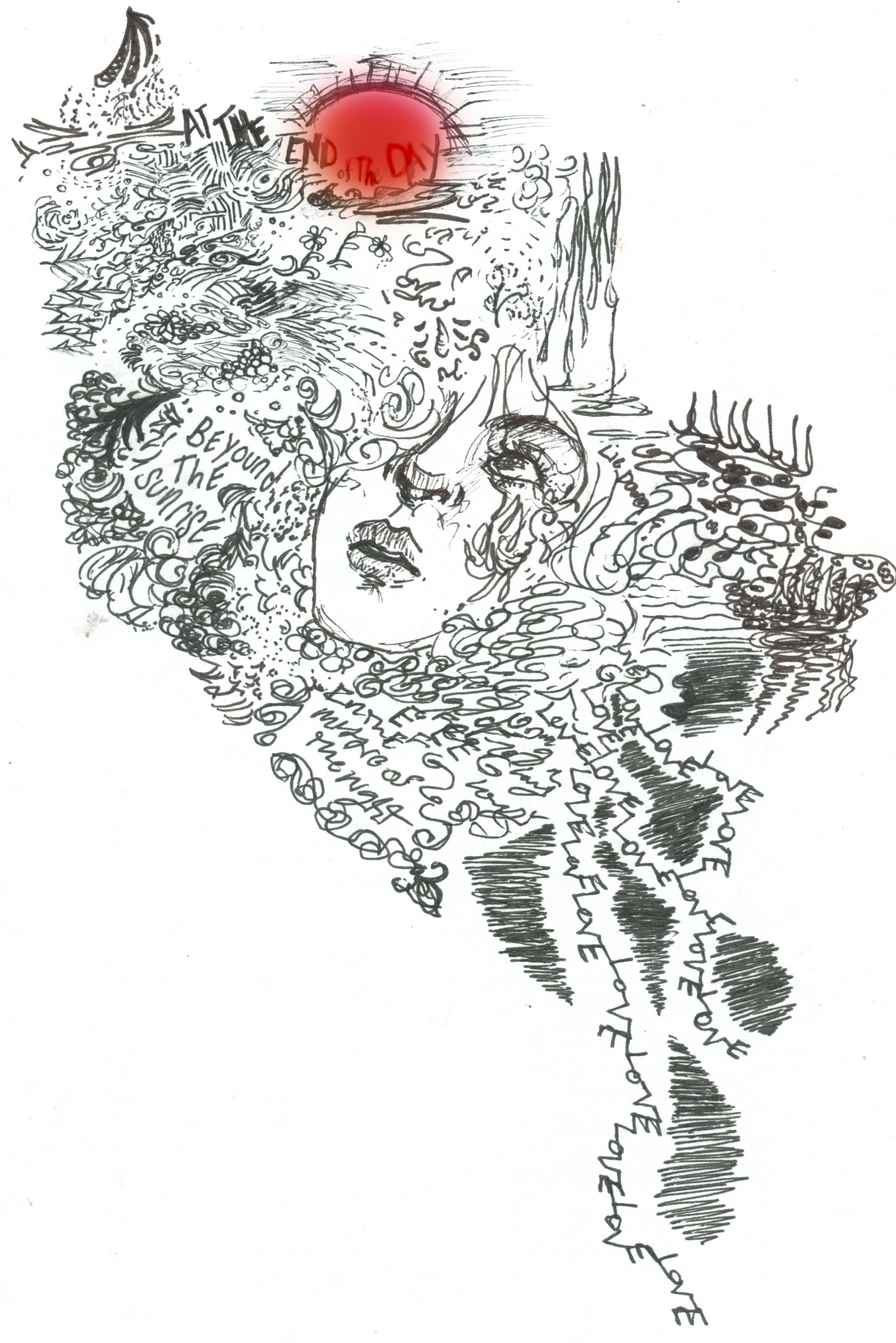
ink1007 sunsetTone of voice… you have probably heard this phrase used frequently, such as in “I don’t like your tone of voice.” As a child I often assumed that phrase was the adults’ way of reprimanding someone whose statement was not malicious or false, but brought up an inconvenient truth. In speaking, tone is typically associated with a certain timbre, pitch or intensity that expresses an attitude, such as amusement or disdain. However those cues disappear if the words are written.

How are we to betray underlying emotions in writing? That is one of the keys to creating a distinctive writer’s voice.  Authors often use imagery to create the tone through their descriptive passages.  It does make a difference if the setting sun is “red as a ruby” or” red as blood.” A skillful writer uses imagery, full of connotative words with emotional undercurrents, to draw their characters and set the stage for events.

Diction–use of vernacular and level of formality–is another key way to create tone. A seeming disparity between the diction and the content is especially effective. Although most formal writing seems to be serious, it does not have to be. Consider the very pompous tone of Daniel Defoe’s A Modest Proposal. Most readers are smart enough to realize that Defoe was not serious about cannibalism. He was using the absurdity of a farce to make his point. One should also not assume that informal, folksy diction that is full of colloquialisms means a lighthearted tale, either. Mark Twain expressed serious concerns about slavery through the voice of Huckleberry Finn. The ability to use a diction that is unexpected for the theme contributes to a unique voice in writing.

This brings us to another characteristic of tone–the use of themes. Themes are abstract and if you try to imagine the concept of love, hate, folly or bravery you would probably picture it as a relationship between humans, or anthropomorphized creatures, such as the rabbits in Watership Down. Now, try to conjure up a similar scene depicting love  without any characters. Difficult? Close to impossible. We see the intangibles revealed in the response of characters.

Creating tone, through imagery, diction, and characterization are useful techniques. But, in the end the voice of the writer expresses their inner thoughts and convictions. Techniques are useful, but you must be willing to bare your soul.

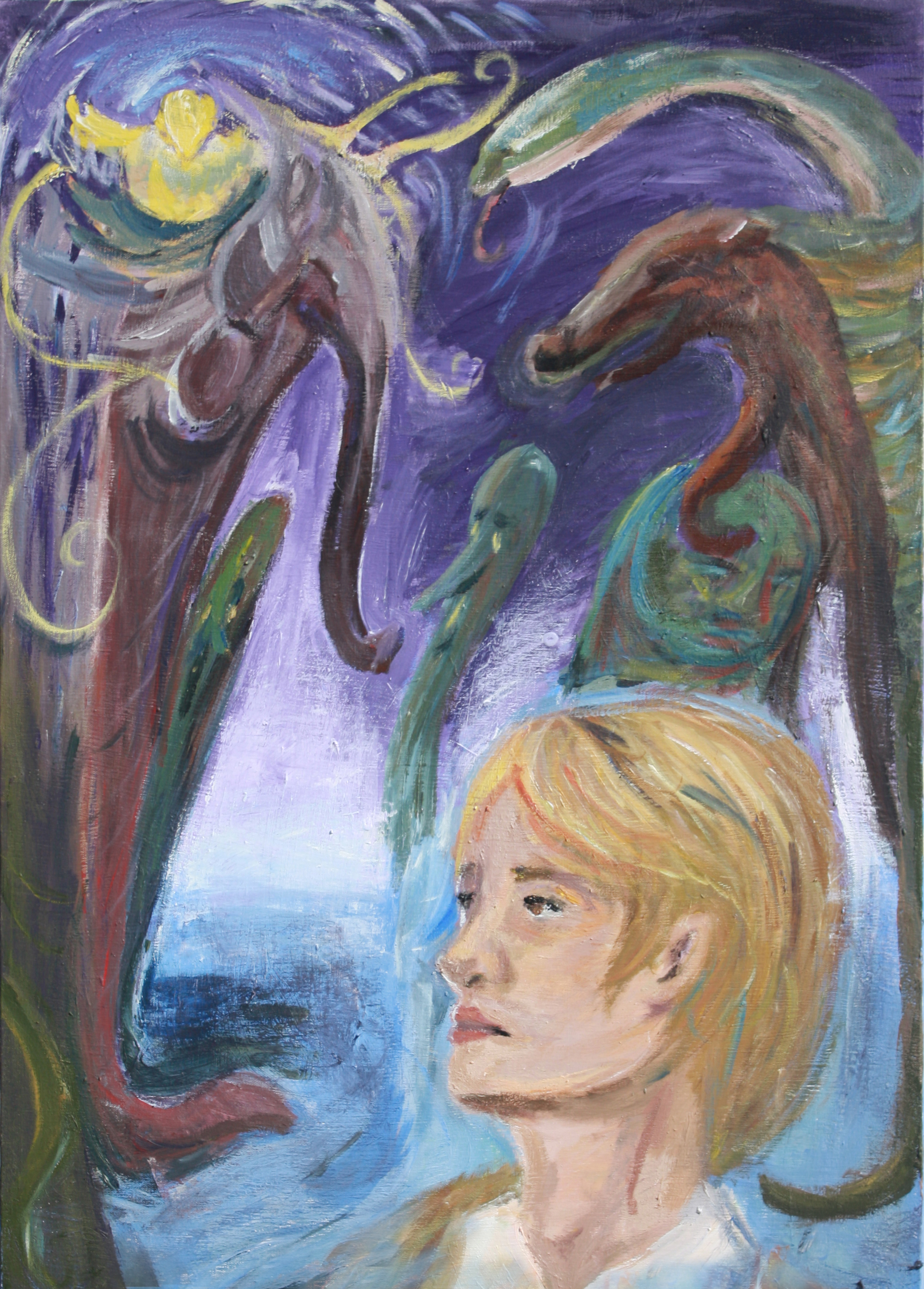
Art work by S.L.Listman


← Back

Thank you for your response. ✨

Posted in Style and voice, Teaching writing skills, Writer's resource | Tagged , , , , | 2 Comments

Write or wrong word

chronic waste c2

Diction is one of the building blocks of voice that pushed far enough can become a two-edged sword, making the written word dangerously inaccessible to readers. When teaching Shakespeare’s plays to students I frequently pointed out that it was not the formal speeches that were hard to comprehend. Rather it was the lines full of common slang and innuendos of Elizabethan English that the students failed to grasp. After all, the bard did write to entertain the “man on the street.”

Beginning with the Renaissance there was a movement toward more formal diction in writing, and then sometime before the twentieth century writers started backing away from that same kind of diction. You could blame or praise Mark Twain for this, but the swing in formality of diction has been continuing for ages. Today, the media has morphed into users of an informal brand of Standard English that is sprinkled with slang and the latest jargon–particularly business and technical. Erudite words are avoided. But jargon can be just as confusing. Some writers are not even aware of how difficult it is to decipher writing that is little more than a dictation of their daily work vernacular.

At the basic level diction is concerned with word choice and its most obvious characteristic is the level of formality. You can write using the cozy colloquialisms of a back country region, the gritty language of the streets, the slang and catch phrases of a generation, or move into more formal territory. The formal language of academia and research is not only aimed at being precise. Words are selected words to impress the reader with depth of knowledge. A simple concept repeated ad nauseam, yet obscured in a wealth of higher level vocabulary, can seem brilliant.

One of the lessons I have learned when corresponding with people from other countries over the internet is the need to use both a more formal grammar and a simple vocabulary to be understood. Those from other countries know English far better than I know their language, but it is a traditional style of English. Often, the first step to cultivate a distinctive diction is to write using the plain, vanilla, Standard English vocabulary and grammar so the work is comprehensible. Then, alter diction by adding colorful words and phrases, making conscious choices that don’t impede the reader’s ability to understand. Word choice requires a balance between the formal speech, dripping with overtones of privileged education, and the man on the street’s style of conversation.

Art work by S.L.Listman

← Back

Thank you for your response. ✨

Posted in Style and voice, Teaching writing skills, Writer's resource | Tagged , , , , | 2 Comments

Voice, deconstructed

ink032Voice in writing can be best defined by breaking it down into its components. But the problem remains that voice is comprised of different things, depending on who you ask.

According to the Texas TAKS writing rubric, voice is demonstrated if:

The writer engages the reader and sustains this connection throughout the composition. The composition sounds authentic and original. The writer is able to express his/her individuality or unique perspective.1

For this rubric, voice components would be:

  • engaging  (appealing , interesting)
  • authentic (genuine, realistic)
  • original (creative, distinctive)

First, there is little way of discerning if the composition is authentic without personally knowing the author.  So authentic probably refers to idea that the writing doesn’t sound like someone else wrote it  – or like something they have read before – basically the same thing as original.  Of course, the readers would judge both engaging and original based on their own interests and past exposure to new ideas. The reader’s background brings as much to the table in determining if the writer shows a well-developed voice as the writer does.

According to 6 +1 writing traits as described by Northwest Regional Education Laboratory. Voice is “the personal tone and flavor of the author’s message” and this is further defined by stating:

When the writer is engaged personally with the topic, he/she imparts a personal tone and flavor to the piece that is unmistakably his/hers alone. And it is that individual something–different from the mark of all other writers–that we call Voice. 2

Apparently the engaging, authentic and original definition found in the TAKS rubric, is copied and therefore, has no voice of its own. But it is more concise and easier to understand.

If I look elsewhere, I can find voice defined with more complexity. According to document by Greece, New York  Central School district:

Voice can be defined as the writer’s awareness and effective use of such elements as diction, tone, syntax, unity, coherence and audience to create a clear and distinct “personality of the writer,”3

As you continue to read, you’ll discover that according to the proscribed method each of those characteristics  are to be taught one at a time in order.

For instance, under Diction, you may only introduce tone; under Tone, you may only use characterization, you may not introduce Syntax until later on; you can then build on these basics as your students’ understanding grows and develops.3

Does that mean students would learn how to determine the type of words to use and to order them in the sentences before even considering what kind of logical content they are creating? The definition is better than the technique for teaching it. Also, to tell you the truth, although my “audience” may determine whether my writing has voice or not, I have never effectively used “audience” when writing. So if I leave out audience I end up with a list of voice components that include:

  • Diction (choice of words)
  • Tone (attitude expressed by words and ideas)
  • Syntax (order of words)
  • Unity (focus)
  • Coherence (logic of organization)

Another word I hear frequently in the definition of voice is “style.” The term “style of writing” has been thrown around for a lot longer than voice.  So does the writer’s voice simply refer to a distinctive or original style? Because the definition of voice is so nebulous, the new State of Texas Assessments of Academic Readiness (STAAR) does not even mention it in when describing writing, nor does the Common Core State Standards Initiative – but every writer, professional or amateur, will tell you the writer’s voice still exists.

Artwork by S.L.Listman

1 http://www.tea.state.tx.us/WorkArea/linkit.aspx?LinkIdentifier=id&ItemID=2147487762&libID=2147487761
2 http://educationnorthwest.org/resource/503
3 http://www.greece.k12.ny.us/academics.cfm?subpage=944

← Back

Thank you for your response. ✨

Posted in Style and voice, Teaching writing skills, Writer's resource | Tagged , , , , | Leave a comment