The limits of e-learning

stollen (2)wWith the glut of information offered on the Internet, including  MOOCs (massive online open courses) offered free from prestigious universities like Harvard and MIT, many educators are beginning to fear for their lively hood. There are reasons that human educators will not disappear with onslaught of e-learning.

I sometimes hear instructors say that on-line courses are fine for basic learning but the personal interaction with seasoned professional is necessary for the complexities of advanced work. However, the majority of the “students” that earn a certificate from a massive open on-line course already have Bachelor’s degrees, and a significant chunk hold  Master’s degrees. Most of the courses are highly technical. Evidently it is the person who has spent more than their share of time listening to instructors that is willing to deal with the independent effort required to complete an on-line course on Artificial Intelligence.

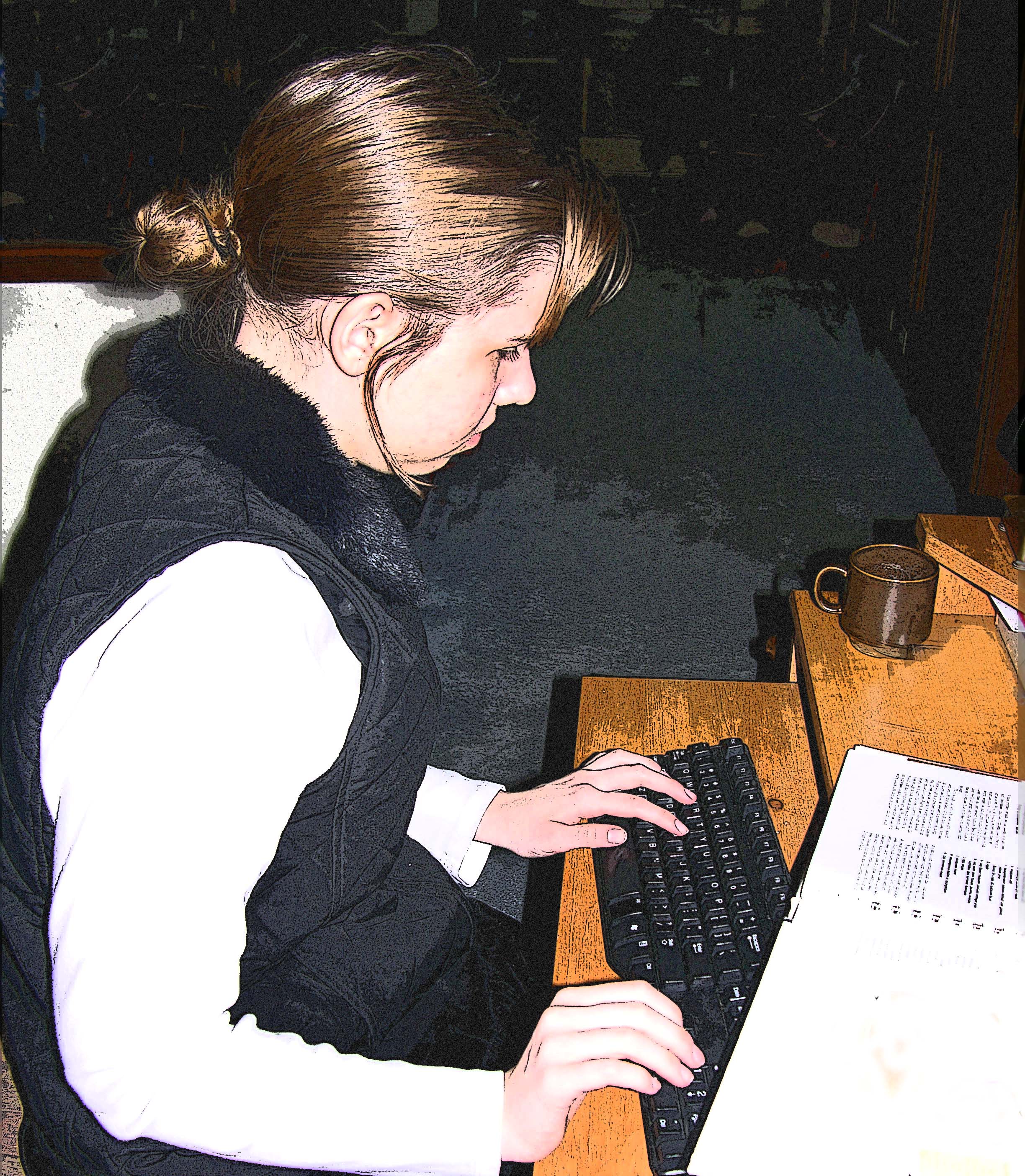
As I watch participants slogging through a basic  on-line course on occupational safety, I hear their constantly shuffling feet and begrudging sighs. They would rather be learning anywhere else than plopped in front of a computer. They want to be moving around, making things happen, working with their hands and interacting with others. On the other hand, students that line up outside the computer lab an hour before it opens are actually used to producing their work (games, graphics, apps etc.) on the computer. It is a tool to use and not just a conduit for the somniferous “interactive” lectures. They are able to sit concentrating through boring files in order to start an adventure in new software.

What are the limits to e-learning?

1) Not all that needs to be learned can be learned on a computer. Anything that requires specific manipulation – from repairing a crumpled fender to playing a soul stirring Beethoven concerto – requires that people practice on the tools they will be using. Viewing a master performing his trade on a video followed by a”low level” simulation practice (screen touches or key presses substituted for the actual actions) is not sufficient. Watching a moderately proficient person perform in the flesh, and then attempting to repeat the actions while receiving feedback provides essential dimensions that can be lost in e-learning.

2) Not all learning is technical in nature. Dealing with humans requires experience dealing with living, breathing, unpredictable humans, not an avatar safely captured in an LCD monitor. Despite advances in Artificial Intelligence we cannot create reliable models for human thought processes because humans are a quirky mix of rational and irrational.

3) Not all learning can be measured electronically. We have long been aware that a bubbled-in Scantron is not necessarily a good reflection of students’ ability to perform authentic tasks in a particular content area. The same is true of assessment techniques used by e-learning, which typically reduce information to a level of memorization or simple analysis. Complex multi-step procedures requiring judgment are sometimes impossible to duplicate.

4) Finally, not everyone wants to spend their life working face to face with a computer. We often forget that the initial purpose of technological advances are to improve the lives of people by making them more efficient. However we need to be aware; advances in factory production during the industrial age lowered the cost of products and increased the work week. As the gathering information becomes a priority, more people spend their days  behind the screens. The coal mining that fed the furnaces of the industrial revolution is being replaced by the data mining that feeds the statistic hunger of industries in the information age.

The good news – instructors need not fear being replaced by computers. However, e-learning is still very useful to supplement face to face instruction. The bad news – the more time students spend learning on-line the more time instructors spend, reading posts, tracking data and trying to determine what students are actually learning.

← Back

Thank you for your response. ✨

Posted in E-learning, Education trends, Millennials, Technology in education, Zoomers | Tagged , , | Leave a comment

Adventures in the electronic classroom

File:IPad 2 front view.jpg Some of the middle school students tumble out of their seats and rush to the portable cart as soon as the teacher announces “Today we will be starting to use the iPads.” Others hang back warily. The inclusion of new electronics that are small, lightweight, and easily handled is not so easy. A new set of classroom management techniques must be worked out. Required supplies now include headphones or earbuds. 

The students’ exposure to technology differs widely. Those with iPads at home are soon surfing YouTube. Others are more familiar with computers and curse at the small keyboards, while a few have yet to figure out how to get the keyboard to appear. As I provide support for struggling students I realize that very few actions are really “intuitive” to humans (except for things like crying and smiling).  No matter how intuitive a new product is touted to be, we all expect electronics to work in ways that we have learned before. 

The next difficulty to overcome – iPads usage requires more complex actions than are needed to open a book to a page number. The teacher who stood in front of the class and told the students which website to go to, was soon  forced to write the lengthy web address along with specific key entries on the board. Some still failed to type it in correctly. The idea to save paper through use of electronics was quickly scrapped by another teacher, who handed everyone a paper with both web addresses and QR codes. Students quickly learned to use the camera to capture QR codes… and their neighboring students’ faces. Still, one boy who had sat quietly taking notes (or so I thought) during the whole lecture on how to use the iPads could not scan the code. When I went to assist him I saw that the ‘notes’ where actually doodles. However, I could not get the camera to capture the code either. I was stumped until I saw the faint pencil tracing of a doodle encirling the QR code. 

In the true spirit of electronic age teachers insisted that work be turned in using the iPads. One had gone to the trouble of creating ‘tags’ with sign-ins for Outlook that were sealed with transparent tape onto each student’s planner. (Some still managed to lose theirs.) However, using e-mail is not second nature to these students. Many that are tech savvy use social networking (i.e., Facebook) to communicate despite being under 13. Others just rely on texting. Setting up Outlook accounts required individual attention for over half of the students. One girl managed to find her way into the personal information section (which was not necessary to set up the account as the parents has already signed a permissions slip) and completed it. However, she was then denied the right to use Outlook without a parent signing on and giving permission because of her age. She waved her hand wildly to show me the message.

“Did you put in a birth date?” I asked

“There was a blank for it.”

“Okay,” I sighed; undoing the entries was more difficult than simply altering them. “Let’s back up and change the birth date.” 

She stared at me confused, but too many students were pleading for help to spare the time for an explanation. “Touch the arrow to go back. Now, change the year to 1994.” She had a doubtful look but followed my instructions. There was even a prompt asking if the birth date needed to be corrected on the personal information page. After re-entering the year she was allowed to continue on to e-mail.

“Congratulations,” I said “You’re now eighteen.”

The boy in front of her turned around and grinned at me, as if he and I shared a secret. “You’ve done this before?” I asked.

“Of, course. How do you think I got a Facebook page?” he replied.

Photo by Tom Morris (CC 3.0)

← Back

Thank you for your response. ✨

Posted in Education trends, Millennials, Technology in education, Zoomers | Tagged , , , , , | Leave a comment

Is Internet access the new leveler of society?

economic_divide copyMost schools would love to have the complications of e-learning in a classroom that happen when the dream of an iPad for every student actually occurs.  But due to lack of funding they are scrambling to figure out how to use the internet enabled phones, e-readers and tablets that students are already bringing to school as a basis for electronic classrooms. 

So often I’ve heard “the overwhelming majority of students walk into school with an internet enabled device.” This is a nice optimistic sentiment, but not a working solution. If a school implements “BYOD” (Bring your own device) as a costing cutting strategy there are still expenses that sneak in the back door. Multiply the number of tablets, such as iPad, or e-readers, such as Kindle, that access a local wireless network and  suddenly the teachers are trying to show streaming videos that just don’t seem to stream. The increased internet demand necessitates new networking hardware to update the wi-fi infrastructure. BYOD may mean the school needs to purchase an expensive new server.    

Of course, if smart phones and androids are the major source of internet connection the parents will be footing a hefty bill for increased mobile internet usage. Research on children’s use of media shows that parents of low income families are less likely to use a mobile media device for apps or internet access.[1] Therefore, schools that can least afford an iPad for every student, serve populations in which many students do not have access to internet through smart phone or home computer. 

Unfortunately, this problem also occurs for a minority of students in schools serving predominantly middle class populations. I have seen bright, eager students from poor families failing to succeed in higher level classes when the teacher erroneously assumed that everybody had internet at home. The very student whom education would help the most is shut out by this kind of blindness. Existence of a parent e-mail address is no guarantee of a home computer. Every time I visit the local library I see the new computer room packed with adults – their only private internet access. New teachers from the middle class often have a hard time comprehending that in some districts 10 to 20 % of students do not have internet at home. Any attempts at instituting a flipped classroom dooms certain students to failure because they cannot watch recorded lectures or complete on-line activities outside of school.

As students move up the education ladder to high school and (hopefully) on to college or a technical institution owning technology becomes more essential. According to a study on student adoption of technology owning both a mobile device and a computer (netbook, laptop or desktop) is not only considered essential, but the computers are expected to be current models that are two years old of less.[2]  The difference in achievement based on the economic level of the student’s family is only magnified by this “digital divide.”

There is also a divide in how the wealthy and poor use the internet access that they do have. A Pew research study found that not only do higher income Americans own more different devices to be able to access the internet, anytime, anywhere, they are more likely to use the internet to research information and conduct business/commercial transactions. Those in the lower incomes brackets mostly use the internet for gaming, listening to music, or watching  videos.[3] This difference in applying technology – for entertainment or for performing a task – will continue to increase the divide. All the wealth of information on the internet is not exactly divided equally. 

Photos by K.N. Listman

[1] http://www.commonsensemedia.org/research/zero-eight-childrens-media-use-america/key-finding-2%3A-substantial-digital-divide
[2] http://net.educause.edu/ir/library/pdf/ers1006/rs/ers10064.pdf
[3] http://pewinternet.org/Reports/2010/Better-off-households.aspx

← Back

Thank you for your response. ✨

Posted in E-learning, Education trends, Millennials, Social media, Technology in education, Zoomers | Tagged , , | Leave a comment

Does social media help or hurt students?

IMAGE0012b copy copyDoes using a social media interface like Facebook, Twitter or Snapchat help students or hurt them? Does increasing use of social media cause a digital divide leaving the lower class even more disadvantaged or provide a new path for education? Research can be found showing results to be either way–whatever way you want it to be.

The first study occurred at Ohio State University where a doctoral student surveyed a total of 219 graduate and mostly junior and senior undergraduates on Facebook usage and study habits. Those who did use it reported about 1/3 less time spent studying than those who did not. They also had lower grades; although a .5 difference is grade point average doesn’t seem great, it is significant when one considered the inflated grades in post secondary education. However, less than 10% of the undergraduates interviewed did not use Facebook – the sample population was too small.[1]

A later study performed by faculty at Northwestern University used a larger sample population, which included younger students still in high school. (There were 1000 undergraduates from age 14 to 22, a cross section sample of 835 students from age 14 to 22, and a representative panel of 415 students age 14 to 23.) The results were mixed, which means is some cases Facebook users had higher grades and in some case lower grades. However, students whose parents had a higher level of education were more likely to use Facebook while in high school. Because the link between parent education level and student achievement had already been established, it was really impossible to determine if Facebook use made any difference in grades.[2]

A University of Minnesota study claimed that there was not a “digital divide” based on socio-economic status of students. Students from low income families understood the use social media has well as their more well off peers. However, the sample selected for this study were part of a program to help low income students have internet access after school. These students were observed using computer skills to navigate MySpace.[3] Why MySpace and not Facebook which is much more widely used?

It turns out that those students with college educated parents typically use Facebook, while those that prefer MySpace typically are more likely to have parents with a high school degree or less. To a certain extent, race could also be predicted based on which social media was used.[4] Even if we try to ignore the digital divide, a digital hierarchy remains.

Photo by K.N. Listman

[1] Ohio State University. “Facebook Use Linked To Lower Grades In College.” ScienceDaily, 13 Apr. 2009. Web. 1 May 2012. http://www.sciencedaily.com/releases/2009/04/090413180538.htm
[2] Northwestern University. “Facebook Use Not Found To Correlate Negatively With College Grade, New Study Shows. “ScienceDaily, 7 May 2009. Web 1 May 2012. http://www.sciencedaily.com/releases/2009/05/090507164403.htm
[3] University of Minnesota. “Educational Benefits Of Social Networking Sites Uncovered.” ScienceDaily, 20 Jun. 2008. Web. 1 May 2012. www.sciencedaily.com/releases/2008/06/080620133907.htm
[4] Northwestern University. “Student Facebook, MySpace Use Predicted By Race, Ethnicity, Education.” ScienceDaily, 19 Nov. 2007. Web. 1 May 2012. http://www.sciencedaily.com/releases/2007/11/071119170137.htm

← Back

Thank you for your response. ✨

Posted in Education trends, Millennials, Social media, Technology in education, Zoomers | Tagged , | Leave a comment

My teacher can see my Facebook?

Ask any higIMAGE0043a copyh school student if they want an easy convenient way to access assignments and communicate. Of course they do. But, going to a teacher’s website is too much hassle. Students are always checking on their social media accounts to see what others are doing. So put homework assignment and other communications from teacher there. Problem solved. 

Not exactly. Overwhelmingly, I find that student do not want the schools or teachers to have any type of access to their social media. And they tend to use a wide range of social media apps. One solution is to create a Facebook group – but exactly how does that work?

A Facebook Group page is for interaction between specific members. It is controlled by the admin (the person who creates it). Before creating a group find out how many in the proposed group already have Facebook accounts (it’s rarely 100%). Everyone in the group needs to have a profile on Facebook for this to work. However, you cannot force any student (or employee) to create an account. You must decide if this approach will be beneficial if everyone is not included.

Of course, there are social networking sites designed to accommodate groups (Edmodo, LinkedIn). Also, there is no guarantee that students (or work group) will be any more involved because you communicate through Facebook. Think of it like product placement–you are connecting what you want to say with a well-known social network just like Heineken beer was connected with James Bond. Your group may buy the idea or think it kind of weird.

1) First, create a new group leader profile that is completely separate from your personal profile.

2) Obtain everyone’s e-mail address and invite them to friend your new profile. Or you can give the group your profile link and ask them to request to friend you.

3) Members of the group can make sure that their name or profile is not paired with advertisements by selecting Account Settings and Facebook Ads to adjust privacy settings. I recommend that all members do this.

4) Create a Friends list for the group:

5) Now, group members can create a limited profile with controlled settings so that their personal information does not appear to everyone. Another option is for everyone to create a new limited profile specifically for that group.

6) Now you are ready to run your Facebook group. What exactly does that give you? As an admin you can edit the group settings, review and remove posts, remove or ban members (so they can’t even see the group page), and add other admins who can do the same thing. 

Will this work to keep students informed of their assignments and upcoming events? It’s hard to say but you’ll want to claim it had a positive effect because of the time and effort you spent on creating and maintaining the group.

Photo by K.N. Listman

Posted in Education trends, Social media, Technology in education | Tagged , , , | Leave a comment

You’ve probably seen the trend in education and training blogs – Use existing social media (i.e., Facebook) to create a collaborative social learning group. So far I’ve found the  the overwhelming number of posts from my professional circles share photos of meal they have cooked, restaurant choices, views on sports, family photos and largely uninformed views on current hot topics.

Despite the number of people that merge the two, using social media for learning is not the same as social learning. According to Albert Bandura social learning happens when people observe others and model their behavior on what they see and hear. While much of social learning research concerns observing live people and imitating their actions, social learning also occurs from what one hears about others or sees on media. Bandura proposed that in order for someone to model their behavior on others, there had to be a payoff – something that the others gained – such as acceptance into a group. Also, social learning did not necessarily have to result in change of behavior. (For example, even if I didn’t want to behave like a group I might still want to observe how they act.)

So what does this have to do with learning on Facebook? Do people observe and imitate others based on Facebook posts?  Well they certainly imitate the type of content posted. I first created a Facebook page assuming it could be used to communicate with other professionals in education, service groups and creative circles. If someone voiced a concern or grievance there was a lot of sympathy, but no solutions. There were loads of posts were copied but rarely was anything new. Basically, all the personal posts which we expect on Facebook are a reflection of what we want our everyday lives to be. By observing others, we have learned that Facebook is about ourselves and the details of our personal habits.  If our lives are boring, we use it to create drama. We would all like to have the kind of creativity and fame in which others follow the minutia of our lives, but since we don’t – there is Facebook.

Photo by K.N. Listman


← Back

Thank you for your response. ✨

Posted on by knlistman | Leave a comment