Why do I need to know this?

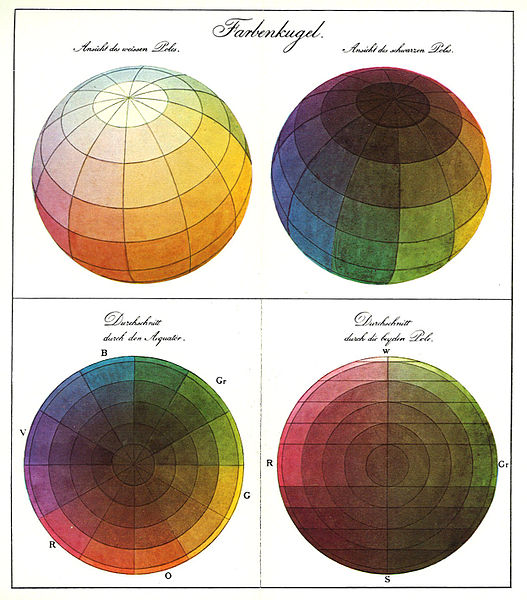
527px-Runge_Farbenkugel

Runge and munsell color spheres

Students often ask “Why do I need to know this?” not because the subject is irrelevant, but  because they struggle to learn. The answer to “How am I going to use this in real life?” depends on what their life will be like.

However, I am becoming increasingly conscious of a disquieting trend behind the questions about relevancy. Students want something that will grab their attention and draw them easily into learning. They want relief from the pressure of mental effort involved in learning – concentrating, focusing and making sense of information. Should educators play along with this trend and seek engage their students through wide range of “edutainment,” or take a different tactic?

One of the difficulties is the increasing amount of knowledge that students are supposed to master. Mastery, however, is often measured by memorization of data, rather than the ability to produce something useful from what have been taught. The tedious work that goes into building a car or researching a genealogy is bearable – even enjoyable – if there is a goal to aim towards.

In school, we supposedly learn information to expand our mind and think more deeply, and then we go on to jobs, where we learn more with the aim of gaining more money. Some people collects details of their acquaintances likes and dislikes, dealing in the social sphere to gain influence, while others seek to learn what is novel and innovative. Why the difference? We tend to learn based on how we believe it will serve us.

However,  we deceive students if we let them believe learning should always be fun and entertaining. There is a discipline required to incorporate information that is not inherently interesting. Yet, this type of learning is still necessary for performing in the real world. Most jobs require careful, conscientious work or dealing with volumes of information. As Adam Timothy pointed out students become invested in educational games and learn to memorize data (like computation tables). However when it is time to apply the learning, they stay on the gaming loop and continue to play rather than produce.[1]

The problem with disengaged students may not be with the instructional method, but the student’s lack of choice in determining a goal to work towards.

[1] Addiction vs. Reflection: Unlocking the Potential of Games Jan 2, 2013http://www.edutopia.org/blog/addiction-vs-reflection-gaming-potential-adam-timothy
Posted in Education trends, The information age | Tagged , , | Leave a comment

When does “engaging” interfere with learning?

055 monitor_child copyRecently, I was surprised to see an article by Ruth Clark entitled “Why Games Don’t Teach.” According to research, a simulation game made a less effective teaching tool than a computerized tutorial.[1] One of the things that I noted as my own children grew up with computers was that as learning games became more complex in use of visuals and audio, they often became less complex in the kind of thinking required to play them. Some of the earliest text based scenario games (like Oregon Trail) required more reflection from players on making decisions and keeping track of results than later games with beautiful graphics and audio.

How do more engaging games affect learning? At one point, I was attempting to give my daughter reinforcement on phonetic reading using a computer program that provided a game like atmosphere for read instruction. At first this seemed to work, but she just did not seem able to master a rhyming exercise. So I watched her. The animation of the alligator, followed by a fire-breathing dragon that occurred whenever students missed too many answers was so intriguing that she kept making mistakes on purpose. The same elements that made the game  emotionally engaging, prevented her from moving forward in learning phonetics.

I observed in schools as some students using computer games to learn math became frustrated because the “logic” of program was not same as theirs. The processes to learn math were developed by specialists in that field. But math problems can be worked in more than one way. Some alternative ways of solving a problem that makes less sense for an expert, makes more sense for the students. This occurs not only for application of math but also problem-solving in science, reading and writing.

Often students do not refuse to complete the work because it is not engaging, but because it requires an extended effort that they are not used to giving. When I would get my daughter started on a game requiring careful attention and problem-solving skills (like Oregon Trail) she would give up the first time her party died. So what are computer-based simulation games used for in education? Human factors research shows that cognitive overload limits human ability to integrate all the data that a computer can display.  When teaching we must show students not only how to use technology, but also how to keep track of data so they are not overloaded (or under challenged). This often requires one on one instruction and other students need to keep busy as the teacher provides this. Until the students have enough experience to be learning or creating on their own, an engaging (but not very deep) computer game as a tutor makes an excellent baby sitter in the classroom.

[1] Clark, Ruth. “Why Games Don’t Teach” Learning Solutions Magazine (February 19, 2013)

← Back

Thank you for your response. ✨

Posted in Education trends, Gaming in education | Tagged , , , , | Leave a comment

How crazy are you?

Paris 2012 141La Pyramide inverted c copyRecently my daughter showed me an inverted Maslow’s hierarchy of needs, balanced on the tiny point of  self-actualization. It was the “Artist’s hierarchy of needs” because creating was more important than eating or sleeping. Despite Abraham Maslow’s theory that fulfillment of physical and psychological needs lead to self-actualization and creativity, creative people seem driven by something else. Something that often causes them to ignore basic needs.  So it’s time to give others their fair shake and look at some competing ideas about what constitutes creativity.

Sigmund Freud, the father of modern psychotherapy, saw creativity as a socially acceptable defense mechanism for expressing socially unacceptable urges.  In other words being creative was the way to sublimate that pesky improper sex drive. He felt the creative process was driven by the unhappy suffering of unfulfilled fantasies. Basically being creative was akin to being neurotic.[1]

Sarnoff Mednick came up with the associative theory. Creativity is a response to stimulus (sort of like drooling when you smell fresh hot cinnamon rolls). When a stimulus hits the senses, a creative response would be to think of an extremely remotely related idea. This was tested using words, with the theory that the more remote the idea was from the original word, the more creative the person was. Mednick is most famous for his research that associates psychosocial disorders (i.e. acting like a criminal) with genes the you inherit from your parents.[2]

Carl Rogers saw creativity in a similar light to Abraham Maslow. He thought creativity was the result of healthy psychological growth, and the highest form of self-actualization.  He saw creative people as being wonderfully balanced, open to new experiences, with internally based control.[3] I’m sure most creative people would like to view themselves this way. However, many are honest and admit to deep insecurities. And of course, most of us have run into a few of the difficult, smug, prima donna types.

Mihaly Csikszentmihalyi does not see creativity as strictly residing within a person, rather it is an interaction between a person and society. Social systems and cultures determine what is creative and what is not. To be considered creative, an individual must strike a balance between coming up with a novel idea and relating to accepted conventions. Otherwise their work will not be viewed as creative. He also has the idea that when creative people are working they become so fulfilled in their involvement that they forget about other things – like food and sleep.[4]

Finally we come full circle to Albert Rothenburg who proposes that creative people use a certain kind of thinking that allows them to consider two opposite concepts at the same time – sort of like two objects occupying the same space resulting in something new. His research shows that creative thought processes are not logical and actually resembled those of the mentally ill. However, creative people are actually aware of that they are indulging in ‘crazy’ thinking while they are doing this – at least most of the time.[5]

[1] Rothenburg, A. &  Hausman. C., (1976). The creativity question.  Durham, NC: Duke University Press.
[2] Mednick. S. (1962) The associative basis of the creative process. Psychological Review. 69, 220-232.
[3] Rogers, C. (1962). Toward a theory of creativity. In Parnes, S. Harding, H. (Eds.) A source book for creative thinking. New York: Scribners.
[4] Csikszentmihalyi, M. (1988). Society, culture, and person: A systems view of creativity. In Sternberg, R. (Ed.), The nature of creativity. New York: Cambridge University Press.
[5] Rothenburg, A. &  Hausman. C., (1976). The creativity question.  Durham, NC: Duke University Press.

← Back

Thank you for your response. ✨

Posted in Creativity, Education trends | Tagged , , , , , , , , | Leave a comment

The disadvantages of being creative

DSCN0774

Creative students often display characteristics that teachers simply do not like. When I asked teachers to rank students’ creative acts, many had trouble. Some called the students contrary, lazy or deceitful, and failed to see the creativity involved.

I’ve found the same conclusions reached by other researchers. J. Khatena teamed with E.P. Torrance, who developed many of the tests for creativity used by educators, to design an assessment called ‘What Kind of Person Are You?’ According to this assessment, Inquisitiveness, a creative characteristic, can be exhibited by talking a lot or demanding responses, especially by younger students. (How else can they inquire about things?)[1]

In addition, acceptance of authority – being obedient, respectful and polite, following rules, and accepting others in power – is indicative of a non-creative person. Creative students make judgments and evaluate situations for themselves, which means that they often do not do what they are told. Their actions are based on their own internal beliefs and desires.  On one hand educators praise intrinsic motivation, while dreading some students that are actually intrinsically motivated.

According the second part of the Khatena-Torrance Creative Perception Inventory, creative adolescents and adults are both open to new ideas and critical of other’s ideas. [2] This does not cause an inherent conflict for creative students as it does for others. However, the creative person tends to have fewer friends because many view criticism as a sign of rejection when it does not have to be. As creative students become older, they will not remain the same. They often increasingly prefer to work alone. This is not always because they desire solitude, but because they are aware that others suspiciously consider them to be different.  Their remoteness, a form of self-protection, is often viewed as snobbishness.

Of course, I realize all these characteristics can cause problems in class. What can one do? When my students butt heads with another teacher, I ask them to talk with the teacher outside of class. That is also the best way to deal with creative students if their actions are disruptive. Ask for a reason for the behavior. Then, politely explain why the behavior causes a problem and ask them what they think can be done about it. If they cannot come up with a workable solution, use your own. Also, I like to keep a collection of quiet, relevant and challenging independent activities creative students can do by themselves to avert disruptive behavior. Still, none of these techniques work all of the time.

The love-hate relationship with creativity and the creative person is not limited to education. In most aspects of life people desire the product of creativity, while avoiding the producer. This is complicated by the fact that creative people can become enemies of their creative cohorts in the competition to achieve. Perhaps the best thing a teacher could do is show a little empathy.

[1]  Torrence, E.P. & Khatena, J. (1970) What Kind of Person Are You? A brief screening device for identifying creatively gifted adolescents and adults. Gifted Child Quarterly, 14, 71-75
[2]  Khatena, G. & Torrence, E.P. (1998). Khatena-Torrance Creative Perception Inventory – Instruction Manual. Bensenville, IL: Scholastic Testing Service, Inc.

← Back

Thank you for your response. ✨

Posted in Creativity, Education trends | Tagged , , , , | Leave a comment

Videomania III

DSC01420 w copy2 What about the claims that I’ve heard? Instruction through video is supposed to be more engaging, save more time and promotes better learning that using traditional methods, such as lecturing or reading assignments.

More engaging? Engagement level really depends on both quality and content of video. If the video narrator is no better at speaking than the live lecturer, the audience will pay less attention. Even if the visuals are more dramatic, they will simply divert the viewers’ attention, making it harder to remember what the narrator said. Most of what we learn comes through language, including the speaker’s body language and intonation. I’ve heard high school students describe a video series in which the narrator’s peppy voices reeked of condescension, making it hard for them to pay attention to what was actually said. Obviously, instructional videos are more engaging if professionally produced and audience-appropriate. What is not so obvious is how to create this kind of video consistently for all content. Choose videos for your class wisely.

Save time? This is an interesting claim because listening to a reading level recorded book takes the average students about three times longer than reading it silently.  The addition of the audio, appealing visuals, varied repetition  and  intermittent drama or humor make the video more interesting and facilitate learning. But these also add time to the video. They usually end up presenting less information in the same amount of time than a well-organized lecture or reading assignment.

Promotes better learning? Textbook and manuals are meant for reference, not reading straight through. Scripts for videos normally condense the data-laden text and do not cover as much. Typically information is reorganized and reduced to emphasize overall objectives before being produced as a video. Most videos provide a good introduction, or special interest investigation, not a complete course. Students who have little prior knowledge or a lot of difficulty reading will learn more from videos. Students with more prior knowledge and higher reading skills tend to learn less from videos than traditional methods. Also, monitoring learning during a video is essential. Stop the video at regular intervals to provide interaction –  students need to practice what they have learned and have their questions answered.

Videos do work for instruction, but they are only part of the learning equation.

← Back

Thank you for your response. ✨

Posted in Education trends, Technology in education | Tagged , , , , , , | Leave a comment

Videomania II

Photographer  aVideos are often promoted as the best way to educate a population marked by decreasing literacy. I often hear “teenagers watch tons of videos on YouTube,” as a reason to depend on videos in the classroom. A more sophisticated explanation might be that videos increase learning through multi-sensory instruction  – The synergy of sensory input of from sound and visuals can teach more than the spoken word alone.

Of course technology does not always improve the appeal of multi-sensory instruction. Think about it – which would be more interesting, watching a full-sized live performance or a recorded version on a five-inch screen? Of course, technology makes it more convenient (much easier to share a video on an iPhone than to transport a band). So now there are massive numbers of videos that we can beckon with the touch of our fingertips.

Simply video-taping myself teaching will make me less interesting to students (even if it will make me available at any time). So why are students constantly watching videos of each other on YouTube? Content – People in embarrassing situations, humorous spoofs and acts that defy reality are entertaining, but entertaining doesn’t always equate to educating.  Everyone likes to see movies starring themselves. I suppose if I could arrange for students to enact a lesson on triangle theorems and proofs, they would watch it raptly, absorbing every detail. However, no one else would pay attention to it.

Actually, we cheat students out of something that they need if we rarely require them to read content. They do not have the option of recording or videotaping their homework; they must write it. Normally tests are written – not videos. As e-learning becomes popular, videos are increasingly used to break the monotony of participating in isolation. However, as it becomes a prevalent medium of communication it loses its appeal due to overuse. I recently saw e-learning video on psychology, on which a viewer had posted the comment – “Why does everything have to be a video. I can read, why don’t you let me read?”

← Back

Thank you for your response. ✨

Posted in Education trends, Technology in education | Tagged , , , , , , | Leave a comment

Videomania

aside

It was almost lunch time and the majority of the students had finished their worksheet. The classroom teacher had decided it would be no imposition for him to leave early, so I was left in charge. A few girls in the back were chatting about a YouTube featuring a teenage girl consuming a disgusting item, trying to figure out how it was faked. I was politely prodding  a boy who had spent much of class simply staring at the textbook. Swiveling his head, he attempted to flag their attention, eager to get the YouTube link.

So I asked “Why did you need to know it?”

“I need to see the video.”

“But it’s is faked.”

“Well, it’s just the thought of it.” he grinned evidently pleased at the sickening image he imagined.

“What is the use of watching something that really isn’t  happening?”

“Who cares as long as it is interesting. It’s more interesting than chemistry,” he shot back.

There are a few ways I could respond:

1) Explain how there would be no such thing as videos on YouTube without the contribution of chemistry savvy individuals in the fields of photography, film, and integrated circuits. However, due to these innovative people (plus software experts) video encoding can be done by the average second grader. With advance knowledge in science no longer necessary to do so many tasks due to electronic devices, this student may see no motivation to learn them.

2) Try to point out that real information is bound to be more useful that than a obvious fabrication. Although this seems obvious, it is extremely hard to combat the human attraction for the sensational story.  As journalist Robert Bianco noted concerning movies, “The preference for fiction over fact is hardly a new phenomenon.”[1] This student was searching for something interesting little concern about the truthfulness or applicability of what he learned.

3) Find a video with adequately realistic disgustingly gross scenes to teach the procedures that this student found boring. Despite the myriad entertaining videos on the Internet, those with adequate instruction in stoichiometry are mostly words on a screen or writing on a board. If attention grabbing sequences are added to this kind of instruction, students pay attention to these scenes and not the instructions for solving the problems.

4) Inform the student that learning applications in chemistry will lead to higher thinking skills. Although this may be true there is no evidence that higher thinking skills can be transferred from chemistry to designing software or interpreting a novel. If his career goals are not going to require any further knowledge of chemistry, he might as well be studying complex problem solving in some other domain.

5) I asked the student what he felt he needed to learn in order to do what he wanted to do. He said he was planning joining in the army and become a gunner in a helicopter. I responded from my experience as creating lessons for a newly armed version of an army observation helicopter (OH58-D) during the time of the Gulf War.

“You need to know basic chemistry and physics both if you are going to be dealing with ordnances.” I said.

“I’m not going to do that, I’m going to be a gunner,” he declared, repeating the thrilling description that an army veteran had given him.

I hope most high school students will not have as rude an awakening as he will, if he ever reaches his dream job.

[1] Bianco, Robert. On Video, Wilmington Morning Star, Friday  June 26, 1998


← Back

Thank you for your response. ✨

Posted in Education trends, Technology in education | Tagged , , , , | Leave a comment

Generation A

Picture 070 (72) copyRecently I was sitting in the dentist’s office waiting. Across from me was a father and his son that couldn’t have been more than three. The child intently maneuvered a tiny race car across the screen of an iPhone. He gave a little scream of delight with each success.

I was amazed at his ability, but evidently he had been practicing for awhile. The man kept warning “my battery will be dead soon.” The screams of delight just got louder. Eventually reaching an ear-splitting pitch as the child continued to play while dodging his father who was trying to retrieve his phone. This was not the first preschooler that I had seen addicted to gaming – just the most obnoxious.

Digital natives, generation net or generation Z are nicknames given to those who have never known any society but that in which media provided by the internet was wherever they went. However, I think some are morphing into a new group, Generation A. But the A doesn’t stand for addicted – addiction has been with us through many generations. Many times recently I have read that instruction should be delivered in short, attention grabbing  interactive segments because that is what the upcoming generation expects. The gamification of education has been encouraged. If we achieve it, what do we lose?

Psychiatrist Daniel Amen has interviewed parents whose children play video games so much that their schoolwork and other activities are ignored. They show withdrawal symptoms, even going into screaming tantrums of fear when forced to stop playing. The children suffer from Attention Deficit Disorder (ADD).[1] Increased symptoms of that disorder may be one of the defining marks of the upcoming Generation A.

Evidently there is a correlation between ADD/ADHD (the hyperactive variety) and the non-stop availability of electronic media. Research conducted by the National Institute of Mental Health reached the following conclusion: “Extensive exposure to television and video games may promote development of brain systems that scan and shift attention at the expense of those that focus attention.”[2]

The Centers for Disease Control and Prevention have recorded a rise in ADHD for over a decade; diagnosed cases increase at the rate of about 3% a year since 1996. Younger children are increasingly exposed to the brilliant and rapid scene changes in media. According to Dr. Dimitri Christakis this may condition their brains to expect excessive stimulation. The normal world becomes “underwhelming.” Studies of students  show that the distractions offered by technology interfere with their attention when they are working. They can multi-task, but everything takes longer to complete. Finishing a task on a computer in an efficient and timely manner becomes increasingly difficult as updates clamor for attention.[3]

Often, I feel the pressure to deliver instruction in short concise chunks with intense audio and video to banish boredom in education. This is supposedly necessary for a generation who are used to having their attention grabbed by addictive bursts of stimuli. However, are we doing them a disservice? Are we making the next generation one increasingly inflicted with ADHD?

[1] Amen D (2001) Healing ADD: The Breakthrough Program That Allows You to See and Heal the 6 Types of ADD, New York, NY: G.P. Putnam— s Sons
[2] Jensen PS, Mrazek D, Knapp PK, Steinberg L, Pfeffer C, Schowalter J, Shapiro T (1997) — Evolution and Revolution in Child Psychiatry: ADHD as a Disorder of Adaptation— Journal of the American Academy of Child and Adolescent Psychiatry 36:1672-1679.
[3] Rosen, L.D. (2012) iDisorder: Understanding Our Obsession with Technology and Overcoming Its Hold on Us: Macmillan  

← Back

Thank you for your response. ✨

Posted in The information age | Tagged , , , | Leave a comment

The Price of Information

Paris 2012 062 La Tour EiffelHumankind’s love affair with technology is not a new development. At the beginning of the twentieth century, the  advances in industrial technology were touted as the solutions to problems of crime, poverty, ignorance and the boredom of ordinary daily life. The level of education was rising. La Tour Eiffel, nicknamed “the Lady of iron,” was a symbol of the new power of industry.

However, as the world celebrated the advancements of technology in art, and architecture, the reputation of technology received a blow. The Eiffel Tower watched over two world wars. The first war reached an intensity unknown before that time due to new industrial technology in weapons. The second war resulted from the resource grab to build up industry and overcome the recession following the first one. When the wars were over we had multiple new ways (poison gas, aerial bombing and atomic weapons) to exterminate vast numbers of humans in an easier and less personal way. So what will be the cost of the information age into which we have thoroughly thrown ourselves?

In 1970 a book was published by Alvin Toffler called Future Shock that described the stress and disconnectedness that comes when change occurs too rapidly. (It was even made into a film for those too overwhelmed with information overload to read.) Although, I do not agree that most of the social problems in our industrial society are due to inability to accommodate rapid change, I do find some of the problems that it causes apparent in education.  For example, because it is much easier to produce new material, we make changes to curriculum – constantly – even thought  the improvement made is often out-weighed by the effort of the learning curve required.

During the seventies, I recall learning a new ‘language’ based on simple English phrases that would allow me, a relatively unsophisticated high school student, to communicate my commands to a computer. It was called BASIC. This language is one of those dinosaurs of the early information age that has not yet gone extinct, although it is relatively unknown today. I have lived through the birth of multiple changes to computing. Most students do not bother to learn this kind of technology in depth, but concentrate on finding the newest, latest app to make their life easier. But is life really getting easier? As we accelerate towards a rate of change in technology that makes much learning obsolete within a decade, the demands of constant relearning is bound to create new difficulties.

Several times recently, it has been brought to my attention that although students have the world of information at their fingertips, they do not know how to do research on the Internet. To tell the truth, research was in many ways easier before the Internet. There were fewer places to look and published works had to pass the review of a ‘gatekeeper’ or editors and publishers, that which helped to cut down on inaccuracies (at least those that were not wide-spread socially acceptable ones). However, I did have to actually leave my house, travel to a library and actually talk with someone face to face in order to do research.

But there is a price to be paid for the luxury of being able to have so much information available anywhere there is a wi-fi signal. There is so much duplication and so many useless dumbed-down articles churned out for the generation that is supposed to be suffering from short attention span. I was reviewing a short news video clip today and saw the same footage repeated three times within three minutes. It seems we are no longer suppose to remember anything without constant repetition. But that means we are taking longer to learn the same amount.

← Back

Thank you for your response. ✨

Posted in The information age | Tagged , , , , , | Leave a comment

Disconnected

068 laptopI used to view movies such as 2001: A Space Odyssey and Colossus: The Forbin Project, as completely improbable. As far as I was concerned computers were machines without autonomous thought; they had neither the capacity or desire to rule humanity. Today, we are surrounded by much smaller and more sophisticated computers, and imagine a world devoid of these devices as a dreary dark ages. Computers have not taken control of the humanity – we have given it to them.

Before I entered grade school, I knew something about computers. That may be ordinary today but unusual for someone born in the 1950’s. However, my father worked for General Electric in Louisville, Kentucky which housed one of the first non-government computers in use. At that time a computer was a bit intimidating, filling an entire room with rows of cabinets containing tapes for storage. It was a huge, main frame computer using vacuum tubes for circuits that had less power and speed than today’s hand-held devices. Add a few blinking lights and monotone voice and you have the image of a malevolent, super-intelligent machine with a human tendency towards egomania that the general public liked to frighten themselves with in movies.

Well, we haven’t exactly given control to the computer, but to the human-run corporations and organizations providing us with the apps, software, services and hardware. We have become dependent on constant internet access to find our way when driving, to entertain our children during the long drive, etc. We typically pay for these with cold, hard credit cards or a wealth of information that will provide companies the data to target us with special ads.

Because of the easy access to information, there is less need to remember what used to fill our heads or note books. We just need to know something general about a topic, details can always be found on Internet search engines. What do we give in exchange for this convenience? According to author Nicholas Carr, there is evidence that our thinking has been changed by the shallow nature of reading as we flit from site to site on the computer. We skim text and then dart off in another direction through enhanced text or attention grabbing ads. The residual effect – greater tendency to be distracted and lower tolerance for reading for an extended period.[1]

The same thing is true of videos; advice offered by Wistia video hosting states “Psychologists say that the average human sustained attention span is 20 minutes. But for online videos it seems to be about 60 seconds.”[2] Others may not claim that attention has been truncated to that extreme, but I have not found anyone recommending internet videos longer than 3 minutes.

With so much “short” material produced for the internet, attracting viewer attention requires additional flash. This distraction has another affect. At University of Kentucky, the authors of a study on ADHD have found increased exposure to electronic media increases ADHD in children and leads to social problems. According to Elizabeth Lorch “Why did an event happen, why did a character do this — that’s where the comprehension and recall of children with ADHD tends to fall down.” Co-author Richard Milich commented “This inability to see causal relations may affect this social problem we’ve known for 30 years.”[3]

The correlation of time spent on computer with increase in asocial behavior has been well documented. In 2004, The Annual Review of Psychology published research that indicated “greater use of the Internet was associated with declines in participants’ communication with family members in the household, declines in the size of their social circle, and increases in their depression and loneliness.”[4]

Of course, I am not advocating that we return to the pre-computer dark ages. Rather we need to realize the problems that occur when our lives are constantly immersed in electronic media. We all need large chunks of electronic free time, when we sharpen old skills like non-interactive reading, writing by hand and talking face to face. E-free time needs to be set aside for everyday life and classrooms as well, so we practice how to stay connected like humans.

[1] Carr, Nicolas, Is Google Making Us Stupid? What the Internet is doing to our brains The Atlantic July/August 2008) http://www.theatlantic.com/magazine/archive/2008/07/is-google-making-us-stupid/306868/ (accessed December 12, 2012)
[2] “4 ways to keep viewers engaged in an online video”, February 7, 2011 http://wistia.com/blog/4-ways-to-keep-viewers-engaged-in-an-online-video/ (accessed December 12, 2012)
[3] “UK Psychologists Featured in New York Times story on ADHD” http://psychology.as.uky.edu/uk-psychologists-featured-new-york-times-story-adhd-0  (accessed December 12, 2012)
[4] Kraut, Robert; Patterson, Michael; Lundmark, Vicki; Kiesler, Sara; Mukophadhyay, Tridas; Scherlis, William. “Results of interaction depends on usage goals, however some characteristics unique to internet”  The Internet and Social Life, Annual Review of Psychology. Vol. 55: 573-590 ( February 2004)

← Back

Thank you for your response. ✨

Posted in The information age | Tagged , , , , , | Leave a comment