Why Not AI?

I write under a curse that requires me to experiment and revise as I create. Despite considering ideas, creating outlines to guide me and re-reading my initial work to improve it, the quality of my writing is not consistent. Unfortunately, I can always make my novels better. However, I can tell when I’ve produced an intriguing chapter that only requires minimal editing to remove the grammatical mistakes I introduced in my frenzied editing.

So why do I ignore the perfect output of Microsoft copilot, ChatGTP or Grammarly’s Writing Assistant when I am stuck? Surely I want to get over that delay quickly. I also know when I have composed a chapter that is errorless and bland. For that reason, I avoid relying on AI for content. When I change tiny details that don’t matter and shift the order of events I realize that I am heading nowhere, and need a new idea for that chapter. However, I don’t want the new version of machine learning to find the average of most popular ideas. I need to reveal a character’s action or trait that will cause the reader to wonder “What will she try to do next?” 

It does not matter if I must scrap some chapters and start over again.

What helps me move forward in a novel is deciding to put the manuscript away for a while. The problematic plot and characters stay on the back burner, simmering. Often I am surprised at how soon inspiration comes and I am ready to serve up scenes that unfold with natural tension. It does not matter if I must scrap some chapters and start over again. The parts of my book that were written with delicate care may not require any more than a spelling and grammar check. I am willing to use AI driven software to find those errors. After all, if I invent my own grammar and usage rules, that will make my writing unintelligible to others. So, I am willing to stick with the average for this. But, not when it comes to creative ideas. 

People tend to use AI for those tasks that they don’t do well. This may mean letting predictive text write emails for you, which will pad the word count as well as transform your words into socially polite phrases. That is not what readers want to see in every book. Authors should work to break this mold and create a unique experience for the reader.  

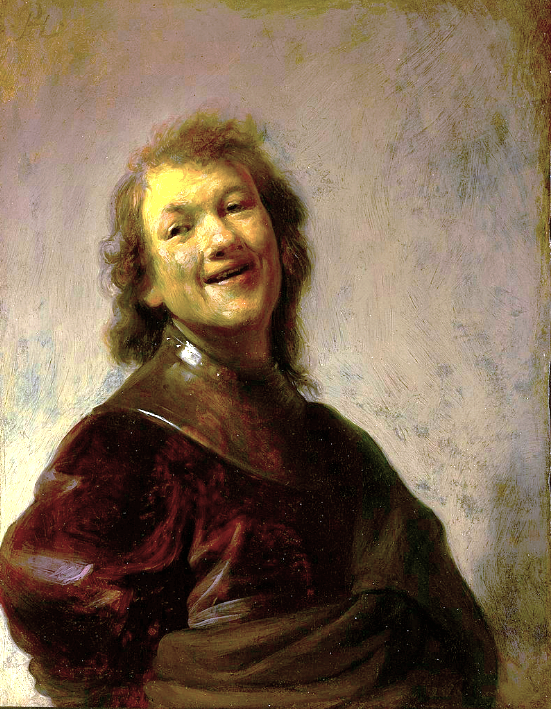
Image from Wikimedia Commons

Posted in Characters, Creativity, Ideas for writing, Novels, Story structure, Teaching writing skills, Trends in books, Writing trends | Tagged , , , , , , , | 1 Comment

The Price of Staying Connected

Before I entered grade school, I knew something about computers. That may be ordinary today but unusual for someone born in the 1950’s. However, my father worked for General Electric in Louisville, Kentucky which housed one of the first non-government computers in use. At that time a mainframe computer was a bit intimidating, filling an entire room with rows of cabinets containing tapes for storage. It used vacuum tubes for circuits that had less power and speed than today’s hand-held devices. Add a few blinking lights and monotone voice and you have the image of a malevolent, super-intelligent machine with a human tendency towards egomania that the general public liked to frighten themselves with in movies.

As an adolescent I viewed movies such as 2001: A Space Odyssey and Colossus: The Forbin Project, without any fear about being endangered by a powerful computer that decided to foist its desires on humanity. Computers really didn’t have the desire to rule humanity, or autonomous thought to produce work of their own volition. Half a century later I find myself surrounded by much smaller and more sophisticated computers. People imagine a world devoid of these devices as a new dark age. We are tempted to try AI (Artificial Intelligence previously known as machine learning) to lighten our own cognitive load while producing art, writing, music and programming code to impress others. Computers have not taken control of humanity–we have handed it to them.

We have become dependent on constant internet access to find our way when driving, to entertain our children during the long drive, etc. We typically pay for these with cold, hard credit cards or a wealth of information that will provide companies with the data to target us with custom ads. Because of the easy access to information, there is less need to remember what used to fill our heads or notebooks. We just need to general knowledge about a topic or the name of the current expert. Details can be found online, neatly condensed for use by AI, which occasionally provides realistic facts that aren’t true, such as best-selling classic books that never existed.

What do we give in exchange for this convenience? Have you seen reports about student’s decreasing ability to comprehend difficult text or even read for an extended period? This did not begin with schools being shut down for COVID 19. According to author Nicholas Carr there is evidence that our thinking has been changed by the shallow nature of reading as we flit from site to site. We skim text and then dart off in another direction through enhanced text. The residual effect is greater tendency to be distracted and lower tolerance for reading for an extended period.1

The same thing is true of videos. “Psychologists say that the average human sustained attention span is 20 minutes.” But a full minute video online tends to tax our patience.2 With so much short material produced for the internet, attracting viewer attention requires additional flash. This distraction has another effect. According to Elizabeth Lorch children increasingly fail to understand causes such as “Why did an event happen, why did a character do this?” More exposure to electronic media correlates with greater numbers of children with ADHD3.

The correlation of time spent on computer with increase in asocial behavior has been well documented. In 2004, The Annual Review of Psychology published research that indicated “greater use of the Internet was associated with declines in participants’ communication with family members in the household, declines in the size of their social circle, and increases in their depression and loneliness.”4

We need time to practice how to stay connected like humans.

Of course, I am not advocating that we return to the pre-computer dark ages. Rather we need to realize the problems that occur when our lives are constantly immersed in electronic media. We all need large chunks of electronic free time, when we sharpen old skills like non-interactive reading, writing by hand and talking face to face. Time free from electronics is needed for everyday life because we need time to practice how to stay connected like humans.

[1] Carr, Nicolas, Is Google Making Us Stupid? What the Internet is doing to our brains The Atlantic July/August 2008) http://www.theatlantic.com/magazine/archive/2008/07/is-google-making-us-stupid/306868/ (accessed December 12, 2012)
[2] “4 ways to keep viewers engaged in an online video”, February 7, 2011 http://wistia.com/blog/4-ways-to-keep-viewers-engaged-in-an-online-video/ (accessed December 12, 2012)
[3] “UK Psychologists Featured in New York Times story on ADHD” http://psychology.as.uky.edu/uk-psychologists-featured-new-york-times-story-adhd-0  (accessed December 12, 2012)
[4] Kraut, Robert; Patterson, Michael; Lundmark, Vicki; Kiesler, Sara; Mukophadhyay, Tridas; Scherlis, William. “Results of interaction depends on usage goals, however some characteristics unique to internet”  The Internet and Social Life, Annual Review of Psychology. Vol. 55: 573-590 ( February 2004)
Posted in Mental health, Social media, The information age | Tagged , | 1 Comment

The Physiology of Love and Fear

The demand for writing from the character’s point of viewpoint is increasing. Sights, sounds, textures and tastes should reflect the perception of the character. But, what about physiological reactions? These descriptions capture the racing heart and euphoria, or the rise of acid to the mouth and sinking dread that match the character’s sensations. It is a potent way of expressing internal feelings.

Imagine you are a young teenage girl, waiting in the math hall, and that handsome senior with an air of indifferent confidence strolls past on the way to calculus. Normally, you watch him unseen, but today he looks you in the eye and says, “How’s it going?” Your heartbeat increases, you breathe faster, you start to feel warm, and your face begins to turn red––otherwise known as blushing––these are the physiological effects of surprise, even a pleasant surprise.

Now, imagine you are a soldier sent to scope out an enemy compound. After stealthily scaling the chain link fence, you slide between the buildings, treading softly, trying to conform to the shadows. You can hear  barely intelligible conversations. Then, there is sudden silence followed by the click of a semi-automatic weapon. Your heart races, your breathing becomes rapid, you start to sweat, your face begins to turn white as your blood withdraws into the interior of your body.

The physiological changes in your body may be similar for excitement and fear, the difference is in the intensity.  The amount of a change in heart rate is often used to measure emotions in experiments. These innate responses occur before people have a conscious realization of their emotional state. Some scientists have even proposed that the racing heartbeat and clammy skin is a cue that lets a person realize he is feeling strong anxiety from a possible threat.

Knowing what characters sense inside their bodies puts us into their heads.

Recognizing how to describe physiological reactions in writing is the first step to putting the reader into the character at the moment that the unexpected happens.  Simply relaying events in the scene puts the reader in the place of the voyeur, watching other’s lives. We often do this, seated safely at home  in front of the big screen TV or in the theater. Knowing what characters sense inside their bodies puts us into their heads. These sensations can be captured in writing more with more ease than filming a scene from the characters viewpoint. The attempt to distort the scene through filters to capture emotions often leaves the audience dizzy and not too sure of exactly what is happening. 

Cathartic writing helps to relieve the pent up emotions of the writer. But I want to capture the physiology of the character’s feelings with words. When I read these pages during the editing phase are the sensations of ardor, zeal, and fury still there? I wonder when I write with tears streaming down my face or trembling in rage, how much of these internal feelings remain to be released when someone else reads it.

Illustration by J.W. Listman

Posted in Ideas for writing, Literary devices, Showing versus telling, Trends in books | Tagged , , , , , , , , , , | Leave a comment

What Catches My Attention in a Book?

We are supposed to judge books by their covers or by the blurbs and by the author’s name. I have favorite books by authors who names I have forgotten. I willing to look at I work with and out of date cover, or an old illustration slapped on the front. I do not pay attention to the author’s ethnicity, age, or gender, or even the year that the book was written. Years ago, in the main Cincinnati Library, I picked up The Idiot because the title intrigued me.

At that time, I was young, not well read, and still reading the first chapter to evaluate books. As I read dialogue between the characters, two of them intrigued me—a man who had been isolated for years and another so infatuated with being in love that he was dangerous to the object of his love. I had never heard of Fyodor Dostoevsky before. Yet, reading The Idiot convinced me that it was worth my time to read other books by him. At one point I even looked up a movie by Kurosawa based on this book. I’ve managed to do a better ending then the original author. But, I imagine he found this book fascinating I did

Covers I tend to avoid include those with the author’s name larger than the title–a lesson I learned after picking up a few and being so disappointed that I did not finish them. Maybe, the authors had produced better quality at one time, but fame, or the quantity of books they pumped out, negative effect on that quality.

Now, when I peruse a book that interests me, I do not read the first pages. I choose randomly, often a section in the middle of the book. I don’t expect the text to grab me immediately, but a good author is able to be engaging throughout the book and not just in the first chapter.

Recently in a class, I asked a young author why he assumed that knowing ethnicity, gender and age of the artist were as important as knowing what the author wrote. He indicated that knowing the background information about the author was required to interpret their works correctly. If that is true, I wasted years reading books that I didn’t realize were written by Europeans, Africans, Central and South Americans, and Asians. I didn’t study the authors’ backgrounds first. I decided if I liked their work based on their actual writing.

Having to learn about the author doesn’t make me think more highly of their work. A good writer reaches for universal themes. The readers should be able to bring what they have as human into the writing in order to gain something from it. If I have to know about the author’s background to appreciate the book, then the author is not really doing their job.

Photo by http://www.pikist.com

Posted in Uncategorized | Tagged , , , , | Leave a comment

Are You What You Read?

We don’t seem to be recovering from the drop in literacy within the United States among school age children in 2019 and following years. The standard response is blame the problem on children not receiving an adequate education during the Covid pandemic. However, reading literature in education was on its way out before that time. My discussions with Language Arts and Literature teachers in the early 2000’s revealed many who thought secondary students had no need to be exposed to works written more than fifty years ago. Some preferred an even more recent time frame.

A number of new English teachers had not been required to do as much reading as those obtaining degrees twenty years ago. So, they choose new popular novels, especially those made into recent movies, to provide students with books that were easier to read. The written assignments that didn’t require analysis of what they read. There was no need because the authors told the reader the kind of characters they encountered in the books and the meanings behind symbols.

What do we have to lose when we no longer require students to read works that are not easily read but have withstood the test of time? Perhaps we will be robbing students of a chance to increase empathy and social skills. Being able to grasp the mental state of other people is valuable for functioning in society. Researchers and scientists do not know a lot about what contributes to this skill. However, two recent studies show that reading fiction, and in particular literary fiction, increases it.

A study by Mar and Oatley (2010)  from York University found that individual who choose to read fiction often were more able to empathize with others and understand the world from their perspective. They made no division between literature and popular fiction.1 A more recent study by Kidd and Castano (2013) indicates that reading literary fiction at least temporarily increase people’s ability to understand that others have differing beliefs, values, goals and desires. These researchers from the New School for Social Research, conducted experiments to test participant’s accuracy in identifying the emotions of others after they had been reading popular fiction, non-fiction, literary texts or nothing at all. They found those that had read literary texts were able to more accurately identify the emotions than those who had read popular fiction or non-fiction.2

So what exactly is the difference between popular fiction and literature?

So what exactly is the difference between popular fiction and literature? According to the literary theory by Roland Barthe, fictional text is divided into two types. He describes “readerly” text as those in which the reader is mostly passive, and does not have to make much effort to receiving the text. This type of text is largely entertaining and the author tells you what you are experiencing. On the other hand “writerly” text require that the reader engage with the writer. This text requires greater effort to read and comprehend the codes of meaning.

You open a book of what we call popular fiction and you know from the get-go who is going to be the good guy and the bad guy.3

Emanuele Castano

We tend to see ‘readerly’ more in genre fiction like adventure, romance and thrillers, where the author dictates your experience as a reader. Literary [writerly] fiction lets you go into a new environment and you have to find your own way.4

David Comer Kidd

There is not a rigid line of demarcation between the two literary fiction and and other types of reading. However, literature is usually marked by an in depth focus on characters inner feelings and thoughts, with few characters remaining it a static state. This forces the reader to make an effort the understand them and and construct their own frame of reference for the characters.

Comprehension of literature may require work that the students may not want to do. I’ve heard teachers voice the fear that students will give up if challenged to read books that hold meanings not apparent on the initial perusal. But, sticking with those works does have its benefit. One of those is becoming aware of people unlike ourselves.

Photo by K.N. Listman

[1] Paul, A. M. “Reading Literature Makes Us Smarter and Nicer” Time. June 03, 2013
[2] Kidd, D.C. and Emanuele C., “Reading Literary Fiction Improves Theory of Mind” Science 18 October 2013 Vol. 342 no. 6156 pp. 377-380, Published Online October 3 2013
[3] Barthe, R. The Pleasure of the Text. Straus and Giroux, Inc. Originally published in French as Le Plaisir du texte 1973 by Editions du Seuil, Paris
[4] Greenfieldboyce, N. “Want To Read Others’ Thoughts? Try Reading Literary Fiction” NPR. October 04, 2013 4:24 PM ET

Posted in Characters, Emotional intelligence, Literature, Trends in books | Tagged , , , , | 1 Comment

Pushover Protagonist?

How often have you heard warnings against creating a protagonist who is the opposite of a mover and shaker, one who simply lets things happen to them? Or one who watches the other characters struggle without taking charge? A main character who is passive and without a compelling goal is supposed to be the death knell for a novel. However, in a tragedy, someone has to survive to relay the story. The passive observer may be the right person to do just that.

Melville wrote one of the most recognizable first lines of a novel, “Call me Ishmael.” But, the fame of his book, Moby Dick, does not mean this is an example of the iconic hook. It is an ordinary opening for an ordinary character named Ishmael. He is a observant person , who first describes the curious behavior of his South Sea islander roommate, Queequeg, and then life on a whaling ship until the obsessed Captain Ahab leaves his cabin to announce the hunt for the giant white whale. Ishmael excels at watching what occurs, so the story he observes is intriguing. Modern writers assume that a particularly devious villain will present a worthy challenge for the hero to combat. But, who exactly is the villain in Moby Dick? Is it the monstrous whale trying to save his own life ? Or, the obsessed captain Ahab who wants to destroy the creature that sent so many ships to their doom? That complex conflict between morally vague characters has kept readers persevering through that massive tome to reach the end.

Most people are aware of characters from Moby Dick without having ever read the book.

Most people are aware of characters from Moby Dick without having ever read the book. However, they prefer a briefer novel. Joseph Conrad’s Heart of Darkness is a well-known novella about a journey down the Congo River to bring back the renegade Kurtz, a villain who has built his own little empire among the natives, a man just as crazed as Captain Ahab. The book is not controversial because of its mostly passive main character, Marlowe. the steamer captain really does not do much more than observe. However, he details with with very sparse emotional input the Company’s cruelty to the natives. Why does he not react to this in outrage? He is an observer, a passive protagonist. Yet, this story is still widely read.

Nick Carraway, the point of view character in The Great Gatsby, is another example of the protagonist who is reluctant to act. He watches the world of the wealthy and bored weaving their intrigues around him in this novel of by F. Scott Fitzgerald. Nick finally gets involved in bringing Daisy and Jay Gatsby back together. However, the main character spends his time watching Gatsby, a man whom he somewhat admires, being sucked into a relationship with an unstable woman who cares more for wealth than love. Yet, Nick makes no protests.

All of these famous books bear the title of someone or something other than the main character. The protagonist’s job, for the most part, is to narrate the story in an impartial manner. Their keen observations help to develop the tragic character into a memorable one in the mind of the reader.

Posted in Drama and movies, Ideas for writing, Literary devices, Literature, Story structure, Trends in books, Writer's resource | Tagged , , , , , , , | Leave a comment

Writing and the Stock Market

All ideas have been done before. It’s basically impossible not to reuse one. If it hasn’t been done before, the idea will make almost no sense to anyone. That defeats the purpose of using it. Conformists want ideas that are popular right now and writers of this type tend to flood the literary market with the same ideas until these are labeled cliche.

Robert J Sternberg described an idea for creative production that works for a number of professions including writing. He gives it the same name as we use for trading stocks for profit, “Buy low, sell high.” Essentially, look for an interesting idea from a past period that appears infrequently in current time. It may have fallen out of favor as little as twenty-five years ago. That is about the length of time assigned to each new generation such as Gen-X, Millennials, Zoomers, and so on.

A non-conformist can build an extensive library of ideas drawn from past years and centuries. These no longer popular ideas are often viewed as creative and sometimes become the next new craze. However, there is a problem using Sternberg’s advice as a new author. Publishers often want a sure thing and demand recent comps (comparable works) from new authors. Yet, avoiding the recreation of a recent bestseller is what produces new and intriguing work.

Avoiding the recreation of a recent bestseller is what produces new and intriguing work.

An author can attempt to create a character that has never been described before. But similar to the main idea of a book this character will have a number of doppelgangers from the past. Still reading older material (by that I mean anything from 50 years ago to 5,000 years ago) is still a good way to leverage the “Buy low, sell high.” technique with character personalities.

Developing a unique voice is a bit easier because language changes frequently while foibles of human nature seem doomed to repeat themselves. However, a unique voice may not captivate readers. Especially with the average reading level decreasing over the past few decades. This decline could come from a number of sources. Increase in viewing of movies, simplification of language on the internet or educational years lost to COVID-19. Many audiences are looking for easy reads, which have resulted in a number of current best sellers written at a sixth grade level.

Captivating an audience with a unique voice in fiction, requires a style that a sizable number of people understand and appreciate. But don’t try to attract the entire world. The unique voice needs to be authentic to each author and based on their experiences, perspectives, fears and aspirations. It takes a bit of soul-searching and time to write in this manner. Copying current trends seems easier, especially with AI writing software designed to capture them. Still some readers search for their preferred style of writing like a treasure. If your style is not a frequent find among new books, you may become one of the few current authors that they favor.

Photo Wikimedia Creative Commons CC0 1.0 

Posted in Creativity, Generation X, Ideas for writing, Literature, Millennials, Style and voice, Trends in books, Zoomers | Tagged , , , , , , , , | 2 Comments

What are Looks in a Story?

If I describe one of my protagonists as chubby with a large pyramid-shaped nose, fat eyelids and thin hair, I believe I’ve indicated she is not attractive. So, she is not deluding herself when she says she is ugly. However, I’ve encountered people who assume she just doesn’t know how to fix herself up and she must follow the trope of eventually becoming gorgeous because she is the main character.

Still, my main character is spot on in her assessment of herself and this is not going to change. Other people in the story do not consider her to be good-looking either. Readers may see what they want to see, no matter how I paint characters’ portraits. That is something that I cannot control.

How much should I describe the exterior appearance and traits of the people in my stories? The sister of a chubby and ill-favored protagonist is seen as beautiful by the others in this story. I actually say little about her appearance other than she has long blond hair that hangs in loose curls. If I explained what the younger sister looked like in detail, some readers might not agree with my assumption of attractiveness. So, it is more important to indicate how the other characters react to the person’s appearance than it is to describe the details. This helps readers get past preconceived notions about how certain kinds of body shapes, skin tone, hair or eye color, or even facial features look in their mind.

It is more important to indicate how the other characters react to the person’s appearance than it is to describe the details.

I know the interiors of my characters well; I have drawn their thoughts and traits. They are based on real people, so I maintain a good idea of what makes them tick with insight into their passions and their fears. I even make up a family tree. Although that is not included in the story. However, their appearances are often based on random photographs. Typically they are not described so well that the reader can imagine them in detail.

A greater depth in describing appearance does not keep a character from being simplistic. Readers who struggle with the time spent learning about well-drawn individuals may prefer stock characters. Those who expect to jump into immediate action and learn all about the character by the end of the first chapter will tend to find beautifully described but such characters in their favorite books. That may be what they are asking for, but not the kind that I want to write.

Photo by K.N. Listman

Posted in Characters, Story structure | Tagged , , , , , , , , | 1 Comment

Allowing Ourselves to Grow

Imagine entering a store to buy some clothes for the upcoming year. In the athletic section there’s one style of outfit and it comes in four basic colors that all go together. The same is true for casuals clothes, business outfits, and outer wear. Only one style; only the same four colors. What would you do? You might try to find a clerk to ask the reason for this unusual lack of selection. You might not find one because there’s no real need for assistance in a store with such limited variety.

Would you simply buy some clothes because you can’t walk around naked in public? Steve Jobs’ “uniform,” the all black outfit with a turtleneck, was iconic because it was his choice of a simple outfit. No one else would have noticed it if everyone else followed his style due to lack of choices.

I thought about those questions when dealing with a person who assured me most people prefer to buy novels repeating the same kinds of characters and tropes. The questions in the first paragraph is also a good set for an author who assures us that readers don’t want to deal with anything over a sixth grade level. And these questions should be asked of those that insist readers prefer not to suffer through reading about serious or difficult concepts. However, this defensiveness about aiming work at the average audience makes me wonder.

In my mind I imagine a kind of Orwellian book selection, similar novels that are rearrangements of the same characters and plots, written at different levels for the upper, middle and proletariat readers. Then, I recall a scene in 1984 when the main female character appears in a old woman’s dress, rather than the typical utilitarian overall/jumpsuit. The dress is appealing because it is different and not following the style everyone else wears.

At what level should books be written? There are upper and lower limits for reader engagement and comprehension, but there is a wide range in between. I try to find a reading level that is both comfortable for me to read and to write. This it is not always the same. Writers should not be pigeon-holed. There is no need to assume they must cling to the style and subjects that they used when initially published. I was fond of Robert Louis Stevenson’s “A Child’s Garden of Verse” when young, But, many years later I became intrigued by the predicament described in “Dr. Jekyll and Mr. Hyde.” How egotistical it seems for readers to limit the artistic growth of writers by demanding the same kind of fiction repeatedly.

The truth is most readers aren’t doing that. It may be the authors’ fear of not producing enough that leads them to crank out similar new work at a somewhat unreasonable pace. It has authors imitating their earlier work, rather than expanding on it. Readers grow and authors should, too.

Photo of Rose Gardens, San Angelo, TX by K.N. Listman

Posted in Uncategorized | Tagged , , , , , , , , , , | 1 Comment

Names and Xenophobia

Imagine a reviewer whose major complaint with a fantasy book manuscript was the number of times that words weren’t recognized by MS Word spell check. This person even provided me with the total–all names of people and places within the story. Fantasy is not the same world as we live in. Why expect the names to be the same?

Wishing to avoid another encounter of a book rejected based on names, I requested help from other writers for an historical novel. I could select each name and change the language so I know it’s spelled correctly in the original tongue. Then, I would have to add them all, including the possessive form, to the dictionary spell checker. Eventually, I would overload it. 

So, I provided the writers with a list of possible Welsh and Cornish names and asked which ones they preferred. “Choose the ones that are pronounced like they are spelled,” was the only advice I received. That’s quite a challenge. The double l in the Welsh name Ellyn is pronounced by sticking your tongue behind the top of your teeth and hissing.  

Spell checkers are a bad way to determine legitimate names. I pasted the Latin names from an article about Marcus Aurelius into MS Word, and other than Marcus Aurelius, it didn’t recognize any of the other names. They were all real historical Roman people.

Why would I defend unusual names? I have one myself. My middle name, Neree, is a new family tradition inherited from my mother, who received from her parents, who read it in a book. A family of Slavic origin, Neree de Babberich, included a notable symbolist artist, Karel de Neree tot Babberich. Perhaps, this is the very person my grandparents read about. My middle name could have roots in the slavic word Nera. But, no one knows.

Neree occurs with the highest frequency as a surname among French African families in Haiti. It is also a first name found in older French Canadian men. What does Neree mean in French? Again, no one knows. Most genealogy sources say Neree is a French version of a name from another language. I bear a name that others frequently mispronounce (in case you’re curious, it rhymes with Marie). I don’t even know the meaning of it. Cool isn’t it?

Neree was not passed on to my own progeny as my husband only accepted normal names–ones from his family, such as Otsy, which is not recognized by MS Word spell check either. It is a German nickname for Arthur, so that became our compromise. Arthur is also a Welsh name and one of the few people recognize due a certain famous king never actually existed. However, Neree has not died out in my family. I have both a cousin and a niece with that unusual moniker.

AI scrapes internet for the most popular names and those are the ones found in spell checkers. Some people’s minds work just like that. They have room only for the most familiar names, which could be considered a kind of xenophobia. Why does a personal preferences for certain kinds of names have to affect how people judge writing?

Art by J.W. Listman

Posted in Uncategorized | Tagged , , , , , , , , , | Leave a comment