Don’t like criticism? You might feel the same way about creativity.

647px-BitterkaelderSoed_edited-1

Illustration Ravnen 1890, Public Domain

Alex Osborn, known for founding the Creative Problem-Solving Institute, set up a structure for group creative brainstorming. One rule to free people from creative inhibitions forbid criticism and judgment during initial brainstorming. [1]

There is no need to guess why. People tend to champion their own ideas at the expense of better ideas. It only takes a small minority set on “defending their turf” to have a detrimental effect.

Ask educators the way to encourage creativity and they will tell you students need an environment full of stimuli. They will also say the classroom should have an open, accepting atmosphere, free from criticism to build up self-esteem. Ask people noted for work in creative fields, and they will agree with the need for a stimulating environment, but not with the lack of criticism.

While interviewing college art and educations majors about factors leading to creativity for my own research, both groups placed willingness to take risks high on their lists. The art majors said being around creative people was the most important factor. The education majors gave high self-esteem first place, but this did not match the results of students in creative fields. Self-esteem wasn’t even mentioned by the art majors. They preferred honest critiques of their work. Evidently, building self-esteem does not build creative thinking.

Teachers often have difficulty with highly creative students for same reason corporate workers find creative colleagues difficult. They tend to level criticism at others more frequently [2]. But evidently creative people are not as hurt by criticism, either. According to research both innovative students and employees take the anxiety resulting from a negative evaluation of their work and convert it into a drive to be even more unique. [3]

Research conducted in both the United States and France, examined the result of brainstorming groups when one was told not to criticize while the other was encouraged to debate ideas. Those allowed to debate generally came up with superior ideas. The key was to encourage debate and even criticism, without allowing anyone to monopolize the session.

“Brainstorming techniques have specifically admonished people ‘not to criticize’ their own and others’ ideas, a tenet that has gone unexamined. In contrast, there is research showing that dissent, debate and competing views have positive value, stimulating divergent and creative thought.” [4]

[1] Osborn, Alex. F. (1953) Applied imagination: Principles and procedures of creative thinking
[2] Torrance, E. Paul. ‎(1963) The Creative Personality And The Ideal Pupil. Teachers College Record, 65, 220-226
[3] Johns Hopkins University news release, August 21, 2012, Don’t Get Mad, Get Creative: Social Rejection Can Fuel Imagination, JHU Carey Researcher Finds
[4] Nemeth, Charlan J. Personnaz, Bernard. Personnaz, Marie. Goncalo, Jack A. (2004) The liberating role of conflict in group creativity: A study in two countries. European Journal of Social Psychology,Volume 34, Issue 4, pages 365–374,
Posted in Creativity | Tagged , , , , , | 2 Comments

The curse of creativity

DSCN6251C.jpgIt just isn’t fair. One person gets to be born with an enviable imagination, the ability to come up with new, innovative ideas, or create artistic masterpieces and the next person does not. Many cringe at the idea that creativity could be an innate and inheritable trait …. including those that have this trait.
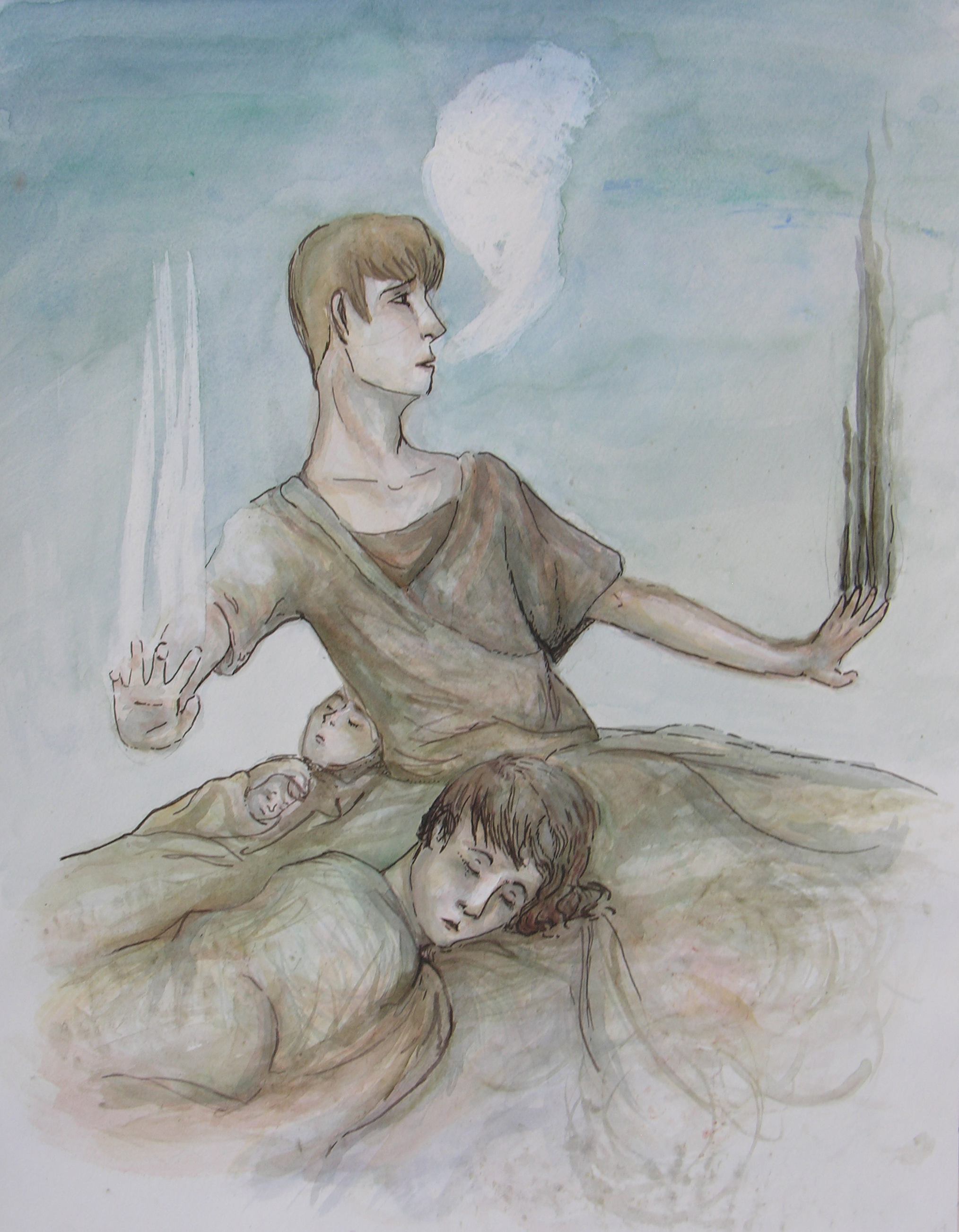
Creative people often feel driven to be different, to strive for the original idea and take it as far as possible despite the deprivation and pain that results. They fear that inspiration may abandon them and leave them stranded, or the world may decide that the masterpiece into which they have pour blood, sweat and tears is useless and ugly. They may not see their ability as being  a fortunate circumstance. In fact, most of the evidence for innate creativity is based on the negatives associated with this trait.

First on the list of negatives is the similarity of creative thinking to schizophrenic thinking. Researchers find increasing evidence for the genetic basis for schizophrenia, as they search through family trees of schizophrenics.  There appears to be a larger than average number of people in creative fields in these family trees. In the same manner, examining the families of famous creative people reveal more members exhibiting types of psychopathology than found in an average population.  Abnormal thinking includes:

  • Delusional thinking, which is similar to using divergent associations
  • Over-inclusive thinking, or paying attention to seemingly irrelevant details
  • Uncontrolled flexibility, evidenced by jumping from idea to idea [1]

Do those sound a lot like creative traits? The difference is that the creative person has a stronger ability to make judgments to determine when this kind of behavior will be acceptable, a characteristic controlled by the pre-frontal cortex. [2]

The second evidence for innate creativity is associated with a problem that many writer’s bemoan–the unpredictability of inspiration. For those most known for creative output, the peak tends to come at the beginning of their career. Then, creativity tends to fluctuate, going up and down, but usually not reaching the earlier height. If creativity were a learned behavior it should improve. However, the ability to come up with a creative product seems to “a chaotic sequence of hits and misses.” [3]

Finally, no one seems to be able to explain why some people keep after their pursuit of creativity when it is heavily discouraged. Reams of articles come out on how to encourage creativity in education and the workplace, but it appears some manage to keep a unique perspective without encouragement. Business have an increasing desire for creative products. But this desire for these products and is in opposition to their treatment of most creative people. Those that produce creative ideas are generally disliked.[4] Why would a creative person continue coming up with the kind of ideas that cause social rejection if it was only something they learned to do–not something they did intuitively? Apparently social rejection increases imaginative thinking–at least  in those that are already nonconforming types. According to a study from Johns Hopkins:

“Rejection confirms for independent people what they already feel about themselves, that they’re not like others. For such people, that distinction is a positive one leading them to greater creativity.”[5]

[1] Kuszewski, A. (2009) The Genetics of Creativity: A Serendipitous Assemblage of Madness, http://www.grupometodo.org
[2] Jung-Beeman, M., Bowden, E., Haberman, J., Frymiare, J., Arambel-Liu, S., Greenblatt, R., Reber, P., Kounios, J. (2004). Neural activity when people solve problems with insight. PLoS Biol 2(4): e97
[3] Feist, G.J. (1998) A meta-analysis of personality in scientific and artistic creativity, Personality and Social Psychology Review, 2, 290-309
[4] Olien,J (2013) Inside the Box, People Don’t Actually Like Creativity.
[5] Johns Hopkins University news release, August 21, 2012, Don’t Get Mad, Get Creative: Social Rejection Can Fuel Imagination, JHU Carey Researcher Finds


Posted in Creativity | Tagged , , , , , , | 1 Comment

How is creativity killed?

chronic waste c2If teaching students to be creative is one of the highest goals of education, we have a problem. The United States as a nation is becoming less creative. Unfortunately, the scores on are getting lower on the Torrance Test of Creative Thinking. Initially after this test gained wide-spread acceptance in schools, scores rose. This is a normal result known as the Flynn effect, which also occurs on IQ tests. In fact, IQ test have to be normed repeatedly or else the general population scores slowly increase.

The scores for creativity increased in a fairly linear manner until the 1990’s. Then, the slump started. The biggest decrease in is the skill of elaboration–the ability to expand and add details to a creative concept.[1]

What caused this decline?  Increasing electronic communication has been blamed. According to Larry Rosen, a psychology professor at California State University , the constant checking of phone texts and social media provides a connection without requiring the innovation necessary for face to face interaction. The student who sees a “like” gets a dopamine boost that reduces anxiety. However, the constant review of social media stats decreases creativity. Rosen noted that mobile phone usage soared at the same time that the Torrance Tests of Creative Thinking scores fell  in 1998, and this is no coincidence. [2]

Even early in his work, Torrance (1963) found reasons that creativity might be discouraged. Adults who come up with original ideas are characteristically absorbed in their work, and do not take the time or effort to be polite. They often refuse to take no for an answer, and level criticism at others. Creative children have the same traits, which can be viewed as “obnoxious” by teachers. Torrance warned educators that they needed to deal with these negative aspects of students’ personalities without discouraging  creativity.[3] In later studies Torrance (1980) uncovered the fact that some teachers said they were rewarding creativity when they were actually punishing it.[4] Part of the decline may be the due to the students’ attempts to get along with others.

Westby and Dawson (1995) proposed that creativity is being discouraged by educators who do not actually recognize it. When they tested college students to find out which characteristics they thought correlated with creativity and non-creativity, their answers matched the psychologists’ findings about 95% of the time. However, when a group of teachers in grade school were asked about the same traits, the correlation was about 50%. They thought students who were not creative if they were:

  •   emotional
  •   impulsive
  •   non-conformists
  •   making up rules as they went along
  •   trying to do the impossible
  •   not fond of working with others when making new things

But all of these traits correlate with higher levels of creative thinking. Still, many teachers claimed they liked creative students, but they warped the definition to match students that were easier to control in class. [5]

A few years ago, I witnessed e a teacher sharing a collection of poems her students had written. She wanted advice on making them into a book. This teacher’s favorite poem was a set of stanzas with perfect spelling and rigid rhymes. The words fell pretty much as expected. A college professor pointed out a different and compelling piece in which the young poet described her own struggles and inability to meet expectations. However, this teacher failed to see the quality of this other poem. She was not fond of the student that wrote it.

In the end, we have to be able to learn to recognize authentic creativity, even if we do not like what we see in the person who produced the work.

Art by S.L. Listman

[1] Bronson, Po, and Merryman, Ashley (2010) The Creativity Crisis, Newsweek.
[2] Joel Stein, Millennials: The Me Me Me Generation
[3] Myers, R.E. and Torrance, E.P. (1961) Can teachers encourage creative thinking? Educational Leadership 19, 156-159
[4] Torrance, E.Paul ‎(1963) The Creative Personality And The Ideal Pupil. Teachers College Record, 65, 220-226
[5] Westby, Erik.L. and Dawson,V.L. (1995) Creativity: Asset or Burden in the Classroom? Creativity Research Journal.  Vol 8, No 1, 1-10
Posted in Creativity | Tagged , , , , , , | 1 Comment

Are children more creative?

ImageIf you listened to Sir Ken Robinson’s TED talk about “How Schools Kill Creativity” [1], you would assume most children enter school tremendously talented and creative and exit at the opposite end of the spectrum. It is an entertaining talk, including naive quips from children that could easily fit into Art Linkletter’s  (and later Bill Cosby’s) program Kids Say the Darndest Things.

Robinson makes the assumption that the unusual things children say is evidence of creativity. However this idea is never supported during his talk. Sometimes children’s “unique” sayings are a result of misunderstanding language. At other times they are concrete interpretation  of abstract things they have been told.

Robinson also fails to explain why there is a noticeable percentage of students that not only remain creative but increase in creative production while in school. These students are in the same schools that turn out the uncreative students that Robinson feels are being prepared for work based on the industrial revolution. (In reality, subjects currently taught in school more closely reflect those taught to the upper class when only the wealthy were educated and almost everyone else learned a trade.)

But, back to the question of whether or not children are actually more creative than adults. When student in schools take the Torrance Test of Creative Thinking, the scores tend to be higher for older students.  This was confirmed by a study from the University of Catania, Italy, testing a sample of 112 Italian school children. The older children scored significantly higher was elaboration [2].

Longitudinal studies of children’s creative development in the United States, using the Torrance Test of Creative Thinking and the Test of Creative Feeling show a slump in creative ability between fourth and sixth grade followed by an increase in creativity between grades six and nine. that is marked by cognitive elaboration [3]. The Test of Creative Thinking require that something be produced and refined based on original ideas. This is a more demanding definition of creativity than simply connecting it to talking about unusual ideas.

Edward de Bono,  author of six hat thinking system, theorizes that childlike or natural creativity is based on suspending judgment of prior knowledge. Of course, children do not have nearly as much prior knowledge as adults. This kind of creativity “does not depend as much on preconceived rules, seeing things as they appear and not as we know them.” [4] However he finds it is not very powerful either, because the creativity that changes society is an unnatural process. It cuts across the patterns that have been formed. A person must intentionally change their perception in order to do this.

When interviewing students who had continued studies in creative areas in higher education, I heard their ideas on childhood creativity expressed. Many students felt that their ideas were “more wild and far out” as children. However, they did not know how to produce these ideas. As they got older their creativity became more practical and more useful. Perseverance was the characteristic that they saw dividing the more creative students from the less, not avoiding indoctrination from education.

[1] Robinson, K. (2006) How schools kill creativity, TED2006, Filmed Feb 2006
[2]De Caroli, M.E. and Sagone E. (2009), Creative Thinking and Big Five Factors of Personality Measured in Italian School Children, Psychological Reports: Volume 105, Issue , pp. 791-803.
[3] Claxton, A. F., Pannells, T. C., & Rhoads, P. A. (2005) Developmental trends in the creativity of school-age children. Creativity Research Journal, 17, 327-335.
[4] de Bono, E. Serious creativity, The Journal for Quality and Participation; Sep 1995; 18, 5; ABI/INFORM Global, pg. 12 (accessed Feb 17, 2014)
Posted in Creativity, Education trends | Tagged , , , , , , , | 8 Comments

Can creativity be taught?

???????????????????

 Emmanuel Fremiet’s depiction of himself creating a sculpture model

Anyone working with a program to encourage creativity has found that deliberate efforts to kick start creativity may fail while creative works may still arise in spite of a pedantic atmosphere. The work of the imagination is terribly unpredictable and won’t follow our schedules.

It is very possible that complex creativity, which blends the recognition of far flung connections and the persistence to try every avenue to produce an innovation, is not an ability that can be taught. According to author and editor Irving Taylor, creativity exists hidden within many people, but requires development.  “At some point, however, some conscious discipline and control is beneficial and necessary. It is difficult to know whether developing creativity is like building a muscle or following a recipe.”[1]

Over half a century ago, J. H. McPherson described four different kinds of instruction aimed at improving creativity. The first was to teach people to recognize that a problem actually existed.[2]  How many times do we go through a number of steps to complete a task, assuming that is the way it must be done. A creative person usually cannot do this without thinking Can’t there be an easier way?  A different type of creative person has a hard time consuming mediocrity and asks Isn’t there a way to produce something better? How hard is it to teach people to ask these questions?  Harder than you think; problem finding is most challenging because it threatens the status quo.

J. H. McPherson  recommended developing cognitive problem solving techniques as a second kind of training and instruction in factors which help or hinder in creativity as the third type of training. Finally McPherson insisted that individuals needed help to accept and support their own creative ideas.[2]  

However, much creative work is produced because the individual feels the need to do it– creativity for its own sake rather than to solve the problems of surrounding society. Lack of acceptance and support from others, not the individual themselves, seems to be the bigger drawback.

In my own  research I interviewed college students studying the arts to identify the factors that helped or hindered them. Near the top of those that helped were “risk taking” (and the very similar “experimenting”), along with “being imaginative.” However, they viewed having creative friends as providing the most help. Their major hindrances were lack of time and resources, followed by their own lack of expertise. To cultivate creativity it seems necessary to provide the appropriate environment: lots of other creative people, no fear of experimentation and plenty of time and resources.

As I examine the kind of instruction recommended to teach creativity, I find that creativity is nurtured, encouraged or cultivated rather than actually taught.  It seems that creativity cannot be learned, but it can be stunted or even killed.

[1] Irving A. Taylor, A Retrospective View of Creativity Investigation, in edited by Perspectives in Creativity, eds, Irving A. Taylor, Jacob W. Getzels (1975)Transaction Publishers
[2] McPherson, J.H. (1964)Environment and training for creativity
Posted in Creativity | Tagged , , , , , , | 1 Comment

The origin of originality

026f7386d86f1391f6f184682e8db927Start any discussions on the origin of creativity and you will quickly find the group divided. On one side people claim it is an innate trait. You are either born with or without it. Keep on pressing this faction and most will admit it is not exactly a black or white proposition, rather people are apparently born with varying amounts of creativity. They cite anecdotal examples of young children demonstrating precocious creative ability that grow up to be a great artists, composers, or inventors–such as Wolfgang Amadeus Mozart.

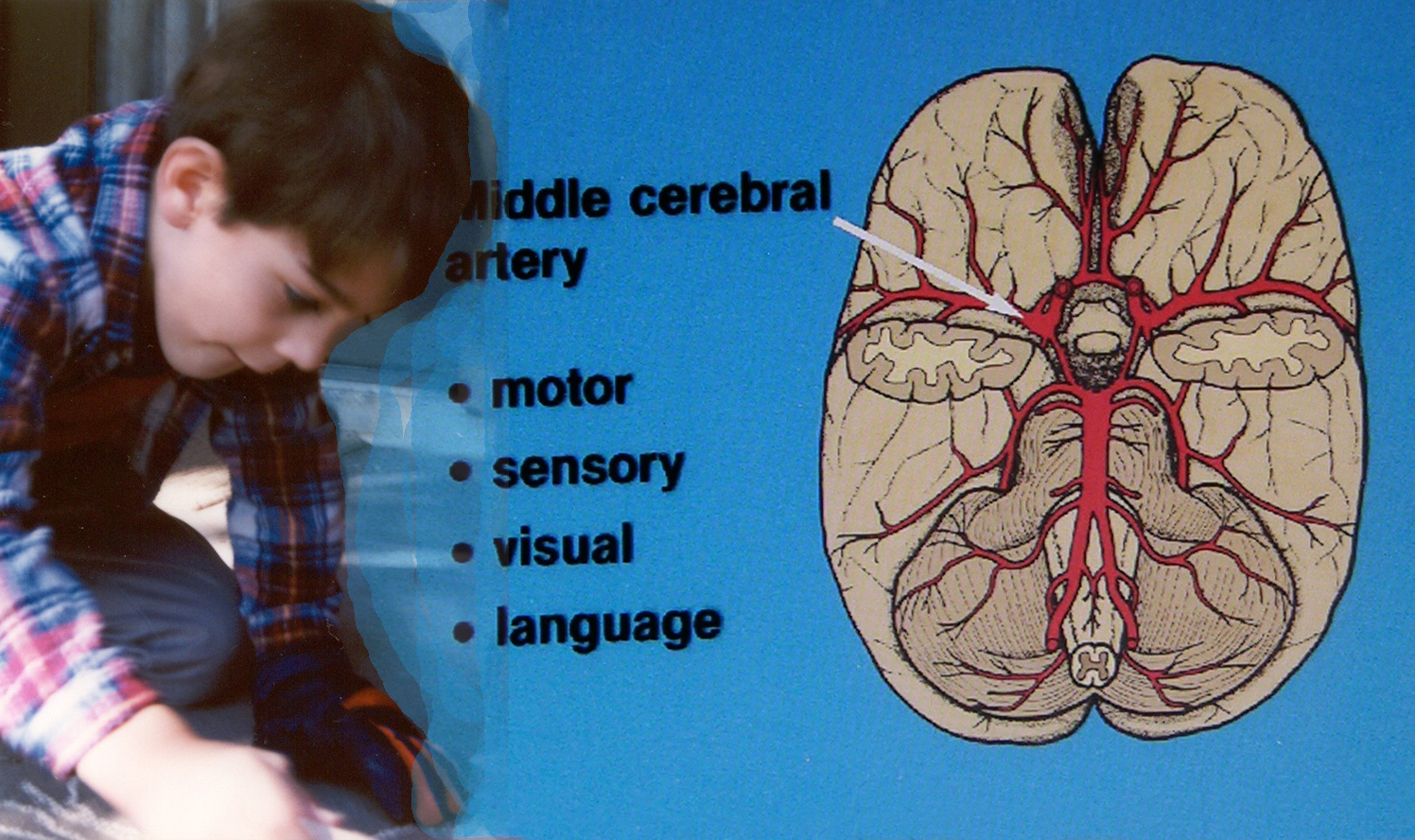
On the other hand there are people who see creativity as a skill that can be taught. Now while many of these people are attempting to advance their own curriculum for developing it, not all are. They commonly view the ability to come up with original, useful ideas as our best chance at solving humankind’s problems. They refer to examples of children who grow up in artistic and creative environment that go on to produce great original works–for example Wolfgang Amadeus Mozart.

In order to test either proposition one must first define creativity and develop a way to measure it. This investigation is already sunk because a single definition of creativity is impossible to obtain. What is original and unique in one culture, may be commonplace in another.  What solves a problems or accomplishes a goal in one society, may be nonsensical to another.  It is not the just the acts or products, but how these compare to others in the same society that is the hallmark of creativity. So psychologists have come up with their own definitions, their own research and their own tests. Actually the definitions may only vaguely relate to the research, and the tests are typically borrowed or build on other’s work.

J.P. Guilford, head of psychological research for U.S. Army,  was one of first to build an elaborate battery of assessments for creativity. He formulated a model called Structure of Intellect, a three dimensional model showing the relationship of mental processes,  products, and content in intellectual ability. His creativity assessments were largely a measurement of divergent thinking–generating a variety of ideas or possible solutions for a task.  [1]

The Torrance Test of Creative Thinking (TTCT) developed by E. Paul Torrance, were based on J.P. Guilford’s work on tests of divergent thinking. They were originally scored on four scales:

  • Flexibility – the number of different categories of ideas
  • Fluency – the total number of meaningful different ideas that were generated
  • Originality – how different the ideas were from those of peers
  • Elaboration – how well the details of these ideas were developed

The major benefits of this test: it can be taken by children or adults and provides a comparative score for originality. Along with this test Torrance performed long term studies to find out what happened to the creatively gifted students who first took it in 1958. Those students who continued with high levels of creative achievement developed an image of their future career earlier than their peers did. Therefore, they were working towards a specific goal longer. They also had mentors to assist them. [3]

Of course this still does not answer the question of whether the creativity is innate or environmental. Perhaps this should not be the question, but rather it should be “how is creativity encouraged and strengthened?” Knowing the direction in which to pour your original thinking and having someone advise you seems to be the recipe for successful use of creative talents.

[1] Irving A. Taylor, A Retrospective View of Creativity Investigation, in edited by Perspectives in Creativity, eds, Irving A. Taylor, Jacob W. Getzels (1975)Transaction Publishers
[2] Torrance, E. (1999). Torrance test of creative thinking:  Norms and technical manual.  Beaconville, IL: Scholastic Testing Services.
[3] Torrance, E. Paul (1980) Growing Up Creatively Gifted: A 22-Year Longitudinal Study. Creative Child and Adult Quarterly, v5 n3 p148-58,170 Fall 1980
Posted in Creativity | Tagged , , , , , , , | 1 Comment

Time and creativity – friend or foe?

burbn timeWhen working with Odyssey of the Mind teams practicing their problem-solving skills, I discovered an interesting aspect of creativity.  Students had to come up with a large of number of  creative ideas to solve a problem on the spot. However, not all students in a large group could participate in this competition, so we set up a way of scoring ideas as a fair way to choose the competitors. Each student was given the same problem scenario. Within a set time, they listed as many possible solutions as they could. I mistakenly thought that coming up with original ideas would require more time. Therefore, students were judged on two scores: the number of ideas and the originality of ideas. Actually there was a positive correlation between number of ideas and originality. Those students that still clung to the tried and true practical ideas came up with noticeably fewer solutions. These students were running ideas through a filter of practicality.

But without both originality and usefulness creativity is …. useless.  This is where the time pressure wields the greatest effect. According to creativity researcher Teresa Amabile, there is a continued debate on how the pressures of deadlines affect creativity. “Some people are convinced that time pressure stimulates creative thinking, and others are certain it stifles creative thinking.”[1] Amabile has recently completed a long term study  in the corporate world and has noted some of her own surprising findings.

Data in this long term study was collected through a self reported daily electronic diary in order to observe creative work in real time as teams collaborated on projects. The collected data suggest that “overall, very high levels of time pressure should be avoided if you want to foster creativity on a consistent basis.” People can continue to work creatively during a time crunch, but not for extended periods. This of course, is not a  new finding. However, there were contradictions in perception among the participants. Amabile stated that “participants were giving evidence of less creative thinking on time-pressured days, [but] they reported feeling more creative on those days.”[1]

So there seems to be a disconnect between feeling creative and showing evidence of creativity when in a time crunch. Creativity occurs as a thought process first; ideas are stimulated by increased pressures. But, once the idea has been conceived, the refinement and elaboration needed to make into a useful solution require time. When the pressure is on, adrenaline flows. Creative ideas seem to pop up left and right. But turning those ideas into something useful, and working through all the dead ends to find the end of the maze takes extended periods of time. So when it comes to producing creative work, time  pressures appear to be both a friend and a foe.

[1] Silverthorne, Sean (2002) Time Pressure and Creativity: Why Time is Not on Your Side, Working Knowledge, Harvard Business School (Accessed 24 Feb 2014)
Posted in Creativity | Tagged , , , , | 1 Comment

Is creativity a right-brain function?

055 monitor_child copyThe idea of left brain and right brain thinking originated with the work of a number of physicians in the 1800s. Pierre Paul Broca, a French physician studied patients suffering from aphasia, inability to speak due to brain injuries. He pinpointed Broca’s area, a region on the front left side of the brain that functioned in the production speech. A few years later, Carl Wernicke uncovered another area on the back left side also responsible for language processing. Damage to Wernicke’s area would result in inability to comprehend language. Then, an area on the underside of the brain was found essential for recognizing people’s faces, and the scramble was on for mapping brain functions .[1] Enter pop psychology. Soon the task each hemisphere was suppose to perform were drawn down the lines of imagination versus logic. According to Carl Zimmer ” People were tagged as “right brains” if they could draw and “left brains” if they were analytical.”[2]

Roger W. Sperry, awarded the 1981 Nobel Prize for split brain research, discovered that the left and right hemisphere of the brain learned and remembered different events.  When the corpus callosum was cut in epileptic patients, disconnecting the two hemispheres of the brain, the cognitive abilities of these patients changed slightly. They were unable to name objects when viewed with only right eye leading him to propose that language was processed on left side of brain.  However, it turned out that some functions of language, such as intonation, are dependent of the right side of the brain.[3]

Apparently ability to use both sides of brain, with their intricate interdependence, together for a single task is a hall mark of “gifted” ability in math.  For average people the left hemisphere of the brain is better at processing visual “parts,” and the right hemisphere is better at analyzing visual “wholes.” But joint research by psychologists at the U.S. Army and the University of Melbourne found that mathematically gifted teens did better than average teens on tests that required the two hemispheres of the brain to cooperate. Could the same be true for creativity? According to Michael O’Boyle, PhD, “giftedness in math, music or art, may be the by-product of a brain that has functionally organized itself in a qualitatively different way than the usual left/right hemispheric asymmetry.”[4] His findings definitely points to the advantage of being able to perform functions that are typically dominated by one side or the other using both sides of the brain.

O’Bolye’s research is not the only one that shows the right brain, left brain dichotomy between logic and creativity is largely overblown. Dr. Jeff Anderson, director of the fMRI Neurosurgical Mapping Service, says the preference to use one specific brain region more than the other for particular functions can be documented using MRI brain scans. When his team examined brain scans of participants they saw pockets of heavy neural traffic in certain key regions. However on average, both sides of the brain had similar amounts of neural networks and connectivity.  The people examined where not predominantly right brained or left brained. What makes pinpointing the area in which creativity originates so difficult is the fact that creativity is not a single function. Dr. Anderson recently reported that “It is not the case that the left hemisphere is associated with logic or reasoning more than the right… Also creativity is no more processed in the right hemisphere than the left.”[5]

So if someone asks you to concentrate on “right brain” thinking, remember, a whole brain is better than a half a brain, especially when it comes to creativity.

 
[1] http://en.wikipedia.org/wiki/Pierre_Paul_Broca (accessed Feb 17, 2014)
[2] Zimmer, Carl (2009) The Big Similarities & Quirky Differences Between Our Left and Right Brains. Discover Magazine (accessed Feb 17, 2014)
[3] http://en.wikipedia.org/wiki/Roger_Wolcott_Sperry (accessed Feb 17, 2014)
[4] Singh, Harnam, and  O’Boyle, Michael W., Interhemispheric interaction during global-local processing in mathematically gifted adolescents, average-ability youth, and college students” Neuropsychology, Vol. 18, No. 2.
[5] Wanjek, Christopher. Left Brain vs. Right: It’s a Myth, Research Finds (accessed Feb 17, 2014)
Posted in Creativity | Tagged , , , , , , | 1 Comment

Optimist or pessimist

Eggs_Expressions_Happy_Sad1How does a person’s view of the world –optimistic or pessimistic–affect creativity? Psychologist have noted that the average human has a bias towards optimism. People live with the illusion that most situations will turn out better than they actually do. Unrealistic optimism seems to be the norm. On the other hand. pessimism may result in a darker than actual view of the future. Severely depressed people expect more problems than really do occur. The slightly depressed people tend to have the most realistic view of the future [1].

In the world of the ancient Greeks, the character of authors, artists, and composers was often connected with melancholy, a sense of pervasive sadness. In modern times, philosophical pessimism seems rampant among creative people. Just look at the life and work of Miguel de Cervantes, Fyodor Dostoyevsky, Joseph Conrad, Richard Wagner, Edward Munch,  Thomas Mann,  Jorge Luis Borges and Albert Camus. However, philosophical pessimism is a view of the human predicament. Negative outcomes for humankind are seen as the result of a hostile universe. This philosophy counters the view that humans are improving and may upset many people.

The relationship of optimism and pessimism to creativity depends how creativity is determined. One way is to test a people considered creative by their peers using a  personality inventory, such as the study that used the Khatena-Torrance Creative Perception Inventory (Khatena & Torrance, 1976) and the Attributional Style Questionnaire (Seligman, 1990) to determine if people with creative personalities showed more more trust in good outcomes or bad outcomes for the future. This study among college students found optimism had a positive correlation with characteristics such as artistic production, openness to ideas and self-confidence. On the other hand pessimism was correlated with lower scores in inquisitiveness. But overall there was not a significant relationship between the creative personality and either optimism or pessimism.[2] Another similar study showed that both positive and negative emotions contributed to the creative personality, with pessimism enhancing apparent creativity.[3]

However, the idea of the melancholic writer, composer or artist continues to be pervasive. It is possible that this pessimistic view of mankind drives the most notable creators to the solitary task of producing something artistic. It may be that they find some satisfaction in the beauty of producing something unique to show their baleful outlook.

Photo from  http://pdpics.com/

[1] Taylor, S. E. & Brown, J. D. (1988). Illusion and well-being: A social psychological perspective on mental health. Psychological Bulletin, 103, 193—210.
[2] Reffel, J. A. (2010, July). Optimism, Pessimism and Creativity. Paper presented at the 11th Asia Pacific Conference on Giftedness, Sydney, Australia.
[3] Charyton, Christine; Hutchison, Shannon; Snow, Lindsay; Rahman, Mohammed A.; Elliott, John O.Creativity as an Attribute of Positive Psychology: The Impact of Positive and Negative Affect on the Creative Personality, Journal of Creativity in Mental Health, v4 n1 p57-66 2009
Posted in Creativity | Tagged , , , , , | 1 Comment

Creative styles – what’s in fashion now?

dec steph 199aDoes creativity equate with keeping up with the latest trends? I wince a bit at this thought and realize how many people assume “early adopter” is same as creativity. I realize that no one comes up with ideas in a vacuum. We must all build on the past and avoid constructing something so disconnected to the current world that it is utterly incomprehensible. However, creativity is really defined by starting trends, rather than following them.

Now that creativity has become a valued ability it seems cruel to for anyone to be left out. It is no longer the domain of the eccentric inventors, impractical daydreamers, and those living in garrets on the edge of poverty. Many claim everyone should have the possibility of being creative. But, if you look at any group some people generate far more unique ideas and original work than others do.

The latest trend in creativity research is not to find who has it, as much as it is to define the various styles, so everyone can share the glory. For example, Kirton Adaption-Innovation Inventory describes both Adaption and Innovation as styles of creativity. However, but when one looks at how they are defined one will really see that they are levels of creativity.  People fall between working within the system and challenging the system.[1] According to this scale, no one is purely creative or completely non-creative, but somewhere on a continuum between the two.

Another creative style assessment known by its acronym, C.A.R.E., (Fahden & Namakkal, 1995). Describes the different approaches that people use. As in Kirton’s Adapter-Innovator split no one fits completely into any category. Most people use all of these approaches at one time or the other, but they show a definite preference of one type of approach.

Conceptual approach encompasses developing new ideas, different alternatives, describing concepts, and forming an overall plan. This is the creative style of the thinking person.

Spontaneous approach is marked by freedom from constraint and traditions, and an ADHD style that focuses on many things at once, impatiently jumping from one to the other – the feeling approach to creativity.

Normative approach is shown by putting ideas into a familiar context, based on past experiences and similar situations to guide them, with a preference for knowing the consequences and following rather than leading. This play-it-safe style is not particularly creative. Maybe these people follow rather than lead when it comes to producing original ideas and products–like the person who assumed adopting trends early was creative.

Methodical approach is not really creative at all. This approach is demonstrated by focusing on proven solutions, and placing things in order. However, creative people can be methodical during part of their process because if they use a step-by-step, orderly routine to test ideas to see which are practical.[2]

It is still obvious that that creativity is not spread equally across the masses.  However, everyone may not be driven to be unique to the same extent because they may not want to be creative. Many are simply content to keep doing what exactly what has been done.

Photo by Dave Cachero
[1] Kirton, M.J. (1976). Adaptors and innovators: A description and measure. Journal of Applied Psychology, 61, pp. 622 – 629.
[2] Carlson Learning Company, (1995). pp. 8-9
Posted in Creativity | Tagged , , , , , | 1 Comment